Best Surfboards for Beginner Adults
The right beginner surfboard for an adult comes down to one thing most charts ignore: enough volume to float your actual bodyweight.
See the top picks →Most beginner surfboard lists are written for lean teenagers, which is useless if you’re a grown adult carrying real weight. We tested and sized boards specifically for adult beginners, including heavier and taller riders who need more length and far more foam than the spec sheets suggest. Below are the five we’d actually hand a first-timer, with the volume math to back each pick.
At a Glance
| Surfboard | Best for | Specs | Price |
|---|---|---|---|
| South Bay Board Co. Heritage 9' | Best for Tall & Heavy Adults | 9'0" length, ~86 L of volume, soft-top deck, rated comfortably for riders up to ~250-280 lb. | $$$ |
| Paragon Surfboards 8'0" Soft-Top | Best Rated to ~250 lb | 8'0" length, generous foam volume, soft-top construction, comfortably supports riders up to roughly 250 lb. | $$ |
| Wavestorm 8' Classic Soft-Top | Best Value Adult Beginner | 8'0" length, high-float foam core, soft-top deck, best for adult beginners up to roughly 200-220 lb. | $ |
| Catch Surf Odysea Log 8' | Best Wave-Catching | 8'0" length, thick high-volume foam blank, soft-top with stringers, suits beginners up to roughly 220 lb. | $$ |
| Degree33 Ultimate Longboard | Best Performance for Adults | 9'+ longboard, hard epoxy construction, high volume, supports larger adults while still allowing real turns. | $$$ |
The Top Picks, Reviewed
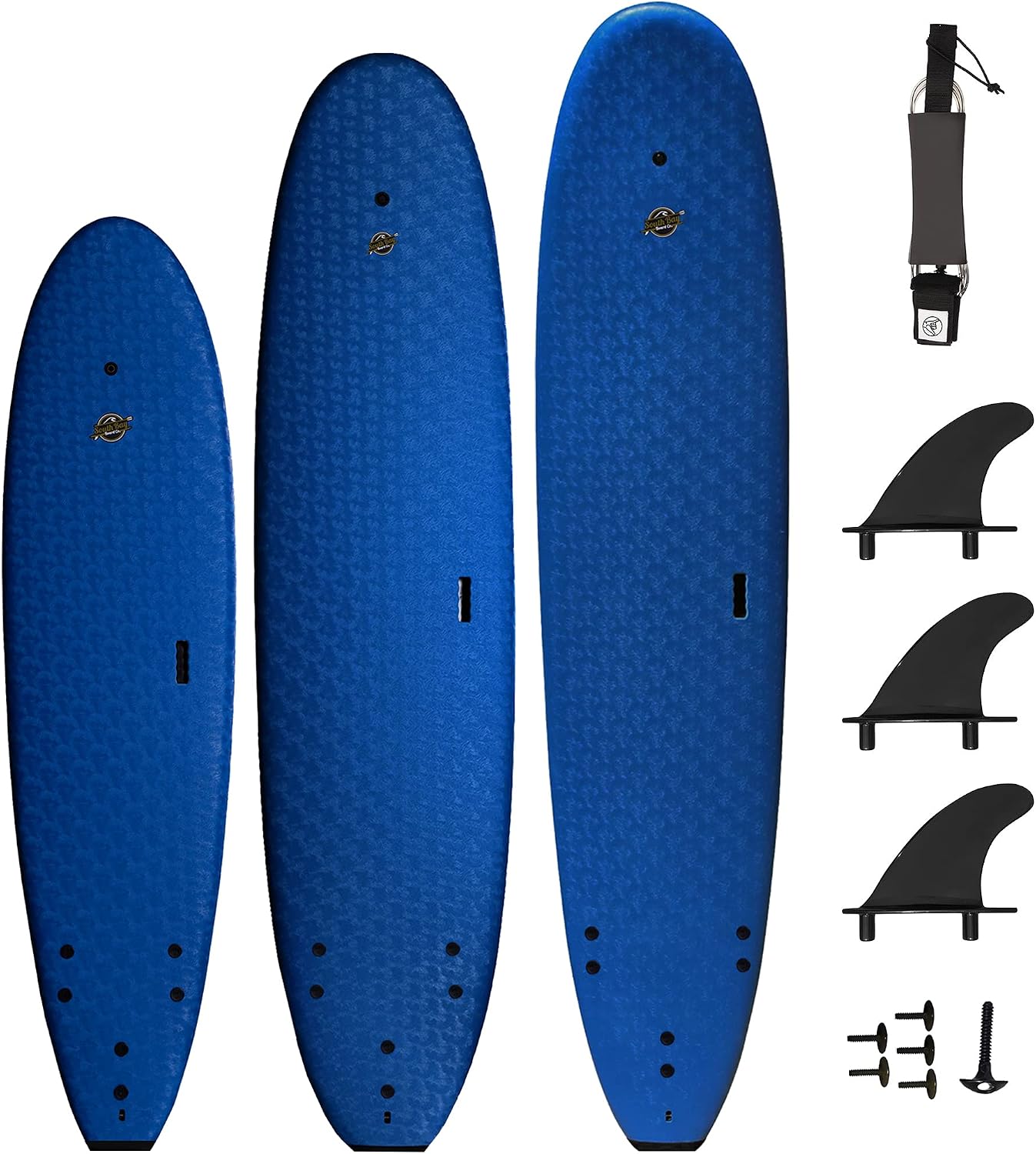
South Bay Board Co. Heritage 9'
If you’re tall, heavy, or both, this is the one we steer adults toward first. At nine feet and roughly 86 liters it floats riders in the 220-280 lb range that smaller boards leave wallowing, so you actually paddle into waves instead of sinking. The soft deck is forgiving when it bonks you, and it still glides well enough that you won’t outgrow it in a month. For the full sizing logic see our surfboard size chart and volume calculator.
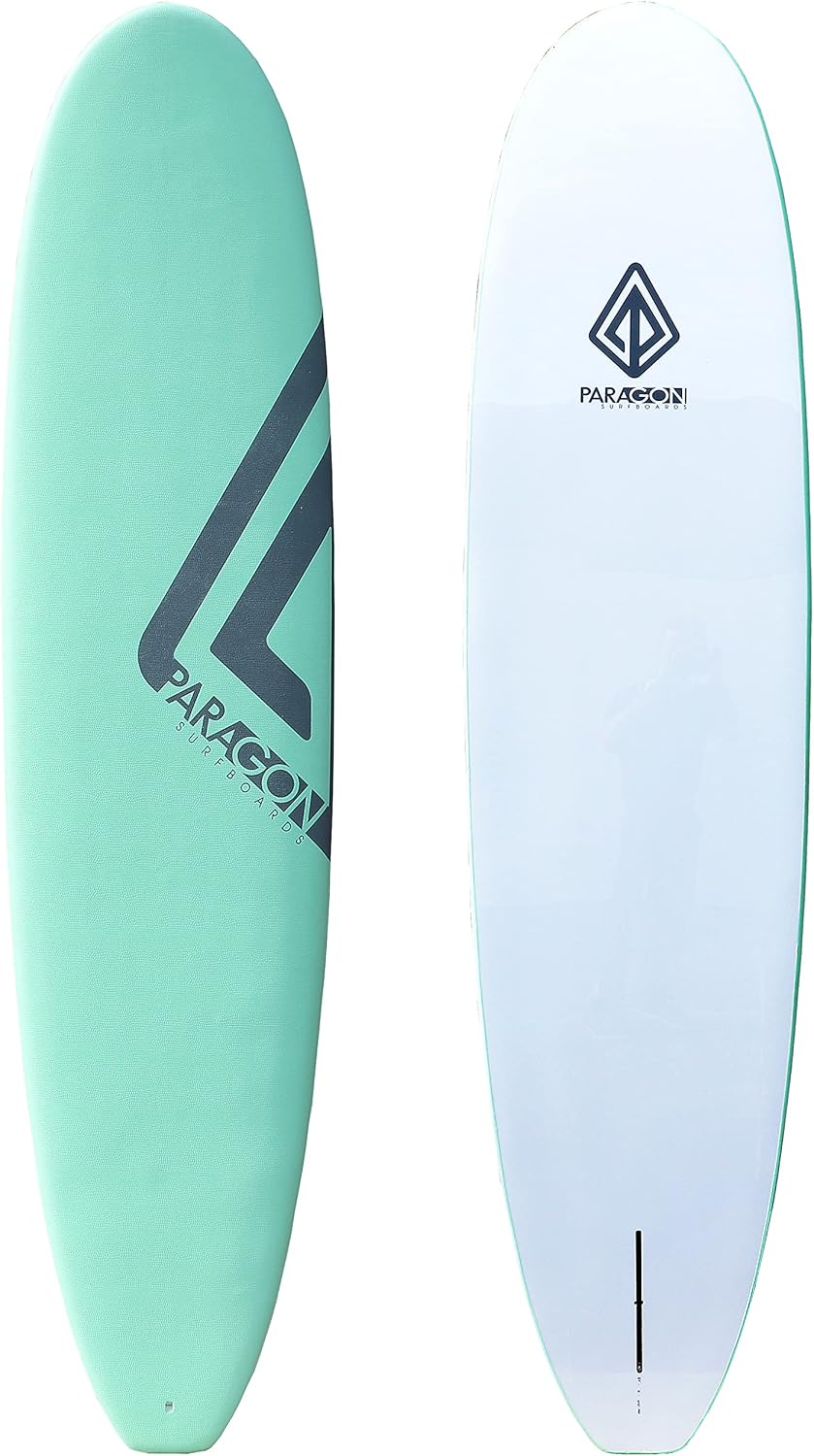
Paragon Surfboards 8'0" Soft-Top
Paragon’s 8-footer is the sweet spot for a lot of average-to-large adults who don’t quite need a full nine-foot log. There’s enough volume packed into the wide outline to float a 200-230 lb beginner with margin to spare. It’s stable under your chest while paddling and stable under your feet when you pop up, which is exactly what a first-timer needs. Easier to carry and turn than a 9′ if you’re under about 230 lb.
Wavestorm 8' Classic Soft-Top
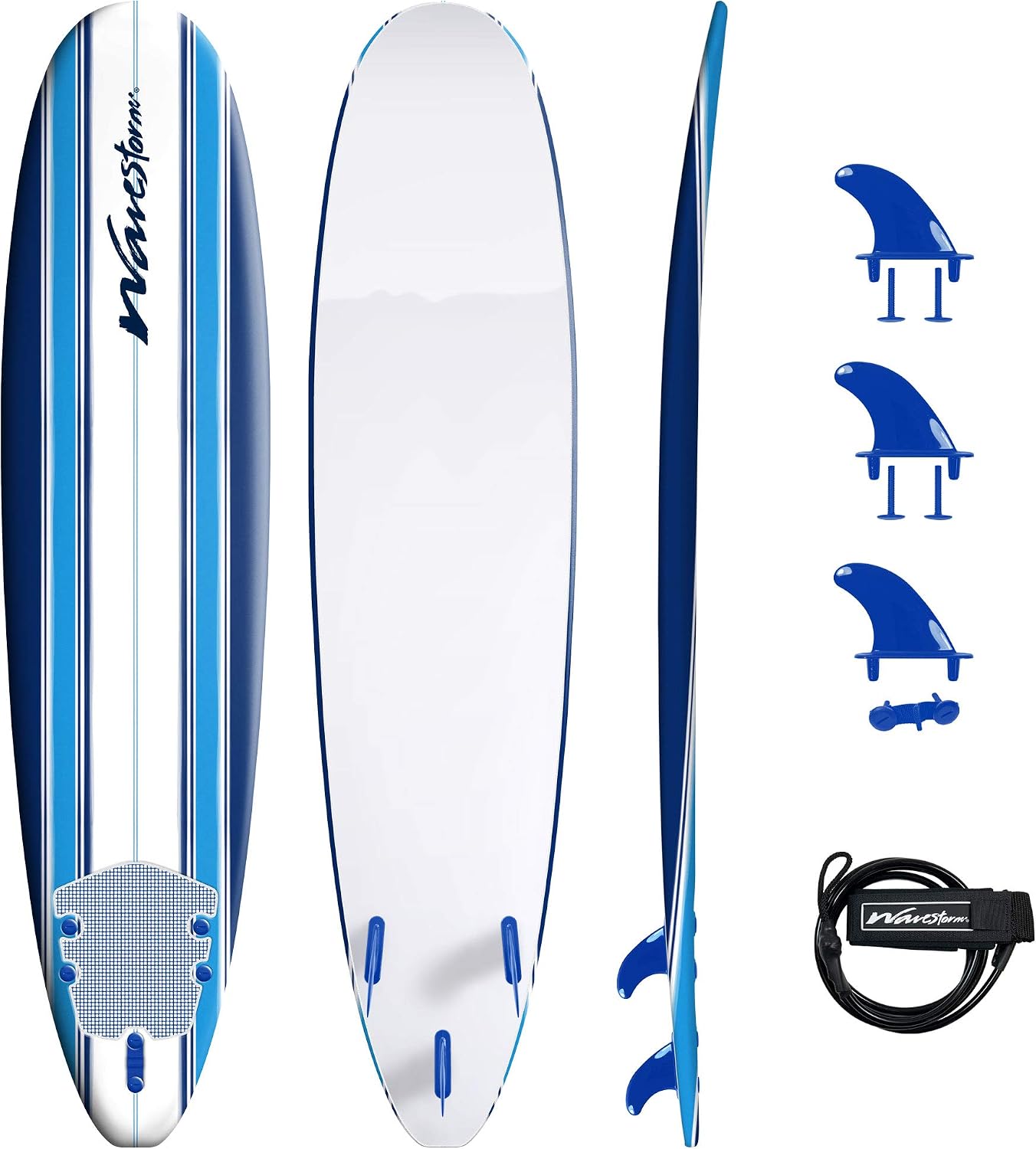
The Wavestorm is the board that put a generation of adults on waves, and it’s still the value champ. You get a ton of floaty foam for the money, which is why beaches everywhere are dotted with them. Heavier riders past about 220 lb will want one of the bigger boards above, but for an average-build adult learning on whitewater it’s hard to beat the price-to-fun ratio. See where it ranks among our best soft-top surfboards.
Catch Surf Odysea Log 8'
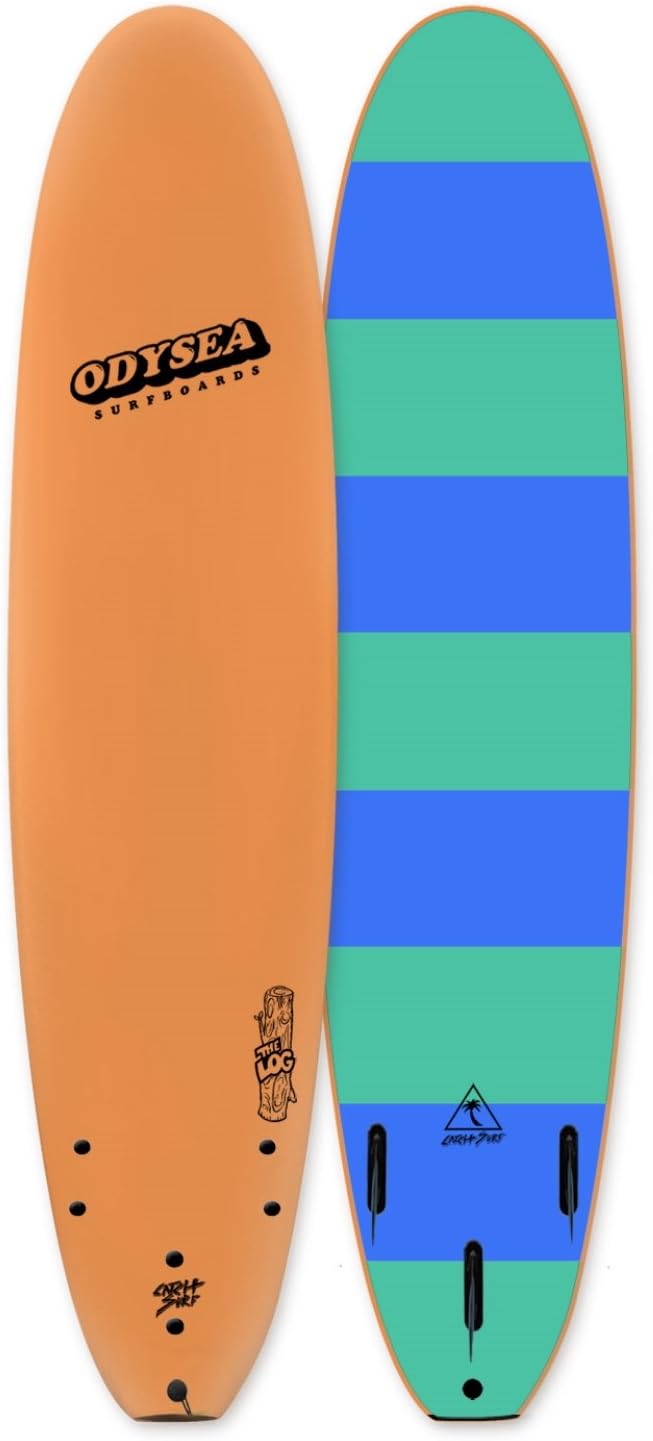
The Odysea Log catches waves almost embarrassingly early, which is gold when you’re learning to read the takeoff. Its full, thick foam outline keeps you floating high so you can paddle into more waves per session and get more reps standing up. It’s a touch livelier than a pure foam slab, so it rewards you as your balance improves. Durable enough to take the beating a beginner dishes out.
Degree33 Ultimate Longboard
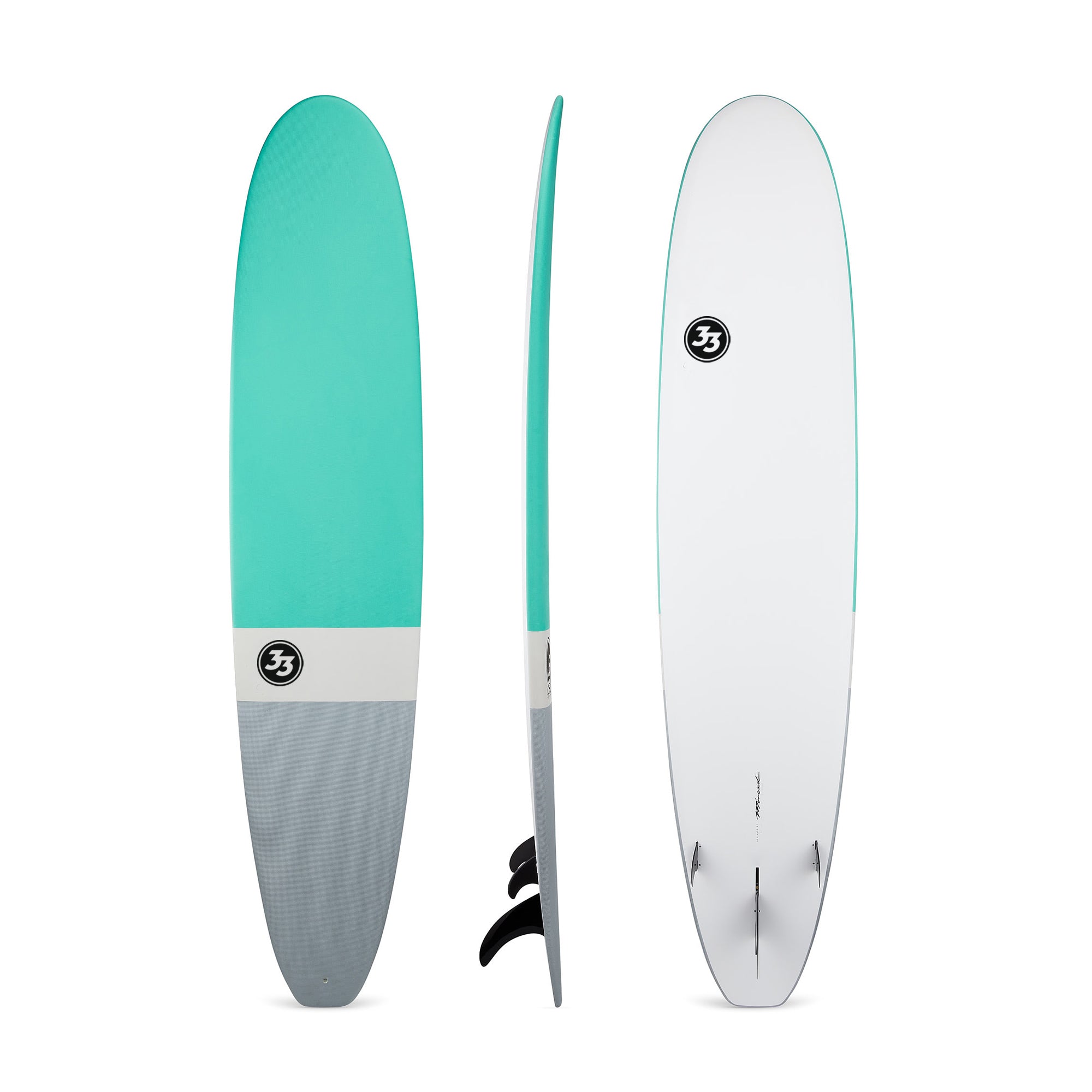
Once you can reliably stand and trim, the Degree33 is the board that grows with you. It’s a hard epoxy longboard rather than a soft-top, so it’s faster and far more responsive when you start steering down the line. The high volume still floats bigger adults, but the slick hard deck is less forgiving on falls, so we’d hold off until you’re past the whitewater stage. A genuine step up that you won’t replace for years. Compare it in our best longboard surfboards guide.
How we chose for adult beginners
Most “best beginner surfboard” lists quietly assume you weigh 150 pounds and bend like a teenager. That’s not who we’re writing for. We picked these boards specifically for grown adults learning to surf, with an honest eye on riders who are heavier, taller, or carrying a little extra around the middle.
Our priorities, in order:
- Float for your real bodyweight. If the board sinks under you, nothing else matters. Volume came first for every pick.
- Stability over performance. A board that wobbles is a board you fall off. We favored wide, flat, forgiving shapes.
- Soft decks for the learning phase. You will headbutt your board. A soft-top hurts a lot less than fiberglass.
- Wave-catching ease. More waves caught means more practice standing up, which is the whole game early on.
We’ve coached enough first-timers to know the single biggest reason adults quit: they get a board that’s too small, struggle for an hour, and decide surfing isn’t for them. The fix is almost always more foam.
Why bigger riders need more volume (the volume math)
Surfboard float is measured in liters of volume. The simple, reliable way to think about it: as a beginner, you want roughly 0.9 to 1.0+ liters of volume for every kilogram of bodyweight. Lean experts ride far less, but you are neither lean (relatively) nor expert (yet), so err high.
Here’s the math worked out for common adult weights:
| Bodyweight | Bodyweight (kg) | Beginner volume target |
|---|---|---|
| 165 lb | 75 kg | ~68-75 L |
| 185 lb | 84 kg | ~76-84 L |
| 200 lb | 91 kg | ~82-91 L |
| 220 lb | 100 kg | ~90-100 L |
| 250 lb | 113 kg | ~102-115 L |
This is exactly why the soft-tops on this list run thick and wide. A skinny shortboard might be 28 liters. That floats a pro. It will drown you.
What length and liters for 185 lb / 220 lb / 250 lb riders
Volume is the headline number, but length and width are how that volume gets delivered. Longer, wider boards paddle faster and feel more stable, which is everything when you’re starting out. Here’s how we’d size three common adult riders:
- 185 lb rider: An 8-foot soft-top in the 80+ liter range is ideal. The Paragon 8’0″ or Wavestorm 8′ both fit cleanly here. You don’t need a full nine-foot log, but you do need a thick, wide 8.
- 220 lb rider: You’re at the edge of what an 8′ can comfortably float. Go for the largest, thickest 8-footer you can find, or step up to a 9′. The South Bay Heritage 9′ is the safe, easy call.
- 250 lb rider: Don’t fight it, get the 9-footer. You want ~100+ liters and the extra length to paddle efficiently. The South Bay Heritage 9′ is our go-to for heavier adults. Anything shorter will leave you sinking and frustrated.
Taller riders should also lean longer even at the same weight, because length spreads your mass out and keeps the board planing under longer legs. If you’re 6’2″ and 200 lb, ride like you’re heavier than the chart says.
Foam vs hard boards for adult beginners
For your first dozen-or-more sessions, a soft-top (foam) board wins for nearly every adult. Here’s the honest trade-off:
| Soft-top (foam) | Hard board (epoxy/fiberglass) | |
|---|---|---|
| Forgiveness on falls | Excellent | Can hurt |
| Stability | Very high | Lower |
| Wave-catching | Easy | Requires more skill |
| Performance / turning | Limited | Much better |
| Durability vs beginner abuse | Takes a beating | Dings easily |
Four of our five picks are soft-tops for exactly this reason. The Degree33 hard longboard is the one exception, and we only recommend it once you’re past the whitewater stage and actually steering down the line. A soft, floaty board you stand up on beats a sleek board you keep falling off.
If you’re still deciding, our roundup of the best beginner surfboards breaks down more options across both categories.
Board features that actually help you stand up
Once volume is handled, a few design details genuinely speed up your progress. These are the things we look for when sizing a board for an adult who wants to be standing by the end of the day:
- Width over 22 inches. A wide board is a stable platform. The wider the deck, the slower it tips, and the more time you have to find your feet.
- Flat to mild rocker. A flatter board planes earlier and catches waves sooner. Beginner boards should not have aggressive curve.
- A full, rounded nose. Pointy noses are for performance. A full nose adds paddle-power and float right where you lie.
- Three fins (a thruster setup). Stable, predictable, and easy to control. Most of these ship with soft beginner fins, which is perfect.
- A deck pad or textured top. Grip means you’re not fighting to stay on. Wax up smooth decks before every session.
Want to nerd out on the physics of float and stability? The Wikipedia entry on surfboards has a solid overview of how shape and volume interact.
Frequently Asked Questions
What is the best surfboard for a heavy adult beginner?
For a heavy adult beginner, we recommend a high-volume soft-top in the 8′ to 9′ range, like the South Bay Board Co. Heritage 9′. Heavier riders need enough liters of foam to float their bodyweight, and a nine-foot board delivers that float plus the paddle speed to catch waves easily. The soft deck also makes the inevitable falls far less painful while you’re learning.
What size surfboard for a 200 lb beginner?
A 200 lb (about 91 kg) beginner should target roughly 82-91 liters of volume, which usually means a thick, wide 8-foot soft-top or a small longboard. An 8’0″ board like the Paragon or Wavestorm works well, but if you’re also tall or want extra ease, stepping up toward 9 feet adds float and paddle power. The goal is to float high and catch waves without struggling.
Can a big guy learn on an 8ft board?
Yes, a big guy can absolutely learn on an 8-foot board, as long as it’s a thick, wide, high-volume soft-top rather than a thin performance shape. Up to about 220 lb, a generous 8-footer like the Catch Surf Odysea Log or Paragon soft-top has enough foam to float you and catch waves. Past 250 lb, you’ll be happier and progress faster on a 9-foot board.
How much volume do I need on a beginner surfboard?
As a beginner, aim for roughly 0.9 to 1.0+ liters of volume per kilogram of bodyweight. A simple rule: take your weight in kilograms and get at least that many liters. So a 90 kg (200 lb) rider wants around 90 liters, and a 113 kg (250 lb) rider wants 100+ liters. Beginners should always round up. Too much float is forgiving; too little is the fastest way to quit.
Is a longboard better for heavier beginners?
Generally, yes. Longboards and long soft-tops carry more volume and length, which means more float and faster paddling, exactly what heavier beginners need. The extra length also helps the board plane and stay stable under more bodyweight. We’d start a heavy adult on a soft-top log like the South Bay Heritage 9′ rather than a shorter board, then move to a hard longboard once standing up is automatic.
What size board for a 6 foot beginner?
For a 6-foot adult beginner, length matters as much as weight because taller riders spread their mass over more board. We’d recommend at least an 8-foot soft-top, and a 9-footer if you’re also on the heavier side or want maximum ease. A board around 8’0″ to 9’0″ with high volume gives a six-footer the stable, floaty platform needed to paddle into waves and find their feet.