
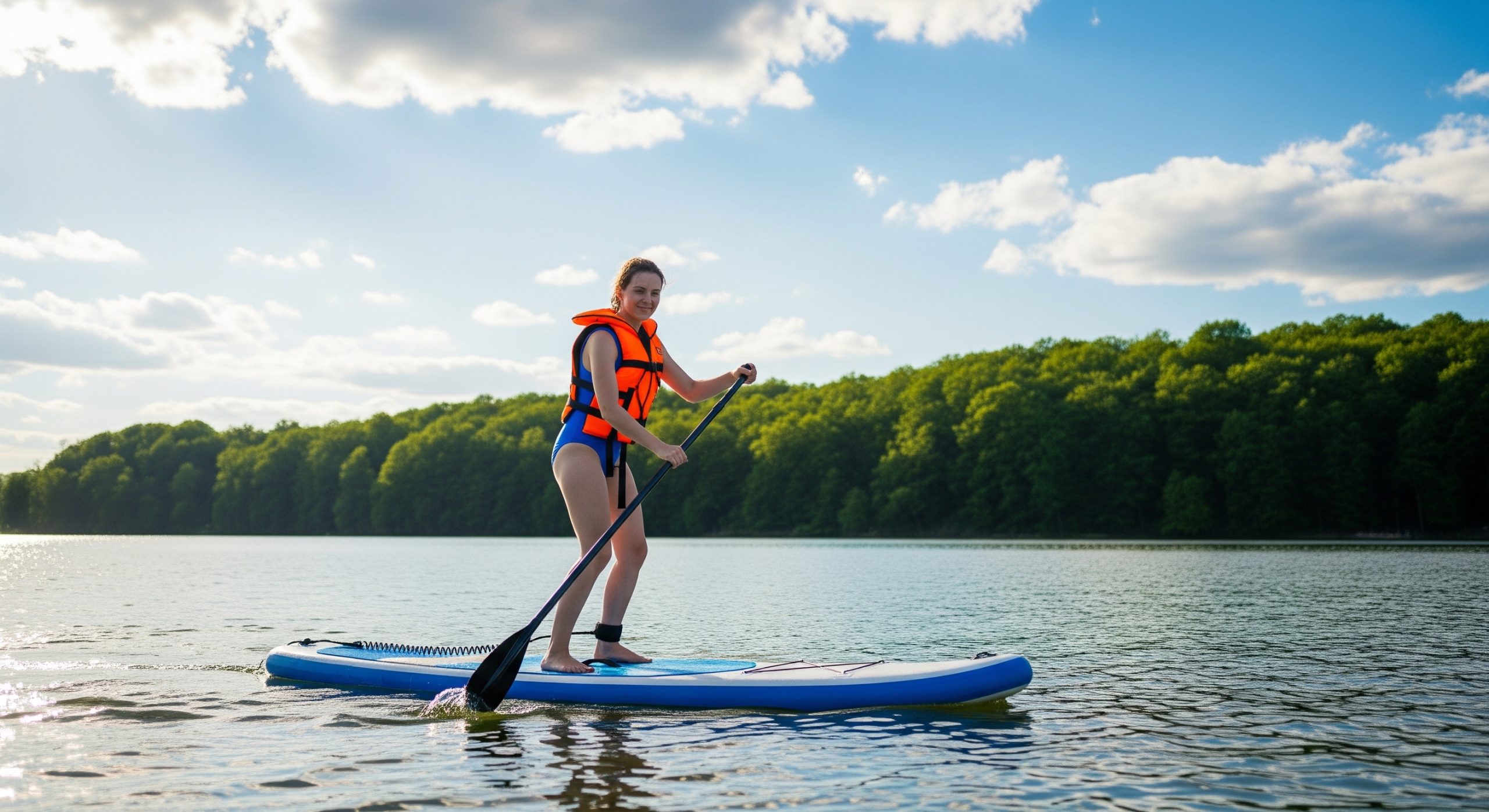
The Best Budget Paddleboards of 2026
Cheap doesn’t have to mean a pool toy. These are the inflatable SUPs that actually hold up under $250 — plus the one board worth saving a little more for.
You can get on the water for around $200 — but the gap between a genuinely good cheap board and a flexy pool toy is huge. These are the budget inflatable paddleboards we’d actually recommend, the cheapest pick that still holds up, and an honest note on when it’s worth spending a bit more.
The budget picks, side by side.
Two genuinely good boards under $250 — and the step-up we’d save for.
| Board | Best for | Size / width | Capacity | Price | |
|---|---|---|---|---|---|
| FunWater Cruise 11′ Best budget overall | Most first-time buyers on a budget | 11′ × 33″ × 6″ | ~330 lb | ~$231 | Check price → |
| FunWater Tiki 10′6″ Cheapest & most compact | Smaller paddlers, tight storage | 10′6″ × 33″ × 6″ | ~300 lb | ~$220 | Check price → |
| iRocker All-Around 11′ Worth saving for | The step-up that lasts years | 11′ × 32″ × 6″ | 435 lb | ~$529 | Check price → |
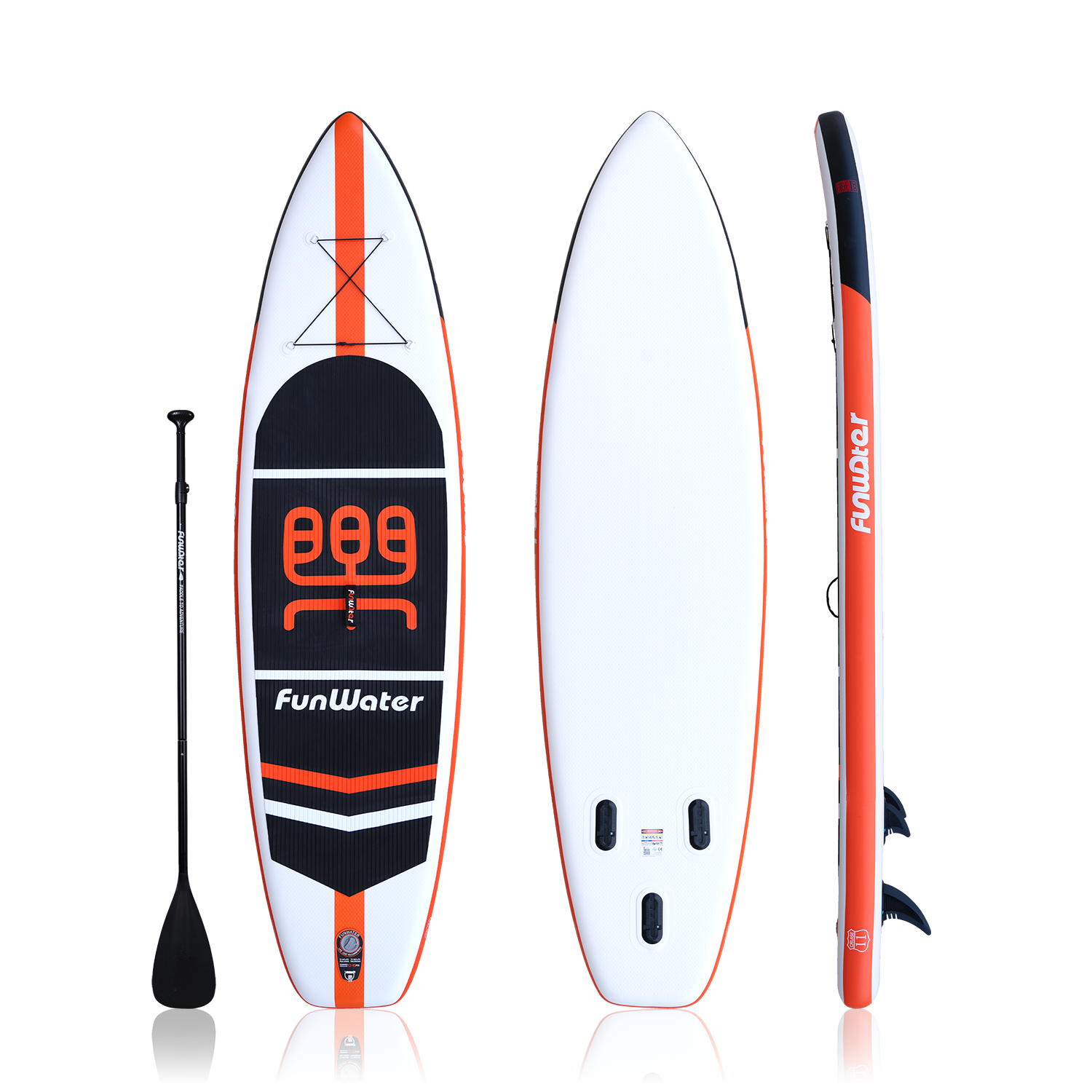
FunWater Cruise 11′
Proof a cheap board doesn’t have to be a pool toy. At around a third the price of a premium iSUP, the Cruise is genuinely stable, comes with a full accessory kit, and is the board we point most budget-first buyers to. You give up some rigidity, not your whole first season.
What we like
- Hard to beat for the money
- Complete kit + backpack included
- Stable, beginner-friendly 33″ deck
The catches
- Flexier than a premium board
- Budget paddle you may upgrade
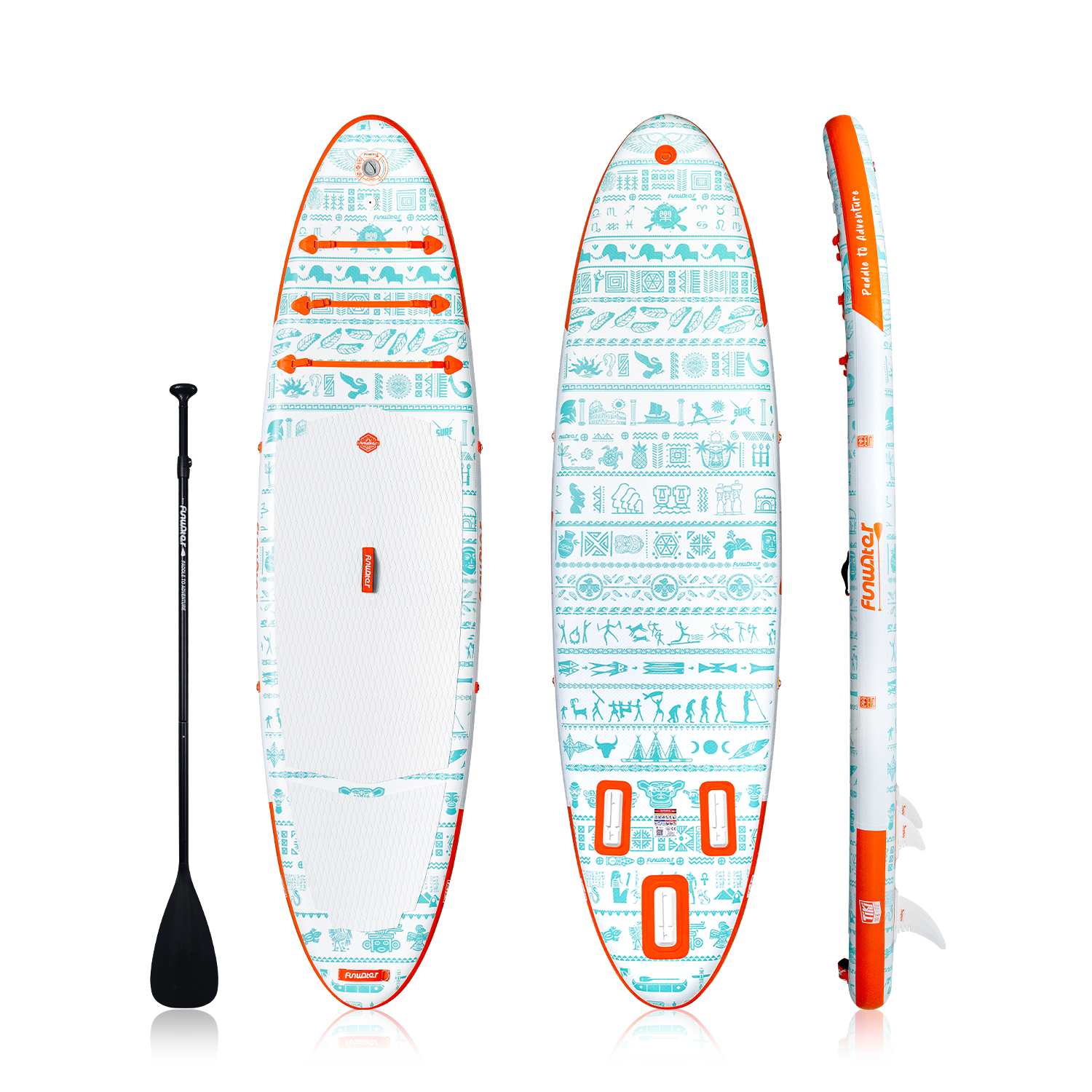
FunWater Tiki 10′6″
The lowest price here, and a touch shorter and lighter — which makes it a smart pick for smaller paddlers, kids growing into the sport, or anyone short on storage. Same FunWater value: a complete kit at a price that’s hard to argue with.
What we like
- The lowest entry price of our picks
- Light and easy to carry & store
- Full accessory kit included
The catches
- Less length = a bit less glide
- Lower capacity than the 11′ boards
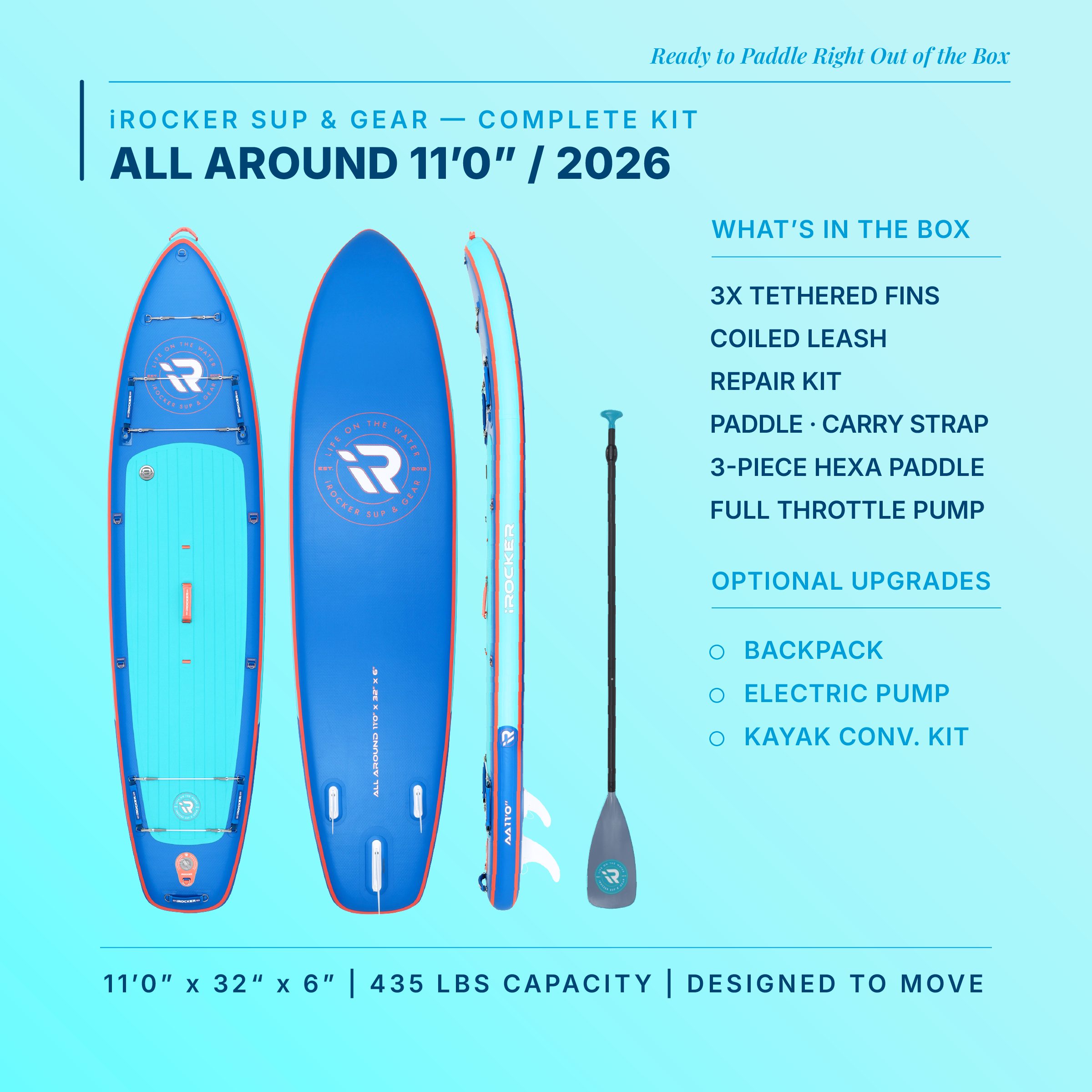
iRocker All-Around 11′
We’d be doing you a disservice not to mention it. For roughly twice a budget board, the iRocker All-Around is dramatically stiffer, carries 435 lb, and tends to still feel great two seasons in. If you can stretch the budget once, it’s the board that saves you buying twice.
What we like
- Hardboard-like rigidity
- Huge 435 lb capacity, lasts years
- Premium complete kit
The catches
- Roughly 2× a budget board
- More than a casual paddler needs
What actually separates these boards.
The three things that decide whether a paddleboard is worth owning — and how we weighted them.
Rigidity
A board that flexes underfoot is harder to balance on and slower. We favor boards with denser cores (triple-layer or woven drop-stitch) that stay flat at 15 PSI.
Stability vs. weight
Width and volume make a board steady; too much makes it a barge. We look for the sweet spot — stable enough to learn on, light enough to actually carry to the water.
What’s in the box
A cheap board with a junk paddle and a leaky pump isn’t a deal. We weigh the whole package — paddle, pump, leash, fins and bag — not just the board.
We’d rather lose the sale than your trust.
We test boards on real water and publish the cons next to the pros. We earn a commission if you buy through our links — at no extra cost to you — but it never changes our ranking, and we’ll happily point you to the cheaper board when it’s the smarter buy.
How to buy a budget paddleboard without getting a pool toy.
The difference between a great cheap board and a wobbly disappointment comes down to a few things.
The good news: you really can get a genuinely capable inflatable paddleboard for around $200. The catch is that the same price bracket is full of flexy, throwaway boards. Here’s how to tell them apart.
1Avoid the sub-$150 pool toys
Below roughly $150–$180, you’re usually buying a board with thin single-layer PVC and a flimsy paddle. They flex badly underfoot, which makes balancing harder, and they don’t last. Our cheapest pick sits around $220 for a reason — that’s about the floor for a board that’s actually worth owning.
2What a budget board buys (and gives up)
A good budget iSUP gets you on the water with everything you need — board, paddle, pump, leash, fin and bag — and plenty of stability for cruising, fitness and family days. What you trade versus a premium board:
- Rigidity — a little more flex, especially for heavier paddlers.
- Paddle quality — a basic aluminum paddle you may upgrade later.
- Longevity — good for several seasons rather than a decade.
3Rigidity & PSI make or break a cheap board
On a budget board, stiffness matters even more. Look for dual-layer or fusion drop-stitch over basic single-layer PVC, and a decent pressure rating.
4Size it to your weight
Even on a budget, size still matters — get the length and width right for your body:
| Your weight | Board length | Width |
|---|---|---|
| Under 125 lb | 9′6″ – 10′6″ | 30–32″ |
| 125 – 175 lb | 10′6″ – 11′ | 32–33″ |
| 175 – 225 lb | 11′ – 11′6″ | 32–34″ |
| 225 lb and up | 11′6″ and up | 34″ + |
5When it’s worth spending more
If you’re over ~200 lb, plan to paddle most weekends, or want a board that still feels great in a few years, the step up to something like the iRocker All-Around pays off — you’ll feel the extra stiffness on day one and won’t be shopping again soon. For occasional calm-water cruising, a budget board is plenty.
6What’s in the box
Every board here ships complete — board, adjustable paddle, pump, leash, fin and bag. The two upgrades budget owners reach for first are a lighter paddle and an electric pump. The two things we’d never skip on any board: a leash and a properly fitted PFD.