
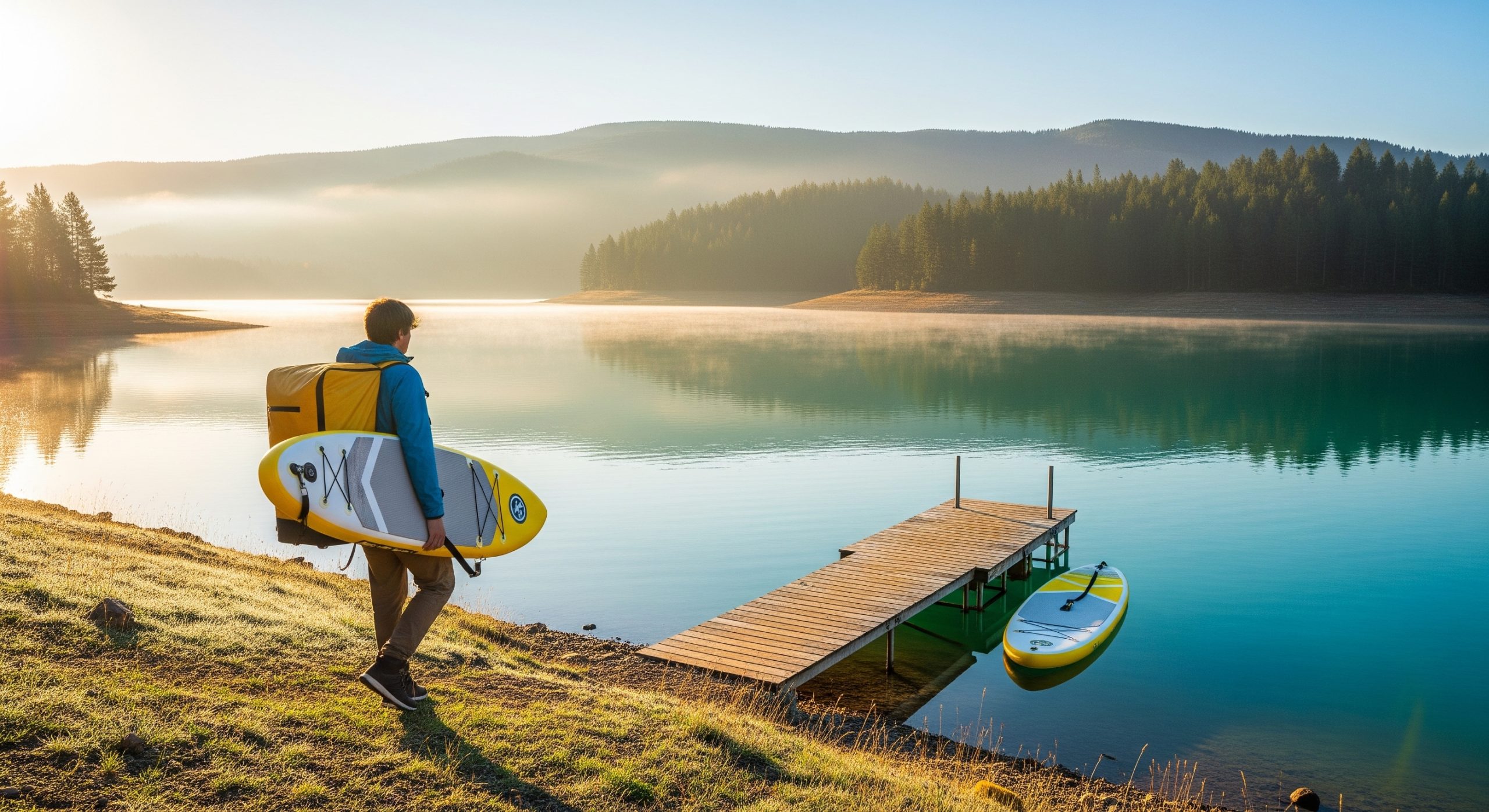
The Best Inflatable Paddleboards of 2026
The inflatable SUPs (iSUPs) we’d actually put our own money on — packable, stiff, and ranked by who each one is really for, not who pays the most. Honest catches included.
A good inflatable paddleboard rolls into a backpack, shrugs off the rocks, and — done right — is stiff enough that you’ll never miss a hard board. These are the four iSUPs we genuinely recommend in 2026 — best overall, premium, most stable, and budget — each with who should buy it and who should skip it.
The picks, side by side.
Tap a board to jump to the full breakdown, or check the current price on the brand’s site.
| Board | Best for | Size / width | Capacity | Price | |
|---|---|---|---|---|---|
| iRocker All-Around 11′ Best overall | Most paddlers, all-round use | 11′ × 32″ × 6″ | 435 lb | ~$529 | Check price → |
| BOTE Breeze Aero Best premium | Buyers who want a top-tier build | 10′6″–11′6″ × 34″ | ~315 lb | ~$799 | Check price → |
| Thurso Waterwalker 132 Most stable | Bigger riders & nervous beginners | 11′ × 32″ × 6″ | 370 lb | ~$699 | Check price → |
| FunWater Cruise 11′ Best budget | First board / tight budget | 11′ × 33″ × 6″ | ~330 lb | ~$231 | Check price → |
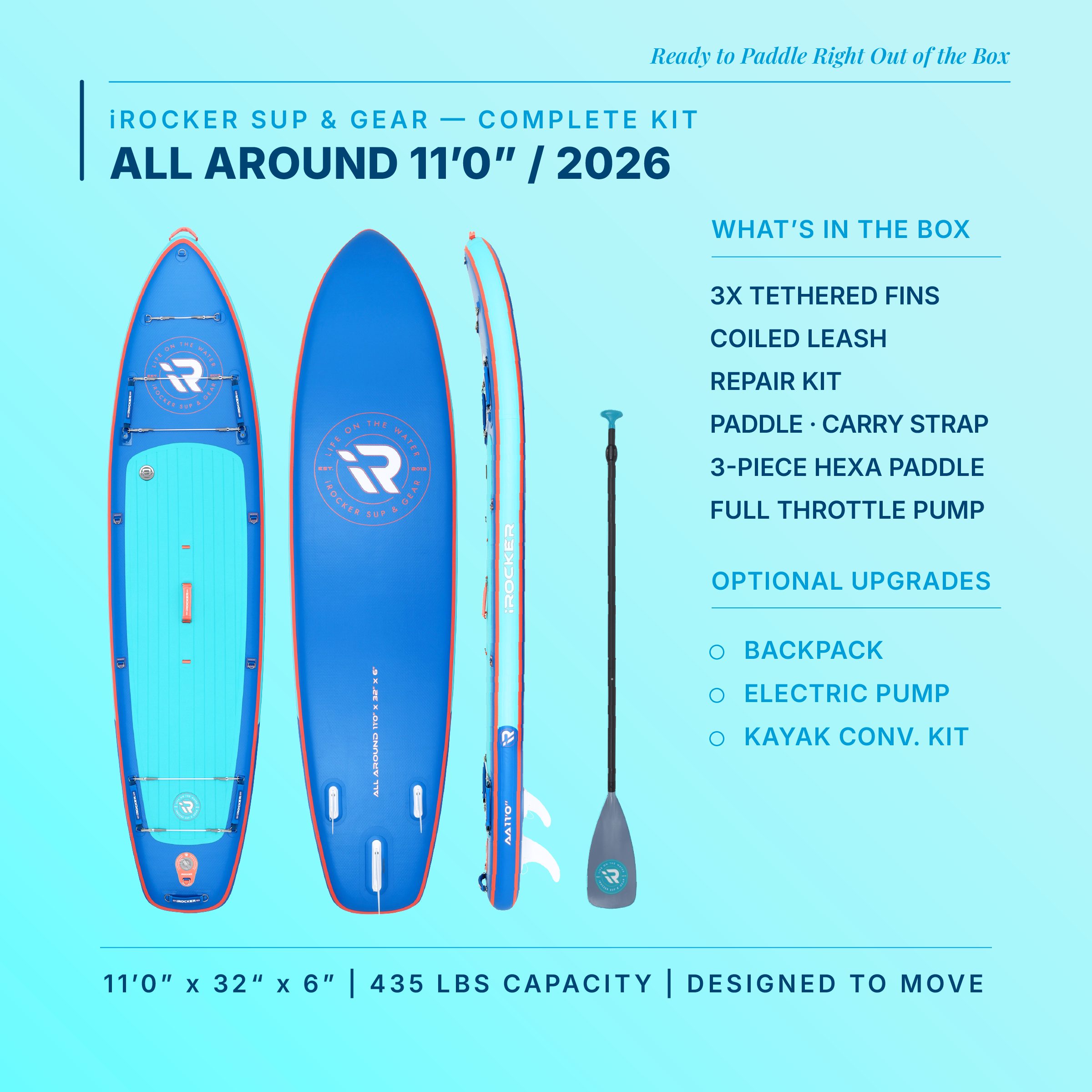
iRocker All-Around 11′
The board we recommend to most people. Triple-layer PVC makes it stiff enough to feel like a hardboard, the 32″ width is stable without being sluggish, and a 435 lb capacity covers almost everyone — solo, with a kid, or with the dog.
What we like
- Rigid, premium feel for the price
- Huge 435 lb capacity
- Complete kit: pump, paddle, fins, bag
The catches
- Not the cheapest entry point
- Hand pump is a workout (electric is extra)
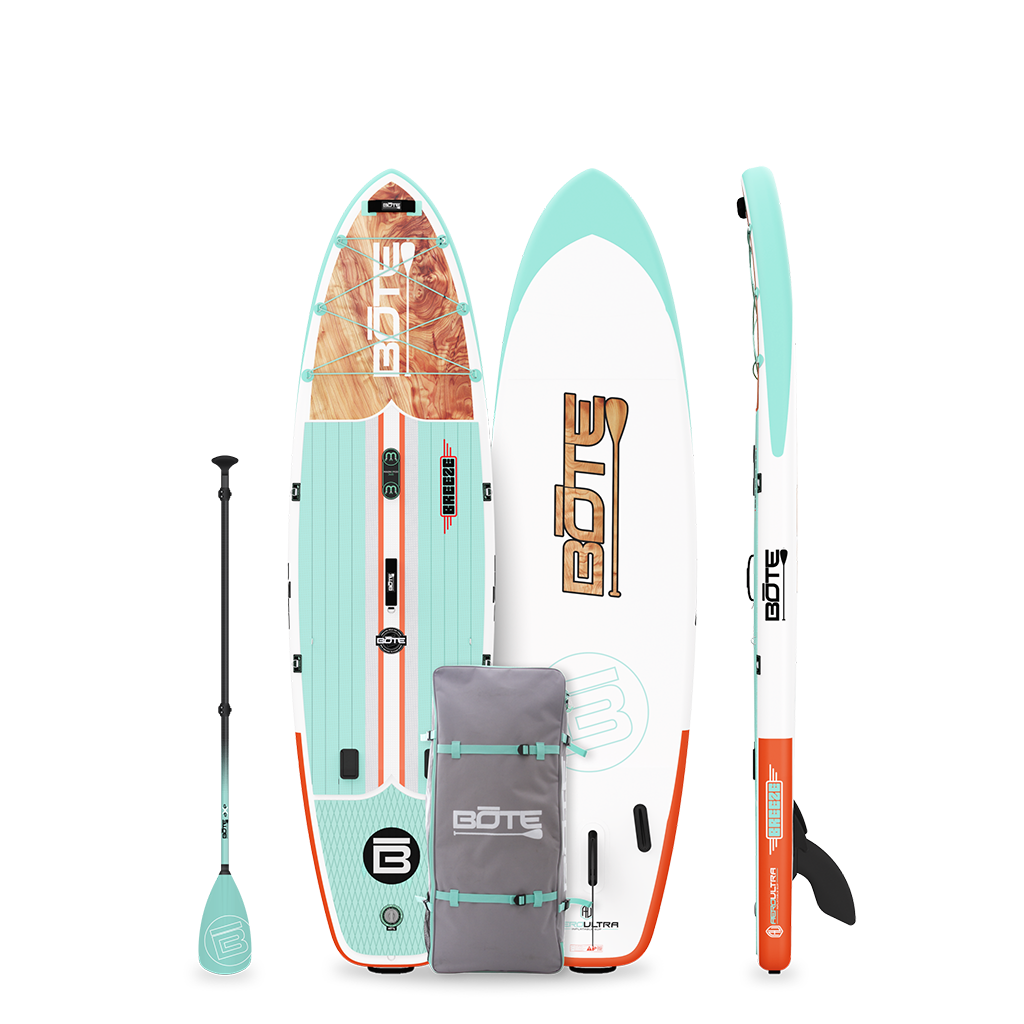
BOTE Breeze Aero
If you want the nicest board here and don’t mind paying for it, this is it. BOTE’s AeroULTRA construction is genuinely rigid, the 34″ deck is rock-steady, and the fit-and-finish is a step above. Compatible with BOTE’s clever accessory ecosystem (coolers, racks, MAGNEPOD).
What we like
- Best build quality in this list
- Wide 34″ deck = very stable
- 2-yr warranty + 30-day guarantee
The catches
- The most expensive pick here
- You pay partly for the brand
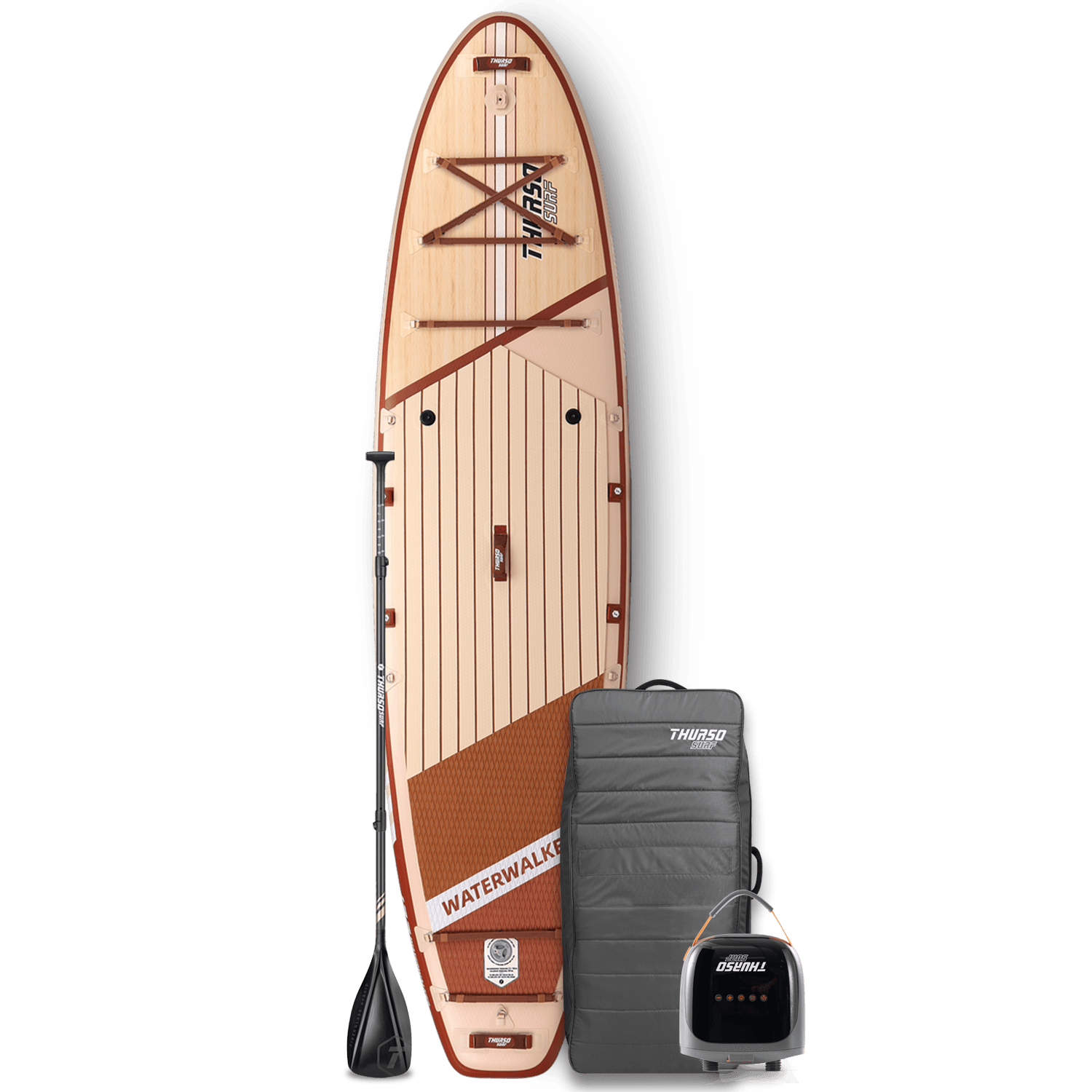
Thurso Waterwalker 132 (11′)
The most stable-feeling board here and the best for bigger riders or nervous first-timers. Thurso’s woven drop-stitch core is noticeably stiffer than budget boards, and the kit punches above its price — a carbon-shaft paddle and a roller backpack come standard.
What we like
- Stiff woven drop-stitch deck
- Carbon paddle + roller bag included
- Great for heavier/taller paddlers
The catches
- Heavier than the iRocker
- Wood-look styling isn’t for everyone
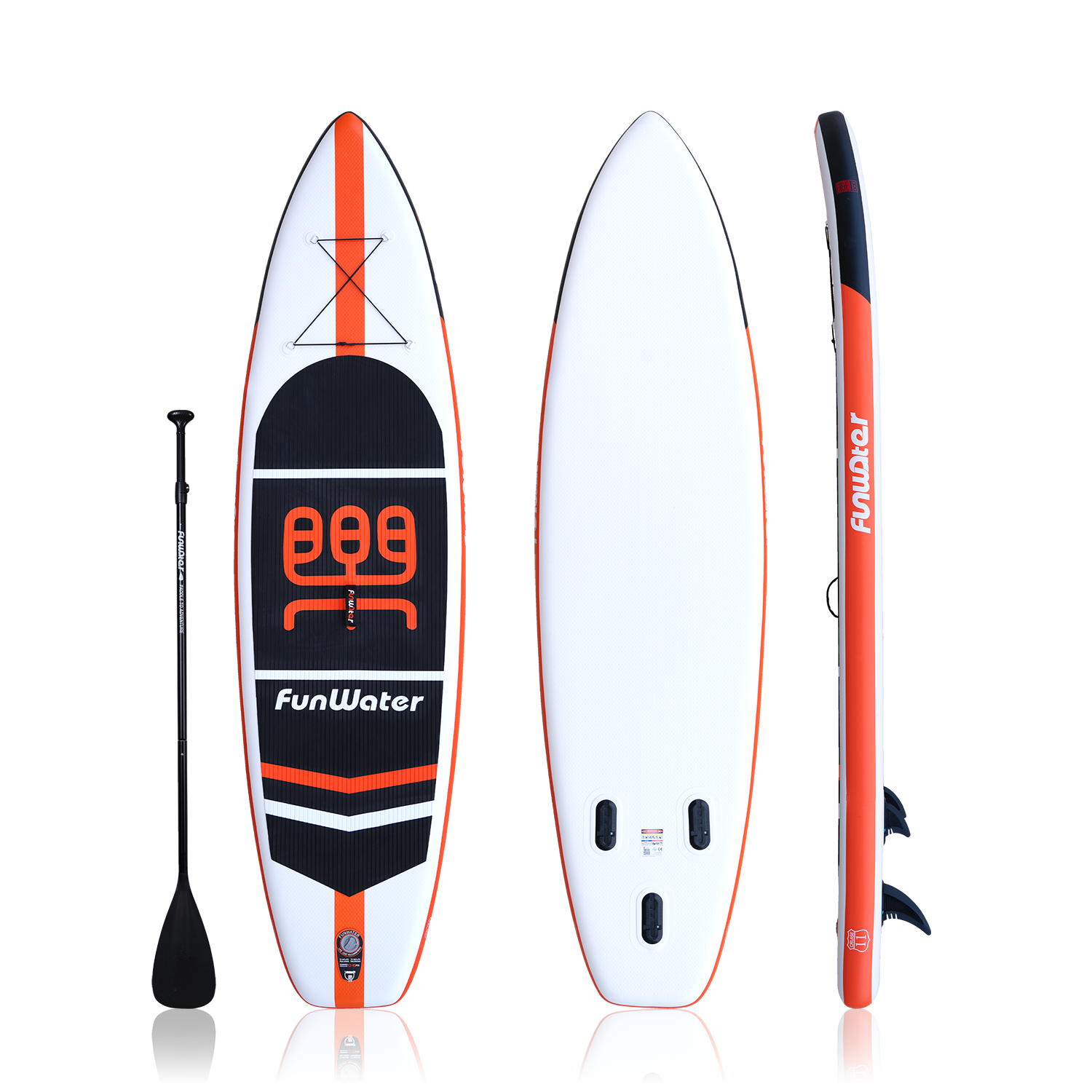
FunWater Cruise 11′
Proof a cheap board doesn’t have to be a pool toy. At around a third the price of the premium picks, the FunWater Cruise is genuinely stable, comes with a full accessory kit, and is the one we point true beginners to when budget is tight. You give up some rigidity, not your whole first season.
What we like
- Hard to beat for the money
- Complete kit + backpack included
- Light and easy to handle
The catches
- Flexier than the premium boards
- Budget paddle you may upgrade later
What actually separates these boards.
The three things that decide whether a paddleboard is worth owning — and how we weighted them.
Rigidity
A board that flexes underfoot is harder to balance on and slower. We favor boards with denser cores (triple-layer or woven drop-stitch) that stay flat at 15 PSI.
Stability vs. weight
Width and volume make a board steady; too much makes it a barge. We look for the sweet spot — stable enough to learn on, light enough to actually carry to the water.
What’s in the box
A cheap board with a junk paddle and a leaky pump isn’t a deal. We weigh the whole package — paddle, pump, leash, fins and bag — not just the board.
We’d rather lose the sale than your trust.
We test boards on real water and publish the cons next to the pros. We earn a commission if you buy through our links — at no extra cost to you — but it never changes our ranking, and we’ll happily point you to the cheaper board when it’s the smarter buy.
How to choose an inflatable paddleboard.
The decisions that actually matter once you’ve settled on an inflatable — from stiffness to lifespan.
Inflatable paddleboards (iSUPs) have quietly taken over the water for good reasons: they store in a closet, travel in a backpack, take a beating, and modern ones are genuinely rigid. But they’re not all equal. Here’s how to pick a good one — and avoid the pool toys.
1Why most people should buy inflatable
For roughly nine in ten paddlers, an inflatable is the smarter buy than a hard board. You get the same on-water experience for cruising, yoga, fishing and family days, plus a list of practical wins a solid board can’t touch:
- Storage — rolls into a backpack; no garage rafters or roof rack required.
- Travel — checks as luggage, fits in a trunk, comes on the trip.
- Durability — bounces off rocks and docks that would ding a hard board.
- Comfort & price — softer underfoot, and usually cheaper for the quality.
2Inflatable vs. hard — when a solid board still wins
Hard boards keep a small edge in two places: outright glide/top speed, and being grab-and-go with no pump. If you race, train, or live on the water and paddle daily, a solid board can be worth it. For everyone else, inflatable wins on balance — the full breakdown is in our inflatable vs. hard comparison.
| Inflatable (iSUP) | Hard / solid | |
|---|---|---|
| Storage & travel | Rolls into a backpack | Needs space + a roof rack |
| Durability | Shrugs off knocks | Dings and cracks |
| Glide / top speed | Very good | Slight edge |
| Ready to paddle | 5–10 min to pump | Instant |
3Get the size right — length, width & your weight
An 11′ board tracks straighter and carries more than a 10′ — the safer all-around call for most adults (three of our four picks are 11-footers). Width drives stability: 32–34″ is the sweet spot, with stability/yoga boards reaching 34–36″. Then match it to your weight:
| Your weight | Board length | Width |
|---|---|---|
| Under 125 lb | 9′6″ – 10′6″ | 30–32″ |
| 125 – 175 lb | 10′6″ – 11′ | 32–33″ |
| 175 – 225 lb | 11′ – 11′6″ | 32–34″ |
| 225 lb and up | 11′6″ and up | 34″ + |
Bringing a kid, cooler or dog? Size up. Our full sizing guide goes deeper.
4Rigidity & PSI — the difference between great and frustrating
Stiffness is everything on an inflatable. Look for triple-layer or woven/fusion drop-stitch construction rather than basic single-layer PVC, and a higher pressure rating.
5How long do inflatable SUPs last?
A well-built iSUP lasts 5–10 years with basic care; a cheap one, far less. The materials hold up fine — what kills boards early is heat and UV. Rinse off salt and sand, dry it before rolling, and store it out of prolonged direct sun.
6Storage & travel — the inflatable superpower
This is where iSUPs earn their keep: deflate, roll, and the whole kit lives in a backpack in a closet or trunk. Leaving it inflated for a few weeks in a cool, shaded spot is fine; for long-term storage or a hot trunk, release some pressure (heat expands air) or roll it up.
7The disadvantages worth knowing
We publish the cons too. Inflatables take a few minutes to pump up, the cheapest ones flex, and a hard board still has a touch more glide for racing. None of that matters for normal cruising — but if instant readiness or maximum speed is your priority, factor it in.
8Accessories & what’s in the box
Every board here ships as a complete package — board, adjustable paddle, pump, leash, fin and bag — but kit quality varies. What to weigh (and add):
- Paddle — lighter is better all day; carbon beats heavy aluminum.
- Pump — a dual-action hand pump is standard; an electric pump is the upgrade most owners say they’d buy again.
- Leash & PFD — non-negotiable. A leash keeps your board (your biggest float) with you; the Coast Guard treats a SUP as a vessel, so carry a PFD.