
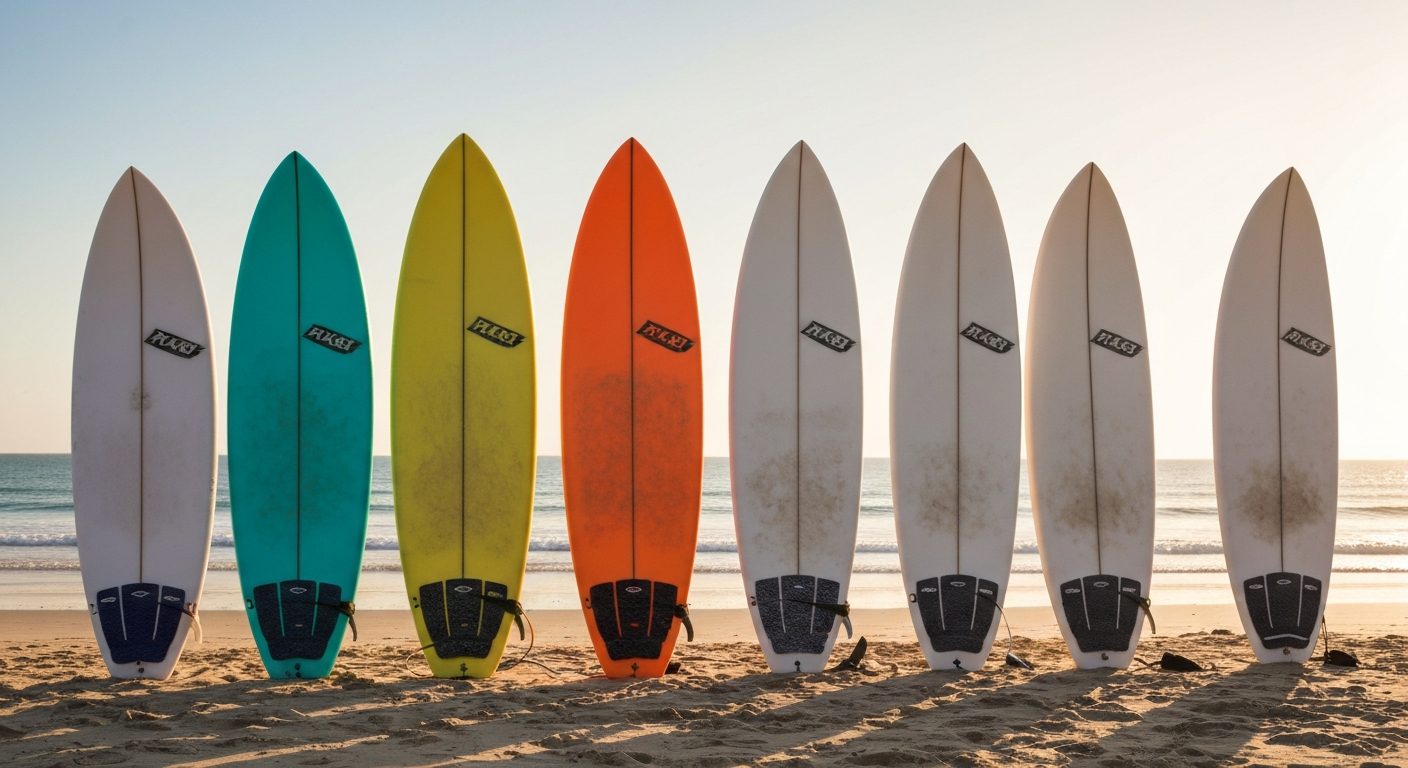
Best Surfboard Brands of 2026
The best surfboard brands depend entirely on where you are in your surfing: beginners want forgiving foam from names like Wavestorm, Catch Surf, and South Bay Board Co., while improving surfers eventually graduate to shaper brands like Channel Islands, Lost, and Pyzel, and value brands like NSP, Degree33, and Isle bridge the gap.
Best beginner surfboardsAsk ten surfers for the best surfboard brand and you’ll get ten answers, because the right brand depends entirely on who’s asking. A foam-board company that’s perfect for your first summer would be a frustrating downgrade for someone surfing real waves, and a hand-shaped performance board that an expert loves would actively hold a beginner back. So instead of crowning one winner, we’ve organized the best surfboard brands of 2026 by who each one is for, with honest takes on what they do well and where they fall short.
How to Read This (Brand Matters Less Than You Think)
Before we get into names, one honest truth that the marketing won’t tell you: for a beginner, the brand on the board matters far less than getting a foam board of the right size. A correctly sized 8-foot soft-top from a budget brand will teach you to surf faster than an expensive board that’s too small from a famous one. Wave count is what makes you better, and volume is what gets you the wave count. The logo is almost an afterthought.
Where brand does start to matter is later, once you’ve outgrown the whitewater and want a board that turns, holds in a steeper wave, and responds to your feet. At that point construction quality, shape pedigree, and the specific model line a brand offers genuinely change how you surf. So read the groups below in order: figure out which stage you’re in first, then look at the brands that serve it.
We’ve split the field into three honest buckets: beginner and foam brands (where most readers should start), performance and shaper brands (where you graduate to), and value and all-round brands (the bridge in between). A comparison table at the end lines them all up by best-for, price, and vibe.
Best Beginner & Foam Surfboard Brands
This is where the vast majority of new surfers should be shopping, and where the brand really is secondary to size and construction. Every brand here makes soft-top (foam-deck) boards designed to be stable, forgiving, and safe when they bonk you in the head. Here’s our honest read on each.
- Wavestorm – The default first board for a reason. The 8-foot Wavestorm is cheap, hugely buoyant, catches everything, and is so common at beginner breaks it’s practically a uniform. It’s not built to last forever and it surfs like a barge once you improve, but as a learn-to-surf machine it’s hard to beat on value. See our full Wavestorm 8ft Classic review for the long version.
- Catch Surf – The fun brand. Their Odysea line (Log, Skipper, Stump) is foam that actually surfs well, which is why you’ll see decent surfers riding them on small days. Pricier than a Wavestorm but better built and far livelier. A great pick if you want a foamie you won’t immediately outgrow.
- South Bay Board Co. – Our pick for the best all-rounder foam brand. Better fittings, real fin systems, and a stiffer build than the bargain foamies, with sizes from 7 to 10 feet. They cost more than a Wavestorm but feel like a step up in quality without jumping to a hard board.
- Thurso Surf – Known mostly for paddleboards, their soft-tops are solid value with a dual wood-stringer build that adds stiffness. A sensible mid-budget choice, especially if you’re shopping their ecosystem already.
- Paragon – A quietly competent foam and soft-top brand that offers longer learner shapes at fair prices. Less hyped than the others, but the boards do the job for first-timers and bigger riders who need length.
- Giantex – The true budget end. If money is the deciding factor, a Giantex foamie will get you standing up. Just go in clear-eyed: the fins, leash, and deck quality are basic, and it won’t hold up to heavy use. Right size still beats everything here.
- Ocean & Earth – An Australian accessories powerhouse that also makes respectable soft-tops and learner shapes. Their build and fin quality tend to run a notch above the bargain brands, and they’re easy to find paired with leashes and pads.
For the full shortlist with sizes and picks, see our roundups of the best beginner surfboards and the best soft-top surfboards.
Best Performance & Shaper Surfboard Brands
These are the famous names painted on the boards your favorite pros ride. We’ll be upfront: most of these are well beyond what a beginner needs, and we don’t sell them. But understanding them matters, because this is what you’ll graduate to once foam stops being fun. Here’s what each is known for and when a surfer is ready for it.
- Channel Islands (CI) – Arguably the most iconic shaper brand in the world, born from Al Merrick’s shaping bay. Known for high-performance shortboards and the legendary models pros have ridden for decades. You graduate to CI when you’re turning confidently and want a board that rewards good surfing. Overkill for a beginner.
- Lost (Mayhem) – Matt Biolos’s brand, beloved for its hybrid shapes that let everyday surfers ride shorter without losing wave count. Models like their fuller-volume shortboards are a common first “real” board for improving surfers. A strong step-down target once you outgrow a funboard.
- Pyzel – John Pyzel shapes for some of the best surfers alive, and his boards have a reputation for being forgiving for high-performance shapes. A great brand to aspire to as you move into proper shortboards.
- JS Industries – Jason Stevenson’s brand, hugely popular for performance shortboards that still paddle and catch waves well. Another classic “my first good shortboard” graduation brand.
- Firewire – The technology and sustainability story. Their epoxy/EPS constructions are livelier and tougher than traditional fiberglass, and the Slater Designs line under Firewire is widely loved. Worth knowing about because the durable construction suits surfers who don’t want to baby a fragile board.
- NSP – The crossover brand (it also lives in our value section below). NSP’s tougher epoxy construction makes performance-leaning shapes that survive real-world abuse, which is why improving surfers on a budget love them.
- Torq – The smart bridge brand. Torq’s EPS/epoxy boards come in beginner-friendly shapes (their soft-deck and TET models) at fair prices, but with real performance outlines. Many surfers consider a Torq their first proper hard board after a foamie, and we think that’s a smart move.
Construction is a big part of why these brands feel different. Our foam vs epoxy vs fiberglass guide explains why a Firewire or Torq epoxy board feels livelier and tougher than a traditional fiberglass shape at the same volume.
Best Value & All-Round Surfboard Brands
Between the disposable foamie and the pro-level shaper board sits the most useful group for most readers: value and all-round brands. These make durable, fairly priced hard boards (usually epoxy) in friendly, do-everything shapes. If you’ve outgrown your first soft-top but aren’t ready to spend big on a fragile performance board, this is your aisle.
- Degree33 – A direct-to-consumer brand that punches above its price. They offer a wide range of shapes, from longboards to funboards to shortboards, often with the option to customize, at prices well below shaper brands. A great value if you want a real hard board without the boutique markup.
- Isle – Better known for paddleboards, but their surf-side shapes and soft-tops are solid value for casual and intermediate use. Sensible for the surfer who wants one easy do-everything board and isn’t chasing performance.
- NSP – Our top all-round value pick, which is why it appears in two groups. NSP’s epoxy construction is famously durable (their boards survive rental fleets and travel), and their shape range covers everyone from learners to intermediates. If you want one tough board that does most things well at a fair price, NSP is the easy recommendation.
The thing we love about this tier is forgiveness of mistakes, in both senses. The boards forgive your surfing because the shapes carry volume, and they forgive your wallet and your dings because the epoxy construction is durable and the prices are reasonable. You can surf one hard, ding it, and not feel sick about it.
If you’re leaning toward a longer, glide-y all-rounder, our best longboard surfboards roundup covers value and premium longboard options that overlap with several of these brands.
Brand Comparison Table: Best For, Price & Vibe
Here’s the whole field at a glance. “Price tier” is relative within surfing, and “vibe” is our honest one-line read on what kind of surfer each brand fits. Use it to narrow down, then size your actual board with the volume calculator.
| Brand | Best for | Price tier | Vibe |
|---|---|---|---|
| Wavestorm | First-ever board | $ | The default learn-to-surf foamie |
| Catch Surf | Fun foam that still surfs | $$ | Playful, lively, won’t outgrow fast |
| South Bay Board Co. | Best all-round foamie | $$ | A quality step up from bargain foam |
| Thurso Surf | Mid-budget learner | $$ | Stiff, sensible, paddleboard-adjacent |
| Paragon | Longer learner shapes | $$ | Quietly competent, fair value |
| Giantex | Tightest budget | $ | Gets you standing, basic build |
| Ocean & Earth | Foam + accessories | $$ | Solid build, easy to kit out |
| Degree33 | Value hard boards | $$ | DTC value, customizable shapes |
| Isle | Casual all-rounder | $$ | Easy one-board-does-it-all |
| NSP | Durable all-round value | $$ | Tough epoxy, survives anything |
| Torq | First hard board | $$ | Smart bridge from foam to performance |
| Firewire | Durable performance | $$$ | Tech-driven, lively, eco story |
| JS Industries | First good shortboard | $$$ | Performance that still catches waves |
| Lost | Hybrid shortboards | $$$ | Shorter without losing wave count |
| Pyzel | High-performance shortboards | $$$ | Forgiving pro-level shapes |
| Channel Islands | Advanced performance | $$$ | The iconic shaper benchmark |
Notice the pattern: the cheap brands are first-board specialists, the value tier ($$) covers the most surfers, and the premium tier ($$$) only earns its price once your surfing can use it. There’s no shame in living in the $$ column for years.
How to Choose a Surfboard Brand (Our Honest Process)
Forget brand loyalty for a moment. Here’s the order of operations we actually use when helping someone pick, brand last.
- 1. Pin your skill stage honestly. Are you learning to stand up, catching green waves and turning, or surfing critically? Be honest, most people overrate themselves and buy too advanced. Your stage decides your whole shortlist.
- 2. Lock your size before anything else. Run your weight through our size chart and volume calculator and get a target liter range. This number outranks brand entirely. A right-sized board from any brand beats a wrong-sized board from a great one.
- 3. Pick your construction. Soft-top foam for learning, durable epoxy for value and abuse, traditional fiberglass for premium performance feel. Our construction guide walks through the trade-offs.
- 4. Now choose a brand within that filter. Only after stage, size, and construction do you look at the logo, and by then your list is short. A beginner’s choice is basically Wavestorm vs Catch Surf vs South Bay; an improver’s is NSP vs Torq vs Degree33; an advanced surfer’s is the shaper tier.
- 5. Match the budget to the stage, not the ego. Spending shaper-brand money before you can use it is the classic mistake. Spend up when your surfing will actually feel the difference.
Surfing also has standardized references worth knowing as you go deeper into gear and competition, the International Surfing Association is the recognized world governing body. But for buying your next board, the process above will steer you better than any logo. Start with the right size, and the rest gets easy.
Frequently Asked Questions
What are the best surfboard brands for beginners?
The best beginner surfboard brands are foam (soft-top) makers like Wavestorm, Catch Surf, and South Bay Board Co., with Thurso Surf, Paragon, Ocean & Earth, and budget Giantex as alternatives. Honestly though, the brand matters far less than getting a foam board of the right size. Any of these will teach you to surf if you choose an 8-foot-ish board with enough volume for your weight. Buy for fit first, logo second.
What is the most popular surfboard brand?
For beginners, the Wavestorm is the most popular and most-seen surfboard in the water, thanks to its low price and easy availability. Among performance and shaper brands, Channel Islands is the most iconic and widely ridden, with Lost, Pyzel, and JS Industries close behind among serious surfers. “Most popular” depends on the crowd: foamie beaches are full of Wavestorms, while lineups of experienced surfers are full of shaper boards.
Are expensive surfboard brands worth it?
Only once your surfing can use them. Premium shaper brands like Channel Islands, Pyzel, and Firewire are absolutely worth it for surfers who turn confidently and surf real waves, where the shape and construction genuinely change performance. For a beginner, an expensive board is often a downgrade because the high-performance shapes carry less volume and catch fewer waves. Spend up when your surfing will feel the difference, not before.
What brand of surfboard should a beginner buy?
A beginner should buy a soft-top from Wavestorm, Catch Surf, or South Bay Board Co., sized correctly for their weight, usually an 8-foot board with plenty of volume. Of these, Wavestorm is the cheapest, Catch Surf is the most fun and durable, and South Bay is the best all-round build. But the exact brand matters less than the size: get the volume right and any of them will get you surfing faster than a pricey, smaller board.
Who makes the Wavestorm?
Wavestorm is made by Agit Global, a manufacturer that produces the popular foam soft-top boards sold widely at retailers like Costco. The 8-foot Wavestorm Classic is its best-known model and has become the default first board for countless surfers thanks to its low price, high buoyancy, and forgiving foam construction. It’s a learn-to-surf machine rather than a performance board, which is exactly what makes it so popular with beginners.
Are cheap surfboard brands any good?
For learning, yes, surprisingly so. Budget brands like Giantex and entry Wavestorms will absolutely get you standing up and catching waves, because at the beginner stage volume and size matter far more than build quality. The trade-offs are basic fins, leashes, and decks, and shorter lifespans under heavy use. A right-sized cheap board beats a wrong-sized expensive one. Once you improve, step up to a durable value brand like NSP or Torq.