
The Best Paddleboards for Heavy Riders (2026)
Bigger or taller? You’re not too heavy to paddle — you just need the right board. These are the high-capacity, wide, genuinely rigid iSUPs that stay stable under load.
Most “tippy” complaints from bigger paddlers come down to one thing: a board that’s too small. Get the capacity, width and rigidity right and stability stops being a problem. These three boards carry more, sit higher in the water, and stay stiff under load — our picks for heavier and taller riders.
The picks for bigger paddlers.
Ranked by capacity, width and stability under load.
| Board | Best for | Width | Capacity | Price | |
|---|---|---|---|---|---|
| iRocker All-Around 11′ Best for heavy riders | Highest capacity, all-round use | 32″ | 435 lb | ~$529 | Check price → |
| Thurso Waterwalker 132 Most stable | Nervous bigger beginners | 32″ | 370 lb | ~$699 | Check price → |
| BOTE Breeze Aero Widest deck | Maximum stability, premium build | 34″ | ~315 lb | ~$799 | Check price → |
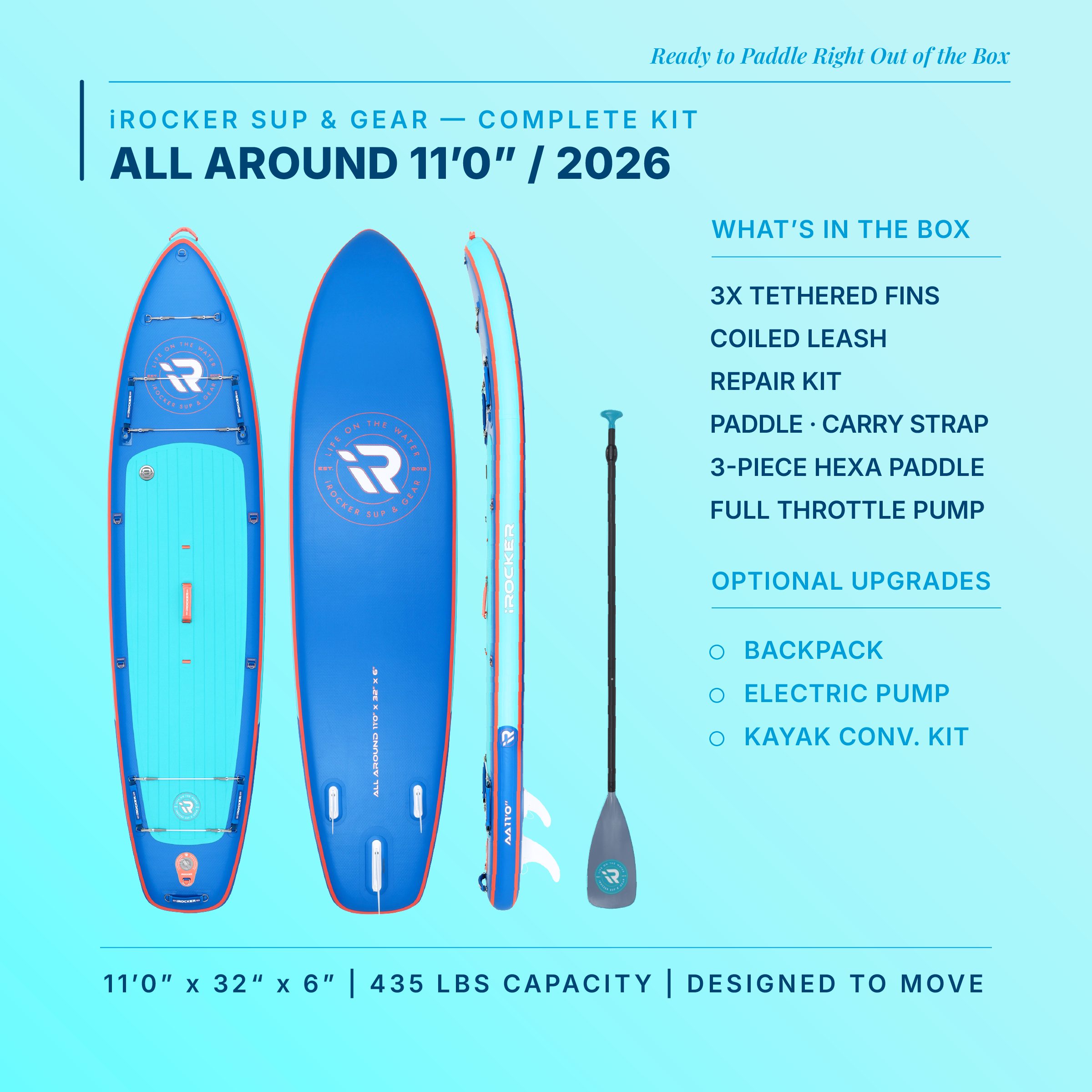
iRocker All-Around 11′
The standout for heavier riders thanks to a class-leading 435 lb capacity and stiff triple-layer construction that doesn’t bow under load. At 32″ wide it’s stable without being a barge, and it still tracks and glides well — you’re not trading performance for capacity.
What we like
- Huge 435 lb capacity
- Stiff triple-layer PVC, minimal flex
- Stable yet still paddles nicely
The catches
- 32″ not the very widest
- Hand pump is a workout
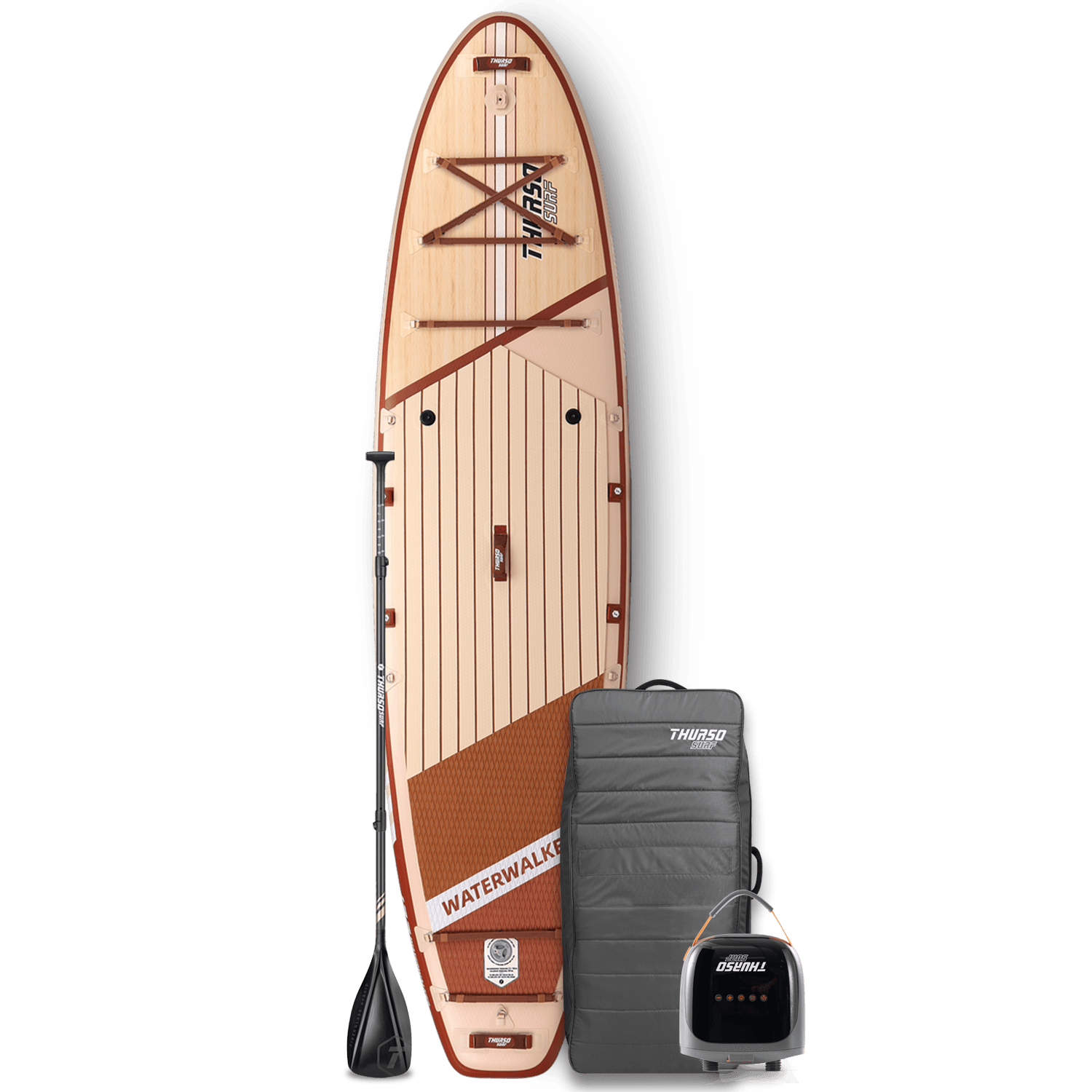
Thurso Waterwalker 132 (11′)
If your main worry is wobble, the Waterwalker’s stiff woven drop-stitch core makes it feel planted — noticeably more solid underfoot than budget boards at the same size. A 370 lb capacity and a premium kit (carbon paddle, roller bag) make it a comfortable, confidence-building pick for bigger beginners.
What we like
- Very stiff = feels planted
- 370 lb capacity
- Carbon paddle + roller bag
The catches
- Lower capacity than the iRocker
- Heavier board to carry
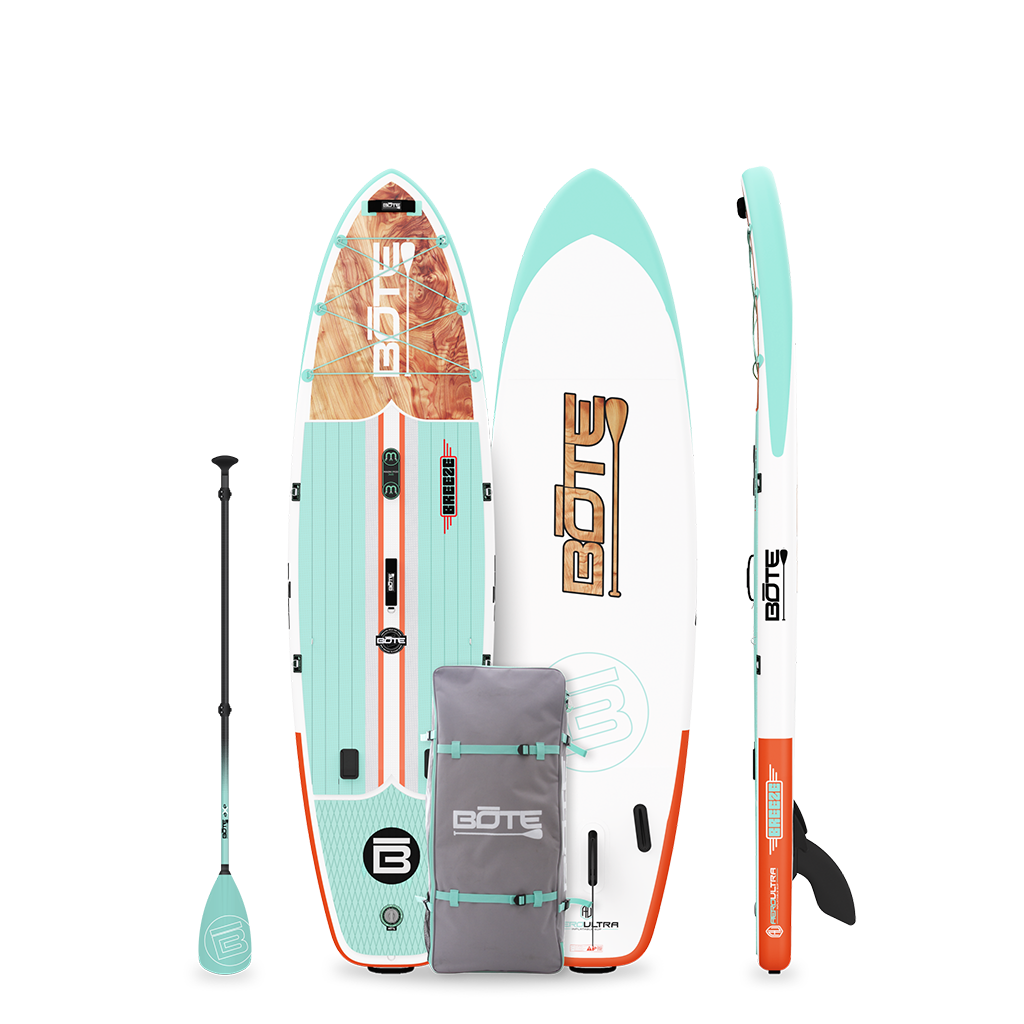
BOTE Breeze Aero
The widest deck here at a full 34″, which translates straight into stability — the easiest board to stand on if balance is your concern. BOTE’s AeroULTRA build keeps it rigid, and the premium finish and accessory ecosystem are a step above. The splurge pick for a planted, confident ride.
What we like
- Widest 34″ deck = most stable
- Premium rigid build
- 2-yr warranty + 30-day guarantee
The catches
- Most expensive pick
- Capacity lower than the iRocker
What actually separates these boards.
The three things that decide whether a paddleboard is worth owning — and how we weighted them.
Rigidity
A board that flexes underfoot is harder to balance on and slower. We favor boards with denser cores (triple-layer or woven drop-stitch) that stay flat at 15 PSI.
Stability vs. weight
Width and volume make a board steady; too much makes it a barge. We look for the sweet spot — stable enough to learn on, light enough to actually carry to the water.
What’s in the box
A cheap board with a junk paddle and a leaky pump isn’t a deal. We weigh the whole package — paddle, pump, leash, fins and bag — not just the board.
We’d rather lose the sale than your trust.
We test boards on real water and publish the cons next to the pros. We earn a commission if you buy through our links — at no extra cost to you — but it never changes our ranking, and we’ll happily point you to the cheaper board when it’s the smarter buy.
How to choose a paddleboard if you’re a bigger paddler.
Stability for heavier riders comes down to three numbers: capacity, width and volume.
First, the important part: you’re almost certainly not too heavy to paddleboard. People well over 250 lb paddle comfortably every day — on the right board. “Too tippy” nearly always means the board is too small, not that you’re too big. Here’s how to get it right.
1How much weight capacity do you need?
A board’s capacity is the total load it carries before it sits low and sluggish — you, your paddle, and any gear or dog. Don’t buy right at your weight; leave headroom so the board floats high and stable.
2Width is your stability
Width does more for stability than anything else. Bigger and taller paddlers should look for 34″ (and up to 36″ for maximum steadiness). The BOTE’s 34″ deck is the most planted here; 32″ boards like the iRocker and Thurso are still very stable for most.
3Volume keeps you high and dry
Volume (in liters) is how much the board floats. Heavier paddlers want high volume so the board rides on the water, not in it. As a guide, a 250 lb paddler wants roughly 250–320+ liters; thicker (6″) boards and wider decks add volume.
4Rigidity matters even more under load
The heavier you are, the more a soft board bows in the middle — which kills stability. Prioritize stiff construction (triple-layer or woven drop-stitch) over a cheap single-layer board.
5Size it to your weight
| Your weight | Board length | Width |
|---|---|---|
| 175 – 225 lb | 11′ – 11′6″ | 32–34″ |
| 225 – 275 lb | 11′6″ – 12′ | 34″ |
| 275 lb and up | 12′+ or extra-wide | 34–36″ |
6When you need an extra-wide or multi-person board
If you’re approaching 300+ lb, or want to carry a kid or cooler too, look at extra-wide (34–36″) or catamaran-style multi-person boards rated to 400–500 lb. They give up a little glide for a lot of stability and capacity.