Best Beginner Surfboards of 2026
We surfed, paddled, and wiped out on dozens of starter boards to find the six that actually get beginners standing up the fastest.
See the top picks →Your first surfboard matters more than almost any other gear choice you’ll make — the right one stacks the deck in your favor with stability, easy paddling, and a forgiving deck that won’t punish every mistake. After years of putting first-timers on borrowed and bought boards up and down the coast, we’ve learned that bigger, wider, and softer beats “cool” every single time. Below are the six beginner surfboards we’d actually hand a friend on day one, plus a no-nonsense buying guide so you can size your own.
At a Glance
| Surfboard | Best for | Specs | Price |
|---|---|---|---|
| Wavestorm 8' Classic Soft-Top | Best Overall for Beginners | 8' | foam soft-top | ~3 fins | best up to ~220 lb rider | $150-$220 |
| South Bay Board Co. Verve 8' | Best Complete Starter Kit | 8' | foam soft-top | ~86 L | includes leash, fins, wax | $280-$360 |
| Thurso Surf Aero 7' | Best Lightweight Foamie | 7' | foam soft-top | ~60 L | lighter, more maneuverable | $240-$300 |
| Catch Surf Odysea Log 8' | Best Step-Up Foamie | 8' | foam soft-top | tri-fin | stiffer high-perf flex | $300-$380 |
| Paragon Surfboards 8'0" Soft-Top | Best for Heavier Beginners | 8' | foam soft-top | wide, high-volume | ~230+ lb rider | $260-$340 |
| Giantex 6' Foam Surfboard | Best Budget / Kids | 6' | foam soft-top | lightweight | kids & small riders | $80-$130 |
The Top Picks, Reviewed
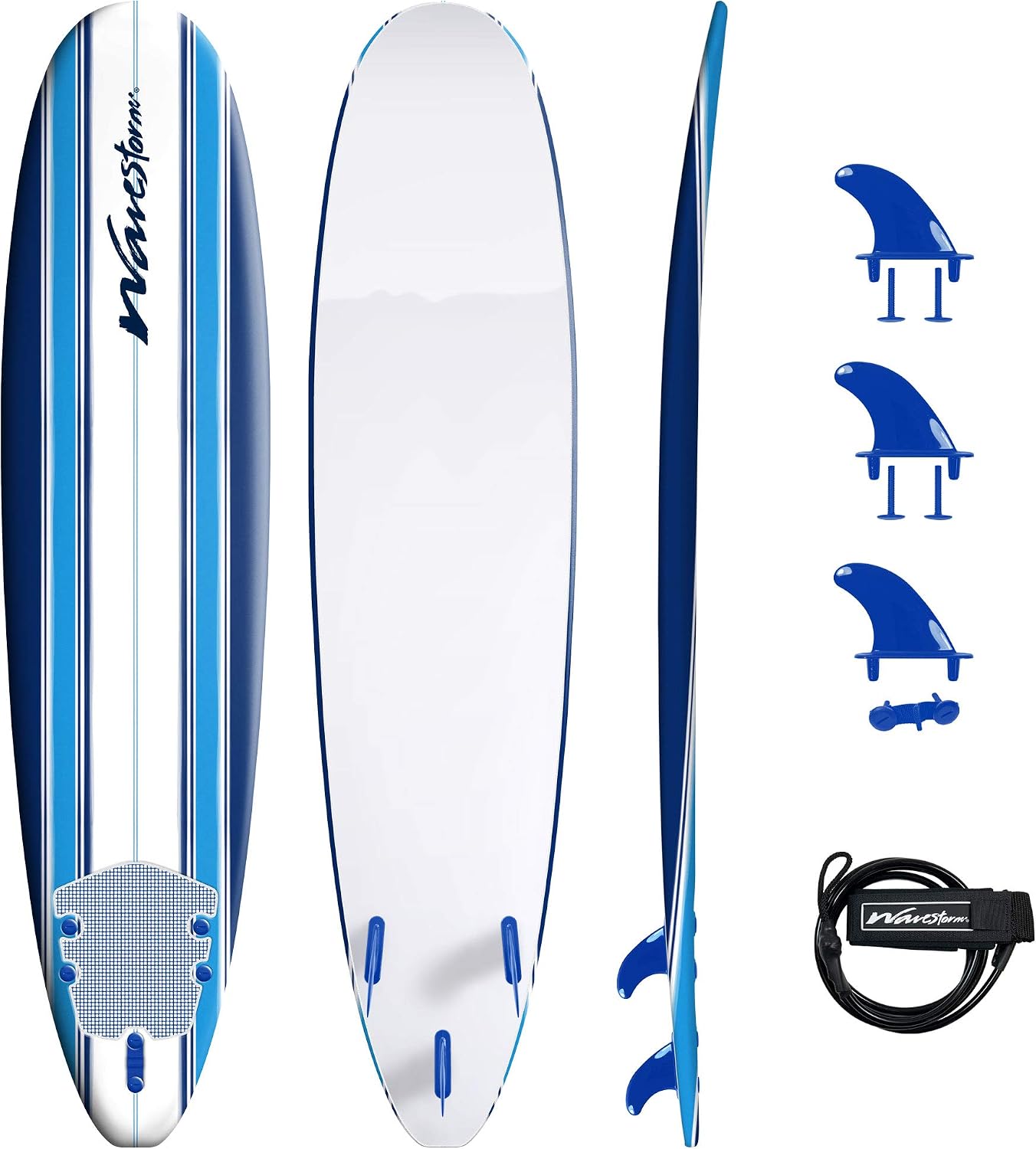
Wavestorm 8' Classic Soft-Top
The Wavestorm is the board that’s launched a million surf careers, and for good reason: it’s huge, floaty, durable, and cheap enough that you won’t cry when it gets dinged. Beginners get to their feet fast on it because the volume and width are wildly forgiving, and the soft deck means falls don’t hurt. It’s not a high-performance board and you’ll outgrow the top-end of it, but as a pure first surfboard it’s the one we recommend most often. If you want a deeper look at the category, see our best soft-top surfboards guide.
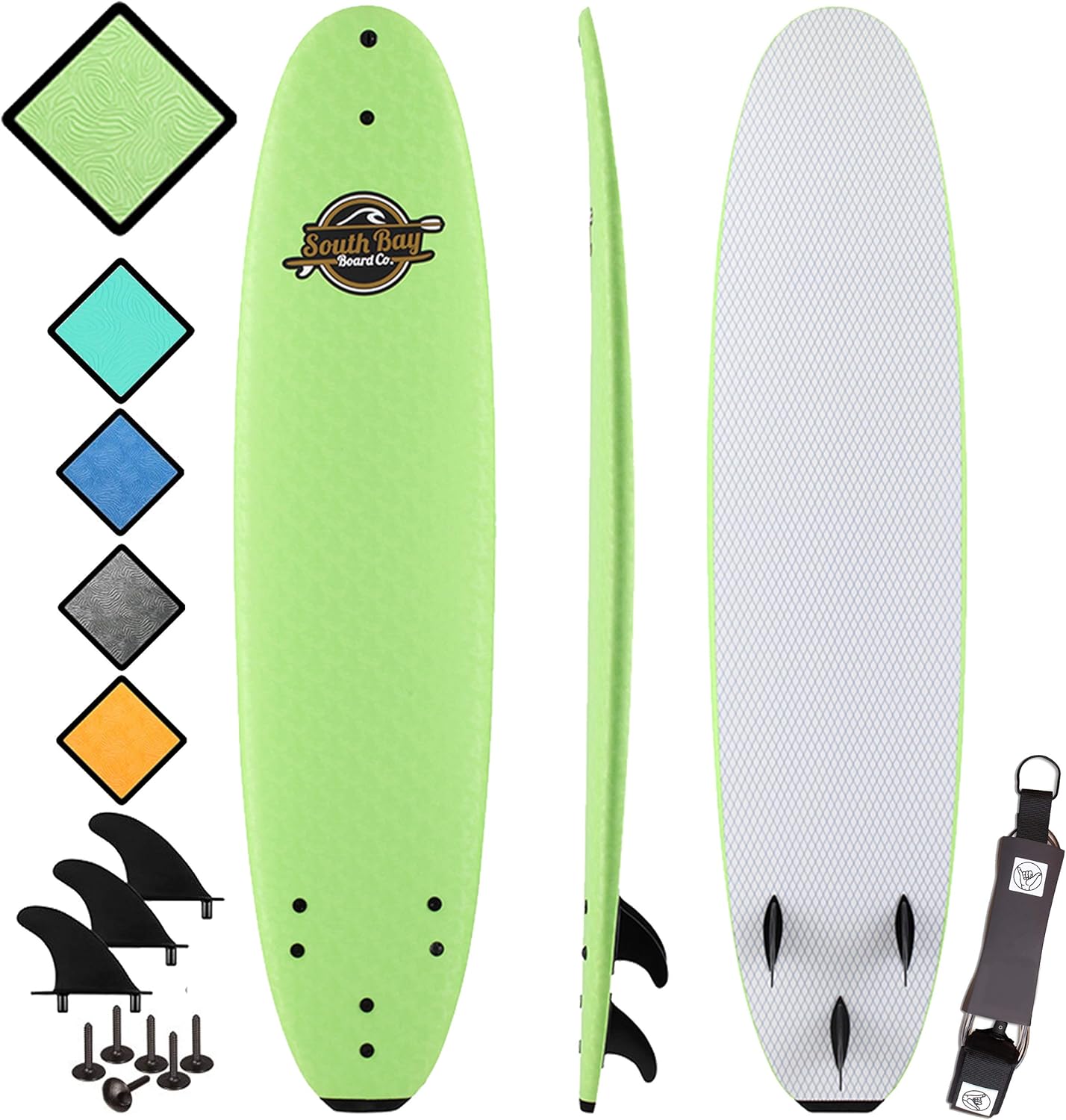
South Bay Board Co. Verve 8'
The Verve comes ready to surf out of the box — leash, fins, and wax included — which removes the “what else do I need to buy?” headache that trips up a lot of first-timers. Build quality is a clear notch above the cheapest foamies, with a stiffer stringer setup that holds its shape better in bigger surf. It costs more than a bare Wavestorm, but for someone who wants one box that contains everything, it’s the cleanest path into the water.
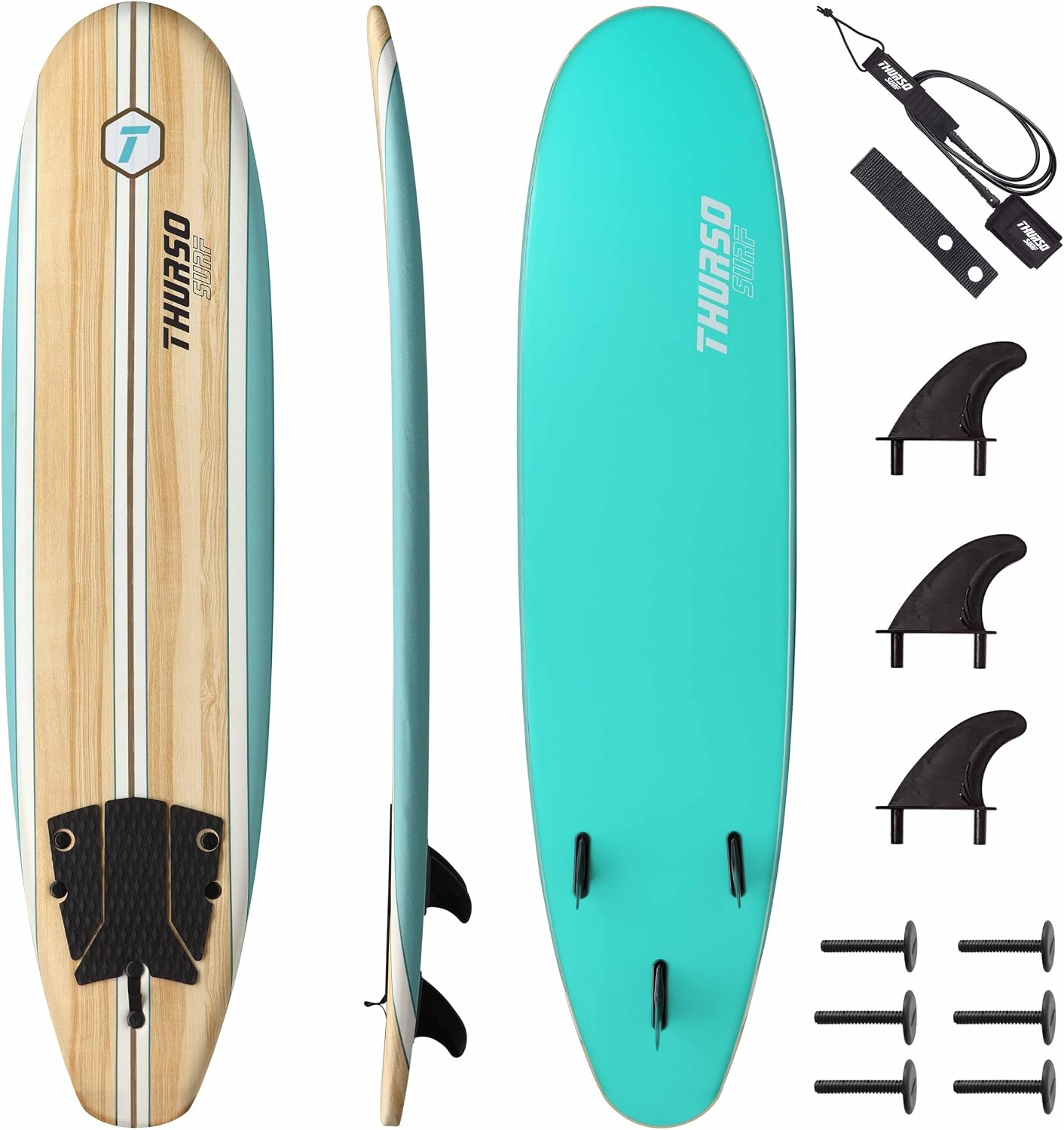
Thurso Surf Aero 7'
At 7 feet the Aero sits in the sweet spot for lighter or smaller adults and teens who find a full 8-footer unwieldy to carry and turn. It’s noticeably lighter than most foamies in this size, so paddling and duck-walking it down the beach is easier, and it turns quicker once you’re past the pop-up stage. We’d steer heavier beginners toward an 8′ for the extra float, but for riders under ~170 lb this is a genuinely fun, progression-friendly board.
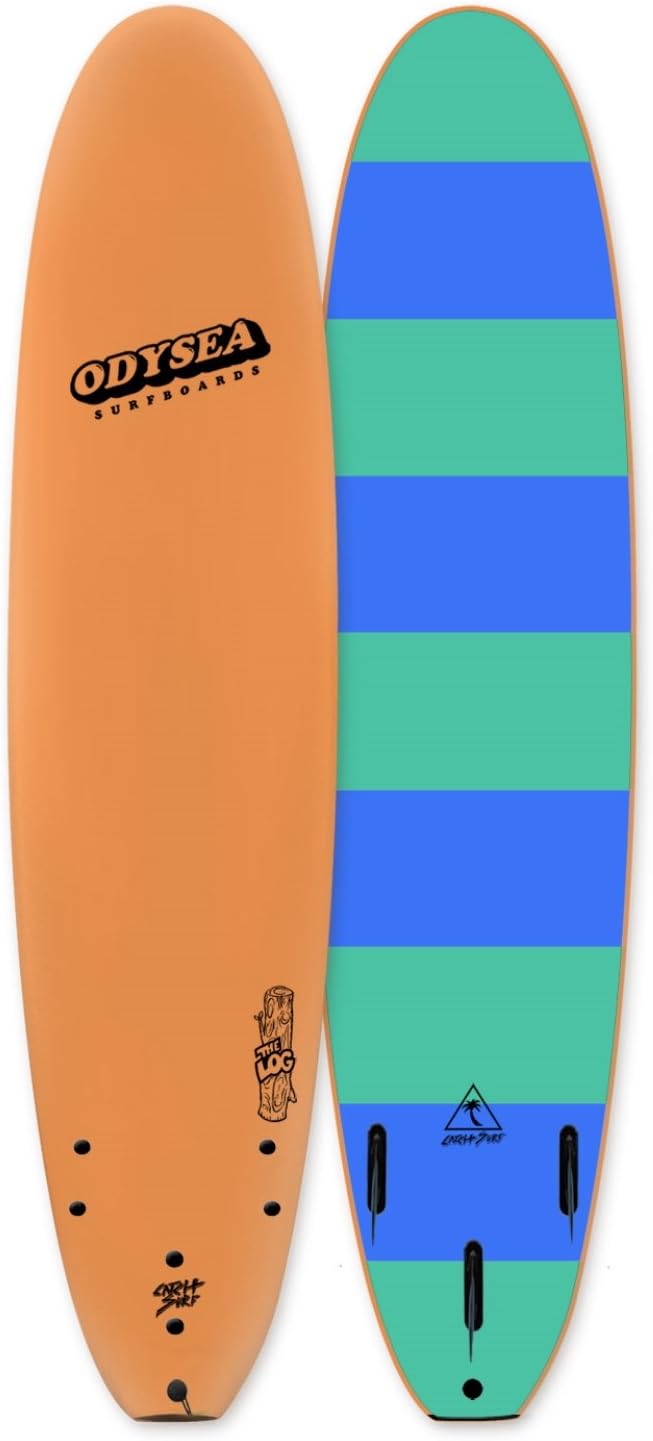
Catch Surf Odysea Log 8'
The Odysea Log is the foamie experienced surfers keep in the quiver for small days — which tells you something. It paddles and catches waves with the ease of a soft-top but has a stiffer, livelier feel than a Wavestorm, so it rewards you as your turns improve. It’s the board to buy if you suspect you’ll progress fast and don’t want to replace your first board in a season. For where it sits in the lineup, our surfboard types explained guide helps.
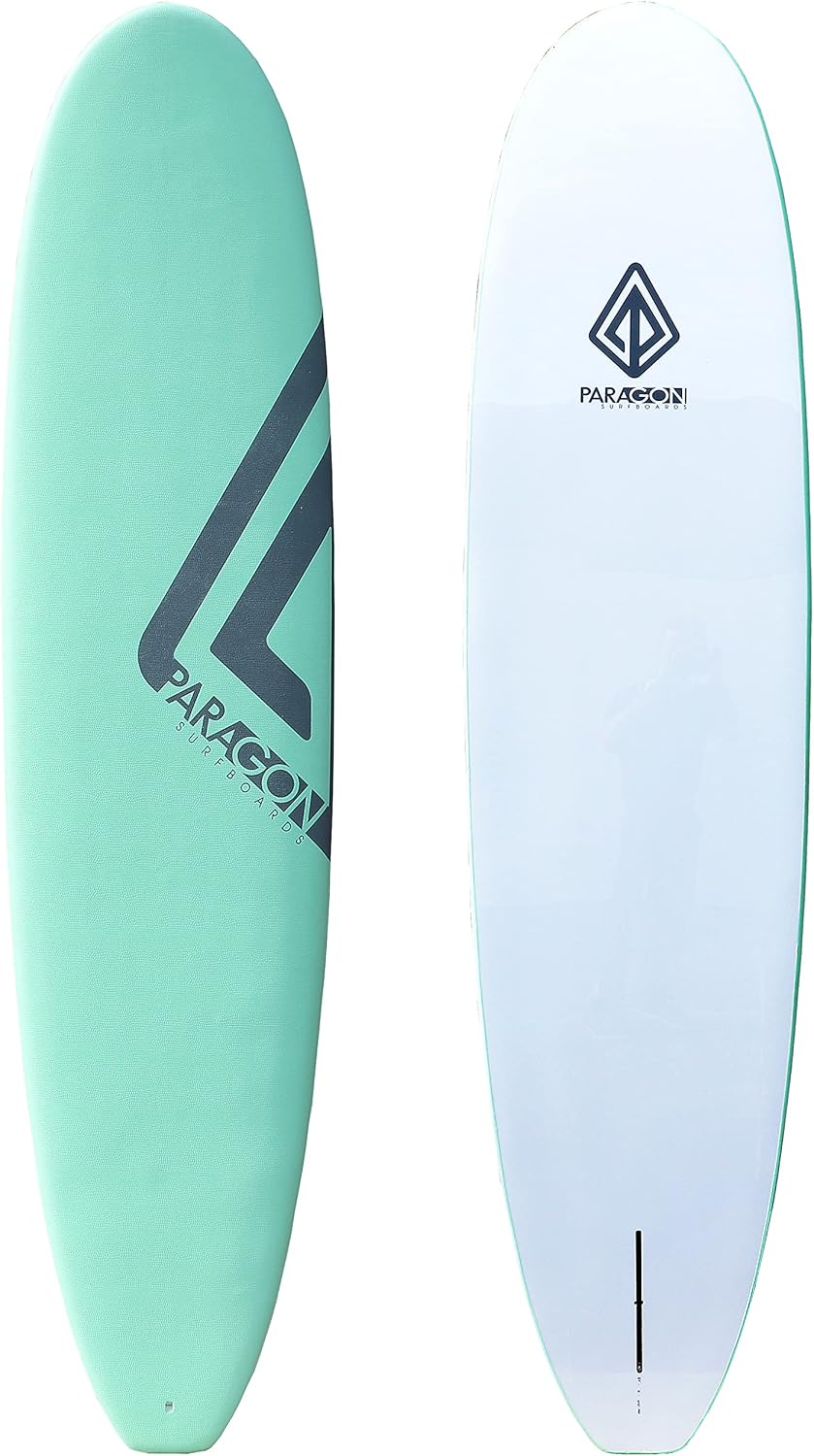
Paragon Surfboards 8'0" Soft-Top
Bigger beginners get short-changed by a lot of “one size” boards, and the Paragon 8’0″ answers that with a wide, thick, high-volume deck that floats heavier riders without sinking. That extra buoyancy is the difference between catching waves and flailing on day one. It’s a stable, planted platform rather than a quick one, which is exactly what a larger first-timer wants. If you’re over ~220 lb, run your numbers through our surfboard size & volume calculator before buying.
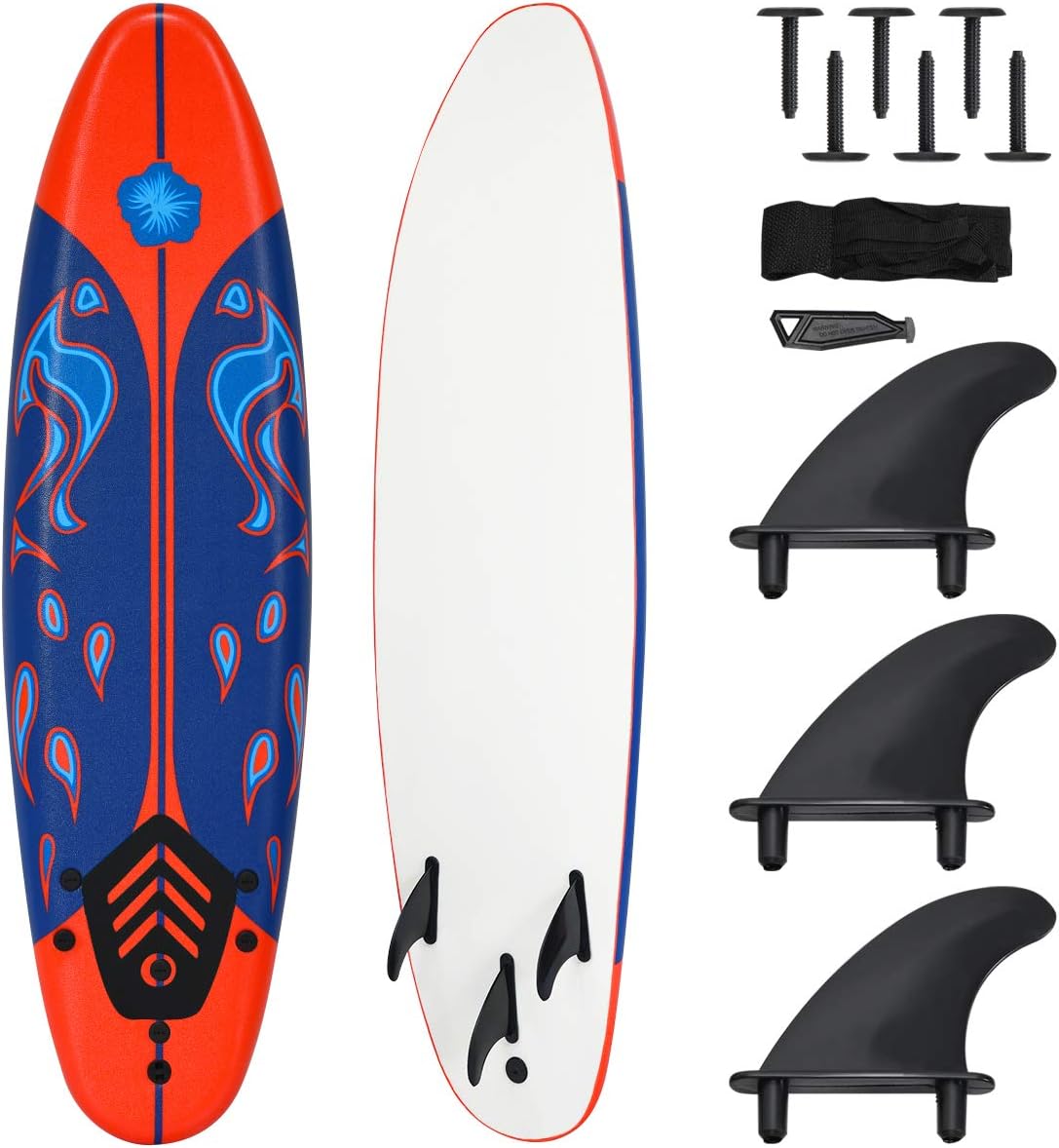
Giantex 6' Foam Surfboard
At 6 feet and well under a hundred-and-something dollars, the Giantex is built for kids, lightweight teens, and anyone who wants the cheapest possible way to find out if surfing sticks. It’s small for an adult — most grown beginners will want more length and float — but for a child or a sub-130 lb rider in gentle whitewater it does the job. Treat it as a fun, low-stakes entry point rather than a board you’ll keep for years.
How we chose and how we test
We don’t rank boards from a spreadsheet. Every board on this list has been ridden by us or by beginners we’ve personally coached in real, messy, beachbreak surf — the conditions you’ll actually learn in. We pay attention to three things above all: how easily a complete beginner catches their first waves, how stable the board feels under wobbly feet during the pop-up, and how durable it stays after a season of being dropped, dinged, and dragged across parking lots.
- Paddle & wave-catching: can a first-timer get into waves without perfect timing?
- Stability: does the board stay flat and forgiving while you find your feet?
- Durability & value: does it survive the learning phase without falling apart or breaking the bank?
Boards that look cool but punish mistakes don’t make the cut, no matter how good the marketing is.
What size beginner surfboard do I need? (The volume rule)
This is the question that matters most, and the answer is almost always “bigger than you think.” Surfboards are measured in liters of volume, and volume is what floats you and helps you paddle into waves early. As a beginner, you want plenty of it.
A simple starting formula: take your bodyweight in pounds and multiply by 0.40 to 0.45 to get a rough minimum volume in liters. So a 180 lb beginner wants roughly 72–81 liters at minimum. Most beginner soft-tops in the 8′ range land in the 80–90 liter zone, which is exactly why they work so well.
Want exact numbers for your weight and ability? Plug them into our surfboard size chart & volume calculator for a personalized recommendation.
Soft-top vs hard board for beginners
Nearly every board we recommend above is a soft-top (foamie), and that’s deliberate. For a beginner, a foam board has three big advantages over a traditional hard (epoxy or fiberglass) board:
- It’s safer. A soft foam deck and rails hurt a lot less when the board hits you — and as a beginner, it will hit you.
- It floats more. Foamies tend to carry generous volume, making waves easier to catch.
- It’s tougher and cheaper. You can ding it, drop it, and learn on it without precious-object anxiety.
Hard boards turn sharper and feel livelier, but that performance is wasted on a true beginner and the steeper, slipperier ride slows down learning. Start soft, progress to hard. For the full breakdown of board construction, read our foam vs epoxy vs fiberglass guide.
Length, width and thickness explained
Volume comes from three dimensions working together, and as a beginner you want all three generous:
- Length (measured in feet/inches): longer boards paddle faster and stay more stable. For most adult beginners, 8′ is the sweet spot — long enough to be easy, short enough to manage.
- Width (measured at the widest point): a wider board is more stable side-to-side, which makes standing up far easier. Beginner boards are deliberately wide (often 22″+).
- Thickness: more thickness means more float. A thick deck keeps you riding high on the water rather than sinking.
The takeaway: a long, wide, thick board is a forgiving board. Sleek and thin looks fast but feels like trying to balance on a knife. Save that for later.
How much should you spend on a first board?
You do not need to spend a fortune to learn. A bare soft-top like the Wavestorm runs roughly $150–$220 and is genuinely all most beginners need. Complete kits with leash and fins included push toward $300–$380, and that convenience is worth it for some people. Budget foamies for kids can be had for under $130.
Our honest advice: spend in the $150–$300 range for an adult first board. Below that you risk flimsy construction; above it you’re paying for performance you can’t use yet. Buying used is fine too — soft-tops are durable, and a dinged foamie still surfs. Surf nonprofits like Surfrider Foundation are also a good reminder that taking care of the ocean you’re learning in matters as much as the gear you buy.
Frequently Asked Questions
What size surfboard should a beginner get?
Most adult beginners do best on an 8′ soft-top with plenty of volume — typically 80–90 liters. As a quick rule, multiply your bodyweight in pounds by 0.40–0.45 to find your minimum liters, then round up. A wider, thicker, longer board is more stable and catches waves more easily, so when you’re unsure, size up. You can always move to a smaller board once your skills improve.
Should beginners start on a foam or hard board?
Start on a foam soft-top, hands down. Foamies are safer when the board hits you, carry more float so waves are easier to catch, and are far more durable and forgiving of the dings and drops that come with learning. Hard epoxy and fiberglass boards turn sharper but are slipperier, less buoyant, and punish mistakes — performance a true beginner simply can’t use yet. Progress to a hard board once you’re confidently riding waves.
What's the best surfboard for a complete beginner?
For most complete beginners, the Wavestorm 8′ Classic Soft-Top is the best all-around pick: it’s big, stable, floaty, durable, and inexpensive, so you’ll get to your feet fast without breaking the bank. If you want everything in one box, the South Bay Verve 8′ kit includes a leash and fins. Heavier riders should look at a wider, higher-volume 8′ board for the extra float they need.
How much should I spend on a first surfboard?
Plan on roughly $150–$300 for a solid adult beginner soft-top. A bare Wavestorm sits near the bottom of that range and is all most people need; complete starter kits with leash and fins run $300–$380. Spending less risks flimsy construction, while spending more buys performance you can’t use yet. Buying a used foamie is also a smart, budget-friendly option since they hold up well.
Is a longer board easier to surf?
For beginners, yes. Longer boards paddle faster, carry more volume, and offer a bigger, more stable platform to stand on, which makes catching waves and popping up much easier. That’s why we steer most adult first-timers toward an 8′ board. The tradeoff is maneuverability — long boards turn slowly — but quick turning isn’t something you need on day one. Easy wave-catching and stability matter far more early on.
Can you learn on a shortboard?
You can, but you’ll make it much harder on yourself. Shortboards have very little volume, so they’re slow to paddle, hard to catch waves on, and extremely unstable for someone still learning to balance. Most people who try to learn on a shortboard spend weeks frustrated. Start on a long, high-volume soft-top, build the fundamentals, and size down later — your progression will be dramatically faster. For more, see our how to surf for beginners guide.