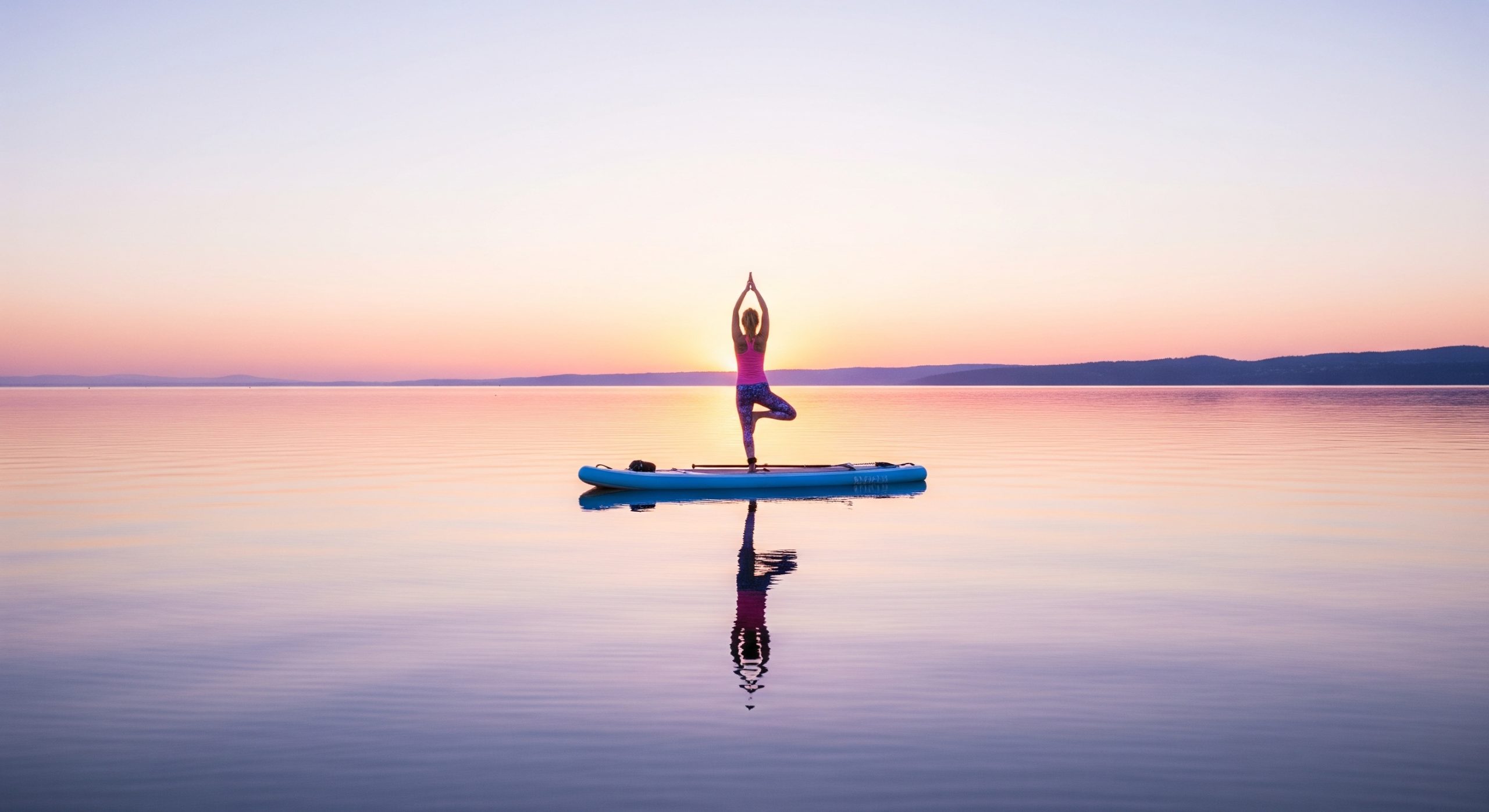
The Best Paddleboards for Yoga (2026)
SUP yoga lives or dies on stability. These are the wide, soft-decked, rock-steady boards that let you flow through poses without a wobble — for every budget.
You don’t need a board labelled “yoga” to do yoga on the water — but you do need the right shape. Width and a soft, full-length deck are what turn a paddleboard into a steady, comfortable yoga mat that floats. These three nail it, from a premium 34″ platform to a budget board that still holds a pose.
The yoga picks, side by side.
Ranked for width, deck comfort and steadiness in a pose.
| Board | Best for | Width | Capacity | Price | |
|---|---|---|---|---|---|
| BOTE Breeze Aero Best for yoga | The steadiest, most comfortable platform | 34″ | ~315 lb | ~$799 | Check price → |
| iRocker All-Around 11′ Most versatile | Yoga plus everyday paddling | 32″ | 435 lb | ~$529 | Check price → |
| FunWater Cruise 11′ Best budget yoga | Flowing on a tight budget | 33″ | ~330 lb | ~$231 | Check price → |
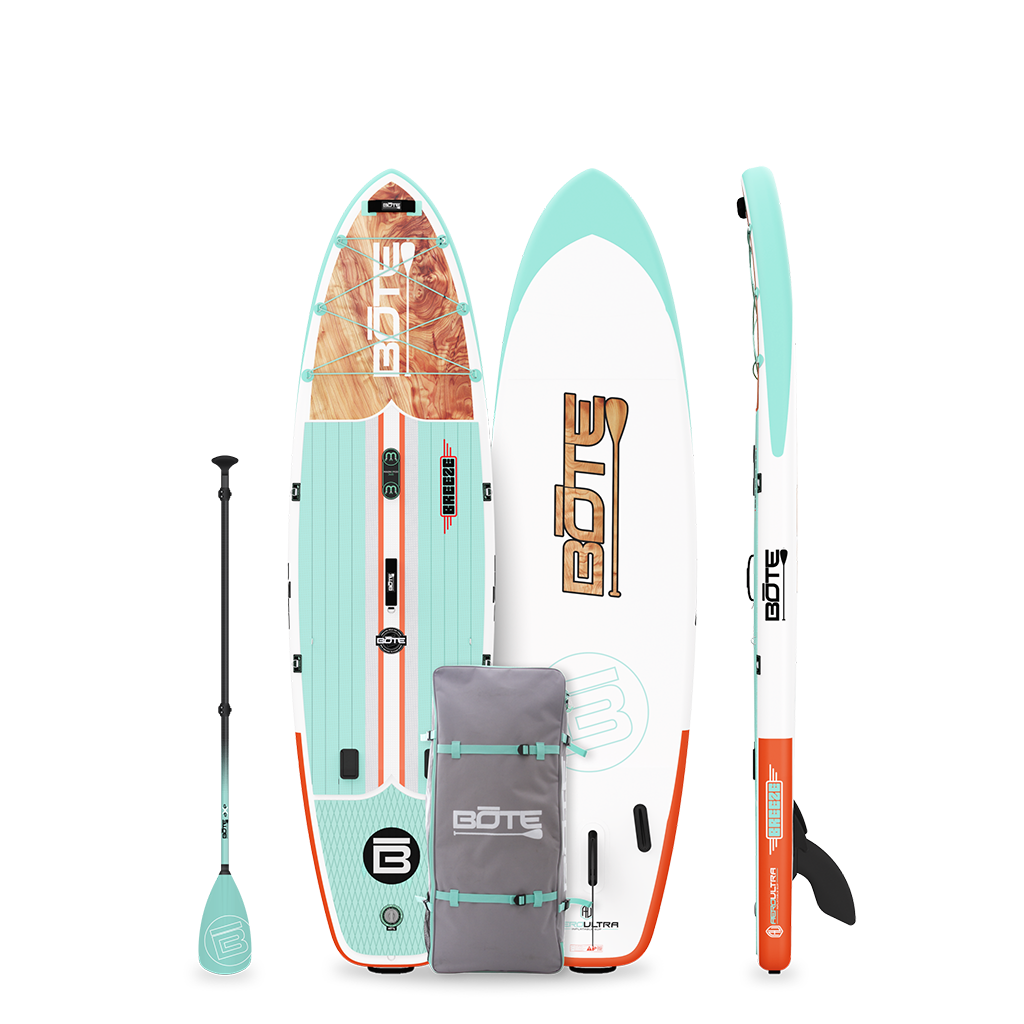
BOTE Breeze Aero
At a full 34″ wide with a soft, grippy full-length deck, the Breeze Aero is the most planted, comfortable yoga platform of our picks — it barely flinches as you shift through poses. BOTE’s AeroULTRA build keeps it rigid (no mid-board sag under a plank), and the fit and finish are a clear step above. The board to get if SUP yoga is your main thing.
What we like
- Widest 34″ deck = rock steady
- Soft, comfortable full-length pad
- Rigid build, premium finish
The catches
- The priciest pick here
- You pay partly for the brand
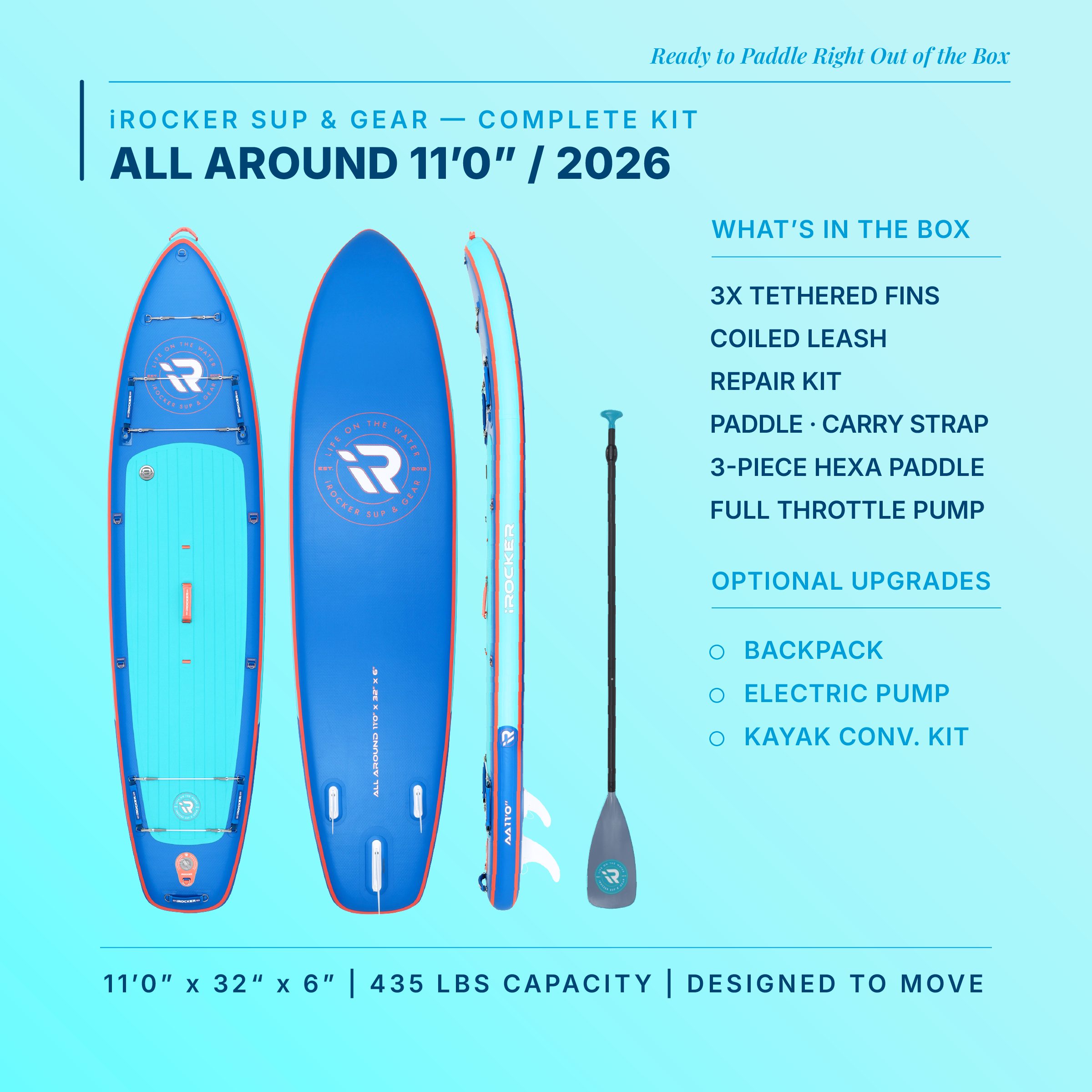
iRocker All-Around 11′
If you want one board for yoga and everyday paddling, this is it. At 32″ it’s a touch narrower than the BOTE but still very stable, and its huge 435 lb capacity and stiff triple-layer build keep it steady and flat under a pose. You flow at sunrise, then go cruise the bay after — without owning two boards.
What we like
- Very stable, stiff and flat
- Doubles as a great all-rounder
- Huge 435 lb capacity
The catches
- 32″ vs the BOTE’s 34″
- Not a dedicated yoga deck
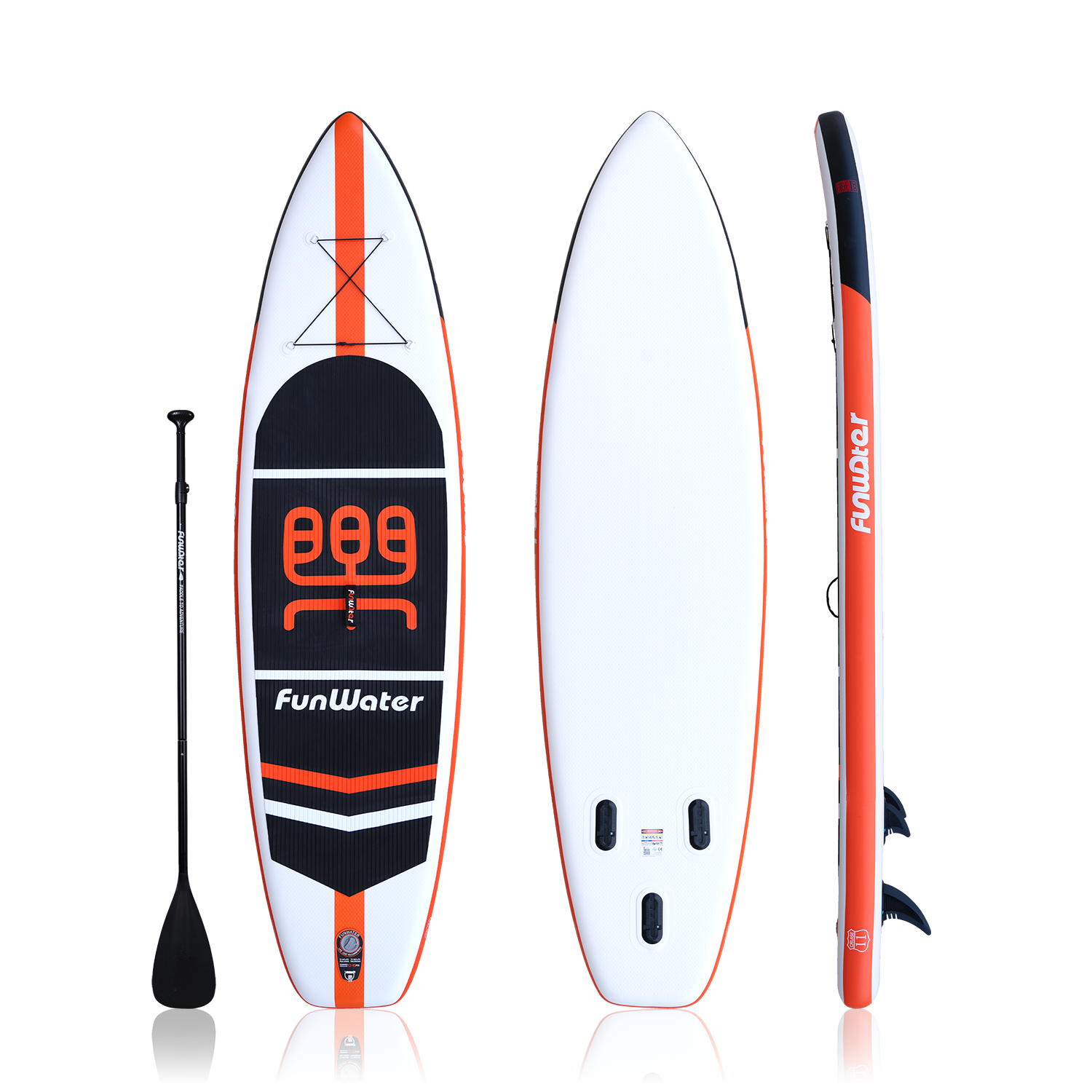
FunWater Cruise 11′
A surprisingly capable yoga board for the money. At 33″ wide with a full traction pad, the Cruise is stable enough to hold most poses, and it costs a fraction of a dedicated yoga SUP. You give up some stiffness, so it flexes a little more under load — but for trying SUP yoga without a big spend, it’s a great start.
What we like
- Cheapest way into SUP yoga
- 33″ wide, full traction pad
- Complete kit included
The catches
- Flexier than the premium boards
- Narrower than a dedicated yoga deck
What actually separates these boards.
The three things that decide whether a paddleboard is worth owning — and how we weighted them.
Rigidity
A board that flexes underfoot is harder to balance on and slower. We favor boards with denser cores (triple-layer or woven drop-stitch) that stay flat at 15 PSI.
Stability vs. weight
Width and volume make a board steady; too much makes it a barge. We look for the sweet spot — stable enough to learn on, light enough to actually carry to the water.
What’s in the box
A cheap board with a junk paddle and a leaky pump isn’t a deal. We weigh the whole package — paddle, pump, leash, fins and bag — not just the board.
We’d rather lose the sale than your trust.
We test boards on real water and publish the cons next to the pros. We earn a commission if you buy through our links — at no extra cost to you — but it never changes our ranking, and we’ll happily point you to the cheaper board when it’s the smarter buy.
How to choose a paddleboard for yoga.
A great yoga SUP is really just a steady, comfortable mat that floats. Here’s what makes one.
You can practice yoga on most stable boards, but a few features make the difference between a relaxing flow and a constant fight for balance.
1Width is everything
Stability comes from width, and yoga demands more of it than paddling does — you’re shifting your weight, balancing on one leg, going upside down. Look for 34″ if yoga is your priority (the BOTE), and at least 32″ otherwise. The wider the deck, the steadier you’ll feel in a pose.
2A soft, full-length deck pad
Your hands, knees, forearms and feet spend a lot of time on the deck, so a thick, soft, full-length traction pad matters far more than on a cruising board. A pad that only covers the standing area leaves you on bare PVC during half your poses.
3Stability over speed
Forget pointed touring noses and narrow race shapes — for yoga you want a wide, flat, planing-style board that sits calmly on the water. A high-volume, rigid board sits high and flat, which keeps you balanced.
4Length & an anchor point
You want enough length to lie down comfortably (11′ is plenty for most). And a D-ring or two lets you clip on an anchor — the single best upgrade for SUP yoga, so you stay in one calm spot instead of drifting mid-flow.
5Why inflatable wins for yoga
Inflatable boards are softer and more forgiving underfoot than hard boards — kinder on joints during floor poses — and they store and travel easily for studio-to-lake days. For yoga specifically, a good iSUP is the obvious choice.