Wavestorm 8' Classic Soft-Top Review
The Wavestorm 8' is the single best first surfboard you can buy — absurdly forgiving, genuinely fun in small surf, and priced so low the risk of regret is nearly zero. It won't grow with you forever, but it will get you standing up faster than almost anything else.
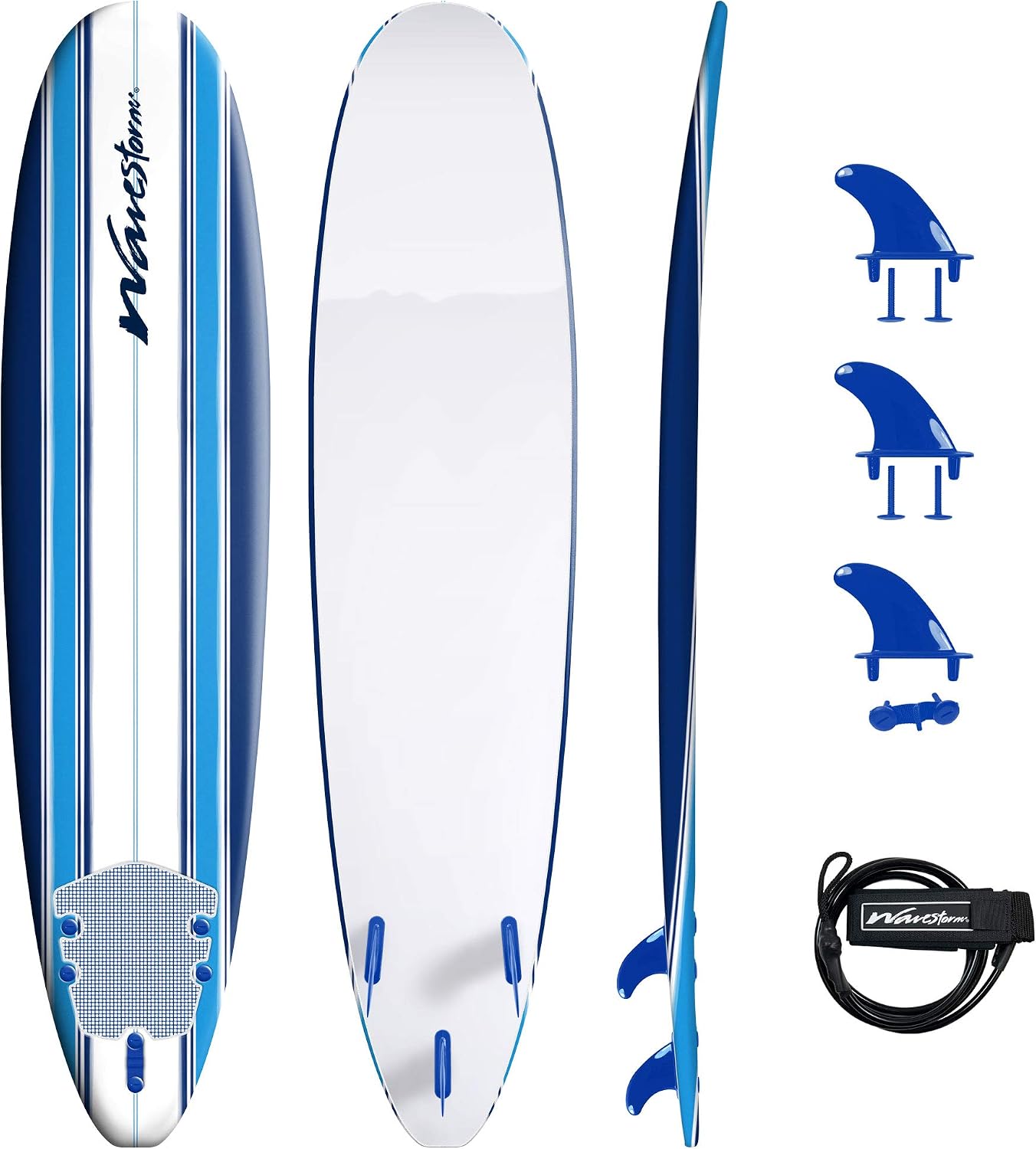
We paddled out on it at a beach break with waist-high whitewater and again on a clean chest-high day with lined-up sets. The Wavestorm 8′ Classic Soft-Top has earned its reputation as the best-selling surfboard in the US — not through marketing, but through sheer results. Pick one up at Costco for around $320, and you have everything you need to start surfing.
This is a beginner surfboard in the truest sense: wide, thick, stable, and slow enough that your brain can actually process what’s happening under your feet. That’s not a knock — that’s the whole point. Catching waves is hard. A board this forgiving removes most of the physical barriers and lets you focus on the technique.
We’re going to be straight with you: we also know experienced surfers who keep one of these around for lazy days and teaching friends. It earns its place. Here’s what we found after serious time on the water.
Wavestorm 8' Classic specs
| Length | 8′ |
| Type | Soft-top / foam |
| Fins | 3 (thruster) |
| Rider | Up to ~200 lb |
| Skill | Beginner |
| Best for | First board / catching whitewater |
On the water — stability & wave-catching
The first thing you notice paddling out is how much foam is under you. At 8 feet long and a generous width, the Wavestorm sits high on the water and paddles with very little effort. You don’t fight it. For beginner surfers, that ease of paddling is huge — fatigue is one of the biggest reasons new surfers quit before they get the hang of it.
Wave-catching is where this board genuinely shines. We caught waves we had no business catching. The volume and length mean you’re generating speed well before the wave reaches you, and the soft, forgiving rails don’t punish a sloppy angle. On whitewater — the broken, foamy waves right near shore — the Wavestorm is nearly foolproof. Small green unbroken waves are totally within reach once you have the basics down.
The three-fin thruster setup gives you enough directional control to feel the board respond to your weight shifts without being twitchy. It’s not a performance board — you won’t be snapping turns or pulling off cutbacks — but it tracks well, goes where you lean, and stays under your feet when you’re getting used to the ride. For the surf it’s designed for (waist-high and under, slower mushy waves), it handles exactly as it should.
Construction & durability
The Wavestorm uses an EPS (expanded polystyrene) foam core — the same lightweight, buoyant material in most modern soft-tops — wrapped in a soft foam deck and an HDPE slick plastic bottom. Three wooden stringers run tip to tail, adding rigidity and preventing the board from flexing so much it loses drive. The whole package is light enough to carry under one arm.
The soft foam deck is the safety feature that makes this board beginner-appropriate. When you (and you will) fall and the board comes back toward you, the deck and rails are foam rather than fiberglass. That matters. ISA (International Surfing Association) recommends soft-top boards specifically for learn-to-surf programs because of the reduced injury risk to the rider and to others nearby.
Durability is reasonable, not exceptional. The foam deck will dent with use — pressure dings from your knees and feet will show up after a season of regular surfing. The HDPE bottom handles fin chops on the sand better than a glass board would. The fin boxes (FCS-style plugs) can loosen over time if you’re not careful tightening them. With basic care — rinse it with fresh water after sessions, store it out of the sun — a Wavestorm held together well through a full summer of twice-weekly use in our experience. It’s not going to last a decade, but it will outlast the beginner phase for most new surfers.
Sizing & who it fits
The 8-foot Classic is Wavestorm’s sweet spot for most adult beginners. Wavestorm rates it for riders up to about 200 pounds, and that tracks with our experience — heavier riders toward that limit will still float well and paddle fine, though the board will sit a touch lower in the water. Riders significantly over 200 lb may want to look at the 9′ or 10′ options for more volume and stability.
For kids and lighter teens, the 8′ is oversized in a good way — it’s easier to manage in the water than on land, and the extra length helps them catch more waves. If you’re a shorter adult (under 5’4″) and already intermediate, it might feel too long and cumbersome for the turns you want to make. But for learning? More board is almost always better.
One honest fit note: the leash that comes in the box is serviceable but not the best. We’d suggest picking up a quality 8′ surf leash separately if you plan to surf regularly. It’s a $20 upgrade that pays off.
If you’re trying to decide between the Wavestorm and a hard board as a first purchase, we cover the full comparison in our best soft-top surfboards guide and give the broader picture in our best surfboards overview. The short version: start on foam, graduate to glass when you’re consistently riding waves from the outside.
Who it's for (and who should skip it)
The Wavestorm 8′ is for anyone who wants to learn to surf and doesn’t want to spend $700+ on a board they might use four times. It’s for beginners of all ages, casual beach-week surfers, and parents teaching their kids. It’s for the surfer who wants something mellow and safe to lend to a friend without holding their breath. If you just want to ride waves and have fun, this board does that job better than the price tag suggests.
Who should skip it: If you’ve already been surfing for a year or two and you’re linking turns on a 7′ funboard, the Wavestorm will feel like a step backward. It’s not designed for steeper, faster waves or performance surfing. The same thickness and volume that makes it easy to ride small waves makes it hard to duck-dive and awkward on anything with real power behind it. Intermediate and advanced surfers should look at a more performance-oriented option in our best longboard surfboards guide if they want to stay in the longboard/funboard range.
Also worth being clear: this is not a board to grow into for very long. Most surfers outgrow the Wavestorm within one to two seasons of consistent surfing. That’s fine — at $320, it served its purpose. Think of it as tuition, not a long-term investment.
What we liked
- Exceptional value at ~$320 — lowest barrier to entry of any quality surfboard
- Incredibly stable and forgiving; catches waves beginners would miss on any other board
- Soft foam deck and rails reduce injury risk during falls and wipeouts
- Three-fin thruster setup gives enough directional control to feel real surfing
- EPS core with wooden stringers keeps it light and resistant to snapping
- Wide availability (Costco, online) makes replacement and resale easy
The catches
- Not suitable for steep, fast, or powerful waves — designed for small, slow surf only
- Foam deck develops pressure dings and wear after a full season of regular use
- Most surfers outgrow it within 1-2 seasons, limiting long-term value
- Included leash is basic and worth upgrading before your first real session
Frequently Asked Questions
Is the Wavestorm good for beginners?
Yes — it’s arguably the best beginner surfboard on the market at any price. The 8′ length and generous foam volume make it stable enough to stand up on, and the soft deck reduces the sting of the inevitable wipeouts. We’ve seen complete beginners catch their first waves on a Wavestorm in a single session. The low price also removes the financial pressure that makes learning stressful on an expensive board.
What size rider can ride an 8ft Wavestorm?
Wavestorm rates the 8′ Classic for riders up to approximately 200 pounds, and our on-water testing confirms that’s a reasonable ceiling. Riders approaching 200 lb will float fine and paddle well, though you’ll sit slightly lower in the water than a lighter rider. If you’re significantly above 200 lb, consider the Wavestorm 9′ or 10′ for more buoyancy and a more comfortable ride. On the lighter end, kids and teens will find the board spacious and very easy to ride — more volume is a feature when you’re learning.
Can you surf real waves on a Wavestorm?
Yes, within limits. The Wavestorm handles whitewater (broken waves near shore) and small, slow-rolling green waves up to about chest-high very well. It’s less suited — and honestly kind of uncomfortable — on fast, steep, or powerful waves. The thickness that makes it so forgiving in small surf makes it hard to duck-dive and slow to respond on bigger days. Most beginner surfers won’t encounter waves beyond its capability for a long time, so it’s genuinely functional surf equipment, not just a toy.
Is a Wavestorm worth it compared to a hard board?
For a first board, almost certainly yes. Hard (fiberglass/epoxy) boards in the beginner-friendly longboard range typically cost $500–$900+, ding easily, and are less forgiving on falls. The Wavestorm at ~$320 gives you a safer, more forgiving learning experience at less than half the cost. The trade-off is durability and progression ceiling — you’ll outgrow it sooner and it won’t hold up as long as a well-made glass board. But for the learning phase, the Wavestorm is almost always the smarter financial and practical choice.
How long does a Wavestorm last?
With basic care, expect one to three solid seasons of regular use. Rinse it with fresh water after every session, keep it out of direct sun when not in use (UV degrades the foam and delaminate the deck over time), and store it flat or on a rack — not leaned against a wall where it can warp. The foam deck will develop pressure dings from knees and feet, and the fin boxes can loosen with heavy use. None of that is fatal to the board’s function, but the Wavestorm is not a board you’ll hand down to your kids. It’s a learning tool, and it holds up long enough to do that job well.