Wilderness Systems Tsunami 145 Review
A true sea kayak for paddlers who are serious about open water — and ready to pay for it.
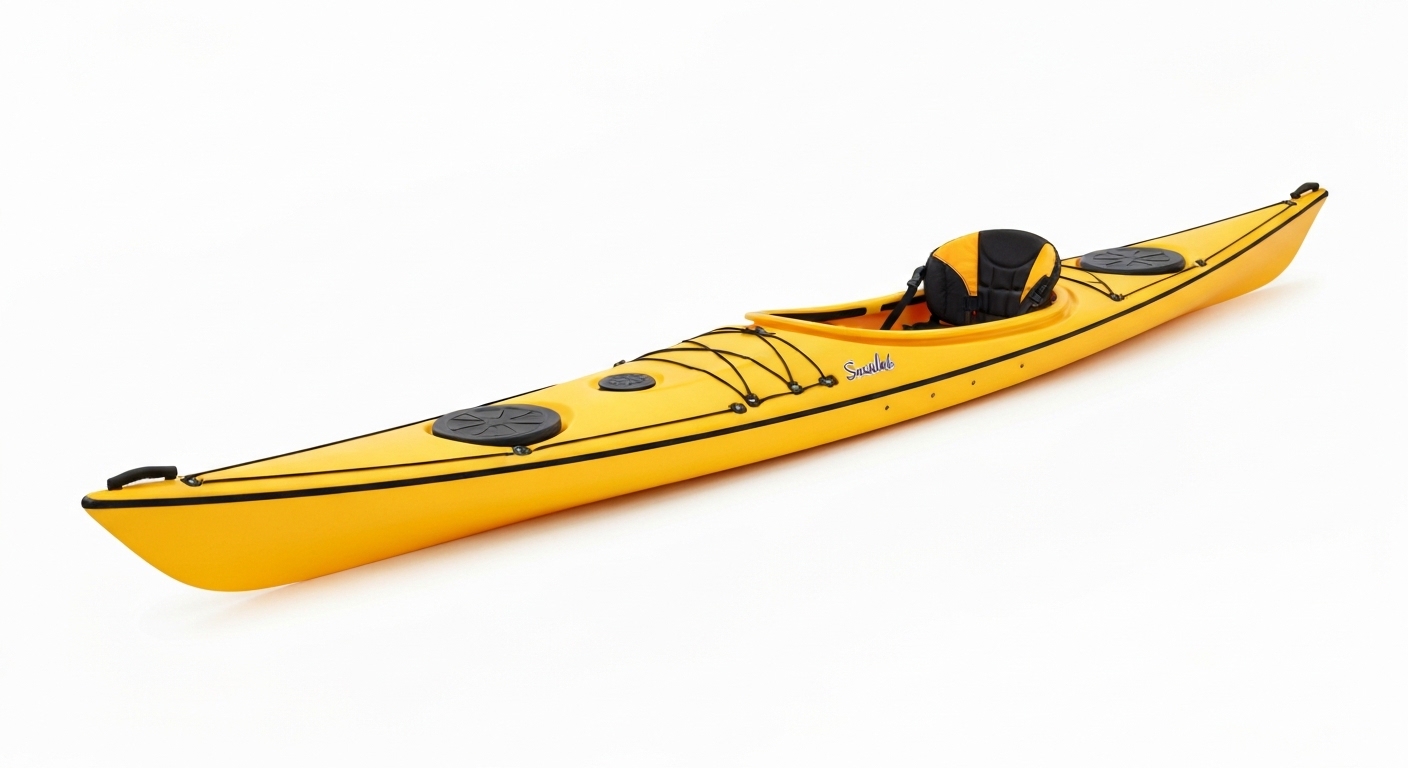
The Wilderness Systems Tsunami 145 is one of the best all-around touring kayaks you can buy. It’s fast, it tracks like it’s on rails, the Phase 3 AirPro seat is genuinely comfortable for all-day paddles, and the sealed bulkheads make it safe and capable on open water or multi-day trips. The honest caveat: at around $1,600, nearly 15 feet long, and with a hull that demands some skill, this is not a boat for casual Saturday paddlers. If you’re a dedicated tourer who wants a kayak that’ll grow with you for years, the Tsunami 145 earns its price. If you mostly do calm flatwater day trips, there are better fits — check our best recreational kayaks roundup instead.
Specs & Build
The Tsunami 145 sits in Wilderness Systems’ touring lineup as the go-to choice for intermediate-to-advanced paddlers who want serious open-water capability without stepping into a dedicated expedition hull. It’s available in both high-density polyethylene (HV, standard) and the lighter Thermoform ABS construction. Here’s what you’re working with:
| Spec | Detail |
|---|---|
| Length | 14 ft 6 in (4.42 m) |
| Width | 23.5 in (59.7 cm) |
| Weight (HDP) | ~55 lbs (24.9 kg) |
| Weight (Thermoform) | ~47 lbs (21.3 kg) |
| Max Capacity | 325 lbs (147.4 kg) |
| Cockpit Opening | 17.5 x 30.5 in |
| Seat | Phase 3 AirPro |
| Rudder | Included (deployable) |
| Bulkheads/Hatches | Bow + stern, sealed |
| Price (approx.) | $1,599–$1,799 |
The build quality is what you’d expect from Wilderness Systems at this price point: clean welds, solid outfitting, and hardware that doesn’t rattle loose after a season. The thermoform version is worth the modest upcharge if you’re loading it onto a car frequently — shaving 8 lbs matters more than you’d think at the put-in.
On the Water
This is where the Tsunami 145 justifies its price tag. The hull is designed for speed and directional stability, and it delivers on both. On flat water, the boat glides efficiently with minimal paddle effort once you’re up to cruising pace. The 23.5-inch beam keeps initial stability confident enough for newer sea kayakers while still allowing the secondary stability that experienced paddlers rely on when things get choppy.
Tracking is a genuine strength. The Tsunami 145 holds a line well on its own, and when you add the included rudder, you can hold course in crosswinds with barely a correction stroke. The rudder deploys smoothly with a foot pedal and stows cleanly when you don’t need it — it’s not an afterthought add-on, it’s integrated well into the hull design.
The Phase 3 AirPro seat deserves its own mention. It’s one of the most dialed-in seats in production kayaking. The backrest adjusts independently from the seat pan, both tilt and lumbar support are tunable, and the foam is dense enough to stay comfortable on 4–6 hour paddles. If you’ve ever ended a long day on the water with a sore back from a cheap foam pad, you’ll notice the difference immediately.
Sealed bulkheads fore and aft give you two dry storage compartments and meaningful floatation safety — if you swim in rough water, the boat stays on the surface and you can re-enter and pump it out. The hatches use a neoprene seal under a hard cover, which is reliable in real conditions. Storage capacity is practical for multi-day trips: you can fit a weekend’s worth of gear if you pack smart.
Where the boat has a learning curve is in its responsiveness. At 14’6″, the Tsunami 145 is more sensitive to body position and edge control than a shorter recreational hull. Beginners who haven’t learned to brace or edge will find it less forgiving than, say, a 12-foot recreational sit-inside. That’s not a flaw — it’s the nature of a performance touring hull — but it’s worth knowing before you buy. For paddlers wondering whether they need all this boat, our guide on what size kayak is worth reading first.
Pros and Cons
No kayak is perfect for everyone. Here’s the honest breakdown:
- Exceptional tracking — holds a line naturally; rudder makes open-water crossings low-stress
- Phase 3 AirPro seat — best-in-class comfort for all-day paddles, genuinely adjustable
- Sealed bulkheads and hatches — real safety floatation plus usable dry storage for gear
- Efficient hull — rewards a consistent forward stroke with real glide and speed
- Rudder included — not an upsell; it’s integrated and well-deployed
- Versatile range — equally at home on a protected bay, a big lake, or a coastal multi-day trip
- Thermoform option available — meaningful weight savings over the poly version
- Expensive — at ~$1,600 for the poly version, this is a significant investment; budget paddlers have cheaper options among the best touring & sea kayaks
- Long and heavy — 14’6″ and 55 lbs means you need a roof rack system and ideally a second person for loading; storage at home takes real space
- More boat than casual paddlers need — if you’re doing 2-hour lake loops a few times a year, a shorter recreational kayak is more practical
- Learning curve — the hull rewards proper technique; complete beginners may find it less stable than they expect until they build paddling skills
- Cockpit fit — the standard cockpit opening fits most paddlers, but larger or taller paddlers should sit in one before buying
Who It's For & Value
The Wilderness Systems Tsunami 145 is built for paddlers who take their time on the water seriously. That means: intermediate and advanced kayakers who do regular half-day to full-day tours, anyone planning coastal or open-water paddling where sea conditions can change, and multi-day trippers who need reliable dry storage and safety floatation built into the hull.
It’s also a strong choice for intermediate paddlers who want a kayak they won’t outgrow. If you’re paddling consistently and improving your skills, the Tsunami 145 will still challenge and reward you in two or three years — which isn’t true of a shorter recreational hull. In that sense, the higher upfront cost can make sense as a long-term buy.
Who should skip it: casual paddlers who head out a few times a summer on calm lakes, newer paddlers who want something forgiving and easy to manage, and anyone without a reliable way to transport and store a 14’6″ boat. For those paddlers, a shorter and simpler hull from our best recreational kayaks list will be more fun and less frustrating day-to-day.
On value: $1,600 is real money, but within the touring kayak category it’s a reasonable price for what you get. The Phase 3 seat, integrated rudder, and sealed bulkhead system aren’t cut-rate features — they’re outfitting you’d find on kayaks costing $400–$600 more. If you find one used in good condition for $900–$1,100, that’s an outstanding deal. New, it competes well against comparable boats from Perception, Dagger, and Current Designs at similar price points.
Bottom line: if the Tsunami 145 fits your paddling ambitions, it’s a genuinely excellent kayak that will serve you well for a decade. Just go in with eyes open about the size, weight, and skill investment it asks for.