Aquaglide AirVolution 2 Review
The Aquaglide AirVolution 2 punches closer to hardshell performance than almost any inflatable on the market — but you'll pay for it.
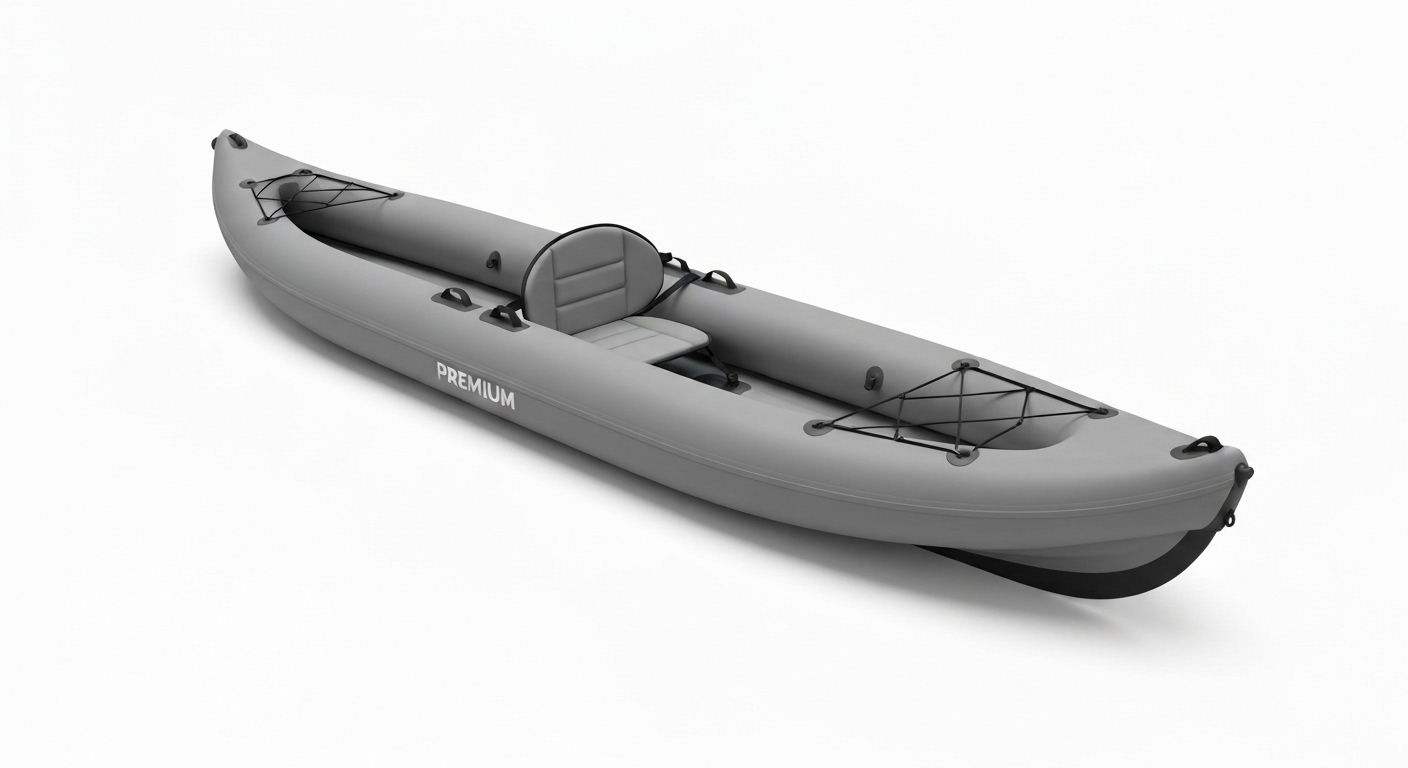
If you’ve been shopping inflatable kayaks long enough, you know the drill: most of them are soft, slow, and drift sideways in a breeze. The Aquaglide AirVolution 2 is a deliberate attempt to break that pattern. Built on high-pressure drop-stitch technology, it’s rigid underfoot, tracks with purpose, and packs into a duffel you can check at an airport. The catch? It costs more than a lot of solid hardshells, it takes 10–15 minutes to set up, and its narrower hull is less forgiving for beginners than a wide recreational inflatable. This review gives you the full picture — what it does exceptionally well and where it’s going to frustrate you.
Specs & Build
The AirVolution 2 uses high-pressure drop-stitch construction throughout the main hull, which is what separates it from cheaper PVC bladder kayaks. Drop-stitch fabric consists of thousands of threads connecting two flat layers — when inflated to high pressure (around 10–15 PSI), the hull becomes genuinely rigid rather than spongy. The result is a kayak that flexes far less under paddle load, which translates directly to efficiency and speed on the water. The outer shell is reinforced PVC over the drop-stitch core, and the seams are welded rather than glued, which matters for long-term durability.
| Spec | Detail |
|---|---|
| Length | 11 ft 6 in (350 cm) |
| Width | 29 in (74 cm) |
| Weight | Approx. 22 lbs (10 kg) |
| Max Capacity | 300 lbs (136 kg) |
| Hull Type | High-pressure drop-stitch |
| Inflation Pressure | 10–15 PSI (main hull) |
| Skeg | Removable tracking fin included |
| Packed Size | Fits in a large backpack or checked bag |
| Valve Type | Boston/Halkey Roberts valves |
At roughly 22 pounds, it’s among the lighter inflatable touring kayaks at this length. A comparable hardshell touring kayak runs 45–55 lbs. For anyone who paddles solo, car-toppers or heavy boats are a real barrier — the AirVolution 2 removes that entirely. If you want to compare the trade-offs more directly, see our guide to hardshell vs inflatable kayaks.
On the Water
This is where the AirVolution 2 earns its premium price. Most recreational inflatables feel like paddling a pool toy — wide, slow, and prone to weathervaning in crosswinds. The AirVolution 2 is different in three measurable ways.
Speed and efficiency: The narrower 29-inch beam and rigid drop-stitch hull mean your paddle strokes actually move you forward instead of flexing the boat sideways. Touring paddlers report GPS speeds in the 4–4.5 mph cruising range, which is competitive with entry-level hardshell rec kayaks. You won’t match a dedicated sea kayak, but for an inflatable, this is genuinely fast.
Tracking: The removable skeg does real work here. With it deployed, the kayak holds a line well and doesn’t demand constant correction strokes on flat water. Remove the skeg and you get more maneuverability, though that’s not really what this hull is designed for. It’s a touring kayak — it wants to go straight.
Stability: This is the honest caveat. At 29 inches wide, the AirVolution 2 has primary stability that feels tippy to beginners, especially paddlers coming from a wide sit-on-top or a broad recreational inflatable. Experienced paddlers will find the secondary stability confidence-inspiring once they lean into it, but if you’ve never paddled a narrower touring hull, expect a learning curve in the first few sessions. It is not a boat for casual pond floaters — it’s built for people who want to cover distance.
Wind and chop: The rigid hull handles light chop well, and the higher pressure means less squirm in confused water. In moderate wind, the shorter length (compared to a 14+ ft sea kayak) will make it work harder to stay on course, but the skeg compensates reasonably. It’s best suited to lakes, rivers, and protected coastal water — not open-water expeditions in rough conditions.
For paddlers who want to explore longer routes and open water, also check out our roundup of the best touring kayaks to see how it stacks up against hardshell alternatives at similar price points.
Pros and Cons
Here’s a straight summary of what works and what doesn’t:
- Genuinely rigid hull — drop-stitch construction means almost no flex under paddle load, a real differentiator from budget inflatables
- Lightweight at ~22 lbs — easy solo carry, no roof rack required, flies as checked luggage
- Packs small — fits in a large backpack or rolling duffel, opens up paddling on trips where a hardshell is impossible
- Tracks well — removable skeg keeps you on course without constant correction strokes
- Durable construction — welded seams and reinforced PVC hold up to repeated use better than glued budget alternatives
- Faster than most inflatables — hull shape and rigidity produce touring-class speed for an inflatable
- Premium price — costs more than many entry-level hardshell kayaks; hard to justify if you only paddle a few times a year
- Setup time — expect 10–15 minutes to inflate fully, longer if you’re using a hand pump; an electric pump is a near-mandatory accessory purchase
- Narrower hull = less initial stability — beginners and casual paddlers used to wide rec boats will find it tippy until they build comfort with the secondary stability
- Not for rough open water — best on lakes, rivers, and sheltered coastal areas; shorter length limits performance in significant chop or strong wind
- Accessories add up — a quality pump, a paddle, and a carry bag can push the total cost significantly higher than the kayak’s base price
Who It's For & Value
The Aquaglide AirVolution 2 is built for a specific paddler: someone with genuine touring ambitions who needs portability above all else. If you live in an apartment, travel frequently, take paddling trips where you fly or use public transit, or just can’t wrestle a 50-lb hardshell onto a roof rack alone, this kayak solves real logistical problems that cheaper inflatables don’t.
It is not the right buy if you’re a beginner looking for a stable, forgiving first boat, if you only paddle occasionally, or if you’re hoping to spend hardshell money but get inflatable convenience at a budget price point. The inflatable category has plenty of wide, stable, affordable options — this isn’t one of them, and it shouldn’t pretend to be.
On value: the price is high relative to inflatable kayaks as a category. It is more defensible when you compare it against performance-oriented inflatables rather than budget rec boats. If you’d otherwise buy a mid-range hardshell and pay for storage or a roof rack system, the math narrows. For someone who travels with their gear or has zero storage, paying the premium for a truly functional touring inflatable makes sense. For everyone else, it’s worth reviewing the broader market — our guide to the best inflatable kayaks covers options at multiple price points so you can see where the AirVolution 2 sits in the full landscape.
Bottom line: The AirVolution 2 is one of the most capable inflatable touring kayaks available. It earns its price if portability is your primary constraint and you’re a paddler who will actually put miles on it. If that’s not your situation, there are better uses for that budget.