Old Town Sportsman AutoPilot 120 Review
The Old Town Sportsman AutoPilot 120 is the most capable motorized fishing kayak on the market — if you can stomach the price and the weight.
Verdict: The Old Town Sportsman AutoPilot 120 is a legitimate game-changer for serious freshwater and inshore anglers who want hands-free position control and a stable casting platform. At $3,700+, it is not for everyone — but for the angler it is built for, it is hard to beat.
Specs & The Motor
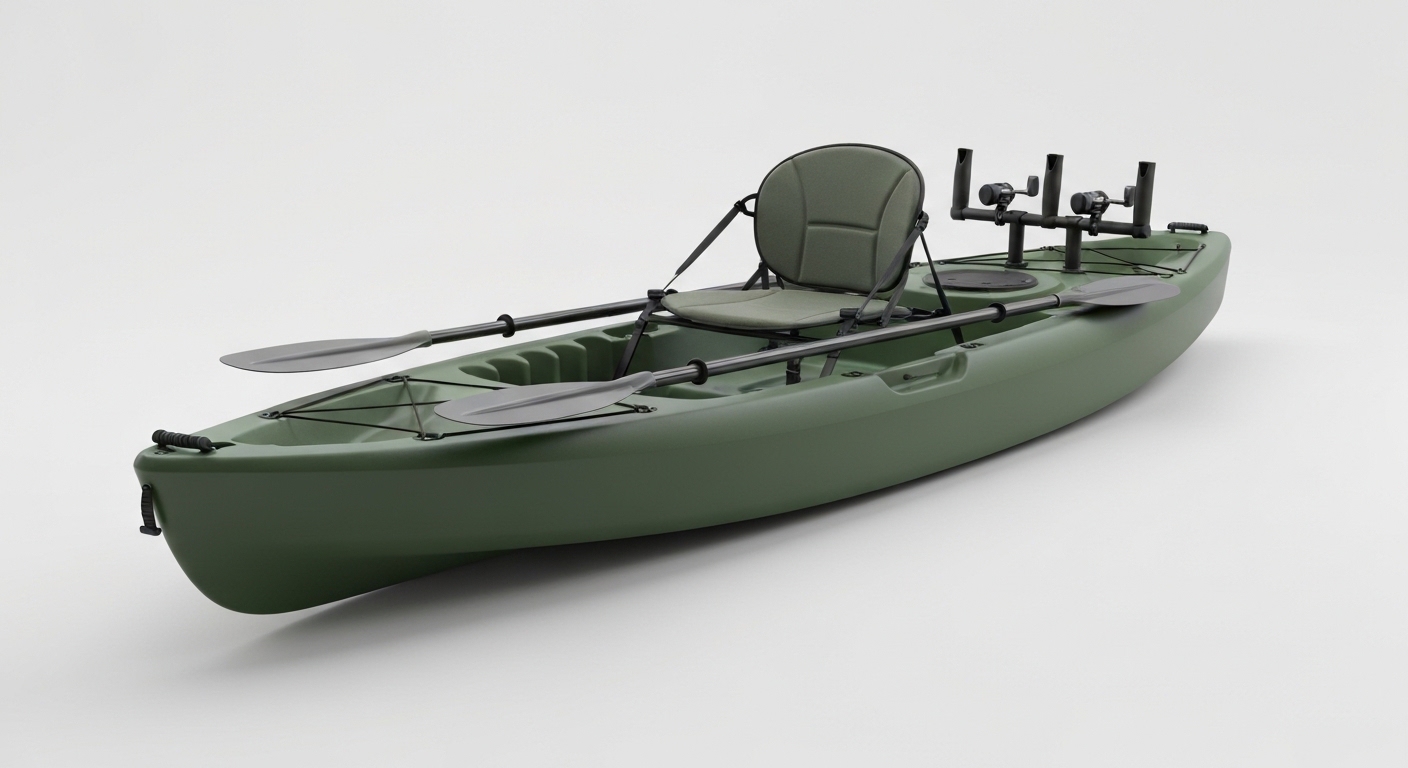
The AutoPilot 120 is built around a factory-integrated Minn Kota trolling motor system — not an aftermarket bolt-on, but an engineered part of the hull. That distinction matters more than it sounds. Old Town designed the motor mount, wiring channels, and battery tray into the kayak from the ground up, so nothing feels jury-rigged. Here are the core numbers:
| Spec | Detail |
|---|---|
| Length | 12 ft |
| Width | 36.5 in |
| Hull weight | 128 lb |
| Max capacity | 500 lb |
| Motor | Minn Kota saltwater-rated trolling motor |
| GPS system | iPilot Spot-Lock |
| Battery type | 12V deep-cycle (not included) |
| Recommended battery | Group 27 or lithium equivalent |
| Drive modes | Motor, paddle, or both |
| Seat | Lawn-chair style high-low stadium seat |
The headline feature is Minn Kota’s iPilot GPS Spot-Lock. Press one button and the motor holds your exact position within a few feet, compensating for wind and current automatically. For anglers who have spent years dropping an anchor or fighting drift while trying to land a fish, this is a genuinely transformative feature. It frees both hands for the rod, which is the whole point. The motor is rated for saltwater use, so inshore anglers fishing estuaries and tidal flats can run it without worrying about corrosion — just rinse it down after each trip. Browse best fishing kayaks to see how it stacks up against non-motorized options.
On the Water
Stability is the first thing you notice. The 36.5-inch beam is wide even by fishing kayak standards, and the hull’s flat secondary bottom means you can stand to sight-cast without feeling like you are about to go swimming. Larger anglers and those who have always found kayak fishing a little nerve-wracking will appreciate this immediately.
Under motor power the AutoPilot 120 moves at a relaxed but practical pace — roughly 3 to 4 mph at moderate throttle. That is not fast, but kayak fishing rarely rewards speed. What it does reward is quiet, and the Minn Kota is whisper-quiet compared to a gas outboard. You can idle right up to a shallow flat or a dock without spooking fish the way a combustion engine would.
Spot-Lock is as good as advertised. On a breezy day over a submerged weed edge, the motor made micro-corrections every few seconds to keep the bow locked on target. Casting accuracy improved noticeably because the boat was not moving under my feet. On calm days the feature feels almost unnecessary — but the first time a 20-mph gust rolls through and the kayak just sits there while you keep fishing, you will understand why people pay for it.
Paddling is still an option when the battery runs low or you want to sneak through a tight channel. The hull tracks reasonably well under paddle power given its width, though it is noticeably slower and more work than a dedicated paddle kayak of the same length. This is a motor-first boat that paddles adequately, not a paddle boat with a motor bolted on. If you spend most of your time paddling, check out our best pedal kayaks guide for more efficient human-powered options.
Storage is generous. A large stern tank well, a bow hatch, and multiple accessory tracks give you room for a full day’s gear. The built-in rod holders and tackle tray placement feel well thought-out — someone who actually fishes clearly had input on the layout.
Pros and Cons
No kayak at any price is perfect. Here is an honest breakdown:
- Spot-Lock GPS is a real fishing advantage — hands-free position holding works as well in practice as it does in the marketing materials.
- Factory-integrated motor system — cleaner install, better weight distribution, and no voided warranty from DIY drilling.
- Saltwater-rated motor — usable in inshore, tidal, and brackish environments without special modifications.
- Exceptional stability — wide beam and flat hull make standing to cast genuinely comfortable for most anglers.
- Generous storage and rigging options — accessory tracks, multiple rod holders, large tank well.
- Quiet operation — electric motor does not spook fish the way gas engines do.
- Price is steep — the AutoPilot 120 lists at $3,700 or more before you add a battery, charger, and any accessories. This is a premium purchase that requires commitment.
- Heavy hull — 128 lb without a battery. Add a Group 27 lead-acid battery (another 50–65 lb) and you are moving close to 200 lb of equipment. A roof rack, trailer, or cart is not optional — it is mandatory.
- Battery adds logistics — you need to own, charge, transport, and eventually replace a 12V deep-cycle battery. A lithium battery cuts weight but adds cost on top of an already expensive setup.
- Motorized boat regulations apply — in many states and some parks, a motorized kayak requires registration, a license plate, and sometimes a boating license. Check your local rules before you buy. This surprises more buyers than it should.
- Overkill for casual use — if you fish once or twice a year on a calm pond, this kayak does far more than you need and costs far more than you should spend.
- Paddling efficiency is just okay — the wide hull and motor housing create drag. Not a dealbreaker, but paddlers who expected a nimble boat will be disappointed.
Who It's For & Value
The Old Town Sportsman AutoPilot 120 is built for one specific angler: someone who fishes frequently, fishes seriously, and is tired of fighting wind and current instead of fish. Bass anglers who work precise structure, inshore saltwater fishers who need to hold a position on a moving flat, and anyone who has watched a drift blow a perfect cast — these are the people the AutoPilot 120 was designed for.
At $3,700+ it is not an impulse buy. But compare it to the alternative: a conventional fishing kayak at $1,200, plus an aftermarket motor mount ($200), a compatible trolling motor ($400), GPS Spot-Lock controller ($300), battery and charger ($150), and professional wiring ($200+). You land at a similar total cost, with a messier install and no factory warranty on the integration. Framed that way, the AutoPilot 120’s price looks more reasonable — though it is still a lot of money for a kayak.
If weight and transport are deal-breakers for you, look elsewhere. If budget is the constraint, there are excellent fishing kayaks in the $800–$1,500 range that will serve a casual angler well — see our full roundups across our kayak guides for options at every price point.
But if you fish hard, fish often, and want the most capable purpose-built motorized fishing kayak available right now, the Old Town Sportsman AutoPilot 120 earns its price. The Spot-Lock alone will change how you fish. That is not hyperbole — it is just a feature that works exactly as described, and once you have used it, a kayak without it feels incomplete.