

Every surfboard, chosen honestly.
The boards we'd actually put a friend on their first wave with — sorted by how you'll really surf. No copied spec sheets, no pay-for-placement.
Picking a first surfboard is where most people go wrong — too small, too advanced, too expensive. We compare boards on the water and tell you the honest trade-offs, so you buy the right board and stand up sooner. Start with how you'll surf 🏄
Find your surfboard.
Pick the lane that fits you — each opens our tested picks and plain-English guides for that path.
Best Beginner Surfboards
The forgiving foam boards that actually get you standing up.
See the picks →Foam & soft-topBest Soft-Top Surfboards
Durable, stable foamies — the smartest first board for most people.
See the picks →Glide & noserideBest Longboard Surfboards
Long, easy-paddling boards that catch waves a shortboard misses.
See the picks →Bigger ridersSurfboards for Adult Beginners
High-volume boards that float taller and heavier learners.
See the picks →Top picksBest Surfboards Overall
Our favorite boards across every category, ranked honestly.
See the picks →What size?Surfboard Size & Volume
The volume rule plus a calculator to dial in your board size.
Size my board →Board typesSurfboard Types Explained
Shortboard, fish, funboard, longboard — what each is for.
Learn the types →ConstructionFoam vs Epoxy vs Fiberglass
Which build to buy for durability, performance and price.
Compare builds →LearnHow to Surf
A step-by-step beginner guide to catching your first wave.
Start learning →GearBeginner Gear Checklist
Board, leash, wax, wetsuit — everything you need to start.
Shop the gear →FinsFin Setups Explained
Single, twin, thruster, quad — what to run and why.
Learn fins →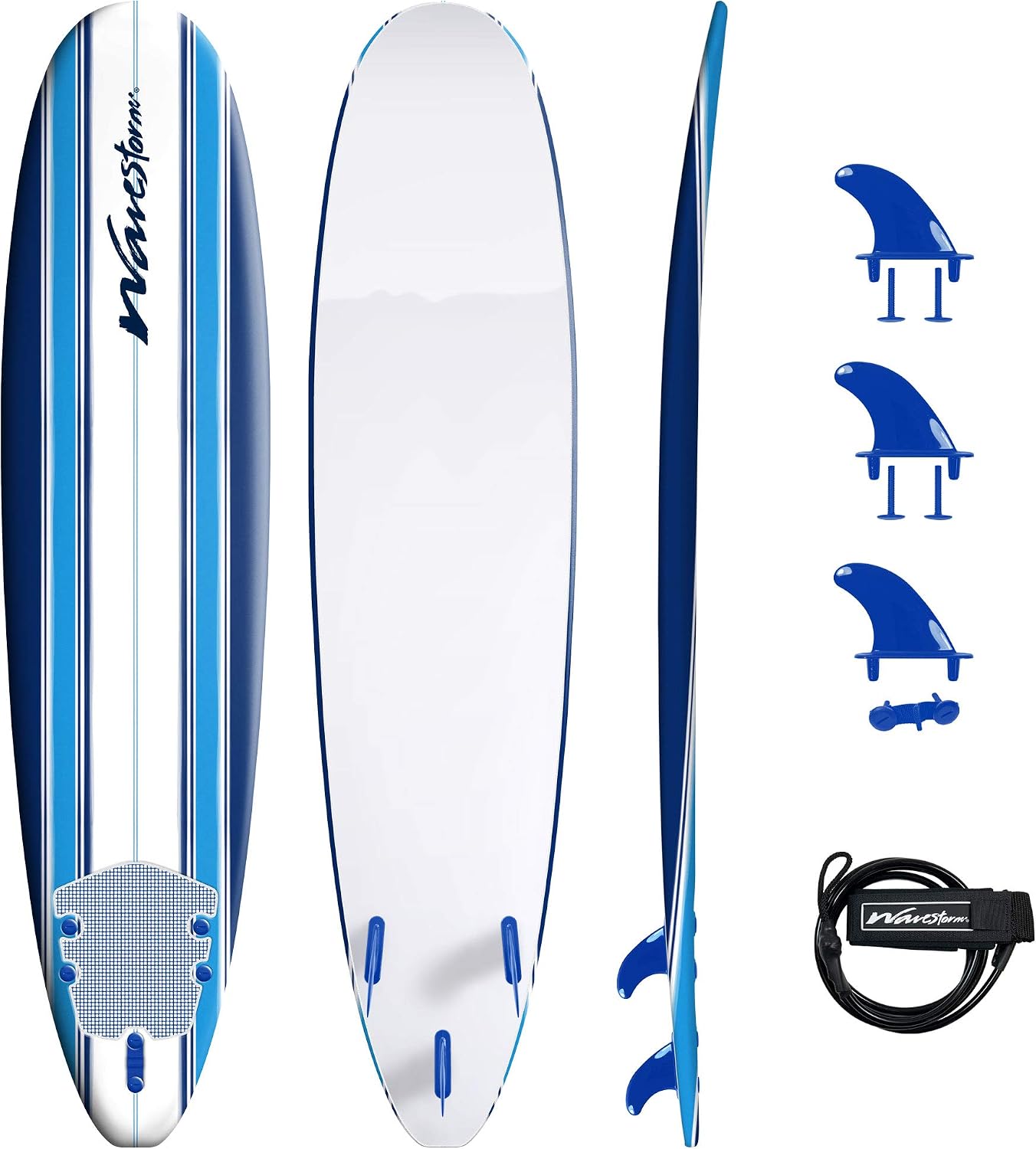
Wavestorm 8′ Classic Soft-Top
Stable, forgiving, cheap and almost impossible to get hurt on — the 8′ Wavestorm has put more people on their first wave than any board on earth. It's the one we hand most new surfers first.
New to surfing? Start here.
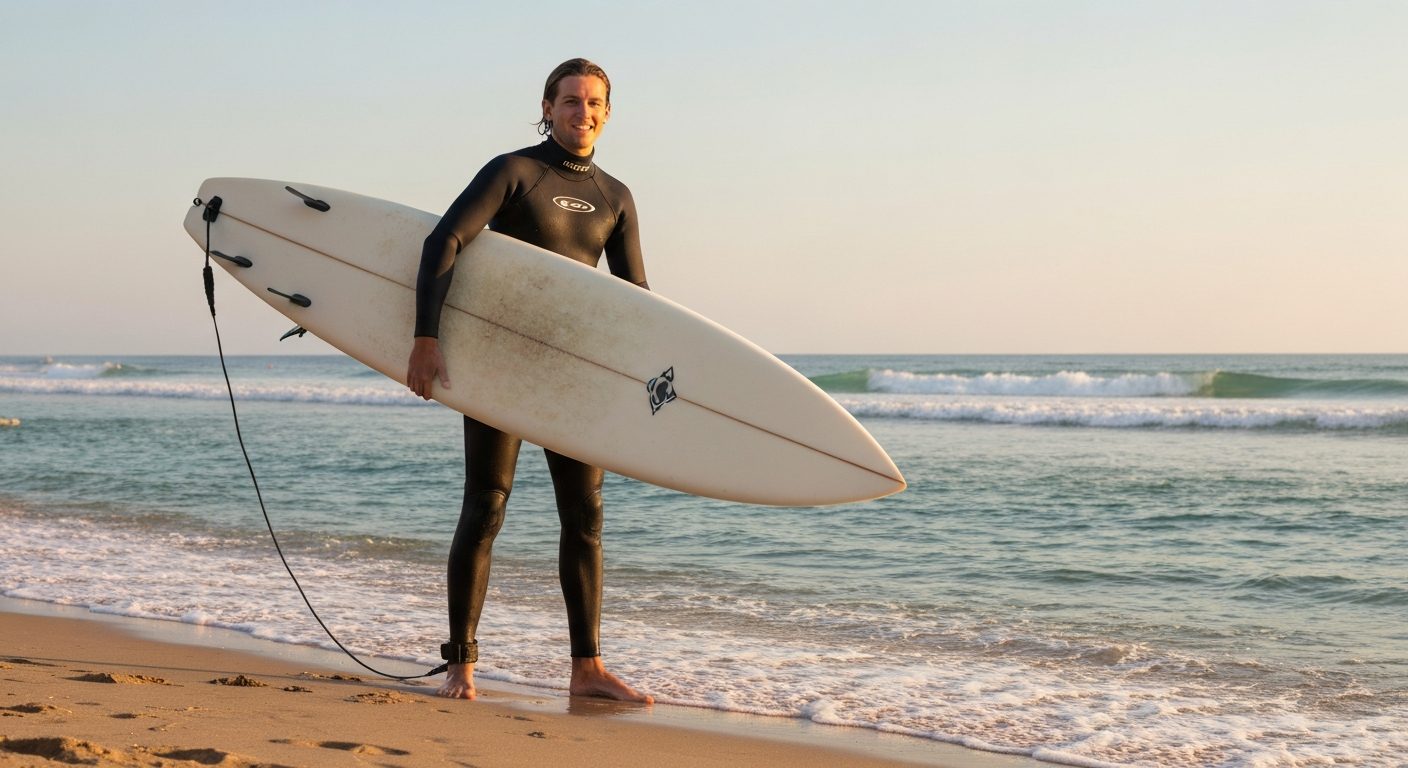
Don't overthink it. A soft-top (foam) board around 7–9′ with plenty of volume is the fastest way to stand up — it floats you, paddles easily, catches waves early, and won't hurt you when it hits you. Heavier and taller beginners should size up to a 8–9′.
Skip the fancy fiberglass shortboard for now: it floats poorly and turns learning into months of frustration. Learn on foam, then progress. Our size & volume guide dials in the exact board for your weight.
Best beginner surfboards →What actually matters.
Four things decide whether you love your board or quit in the whitewater. The plain-English version.
Size & volume
Volume (liters) is what floats you and catches waves. Beginners want more — roughly your bodyweight in lbs × 0.4–0.45 in liters. When in doubt, go bigger.
Size & volume guide →Soft-top vs hard
Foam soft-tops are stable, forgiving and safe — the right call for nearly every beginner. Epoxy and fiberglass surf better but punish learners.
Foam vs epoxy vs fiberglass →The right type
Shortboard, fish, funboard, longboard or foamie — the shape has to match your skill and your waves, or nothing else matters.
Surfboard types explained →The gear around it
A leash, the right wax and a wetsuit for your water temp matter as much as the board. A great board with no leash is a bad day.
Beginner gear checklist →
Never surfed before?
Standing up is more about the right board and the right waves than athleticism. Start in gentle, broken whitewater on a foamie, nail the pop-up on the sand first, and ride straight before you try to turn. Most people are riding whitewater within a session or two.
We lay out the whole thing — where to paddle out, how to pop up, and the mistakes that keep beginners stuck — in our step-by-step guide.
How to surf: beginner guide →We'd rather lose the sale than your trust.
We surf these boards and publish the cons right next to the pros. We earn a commission if you buy through our links — but it never buys a ranking, and we'll happily tell you when the $300 foamie is the smarter buy than the $900 board.
Start with the right guide.
Most new surfers are working through a few of these — jump to the one that fits.
Surfboard questions we get a lot.
What surfboard should a beginner get?
What size surfboard do I need?
Should I start on a foam (soft-top) or a hard board?
How much should I spend on a first surfboard?
How long does it take to learn to surf?
New to it? Start with the honest top picks.
The short, plain-English rundown of which surfboards are worth your money this year — and which to skip.
See the best surfboards →