
Recreational vs Touring vs Sea Kayak: Differences
Recreational, touring, and sea kayaks look similar on the rack but are built for completely different water and completely different paddlers.
Best recreational kayaksWalk into any paddle shop and you’ll see hulls ranging from stubby 9-footers to sleek 18-foot expedition boats — and the salesperson will call them all kayaks. We’ll cut through the confusion by explaining exactly what separates each category, what each one is optimized for, and how to match the boat to the water you actually paddle.
Recreational kayaks: easy and stable
Recreational kayaks run between 9 and 12 feet long and are noticeably wide — usually 26 to 30 inches at the beam. That width gives you a very stable platform right away, which is exactly what beginners and casual paddlers need. The cockpit is large and open, so getting in and out is easy, and you don’t feel confined on a warm afternoon on a calm lake.
The trade-off is speed and tracking. A short, wide hull pushes a lot of water and doesn’t hold a straight line the way a longer boat does. For a two-hour paddle on a local reservoir or a slow river, that’s completely fine. For anything longer — or anything with wind chop — the rec kayak starts to feel like work.
Most recreational kayaks have no bulkheads and no sealed hatches, which means they’ll fill up fast if you capsize. Keep them on flat, protected water and you’ll love them. Take one into open water and you’re asking for trouble.
If you’re buying your first kayak for weekend lakes and easy paddling, a recreational hull is almost always the right starting point. See our best recreational kayak picks for the models we’d actually put money on.
Touring kayaks: speed for day trips
Touring kayaks — sometimes called day-touring or light-touring kayaks — run 12 to 15 feet and narrow down to roughly 22 to 25 inches wide. That extra length and reduced beam lets the hull glide through the water more efficiently, so you cover more ground with less effort once you get your paddle stroke dialed in.
Unlike most rec boats, touring kayaks have at least one sealed bulkhead (usually two) that creates a watertight compartment. That matters for two reasons: it keeps the boat from sinking if you swamp, and it gives you dry storage for a day’s worth of gear. The cockpit is smaller and fits more snugly around your hips, which helps with boat control once you learn to use your core and lower body together.
Initial stability is lower than a rec kayak — the boat may feel tippy the first few times out — but secondary stability (the resistance to actually rolling over) is solid. Most paddlers adjust within a few sessions.
Touring kayaks bridge the gap between beginner lakes and serious expedition water. They’re the right choice for most paddlers who want to explore more coastline, cross bigger lakes, or simply paddle faster without working twice as hard. Check our best touring kayak guide for current top picks.
Sea kayaks: open water and expeditions
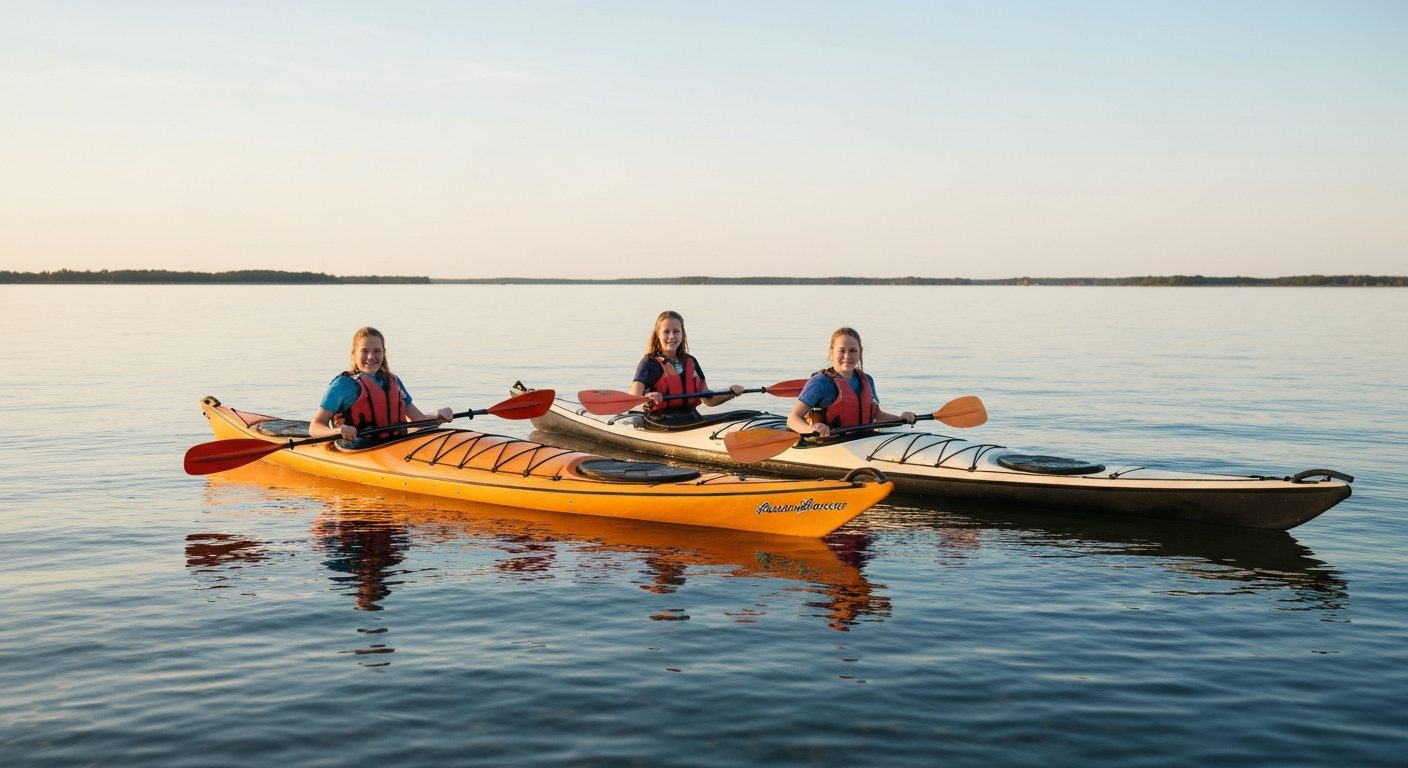
Sea kayaks start around 15 feet and run up to 18 feet or longer. They are narrow — often 20 to 23 inches — and built specifically for open water: ocean coastlines, exposed bays, tidal channels, and multi-day expeditions where conditions can change fast and getting to shore isn’t always an option.
Every sea kayak comes with two sealed bulkheads creating a bow and stern hatch — those watertight compartments are non-negotiable for open-water safety. Most sea kayaks also include a skeg (a retractable fin that improves tracking in crosswinds) or a rudder system. The cockpit fits tightly so you can use edge control and brace strokes effectively when swell pushes the hull around.
Here’s a simple comparison to put all three categories side by side:
| Category | Length | Width | Stability | Best use |
|---|---|---|---|---|
| Recreational | 9–12 ft | 26–30 in | Very high | Calm lakes, easy rivers |
| Touring | 12–15 ft | 22–25 in | Medium | Day trips, larger lakes, mild coast |
| Sea | 15–18 ft | 20–23 in | Lower initial, high secondary | Open ocean, expeditions, rough water |
Sea kayaks reward skill. If you’re new to paddling, the narrow hull will feel unstable until you build the low-brace and edge habits that sea kayakers rely on. The American Canoe Association offers skills courses specifically for sea kayaking — taking one before your first open-water crossing is a smart move, not an optional one.
Which type should you choose?
The honest answer is: match the boat to the water you paddle most, not the water you imagine paddling someday.
If you’re on calm inland lakes and easy rivers, a recreational kayak keeps things simple and affordable. If you want to cover serious distance on day trips, explore coastline, or cross bigger water, step up to a touring kayak — the efficiency gain is real and the learning curve is manageable. If you’re doing open-ocean crossings, camping from the boat, or paddling anywhere that rescue isn’t easy, a sea kayak is the right tool.
Stability and length are directly related: longer and narrower equals faster tracking and less initial stability. Most paddlers who’ve owned a rec kayak and moved to a touring hull wonder why they waited so long. Most paddlers who jump straight to a sea kayak without skills training find it genuinely difficult and sometimes dangerous.
Not sure what size hull fits your body and paddling style? Our kayak sizing guide walks through the numbers. And if you’re still deciding between sit-in and sit-on-top cockpit styles before you commit to a category, our sit-in vs sit-on-top breakdown covers that too.
Buy the boat that fits where you paddle today and you’ll enjoy every session. Buy for aspirational water and you’ll sit in the garage wishing you had something friendlier.
Frequently Asked Questions
Is a touring kayak good for beginners?
It can be, but it’s a bigger adjustment than starting with a recreational hull. Touring kayaks feel less stable at first because of their narrower beam. If you’re willing to spend a few sessions adapting — and ideally take a basic paddle skills class — a touring kayak is a great long-term choice that you won’t outgrow in a season.
What's the difference between a touring kayak and a sea kayak?
Length and intended conditions. Touring kayaks (12–15 ft) are built for lakes and calm coastal day trips. Sea kayaks (15–18 ft) are built for open ocean, swell, and multi-day expeditions — they have two sealed bulkheads, a skeg or rudder, and a tighter cockpit fit that allows more precise boat control in rough water.
How long should my first kayak be?
For most beginners paddling calm water, a 10- to 12-foot recreational kayak hits the sweet spot. It’s easy to maneuver, stable enough that capsize anxiety stays low, and short enough to fit on most car racks and in most garages. If you already know you want to cover distance or explore coastline, 12 to 14 feet in a touring hull is a solid first buy.
Can you use a recreational kayak on the ocean?
Only in very protected conditions — calm bays, harbors, or sheltered coves with easy access to shore. Recreational kayaks lack sealed bulkheads, so a capsize in open water leaves you with a boat that sinks rather than floats. They also struggle in chop and wind. For anything exposed, a touring or sea kayak with proper bulkheads is the minimum safe choice.