
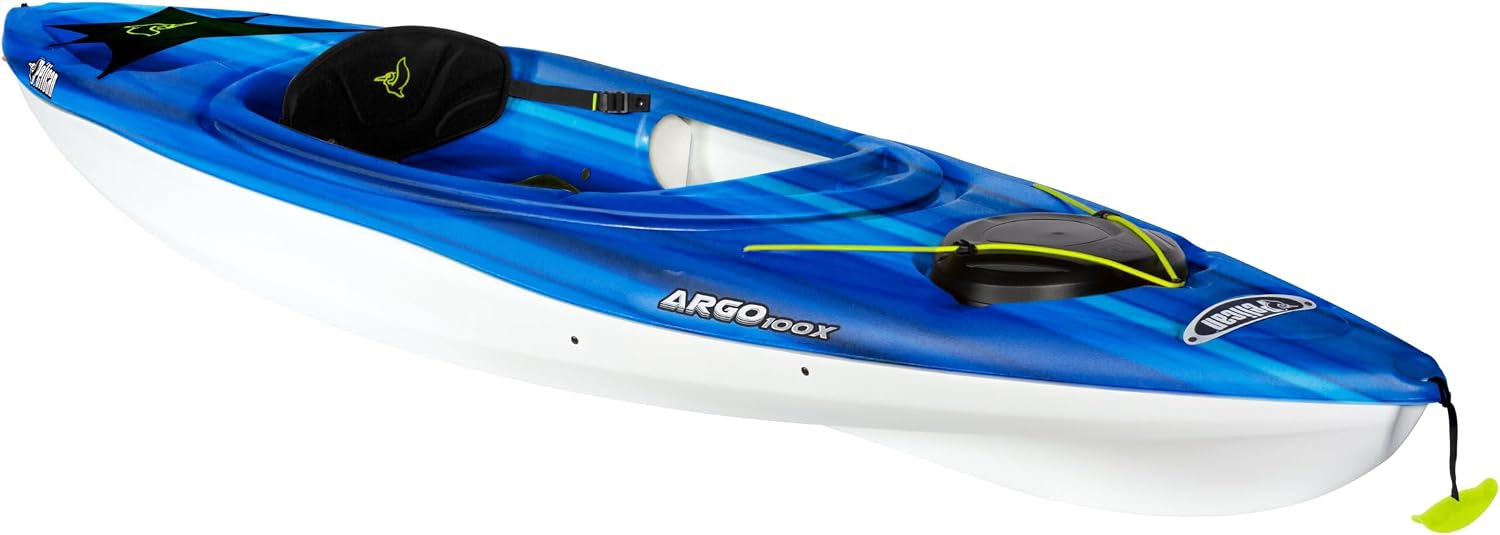
Pelican Argo 100X Review
The Pelican Argo 100X is a genuinely impressive entry-level pick — it's light enough to car-top solo, affordable enough to actually buy, and stable enough for beginners to build confidence on calm water. It won't win any awards for long-haul comfort or open-water capability, but that was never the point.
We paddled the Pelican Argo 100X on a flatwater reservoir and a lazy river section on back-to-back weekends, and we came away with a pretty clear picture of what this boat does well and where it falls short. At roughly $300 street price and just 38 pounds, it’s one of the lightest recreational kayaks in its class — and that weight figure matters more than most beginners realize until they’re standing alone in a parking lot trying to wrestle a 60-pound plastic tub onto a car rack.
The Argo 100X is a 10-foot sit-in recreational kayak built around Pelican’s RAM-X multi-layer polyethylene hull. It’s designed for calm conditions: lakes, ponds, slow rivers, and protected bays. If you’re new to paddling and trying to figure out whether a sit-in design makes sense for you, our sit-in vs sit-on-top kayak guide breaks down exactly that question.
Who is this for? Newer paddlers, lighter adults or teens who want a solo kayak they can actually move themselves, and anyone shopping under $400 who doesn’t want to sacrifice the enclosed, drier cockpit feel of a sit-in design. If budget is the primary filter, it’s also worth looking at our best kayaks under $500 roundup for a full comparison at this price tier.
Pelican Argo 100X specs
| Type | Sit-in recreational |
| Length | 10′ |
| Max load | ~275 lb |
| Hull | RAM-X lightweight |
| Weight | ~38 lb |
| Best for | Lightweight calm-water paddling |
On the Water and Tracking
The Argo 100X sits in that comfortable recreational-kayak sweet spot: stable enough that nervous beginners don’t white-knuckle the paddle, but not so wide and barge-like that forward progress feels like pushing a bathtub. The 10-foot hull tracks reasonably well on flat water — you won’t fight constant yaw if you’re paddling with decent technique. That said, wind is this boat’s nemesis. The high-volume cockpit and relatively short waterline mean crosswinds will push the bow around. Plan to paddle in the morning before the breeze picks up, or stick to protected water.
Initial stability (the “will I tip on entry?” feeling) is solid. Secondary stability — the resistance when you lean into a turn — is fine for calm water but don’t expect a confidence-inspiring edge. This hull does not want you to experiment. It wants you to go straight, enjoy the scenery, and head home before the afternoon chop arrives.
Turning takes deliberate sweep strokes or edging, and the rudder-free design means you’re steering with your paddle the whole time. That’s fine — it’s also how you actually learn to kayak. For a deep dive into whether a 10-foot hull is the right call for your body and paddling style, check what size kayak do I need.
Weight and Easy Transport
This is where the Argo 100X genuinely earns its keep. At 38 pounds, it’s lighter than most recreational kayaks in the $300 price range by 10 to 20 pounds. That’s not a marketing footnote — it’s the difference between loading the boat yourself versus waiting until someone else shows up to help. We loaded it onto a mid-size SUV rack solo in under two minutes. One hand on the bow toggle, boat on the hip, tip and slide. Done.
The RAM-X hull Pelican uses is a multi-layer polyethylene construction that balances durability with low weight. It’s not as bulletproof as thick HDPE you’ll find on heavy whitewater boats, and you shouldn’t drag it over gravel repeatedly. But for normal recreational use — loading, paddling, car-topping, rinse and repeat — it holds up well. We’ve seen three-year-old Pelican boats in decent shape with basic care (rinse, UV protectant spray, store out of direct sun).
The carry handles at bow and stern are solid and comfortable for two-person carries. For solo transport tricks and rack setups, our guide on how to transport a kayak covers the logistics in detail, including foam block options if you don’t have a rack.
Comfort, Storage, and Build
Pelican markets the ERGOFORM padded backrest as a selling point, and it’s fine — emphasis on fine. It’s a molded foam pad with a height-adjustable strap. For a 90-minute paddle it works without complaint. Push past two hours and you’ll feel the lack of lumbar depth. The seat pan is molded plastic with no cushion, so paddlers who run longer sessions will want to add an aftermarket foam pad. This is true of nearly every kayak at this price point, and we don’t ding Pelican too hard for it — it’s a budget boat designed for short outings.
Storage is better than average for a 10-footer. The rear quick-lock hatch gives you a dry compartment for keys, a phone in a drybag, snacks, and a light layer. The bungee cords on deck forward of the hatch let you strap down a small drybag or water bottle. The cockpit ditty tray — a small molded tray near the foot area — is a genuinely useful touch that other budget boats omit. Small items like a lip balm, snack bar, or sunscreen tube fit there without rattling around the hull.
Cockpit dimensions are generous for a sit-in at this price, which is both good and bad. Good: entry and exit are easy, and taller paddlers or those with wider hips fit comfortably. Bad: there are no thigh braces. Your legs rest on the hull floor with no real contact points for boat control. This is standard recreational territory — but anyone who takes an introductory skills course and discovers how much control thigh braces give you will outgrow this cockpit quickly.
The American Canoe Association recommends that beginner paddlers take a basic skills course before heading out solo, and we agree — regardless of which boat you’re in.
Who It's For (and Who Should Skip It)
The Argo 100X is genuinely well-suited to: beginners who want a stable, approachable first kayak; lighter adults and teens (the 275 lb max load is honest — stay a margin below it); anyone who needs to move the boat solo and can’t afford to fight a 60-pound hull; and budget shoppers who want a dry, enclosed cockpit rather than an open sit-on-top deck. It’s a legitimate answer to the question of what to buy when you’re not sure yet how often you’ll actually paddle.
Who should skip it? Intermediate paddlers who’ve caught the paddling bug and want to do longer tours, rougher water, or skills work. Anyone over 220 pounds who paddles aggressively — the stability margin at higher loads gets thin. Anyone planning to paddle open bays, large lakes with afternoon chop, or moving water beyond Class I. And anyone wanting to fish from a kayak who needs a flat casting platform and rod holders — there are better options in the sit-on-top category for that use case.
If you’re early in your research and want a broader look at the full category before committing, our best beginner kayak guide ranks this boat alongside its closest competitors. The Argo 100X consistently earns its place on that list for the weight-to-price combination alone.
What we liked
- Extremely light at 38 lb — easy solo loading and car-topping
- Competitive price around $300 for a purpose-built sit-in design
- Stable and forgiving on flat water — ideal confidence-builder for beginners
- Rear dry hatch provides real weatherproof storage in an affordable boat
- Generous cockpit opening makes entry and exit easy for most body types
- Cockpit ditty tray is a genuinely useful detail at this price point
The catches
- Seat padding is basic — long paddles past 90 minutes get uncomfortable without aftermarket foam
- No thigh braces, so boat control is limited and skill development will outpace the hull
- Calm-water only — crosswind and chop expose the short-hull limits quickly
- Paddle frequently sold separately, adding $50–$80 to the real cost of entry