
How to Transport a Kayak
How to Transport a Kayak: Roof Rack, Truck, Trailer & More
Kayak accessoriesGetting a kayak to the water is half the battle. Done right, it takes about ten minutes and costs nothing extra. Done wrong, you’re watching your boat slide off the highway at 65 mph — or worse, watching it flatten someone else’s car. This guide covers every realistic method for how to transport a kayak, from full roof rack setups to foam blocks to truck beds and trailers, plus the one tie-down step most beginners skip that actually matters.
Roof Rack Options: Crossbars, Cradles, and Carriers
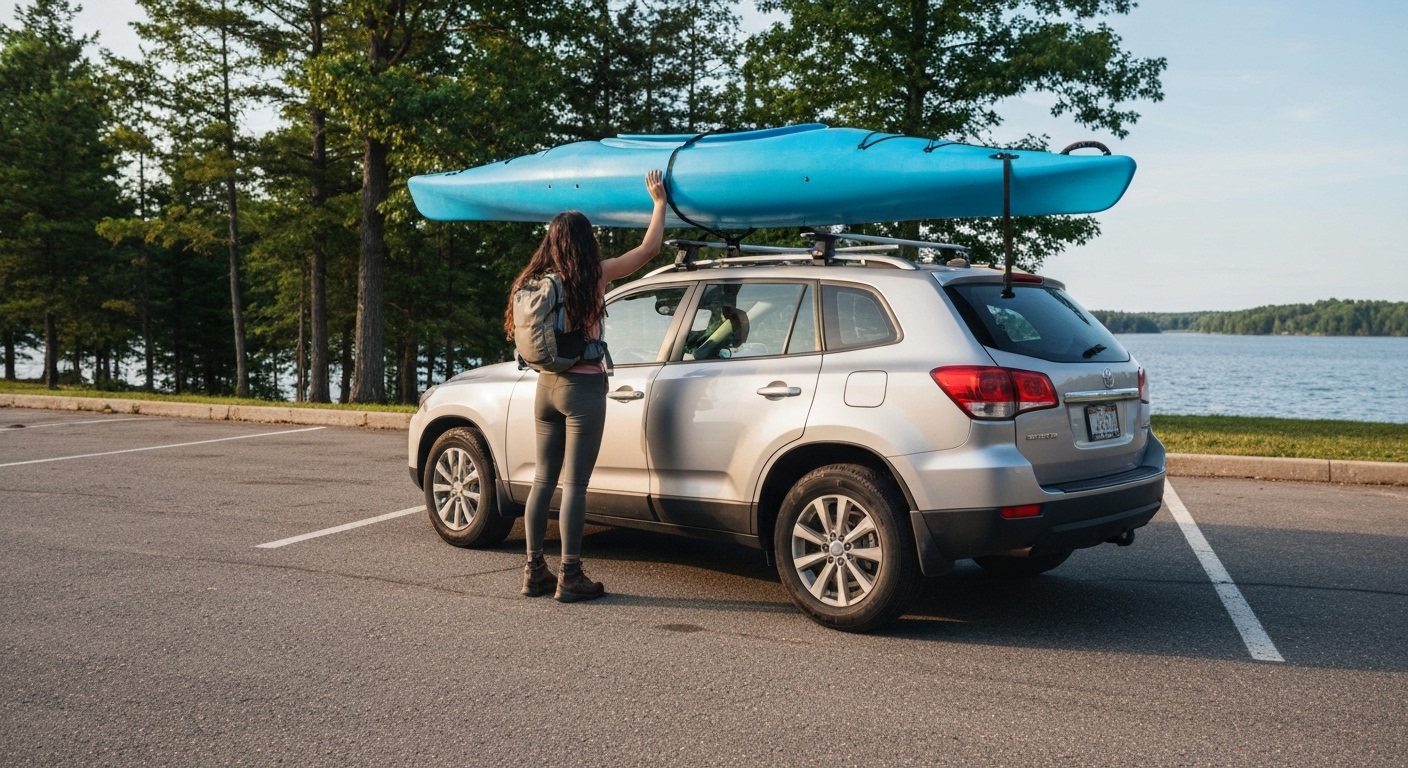
A dedicated roof rack is the most versatile and secure way to haul a kayak. The foundation is a set of crossbars that span your roof — either factory bars that came with the vehicle or an aftermarket system from Yakima or Thule that clamps to your door frame or roof rails. Crossbars alone will work for short trips with the right padding, but adding a dedicated kayak carrier makes loading easier and protects the hull.
J-cradles hold the kayak on its side at roughly a 45-degree angle. They’re the go-to choice for most paddlers because they free up roof space for a second boat and keep wind resistance low. The kayak slides in on edge and two straps clip across the hull. Saddles (also called flat cradles) cradle the hull upright and distribute weight across a wider contact patch — better for boats with delicate composite layups. Stackers stand the kayak fully vertical and let you haul two or three boats in a narrow footprint, though loading a heavy boat that high takes some practice.
Whichever carrier style you choose, make sure your crossbars are rated for the combined weight of the carriers and the kayak. Most factory bars are rated 100–165 lbs dynamic load. A 60-lb rotomold kayak plus carriers is well within range, but check your owner’s manual.
Foam Blocks: No Rack, No Problem (With Caveats)
If your car has no crossbars, foam kayak blocks are a budget-friendly workaround. They’re shaped to cup the hull, sit on top of your roof, and the kayak rests across them while straps run through the car’s interior (looping through the doors, not the windows — that’s a common mistake that dents door seals). Brands like Malone and Yakima make foam block kits for under $30.
They work fine for short local trips — under an hour, under 45 mph. The limitations are real: no rigid anchor points means more lateral movement, and you need to recheck strap tension every time you stop. Don’t use foam blocks for highway trips over an hour or in heavy crosswinds. If you transport kayaks more than a handful of times a year, adding a basic crossbar system pays for itself in peace of mind and hull protection.
For paddlers who own best inflatable kayaks, foam blocks and even roof racks become largely irrelevant — more on that below.
How to Tie Down a Kayak: Cam Straps and the Critical Bow and Stern Lines
This is where most hauling accidents originate. Two cam straps over the hull are necessary — but they are not sufficient on their own.
The cam strap process: Lay one strap over the kayak at each crossbar. Feed each end down and under the bar (not just around the bar — under and back up on both sides), then cinch with the buckle until snug. You want firm pressure, not white-knuckle tight. Overtightening a cam strap can oil-can a plastic hull — visibly denting the deck. Wiggle the boat side to side after strapping; if it moves more than an inch or two, tighten. Twist each strap once before tightening to stop wind-drumming noise on the highway.
Never use ratchet straps directly on a kayak hull. The mechanical advantage of a ratchet makes it trivially easy to crack a composite boat or permanently deform a poly one. Cam straps only.
Two cam straps keep the boat from rolling side to side. They do almost nothing to stop the kayak from shooting forward if you brake hard or sliding back if you accelerate fast. Bow and stern tie-down lines — one rope or strap from the grab handle at the nose of the boat to your front tow hook, and one from the tail to your rear hitch or tow point — are what prevent a kayak from becoming a projectile. Use them every single time, even on short trips. Many states legally require them. A kayak off the roof at highway speed has killed people. Run the lines, always.
Use 1-inch nylon webbing straps or paracord for bow and stern lines. Attach to a fixed point on the vehicle — hood loops, tow hooks, or purpose-made anchor straps that clip inside the doors. The line should run at roughly a 45-degree angle when taut, not straight down. A bit of tension is fine; these are backup restraints, not primary load bearers.
Loading a Kayak Solo: Lift Assists and Rollers
A 55–70 lb kayak on a 6-foot roof is a back injury waiting to happen if you try to hoist it overhead in one move. A few tools make solo loading routine:
Malone SeaWing cradles with a load assist arm swing down to car-door height, so you lift one end at a time and slide the boat up rather than lifting the whole thing overhead. Yakima’s ShowDown and Thule’s Hullavator take it further — spring-loaded arms that meet you at shoulder height and ride the kayak up as you push. They’re $350–$500 but genuinely change what’s possible alone.
Stern rollers are a simpler and cheaper option. A padded roller mounts at the rear of your crossbar. You lift the bow, set the stern on the roller, then walk the kayak forward until it’s centered on the bars. No overhead press required. Yakima and Malone both make these for under $60.
No accessories at all? Back method: stand at the side of the car near the roof, lift one end and rest it on the near crossbar, then walk around and lift the other end up. Two-step lifts are kinder to your spine than a single overhead heave. A folded moving blanket on the crossbar protects the hull while you’re positioning.
Truck Bed Transport: Bed Extenders and Tailgate Flags
Pickup trucks are a natural fit for kayak transport, especially for boats under 10 feet. A short recreational kayak fits entirely in a standard 6.5-foot bed with the tailgate up. Longer boats — most touring and sea kayaks — need the tailgate down or a bed extender to support the hull beyond the truck frame.
Bed extenders hitch into your 2-inch receiver and provide a second support point 2–4 feet behind the tailgate. Without one, a long overhang flexes and bounces on the hull, stressing the boat and potentially snapping it over rough roads. A roller ball or padded cradle on the bed extender keeps the hull from scratching against bare metal.
A red or orange safety flag is legally required in most states when cargo extends more than 4 feet past the rear bumper. Tie one to the stern grab handle — it costs $3 and keeps you legal.
Tie-down points in a truck bed are your anchor rings or rail slots. Run one cam strap across the boat near the cab and one near the tailgate, both anchored to opposite-side rails so the straps form an X pattern from above. Bow and stern lines still apply: forward line to the cab’s tow hook or bed ring at the front, rear line to your hitch. Don’t skip the stern line just because the bed is supporting the hull — the boat can still slide rearward under hard braking.
Kayak Trailers: The Best Option for Multiple Boats
If you regularly haul more than two kayaks or have a heavy composite boat, a dedicated kayak trailer eliminates roof rack hassles entirely. Single-axle kayak trailers from Malone, Yakima, and Harbor Freight’s utility trailer modified with aftermarket bunks can haul four to six boats. They’re the standard choice for outfitters, paddling clubs, and serious paddlers who don’t want to wrestle boats onto a roof.
What to look for: padded bunks or cradles that support the hull without point-loading it, a tongue long enough that the hitch doesn’t drag on steep boat ramps, and built-in tie-down anchor points at the bow and stern of each bay. Most kayak trailers use standard 1 7/8-inch or 2-inch ball hitches. Adding a trailer to a sedan is perfectly doable — most cars can be fitted with a receiver hitch and wiring harness for $200–$400 at a hitch shop.
Registration requirements for trailers vary by state. Many states exempt small trailers under a certain gross weight (typically 1,500–3,000 lbs loaded), but check your local DMV rules. Beyond the registration question, a loaded kayak trailer handles differently than a solo vehicle — turns wider, brakes longer, and backs up in the opposite direction you steer. Practice in an empty parking lot before your first ramp visit.
Browse kayak accessories including trailer hardware and tie-down gear in our accessories guide, and check out our kayak guides for boat-specific transport considerations.
Inflatables, Hull Protection, and Highway Speed Tips
Inflatables: If you paddle an inflatable, transport is almost a non-issue. Deflate, roll, and it fits in a duffel in your trunk. No roof rack, no straps, no bow and stern lines. It’s one of the biggest practical advantages of the category — see our full breakdown of the best inflatable kayaks if you’re considering making the switch for exactly this reason.
Protecting the hull: A few habits prevent long-term damage. Even distribution of support matters more than raw tightness — a kayak sitting on two narrow crossbars concentrates all the load at two points. Wider saddles or foam blocks spread that load. Composite boats (fiberglass, Kevlar, carbon) are most vulnerable to point pressure and overtightened straps; plastic rotomold boats are more forgiving but can still oil-can in summer heat. If you’re parking with the boat on the roof in direct sun for more than an hour, loosen the straps slightly — heat makes plastic soft and a tight strap will mold a dent into the hull.
Highway speed: At 60–70 mph, aerodynamic lift on the hull is real. Kayaks loaded cockpit-down (upside down) have less lift than cockpit-up. If your carrier allows it, flip the boat hull-up for highway driving. Recheck strap tension after the first 10 miles — straps settle and vibrate loose in the first few minutes on the road. Pull over at the first gas station and give everything a tug. A few seconds of checking is worth it.
Speed limit: most kayak transport setups are rated for highway speeds, but anything above 80 mph increases aerodynamic stress significantly. Keep it sane, especially with longer boats.