
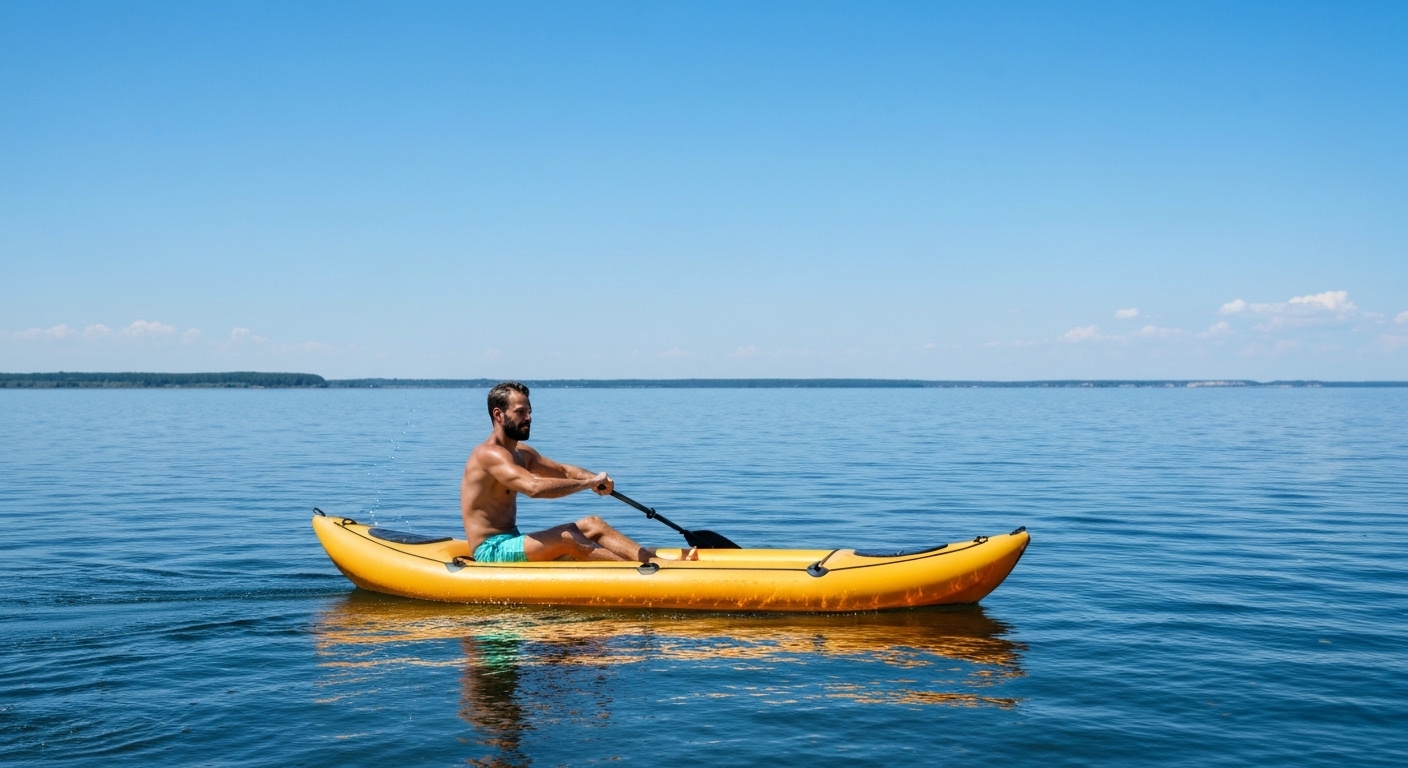
Best Inflatable Kayaks of 2026
Inflatable kayaks have come a long way — these four picks prove you can paddle light without paddling dumb.
See the top picks →Whether you’re squeezing a kayak into a hatchback or just refusing to rent again, the best inflatable kayak saves money, fits anywhere, and gets you on water in under 20 minutes. We tested the real options so you don’t have to guess.
At a Glance
| Kayak | Best for | Specs | Price |
|---|---|---|---|
| Intex Challenger K1 | Best Cheap Solo | 1-person | 9' | 220 lb | ~$75 |
| Intex Explorer K2 | Best Budget 2-Person | 2-person | 10' | 400 lb | ~$110 |
| Sea Eagle SE370 | Best Value / Durable | 3-person | 12.5' | 650 lb | ~$350 |
| Advanced Elements AdvancedFrame | Best Premium | 1-2 person | 10'5" | 300 lb | ~$650 |
The Top Picks, Reviewed
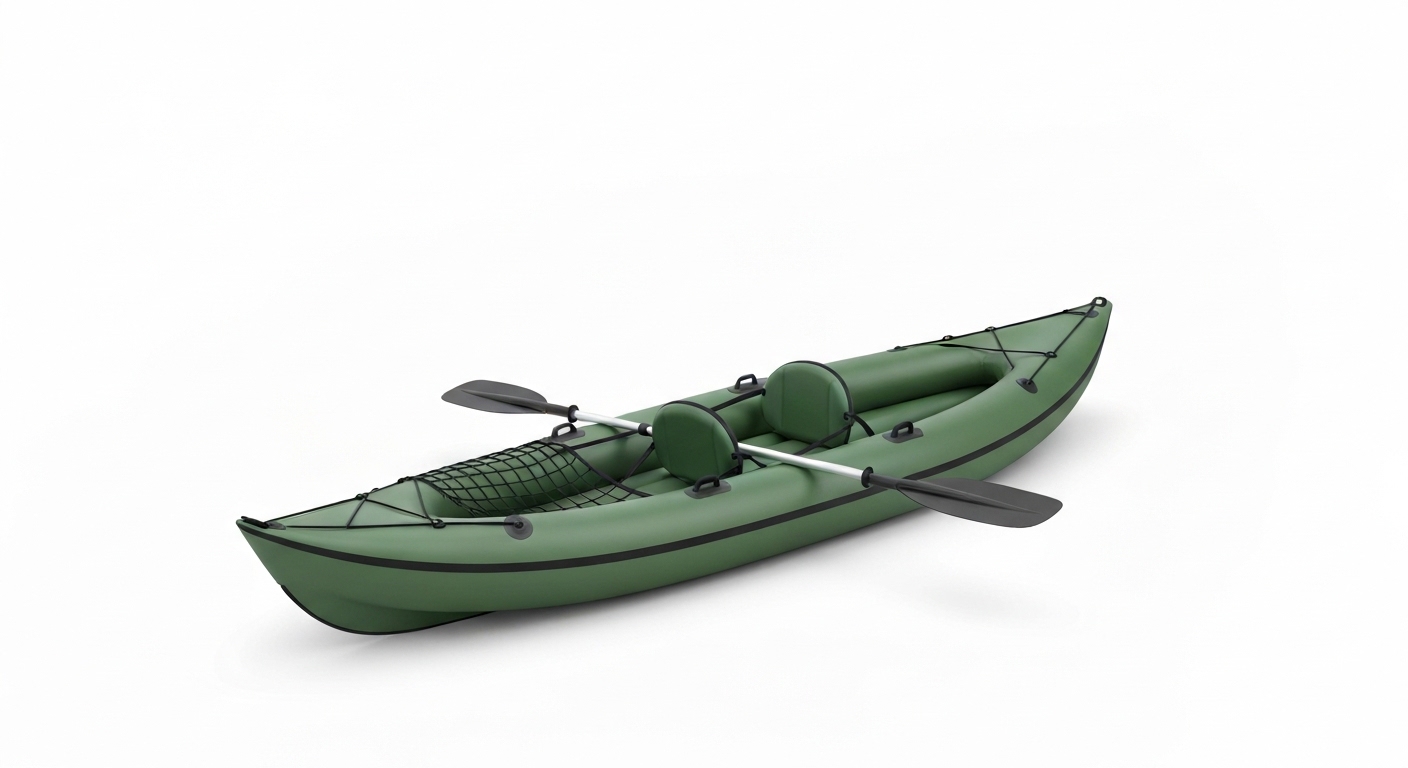
Intex Challenger K1
The Challenger K1 is as no-frills as kayaks get, and honestly that’s the point. At under $80 it comes with an aluminum paddle, a hand pump, and a small cargo net behind the seat — enough to get a beginner on flat water fast. The inflatable seat is more comfortable than it looks, and the grab line along the sides helps if you flip. That said, the vinyl is thin, the tracking is loose, and you will work harder to hold a straight line than in any hardshell. Keep this on ponds, slow rivers, and calm bays, and it earns every dollar. For a broader starting point, see our best beginner kayaks guide.
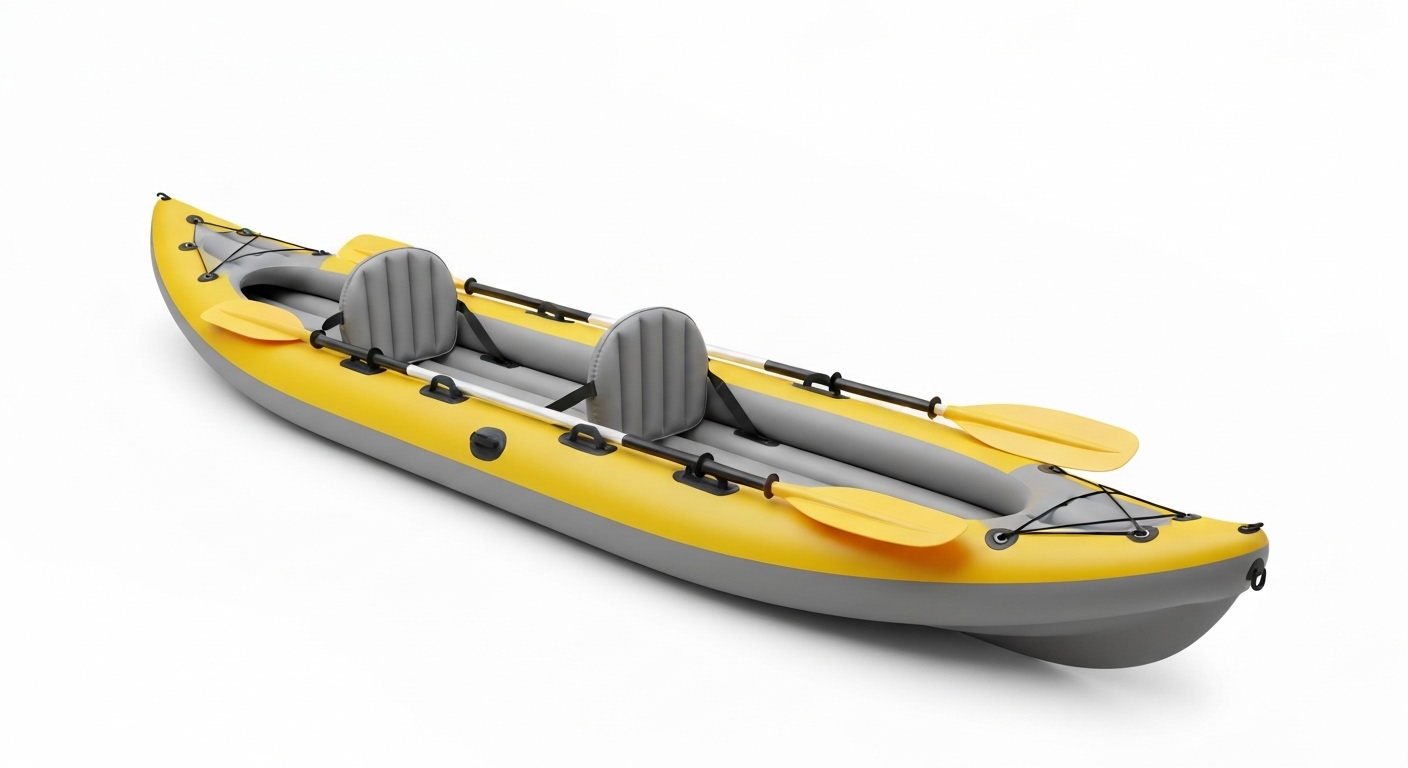
Intex Explorer K2
Two people, one boat, $110 — the Explorer K2 makes shared paddling accessible without a second mortgage. It ships with two aluminum paddles, a hand pump, and a carry bag, which means you’re on the water the same day it arrives. The bright yellow color is genuinely good for visibility on crowded lakes. The flip side: the entry-level vinyl flexes noticeably when loaded, the seats are basic, and you’ll feel every small chop. It’s a bonafide flat-water tandem for casual days, not a crossover into fishing kayak territory or river runs. Manage expectations and it overdelivers for the price.
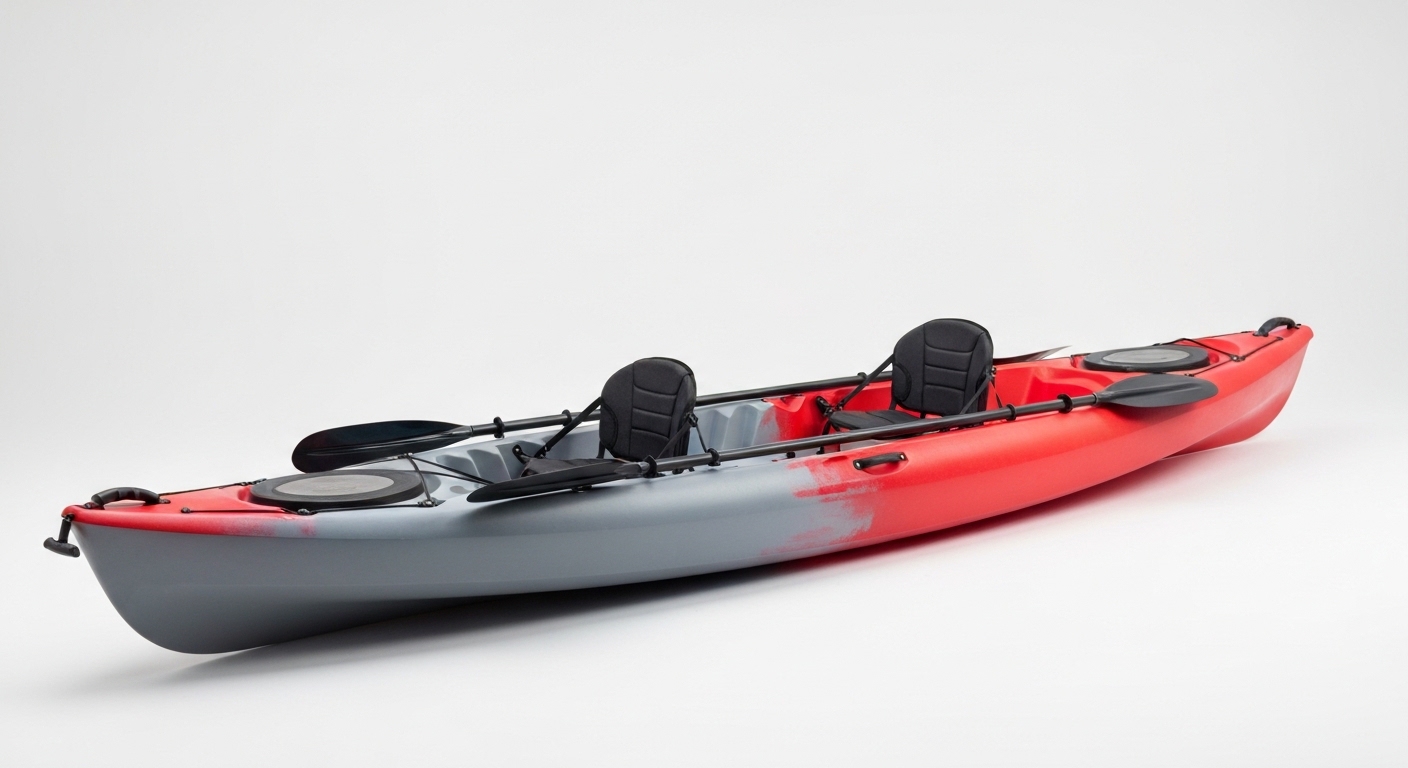
Sea Eagle SE370
The SE370 is the pick where inflatable kayaks stop feeling like compromises. Sea Eagle builds this one from 38-mil PolyKrylar — a reinforced polykrylar hull that handles rocky put-ins and class III whitewater without flinching. At 650 lb capacity it can carry two adults, a dog, and a dry bag with room left over. Setup takes about 10 minutes once you’ve done it twice, and the self-bailing floor option (sold separately) opens up faster water. The weak spots are real though: the included bench seats are stiff and basic, and the boat gets heavy to haul when wet. The upgrade seat kit fixes most of the comfort complaints and is worth the extra spend. If you’re comparing materials to a paddleboard, our inflatable vs hard breakdown is worth a read.
Advanced Elements AdvancedFrame
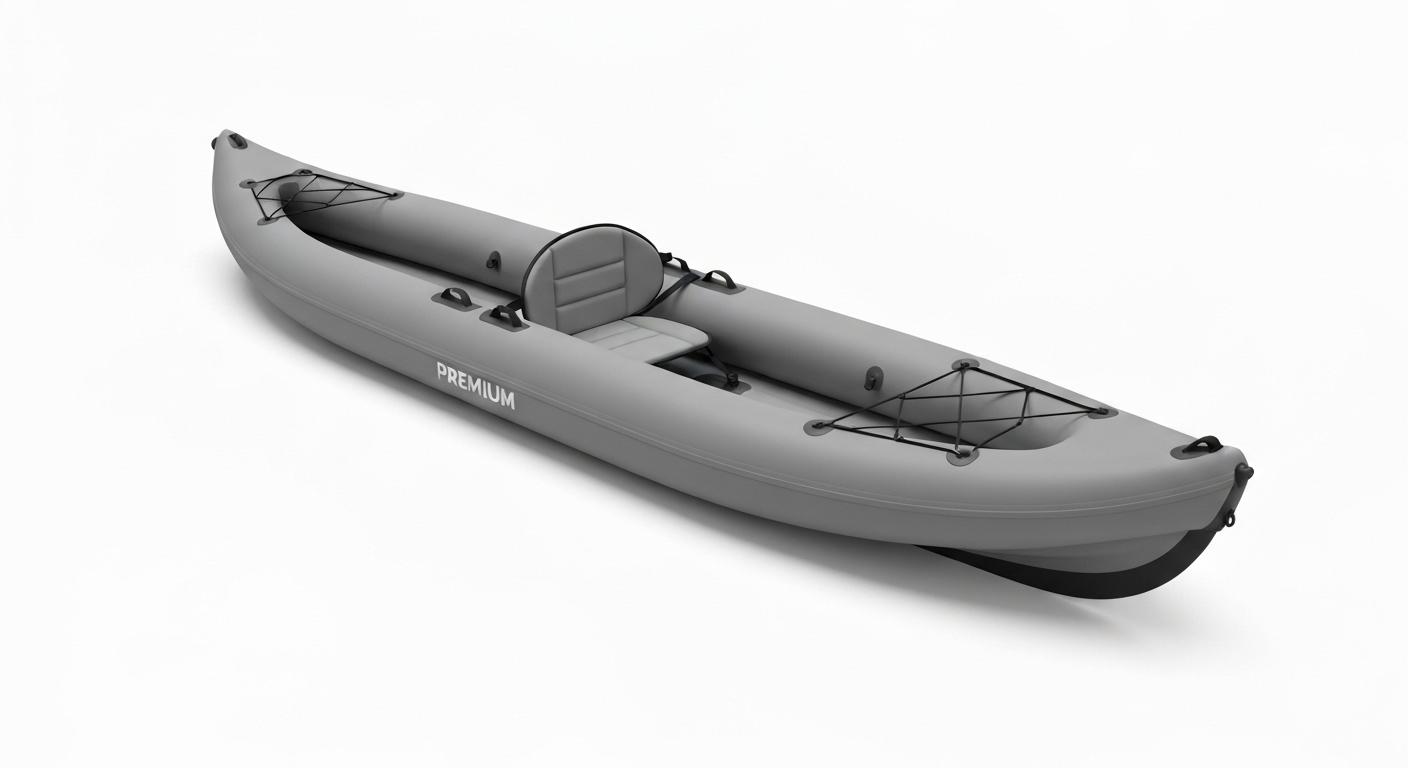
The AdvancedFrame is what happens when someone decides inflatables deserve actual engineering. Aluminum ribs at the bow and stern give it the hull shape of a hardshell kayak, which translates to real tracking — you point it somewhere and it goes there, with far less correction work than any other inflatable here. The three-layer hull is legitimately tough, the convertible solo-to-tandem setup is straightforward, and it handles moving water that would destroy a budget boat. The tradeoffs are just as real: at $650 it costs more than some used hardshells, it’s heavier to carry than it looks, and the setup is slower than the Intex options — figure 15 to 20 minutes until you’re ready to launch. For serious paddlers who still need a packable boat, nothing else comes close.
Are Inflatable Kayaks Actually Any Good?
Short answer: yes, with the right expectations. Inflatable kayaks have closed most of the performance gap with hardshells over the last decade — better materials, tighter seams, and smarter hull designs have turned what used to be pool toys into boats people use for multi-day river trips. The main tradeoff is efficiency. Inflatables are wider and softer than rigid hulls, which means more drag and more paddle strokes per mile. If you’re racing, buy a hardshell. If you’re exploring, fishing, camping, or just getting out on a Tuesday morning, an inflatable will take you everywhere you want to go.
Where inflatables win outright: storage, transport, and cost. A $350 inflatable that fits in a duffel bag replaces a $1,200 hardshell that needs a roof rack and a garage. For anyone in an apartment, a small car, or a household that shares one parking spot, that math is decisive. For new paddlers especially, our best beginner kayaks roundup walks through the full decision.
Materials & PSI: What the Specs Actually Mean
The single biggest quality indicator on an inflatable kayak is the hull material, and most budget listings are vague about it on purpose. Here’s what you’ll actually encounter:
- PVC / vinyl (entry-level): Cheap, light, and fine for calm water. The Intex models use this. It punctures more easily and degrades faster in UV, but it’s repairable with a $5 patch kit and lasts years if you don’t drag it over rocks.
- Reinforced PVC (mid-range): A woven fabric core bonded between PVC layers. Significantly tougher. Handles moderate current and rocky launches without panicking.
- PolyKrylar / Nitrylon (premium): Sea Eagle’s material of choice. More abrasion-resistant than PVC, lighter than many reinforced options, and rated for whitewater. Worth the price jump if you’re doing anything beyond flatwater.
- Multi-layer drop-stitch + aluminum ribs (high-end): What Advanced Elements uses. The rigidity from drop-stitch chambers and metal ribs approaches a hardshell without the fixed shape.
PSI matters more than most buyers realize. Budget kayaks inflate to 1–2 PSI, which is why they feel spongy. Quality boats run 3–6 PSI or higher in drop-stitch chambers. Higher PSI = stiffer hull = better tracking and less energy wasted per paddle stroke. Always use the recommended pump and don’t skip the pressure gauge.
1-Person vs 2-Person: Choosing the Right Size
Solo kayaks are faster, easier to maneuver, and simpler to manage alone — you set your own pace and don’t negotiate turns with a partner. Tandem kayaks carry more gear, work well for paddlers at different skill levels (a stronger paddler in the stern does most of the steering), and split the cost if two people are buying together.
The catch with tandems is coordination. Two paddlers who aren’t synced waste as much energy fighting each other as they spend moving forward. If you’re paddling with kids, a tandem is usually the right call — you control the boat, they learn the rhythm. If you’re paddling with an equally experienced partner, tandems are genuinely faster and more efficient on open water.
- Solo trip, day paddle: 9–10 ft single. Intex Challenger K1 covers the budget end.
- Tandem day trip: 10–12 ft double. Explorer K2 for casual, SE370 for anything more demanding.
- Mixed use or touring: Convertible design like the AdvancedFrame, which runs solo or tandem.
Weight capacity is not a suggestion. Stay at or below 80% of rated capacity — a kayak loaded to its maximum limit sits low, takes on water over small waves, and handles like a barge. This is especially true for inflatables, where hull rigidity drops as weight increases.
Setup, Breakdown & Care
Most people underestimate how long setup takes the first few times and how quick it gets after a dozen launches. Budget kayaks (Intex) run about 8–12 minutes to inflate with a hand pump. The SE370 and AdvancedFrame take 12–20 minutes depending on your pump. An electric 12V pump cuts all of these in half and costs about $25 — worth it if you’re paddling more than once a month.
Breakdown is faster: deflate, fold, roll, bag. The whole process takes 10–15 minutes once you’ve done it a few times. The Intex boats fold down to roughly the size of a sleeping bag. The AdvancedFrame is bulkier — the aluminum ribs don’t compress — but still fits in a large duffel.
Care determines lifespan more than brand or price:
- Rinse with fresh water after every saltwater or river session. Salt and grit grind seams from the inside.
- Dry completely before storing. Storing wet causes mold and seam separation, especially on PVC boats.
- Store out of direct UV. UV breaks down PVC faster than anything else — a dark garage adds years to a budget boat.
- Carry a patch kit. A $5 vinyl repair kit handles 90% of field repairs in under five minutes.
For a full materials comparison between inflatables and rigid alternatives, our inflatable vs hard guide covers the durability question in detail.