
Every paddleboard, chosen honestly.
The boards we’d actually put a friend on — sorted by how you’ll really use yours. No copied spec sheets, no pay-for-placement, no “ultimate destination” fluff.
A paddleboard is a big buy that’s easy to get wrong online — the reviews are gamed and every shop says theirs is “best.” We test boards on real water and tell you the honest trade-offs, so you spend once, on the right board for you. Start with how you’ll use it 👇
Find your paddleboard.
Pick the lane that fits you — each opens our tested picks for that use, with who it’s for and who should skip it.
Best Paddleboards Overall
Our top all-around picks across budgets — the boards most people should buy.
See the picks →Most popularBest Inflatable SUPs
Stiff, packable, forgiving — the right call for ~90% of paddlers.
See the picks →Under $500Best Budget Boards
The cheap boards that actually hold up — and the pool toys to avoid.
See the picks →AnglersBest Fishing SUPs
Wide, stable, rigged for rods and gear without tipping you in.
See the picks →SUP yogaBest Yoga Boards
Extra-wide, soft-deck platforms that stay rock-steady mid-pose.
See the picks →Bigger ridersBest Boards for Heavy Riders
High-capacity boards that still feel stable for taller, heavier paddlers.
See the picks →DistanceBest Touring Boards
Longer, faster hulls that track straight and glide on long days.
See the picks →TandemBest 2-Person Boards
Big tandems for couples, parents-with-kids, or paddling with the dog.
See the picks →By brandBest Paddleboard Brands
Who actually makes a board worth owning — and who’s just marketing.
Compare brands →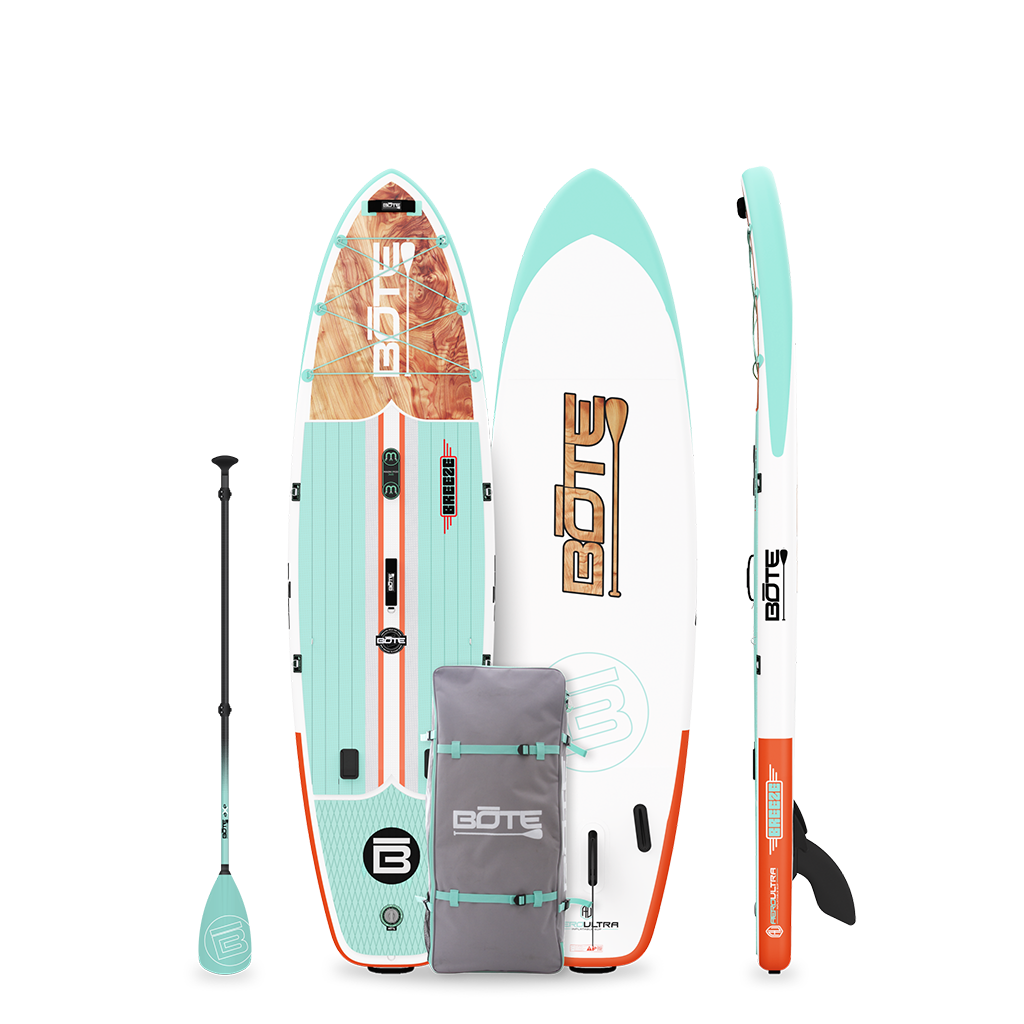
BOTE Breeze Aero
A genuinely stable, beginner-friendly all-arounder — 34″ wide, AeroULTRA-rigid and well-built, with a 2-year warranty and a 30-day guarantee. It rates 4.9★ from 600+ owners, and it’s the board we’d hand most paddlers first.
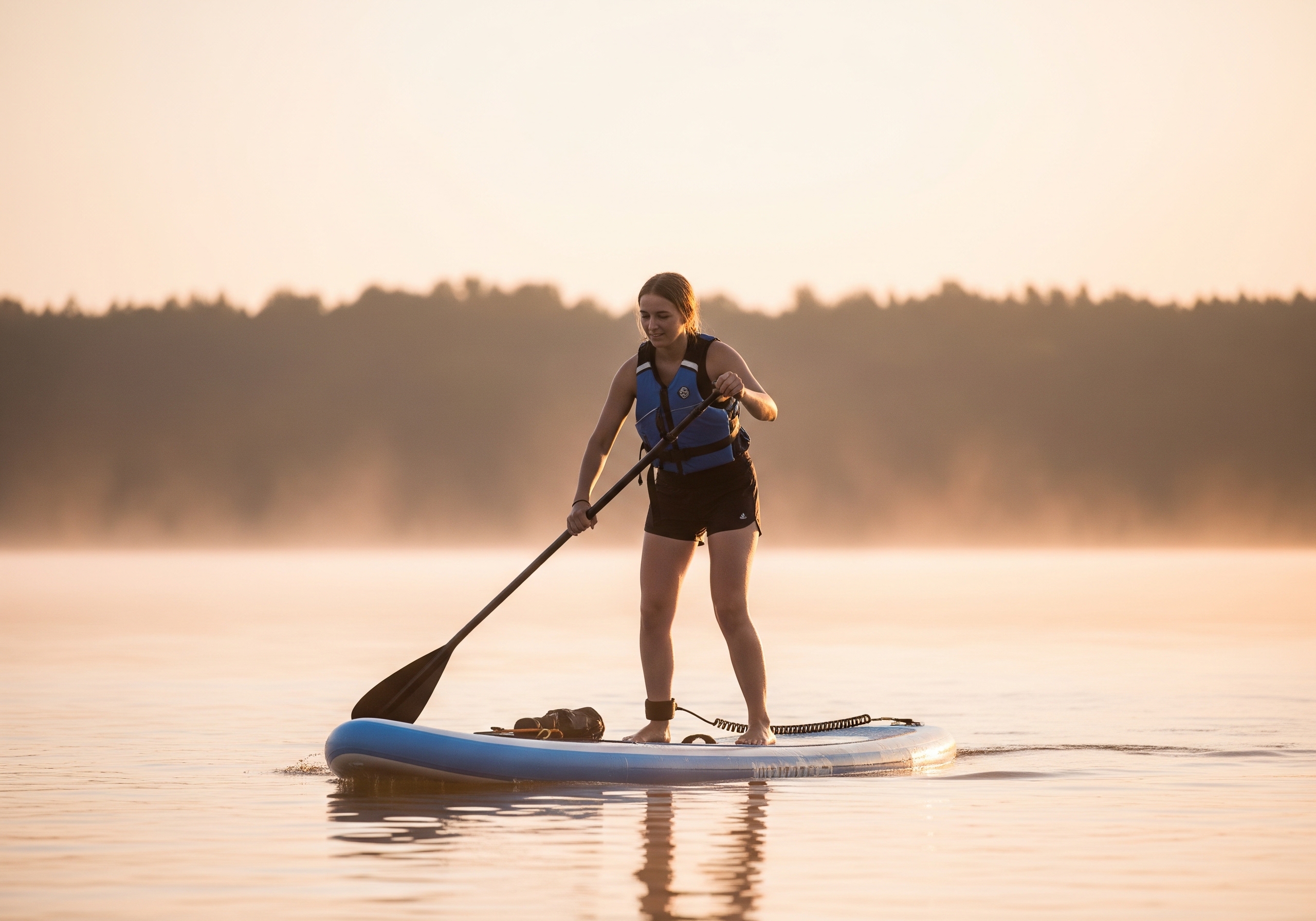
New to paddleboarding? Start here.
If you’ve never stood on a board, don’t overthink the gear. A stable all-around inflatable in the 10’6″–11′ range and 32″+ wide will carry almost any beginner — it’s forgiving when you wobble and easy to climb back onto after a fall (you will fall, and that’s part of it).
Skip the rock-bottom no-name boards: the ones under ~$300 tend to flex in the middle, which makes balancing harder, not easier. Spend a little more on a solid drop-stitch core and a half-decent paddle, and the whole sport gets easier on day one.
Read the beginner’s guide →What actually matters.
Four things decide whether you love your board or resell it. The plain-English version.
Inflatable vs. hard
For most people, inflatable wins on storage, travel and durability. Hard boards are for racing and max glide.
The honest comparison →Size for your weight
Length, width and volume have to match your body and use, or the board feels tippy or sluggish.
Size by weight →Stability vs. speed
Wider = steadier and beginner-friendly; narrower = faster but twitchier. Pick for your skill, not the spec.
How to choose →What’s in the kit
Paddle, pump, leash, fins and bag quality vary a lot. A cheap board with junk accessories isn’t a deal.
Beginner’s guide →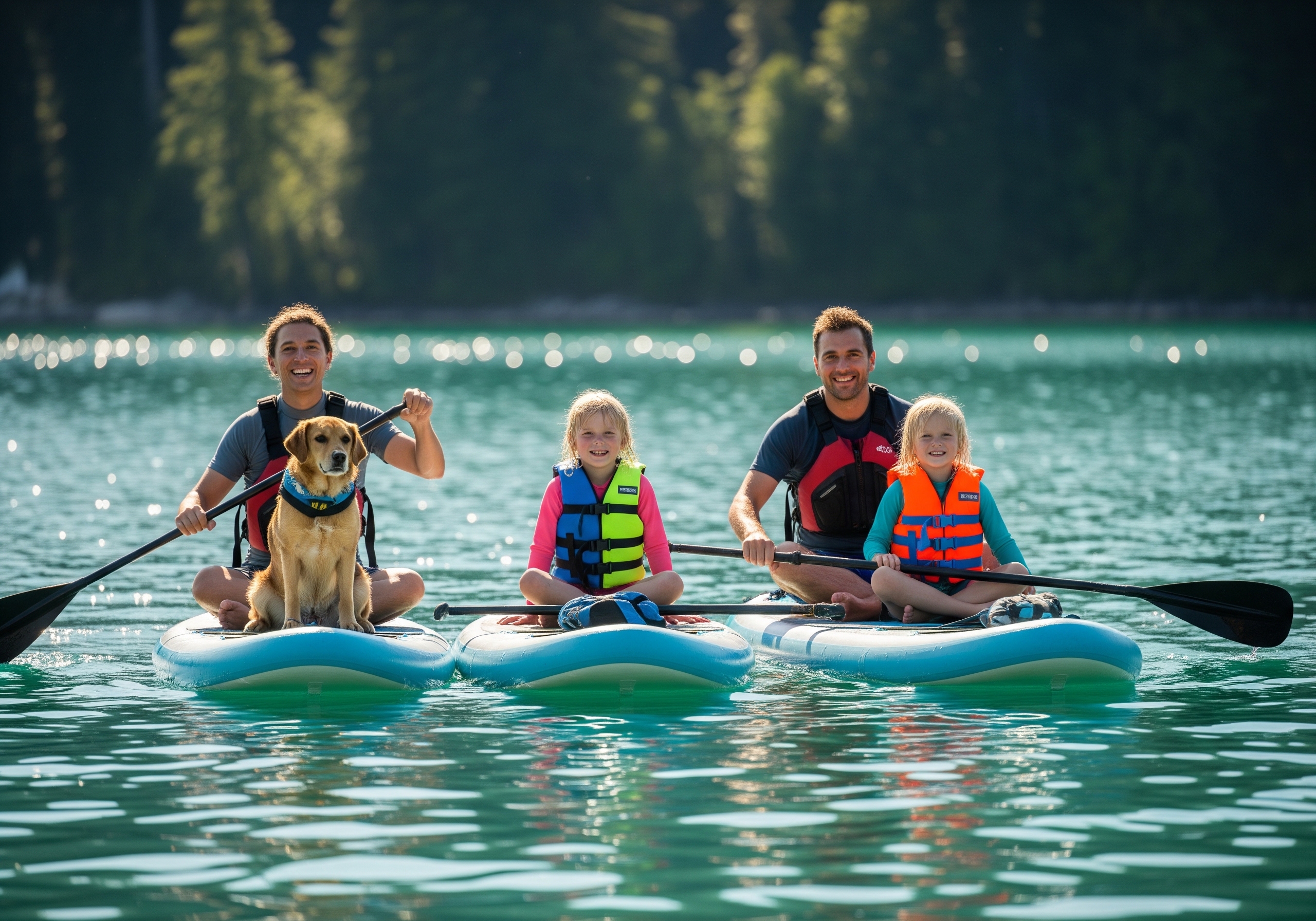
Paddling with kids, a partner, or the dog?
For families, capacity and stability matter more than speed. A wider board (34″+) with a high weight limit lets a kid or a dog ride up front without the nose dipping — and a big tandem hull means two adults can share one board instead of buying two.
Look for plenty of D-rings and a front bungee for gear, a center carry handle that doesn’t dig into your shoulder, and a leash for every rider. We flag which family boards genuinely survive a summer of being clambered on, and which ones don’t.
Paddleboarding with kids →We’d rather lose the sale than your trust.
We buy or borrow the boards, paddle them, and publish the cons right next to the pros. We earn a commission if you buy through our links — but it never buys a ranking, and we’ll tell you when the cheaper board is the smarter one.
Popular paddleboard guides.
Plain-English answers to the questions we get most — from total beginners and upgraders alike.
How to Paddleboard: A Beginner’s Guide
Stand up, balance, paddle straight and get back on after a fall.
Right-Size Your Board for Your Weight
The simple sizing math, minus the jargon — buy the right length once.
Inflatable vs. Hard Paddleboards
Where the “inflatables are worse” myth falls apart — and where it doesn’t.
How to Choose a Paddleboard
Match board to body, water and budget without the spec-sheet overwhelm.
Paddleboard questions we get a lot.
What size paddleboard do I need?
Inflatable or hard board — which is better?
Which paddleboard brand is best?
How much should I spend on a paddleboard?
Do you need a life jacket to paddleboard?
New to it? Start with the honest top picks.
The short, plain-English rundown of which paddleboards are worth your money this year — and which to skip.
See the best paddleboards →