
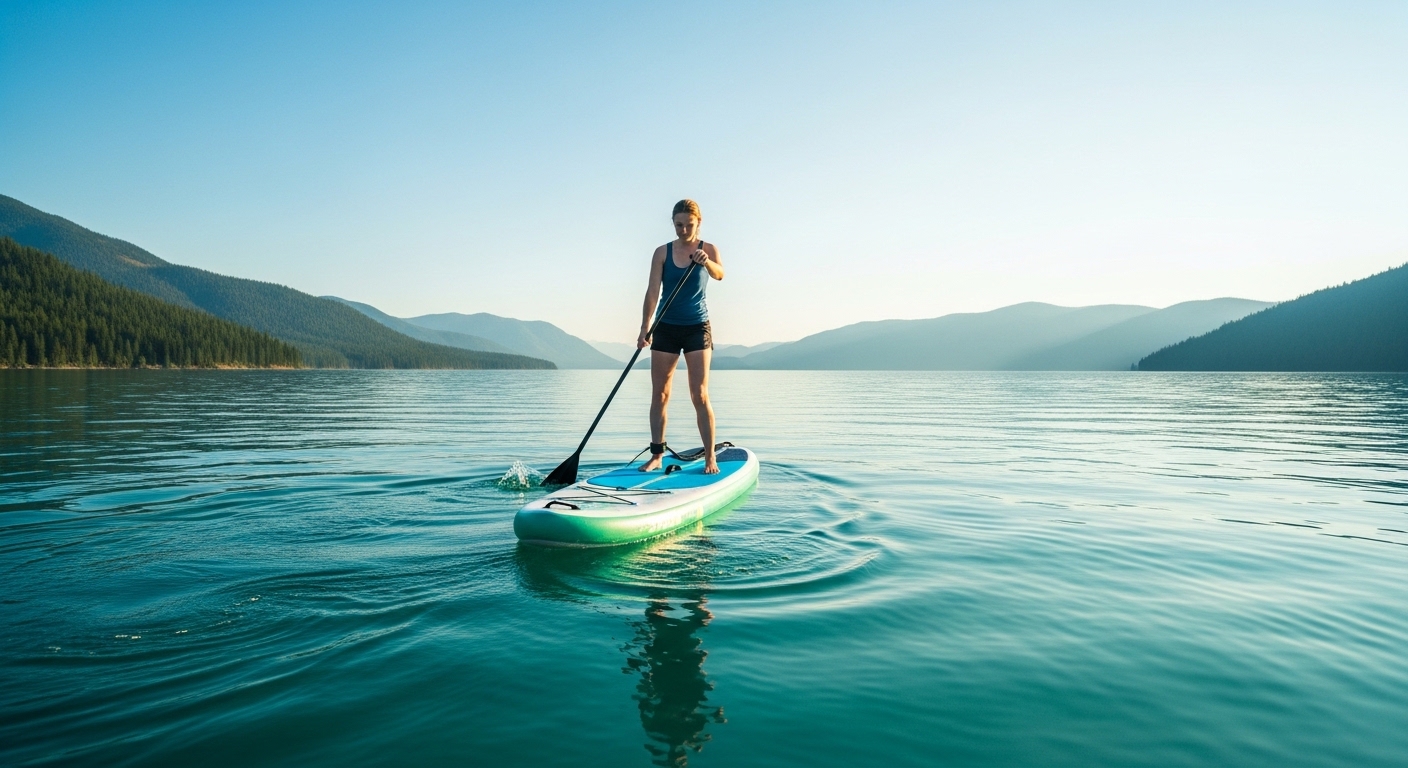
Inflatable SUPs, tested honestly.
The inflatable paddle boards we’d actually put a friend on — stiff, packable and tough, sorted by how you’ll really use yours. No copied spec sheets, no pay-for-placement.
For about 90% of paddlers, an inflatable is the right call — modern drop-stitch iSUPs are plenty stiff, they roll into a backpack, and they shrug off the rocks and dings that crack a hard board. We paddle them on real water and tell you the honest trade-offs, so you buy once, on the right board for you. Start with how you’ll use it 👇
Find your inflatable.
Pick the lane that fits you — each opens our tested inflatable picks for that use, with who it’s for and who should skip it.
Best Inflatable SUPs Overall
Our top all-around inflatables across budgets — the boards most people should buy.
See the picks →First boardBest Beginner Inflatables
Stable, forgiving, easy to climb back onto — the right place to start.
See the picks →Under $500Best Budget Inflatables
The cheap iSUPs that actually hold up — and the pool toys to avoid.
See the picks →AnglersBest Fishing iSUPs
Wide, stable, rigged for rods and gear without tipping you in.
See the picks →SUP yogaBest Yoga Inflatables
Extra-wide, soft-deck platforms that stay rock-steady mid-pose.
See the picks →Bigger ridersBest iSUPs for Heavy Riders
High-capacity inflatables that still feel stable for taller, heavier paddlers.
See the picks →DistanceBest Touring Inflatables
Longer, faster hulls that track straight and glide on long days.
See the picks →TandemBest 2-Person Inflatables
Big tandem iSUPs for couples, parents-with-kids, or paddling with the dog.
See the picks →By brandBest iSUP Brands
Who actually makes an inflatable worth owning — and who’s just marketing.
Compare brands →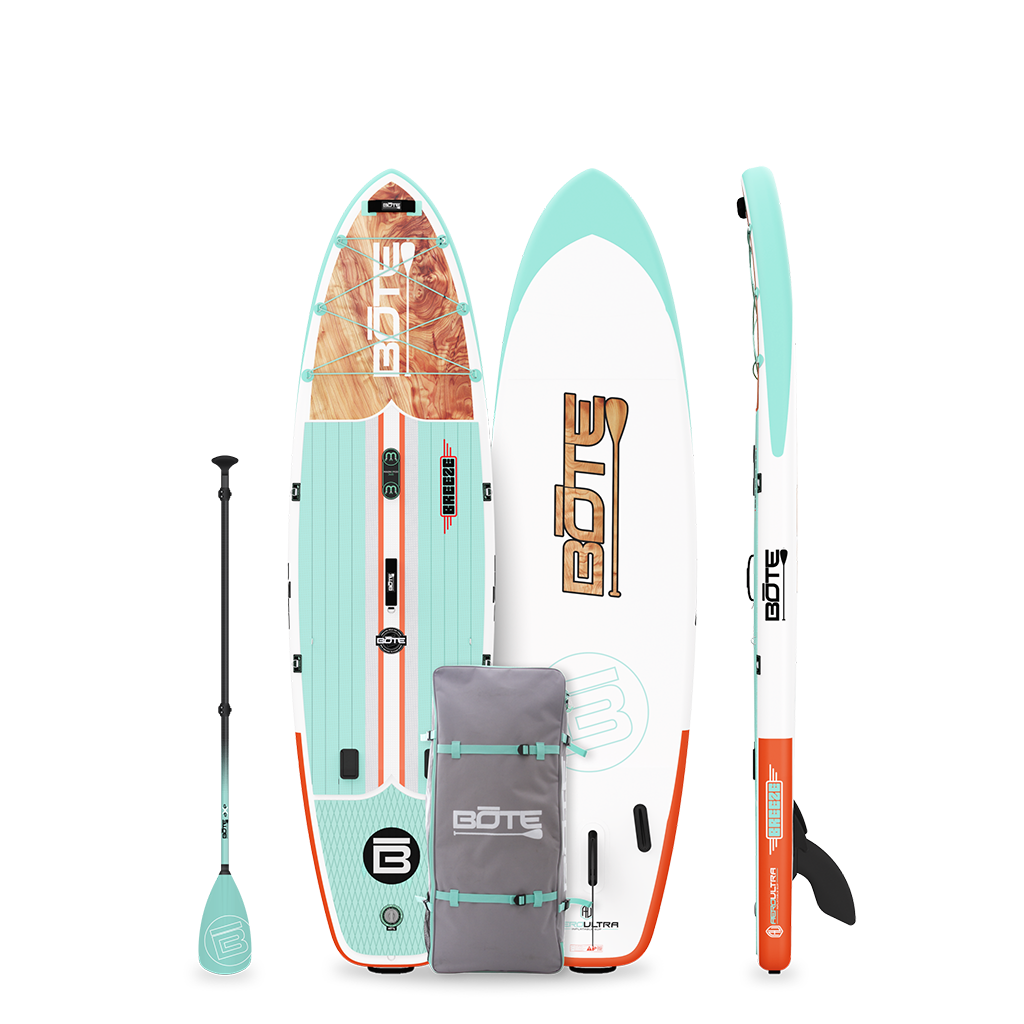
BOTE Breeze Aero
A genuinely stable, beginner-friendly all-around inflatable — 34″ wide, AeroULTRA-rigid drop-stitch and well-built, with a 2-year warranty and a 30-day guarantee. It rates 4.9★ from 600+ owners, and it’s the iSUP we’d hand most paddlers first.
New to inflatables? Start here.
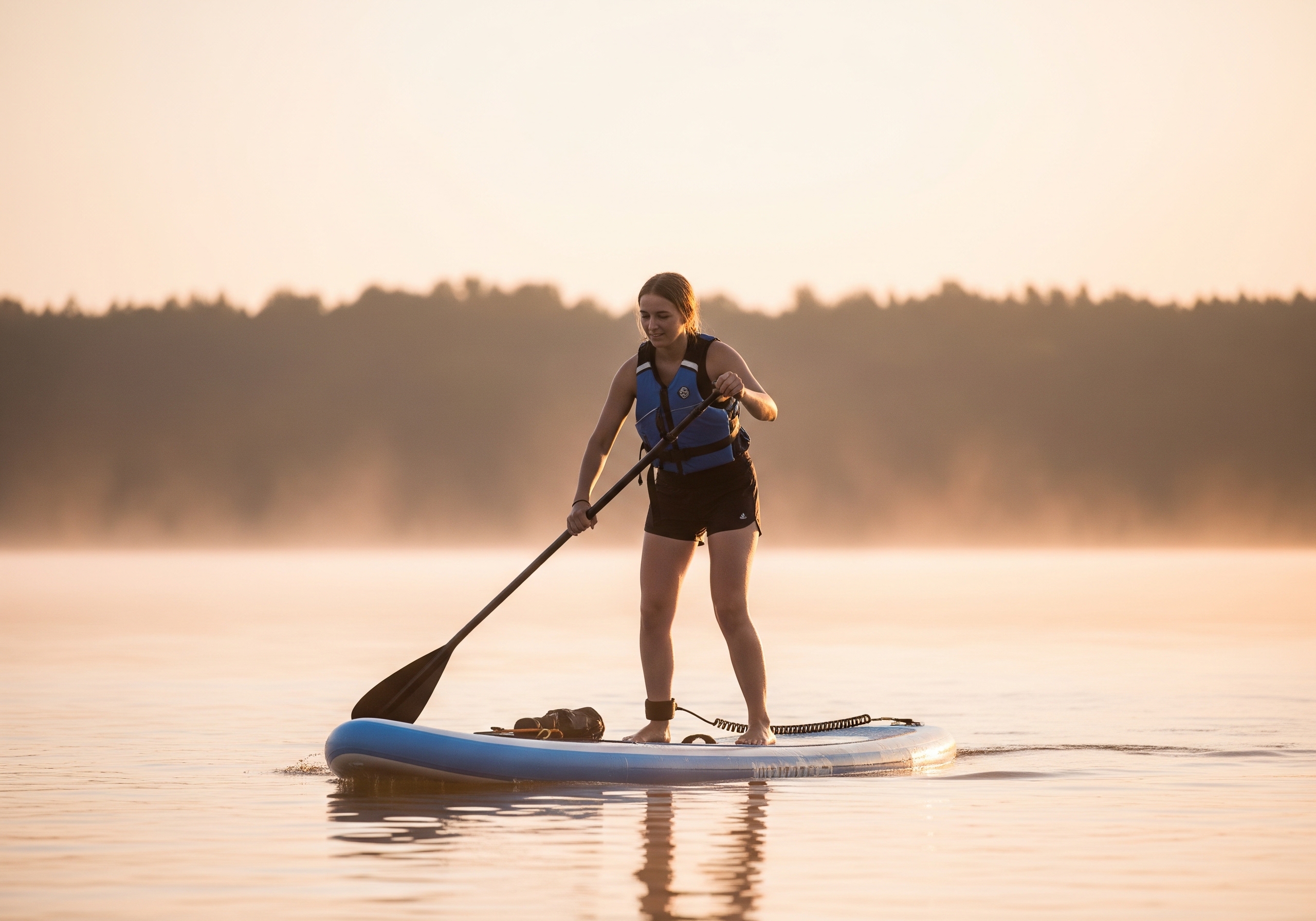
If you’ve never stood on a board, an inflatable is the forgiving way in. A stable all-around iSUP in the 10′6″–11′ range and 32″+ wide carries almost any beginner — it flexes a little when you land a fall instead of bruising a shin, and it’s easy to climb back onto from the water (you will fall, and that’s part of it).
Skip the rock-bottom no-name boards: the ones under ~$300 use thin single-layer PVC that flexes in the middle, which makes balancing harder, not easier. Spend a little more on a proper drop-stitch core and a half-decent paddle, and the whole sport gets easier on day one.
Best beginner inflatables →What actually matters in an iSUP.
Four things decide whether you love your inflatable or resell it. The plain-English version.
Stiffness & PSI
Drop-stitch core and 15–18 PSI is what makes an inflatable feel solid underfoot. Too soft and it bends like a banana under your weight.
Inflatable vs hard →Construction & durability
Double-layer (fusion) PVC lasts years and resists punctures; cheap single-layer boards flex and fail. This is where your money goes.
Materials compared →Size for your weight
Length, width and volume have to match your body and use, or the board feels tippy or sluggish no matter how stiff it is.
Size by weight →What’s in the kit
Pump, paddle, leash, fins and bag quality vary a lot. A cheap iSUP with a flimsy pump and a snap-prone paddle isn’t a deal.
Accessories that matter →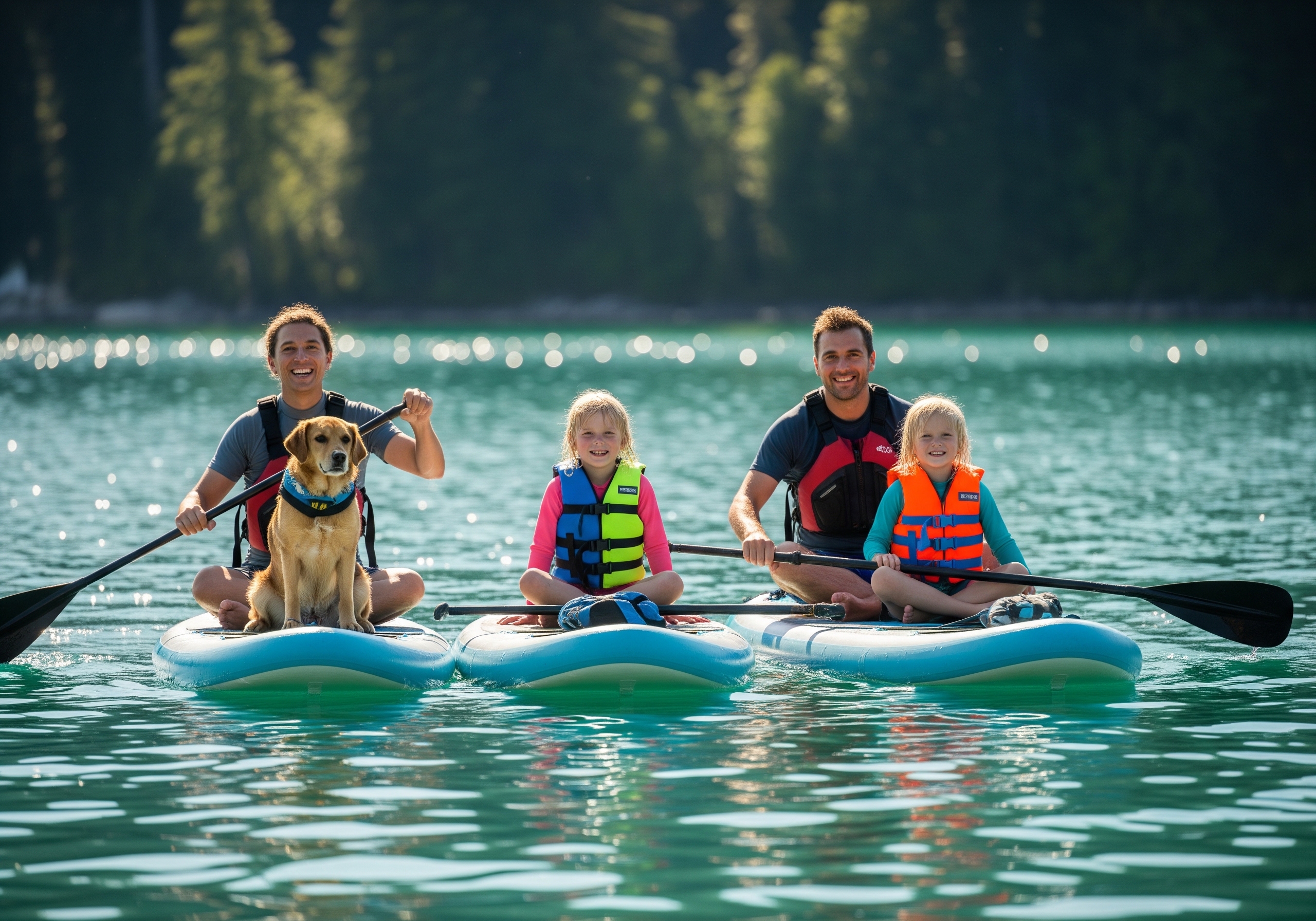
Paddling with kids, a partner, or the dog?
Inflatables are the family-friendly choice — a soft, grippy deck is kinder to knees and paws, and there’s no hard rail to crack a shin. For two-up paddling, capacity and stability matter more than speed: a wider board (34″+) with a high weight limit lets a kid or a dog ride up front without the nose dipping.
Look for plenty of D-rings and a front bungee for gear, a center carry handle that doesn’t dig in, and a leash for every rider. We flag which family iSUPs genuinely survive a summer of being clambered on, and which ones don’t.
Best 2-person inflatables →We’d rather lose the sale than your trust.
We buy or borrow the boards, paddle them, and publish the cons right next to the pros. We earn a commission if you buy through our links — but it never buys a ranking, and we’ll tell you when the cheaper board is the smarter one.
Popular inflatable SUP guides.
Plain-English answers to the questions we get most — from total beginners and upgraders alike.
Inflatable vs. Hard Paddleboards
Where the “inflatables are worse” myth falls apart — and where it doesn’t.
Right-Size Your Board for Your Weight
The simple sizing math, minus the jargon — buy the right length once.
How to Paddleboard: A Beginner’s Guide
Stand up, balance, paddle straight and get back on after a fall.
Fiberglass vs. Inflatable
Hard-board glide vs. inflatable convenience — which actually suits you.
Inflatable paddle board questions we get a lot.
Are inflatable paddle boards any good?
How stiff should an inflatable SUP be, and what PSI?
Do inflatable paddle boards pop or puncture easily?
How long do inflatable paddle boards last?
Inflatable or hard board — which is better?
How do you store an inflatable SUP?
Ready to pick one? Start with the honest top picks.
The short, plain-English rundown of which inflatable paddle boards are worth your money this year — and which to skip.
See the best inflatables →