Paddle Board Beginner Checklist
Everything you need to pack before your first (or fiftieth) session on the water.
Shop the essentialsForgetting one item can turn a great session into a frustrating — or even dangerous — one. Run through this paddle boarding checklist before every outing and you’ll launch with confidence.
How to Use This Checklist
Think of this guide as four stacking layers: Essentials (you literally cannot paddle without these), Safety (the items that keep a bad day from becoming an emergency), Comfort & Extras (small gear that dramatically improves the experience), and Seasonal (temperature-driven additions). Bookmark this page on your phone and scan it the night before a session — it takes about 90 seconds.
If you’re still sourcing gear, our roundup of the best paddle board accessories covers every category with tested picks at multiple price points.
Essentials: The Non-Negotiables
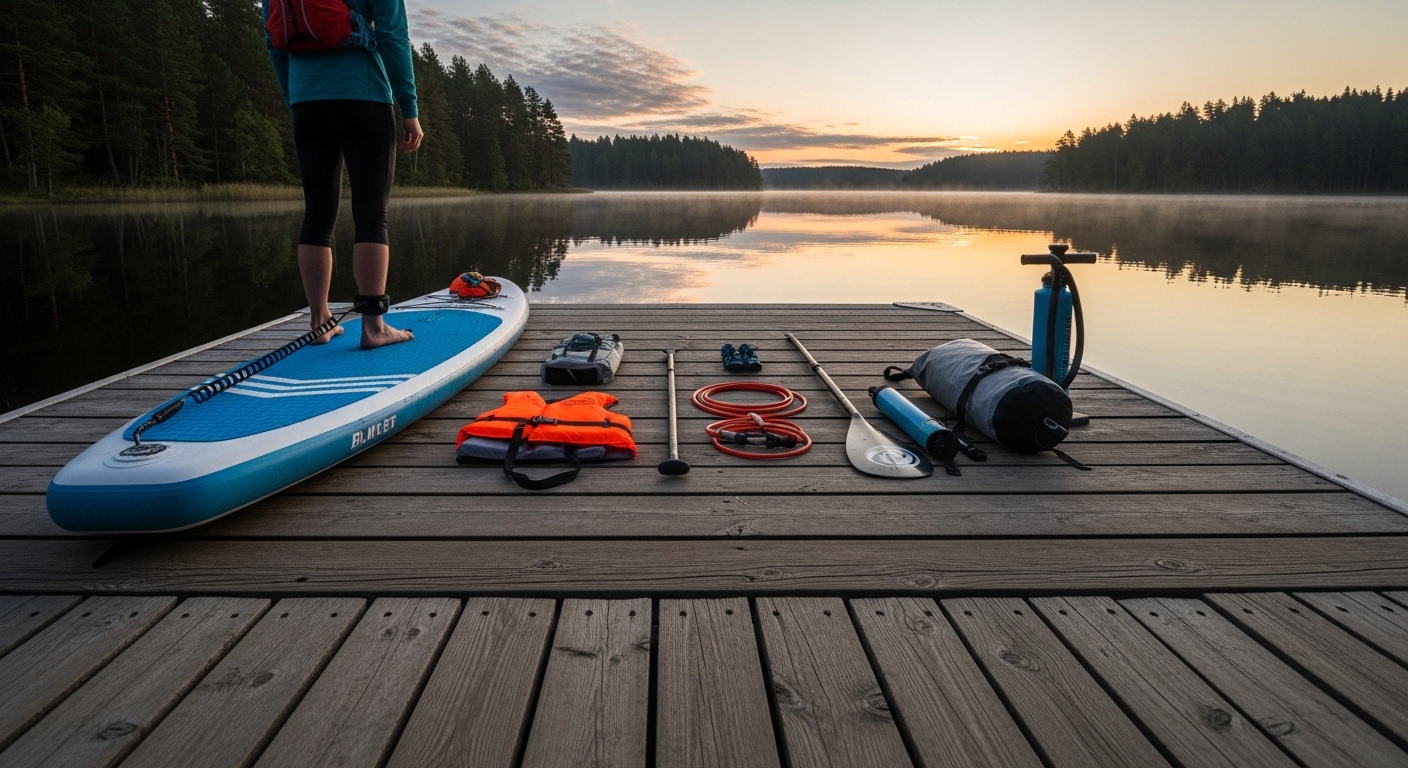
These are the six items without which your session either doesn’t happen or isn’t safe. Every single one needs to be physically in your vehicle before you leave the house.
Essential Gear
- Stand-Up Paddleboard — Inflatable or hard, matched to your skill level and water type; if you’re still deciding, see our guide to the best inflatable paddle boards for a beginner-friendly starting point.
- Paddle — Sized to roughly 6–10 inches above your head; an oversized paddle fatigues your shoulders fast.
- PFD (Personal Flotation Device / Life Jacket) — The U.S. Coast Guard classifies SUPs as vessels, which means a Coast Guard-approved PFD is legally required on board at all times — check the exact rules for your waterway at our life jacket rules page.
- Leash — Ankle leash on flatwater, calf or waist on moving water; your board is your biggest flotation device and the leash keeps it within arm’s reach if you fall.
- Pump (for inflatables) — A high-pressure pump specific to SUPs; a standard bike pump won’t reach the 12–15 PSI most inflatables require.
- Fins — Check that all fins are installed and secure before you load the board; a missing center fin turns a straight-tracking board into a frustrating spinner.
Safety: Preparedness That Takes Five Minutes
None of these items weigh much or cost much, but each one has genuinely bailed paddlers out of serious situations. Think of this category as your insurance policy — you hope you never need it, but you’ll be grateful it’s there.
Safety Gear
- Whistle — A pealess whistle clipped to your PFD meets the legal signaling requirement and can be heard over wind and waves when your voice can’t.
- Phone in a Dry Case — Keep it on your body (not the board) so you can call for help even if you’re separated from your SUP.
- Sun Protection / SPF 50+ — Water reflects UV directly upward; sunburn on the water hits faster and harder than on land, especially on your face, ears, and the back of your neck.
- Water / Hydration — Dehydration sneaks up in open sun; plan on at least 16 oz per hour on the water and bring more than you think you need.
- Weather Check — Check wind speed, storm forecasts, and water temperature within two hours of launch; conditions change fast and offshore wind can push you further out than your skills allow.
- Tell Someone Your Plan — A quick text stating where you’re launching, your expected route, and your return time costs nothing and creates a safety net if you don’t come back on schedule.
Comfort & Extras: Small Gear, Big Difference
These items won’t make or break safety, but they separate a session you’ll want to repeat from one you’ll dread. Most of them fit in a single dry bag. Once you’ve dialed in this layer you’ll wonder how you paddled without them.
Comfort and Convenience Gear
- Dry Bag — A 10–20 L roll-top dry bag strapped to your board’s bungee cords keeps keys, snacks, extra layers, and your first-aid kit genuinely dry even after a swim.
- Anchor — A compact folding anchor lets you hold position to fish, swim, or eat lunch without drifting; especially useful in tidal or river environments.
- Waterproof Phone Mount — A handlebar-style mount on your board’s nose means GPS navigation and camera access without pulling your phone out of a case mid-paddle.
- Change of Clothes and Towel — Pack these in the car, not on the board; dry clothes after a session feel luxurious and prevent the cold drive home.
- Water Shoes — Rocky launches, oyster beds, and hot pavement between the car and the waterline all argue in favor of neoprene water shoes over bare feet.
- Hat and Sunglasses with a Strap — A floating sunglass retainer costs about $5 and saves a $150 pair of polarized lenses from the lake bottom; a wide-brim hat handles the overhead sun your SPF might miss.
- Snacks — High-calorie, portable snacks (bars, nuts, jerky) in a sealed bag mean you can extend a session without bonking; paddling burns more calories than most beginners expect.
For a deeper look at what’s worth buying vs. what’s just gear clutter, read our hands-on review of the best paddle board accessories.
Seasonal Additions: Dressing for the Water Temperature
Air temperature is a trap. The rule that actually keeps you safe is dress for the water temperature, not the air temperature. Cold water immersion can cause involuntary gasping and muscle failure within seconds — well before hypothermia sets in. Add these items any time the water is below 60°F.
Cold-Water and Seasonal Gear
- Wetsuit (water 50–65°F) — A 3/2 mm full wetsuit keeps your core protected during a wet exit and makes cold-water sessions genuinely comfortable rather than something to survive.
- Drysuit (water below 50°F) — A drysuit seals out water entirely; paired with thermal base layers it’s the only reliable option for winter paddling in cold climates.
- Neoprene Gloves and Booties — Hands and feet lose heat fastest; neoprene accessories extend your comfortable range by 10–15°F without adding bulk.
- Layering Base and Mid Layers — Even on warm days, bring a light wind layer; spray and speed create a wind-chill effect that cools you faster than standing on shore suggests.
- Bright or Reflective Outerwear — In low-visibility seasons (fog, early morning, late evening) a high-visibility layer makes you easier for boat traffic to spot.
Before heading out in any conditions, it’s worth refreshing your fundamentals — our how to paddleboard guide covers posture, strokes, and what to do when you fall in.
Quick-Reference: Full Checklist Summary
Print this or save a screenshot to your phone before your next session.
Essentials
- Board — matched to skill and water type
- Paddle — correct height
- PFD / Life Jacket — Coast Guard approved, on board
- Leash — ankle (flatwater) or calf/waist (moving water)
- Pump — high-pressure SUP pump for inflatables
- Fins — installed and secured
Safety
- Whistle — clipped to PFD
- Phone in dry case — on your body
- SPF 50+ — applied and in your bag
- Water / hydration — 16+ oz per hour
- Weather check — within 2 hours of launch
- Float plan — texted to someone onshore
Comfort & Extras
- Dry bag — 10–20 L, bungee-secured
- Anchor — compact folding style
- Phone mount — waterproof, board-mounted
- Change of clothes + towel — in the car
- Water shoes — neoprene
- Hat + sunglasses with strap — floating retainer
- Snacks — sealed, calorie-dense
Seasonal / Cold Water
- Wetsuit — 3/2 mm for 50–65°F water
- Drysuit — below 50°F water
- Neoprene gloves + booties — for cold extremities
- Wind/mid layer — light packable shell
- High-visibility outerwear — low-light conditions
Frequently Asked Questions
Do I legally need a life jacket on a paddleboard?
Yes. In the United States the U.S. Coast Guard classifies stand-up paddleboards as vessels when used beyond the surf zone, which means you must have a Coast Guard-approved PFD on board for each person. Many states and local jurisdictions add additional requirements, including wearing the PFD rather than just carrying it. Read the full breakdown at our life jacket rules page before you launch.
What kind of leash should a beginner use?
On flatwater (lakes, calm bays, slow rivers) a straight or coiled ankle leash in the 8–10 ft range is the standard choice. It keeps the board close without creating a lot of drag. On moving water — rivers or surf — switch to a quick-release waist or calf leash so you can detach instantly if the board catches a current and starts pulling you underwater. Never use a surfboard ankle leash on a river.
What do I absolutely need for my very first paddleboard outing?
At minimum: board, paddle, properly fitted PFD, and an ankle leash. Add a whistle clipped to the PFD, sunscreen, and water. That covers the legal requirements and basic safety for a calm-water beginner session. If you’re renting gear and still figuring out what to buy, our guide to the best inflatable paddle boards is a practical starting point.
Should I bring my phone on the paddleboard?
Yes — but protected. Put it in a waterproof case or dry bag rated for at least 3 meters and keep it on your body rather than on the board. If you swim and the board drifts, you want your phone with you, not floating 50 yards away. A waterproof phone mount on the board nose is a great addition for navigation and photos, but use it alongside a case, not instead of one.
How do I know what to wear for cold-water paddleboarding?
The core rule: dress for the water temperature, not the air. Water at 55°F can cause cold shock and muscle failure in under a minute — a warm sunny day doesn’t change that math. At 50–65°F, a 3/2 mm wetsuit is the standard choice. Below 50°F, move to a drysuit with thermal base layers. For the full paddling stance and technique refresher that goes with your gear, see our how to paddleboard guide.