
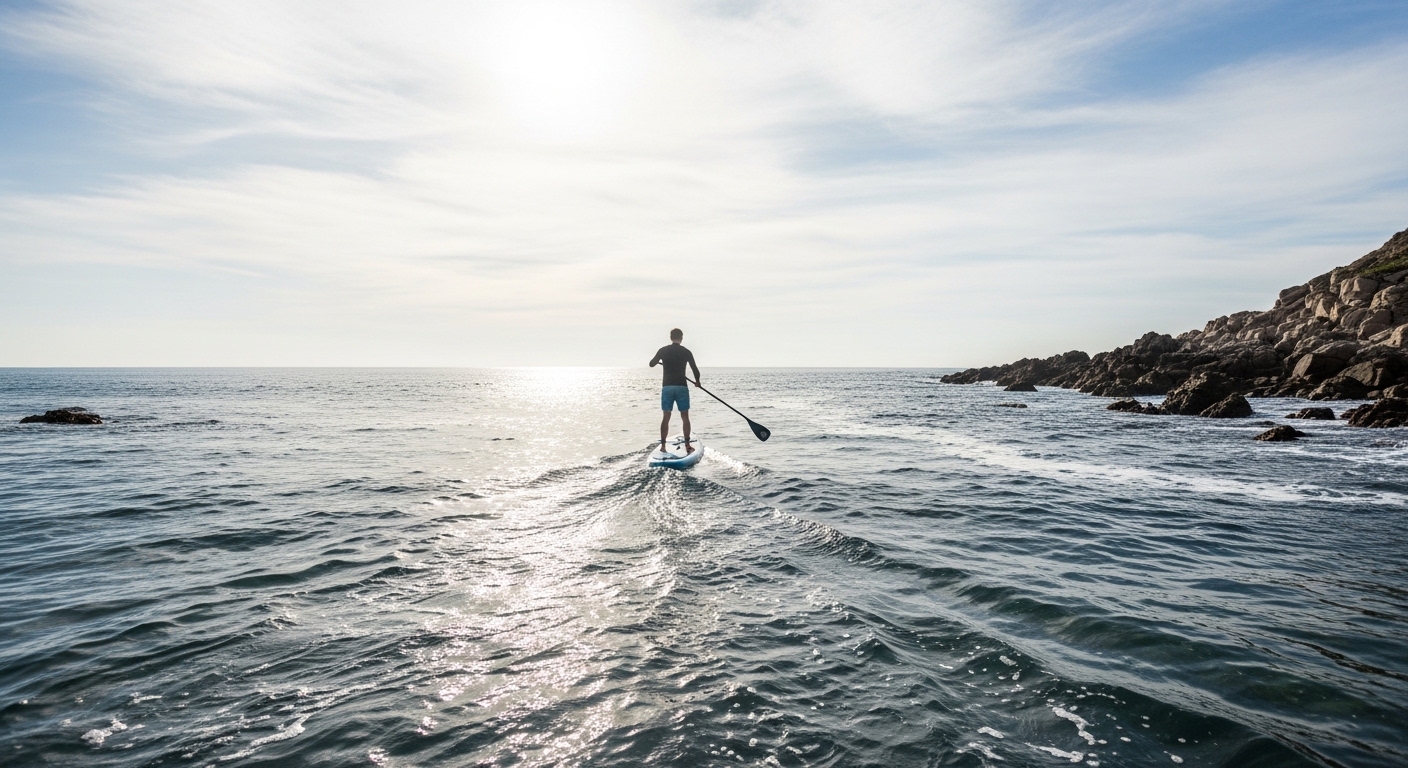
Can You Paddle Board in the Ocean?
Salt water, swell, and wind change the game — here is what you need to know before you launch.
See touring boardsYes, you can absolutely paddle board in the ocean — but ocean SUP is a different discipline from flatwater paddling, and going in unprepared is how people get into serious trouble.
Ocean SUP Is Real — and Worth It
Stand-up paddleboarding started in ocean surf. Hawaiian beach boys were using long boards and paddles in Waikiki before most people had ever heard the word SUP. The ocean is where the sport was born, and for good reason: gliding across open water with a swell lifting you from behind is one of the best feelings in paddling.
That said, the ocean does not care about your experience level. Tides shift. Wind picks up without warning. Currents run parallel to shore and pull you sideways faster than you expect. None of that makes ocean paddling off-limits — it makes it a skill you build deliberately, with the right gear and the right habits, rather than something you wing on a busy beach vacation.
If you are brand new to the sport, spend a session or two on calm water first. Our full guide on how to paddleboard covers stance, stroke, and balance fundamentals that will serve you whether you are on a lake or the Atlantic.
Ocean vs Lake vs River: What Actually Changes
Ocean
The ocean is dynamic in ways that lakes almost never are. You are dealing with three separate forces at once: wind, swell, and current. Wind chop creates short, irregular waves that make balancing harder and forward progress slower. Swell — longer, rolling waves generated by distant storms — can look manageable from shore and feel overwhelming once you are out past the break. Tides add a layer most freshwater paddlers never think about: a flood tide pushing you onto rocks, or an ebb tide dragging you offshore while you are trying to paddle back in.
Salt water is also denser than fresh water, which means you float slightly higher and your board feels a touch more buoyant. That is a small plus. The corrosion factor is not: salt eats fin boxes, corrodes metal hardware, and degrades unrinsed inflatable valves over time. Rinse everything after every salt session.
Lake
Lakes are the most forgiving SUP environment. No tide, no swell, and — on most inland lakes — limited fetch means wind rarely builds serious chop before you can paddle back to shore. Visibility is high, water temperature is often warmer in summer, and the learning curve is gentler. If you are choosing your first session environment, a calm lake on a low-wind morning is the right call.
The tradeoff: lake paddling can lull you into habits that do not transfer to open water. No current means you never learn to read water movement. No swell means your balance is never seriously tested. Treat lake sessions as a training ground, not the ceiling.
River
Rivers introduce the one variable that neither lakes nor oceans have: persistent, directional current. On a slow-moving flatwater river, that current is gentle enough that beginners handle it fine with some basic instruction. On a moving river with any gradient, obstacles, or whitewater, the stakes climb sharply. Current can pin you against a rock or a strainer (a submerged log or debris) before you have time to react.
What to Know Before Your First Ocean Session
Preparation is the difference between a great session and a Coast Guard call. Run through this checklist before you launch.
- Check the forecast: Wind is the biggest variable. Anything above 10–12 mph creates choppy conditions that punish beginners. Offshore wind (blowing away from shore) is especially dangerous — it is easy to paddle out on calm water and find yourself unable to fight back in against the wind. Onshore wind pushes you toward shore, which is safer but still rough. Check National Weather Service marine forecasts before every ocean session.
- Check the tides: Know whether the tide is flooding or ebbing and how strong the tidal current is expected to be. NOAA Tides and Currents publishes hourly predictions for most coastal areas at no cost.
- Start in a protected bay or cove: A harbor mouth, a sheltered cove, or the calm side of a jetty reduces your exposure while you learn how ocean water moves under your board. Save exposed coastlines for after you have that baseline.
- Wear your leash — always: In the ocean your board is your flotation device. Lose it in conditions and you are swimming, possibly far from shore. A coiled leash keeps it attached without trailing in the water.
- Wear a PFD: Inflatable belt-pack PFDs are low-profile and Coast Guard-approved. There is no good argument for skipping one in open water.
- Tell someone your plan: Where you are launching, where you plan to go, and when you expect to be back. Simple, takes thirty seconds, and matters if something goes wrong.
- Stay closer to shore than feels necessary: Your first few sessions should keep you within easy swimming distance of the beach. You can always push further out as your confidence and skills build.
Choosing the Right Board for Ocean Paddling
Board shape matters more in the ocean than on flat water. A wide, short beginner board that is stable on a lake becomes a liability in chop — it catches wind, wallows between waves, and is exhausting to keep pointed in a straight direction.
For ocean flatwater and touring, a longer, narrower board with a pointed nose tracks significantly better. Boards in the 11- to 14-foot range with a displacement or semi-displacement hull cut through chop rather than bouncing over it, and they hold a line with far less correction strokes. Our best touring paddle boards guide covers the top options in that category with notes on which hull shapes suit ocean conditions.
Not sure what length or volume fits your body weight and water type? Use our paddle board size chart to find your starting point before you buy.
Inflatable vs. hard board is a genuine question for ocean use. Hard epoxy boards are faster and more responsive in swell, which is why performance surfers and racers use them. But a quality inflatable — properly inflated to the manufacturer’s PSI spec — handles ocean flatwater and mild chop well, travels easily, and takes impact from rocks and shells without cracking. The key is rinsing the valve and fin system thoroughly with fresh water after every salt session. Browse all our paddleboards to compare hard and inflatable options side by side.
River SUP: Current Changes Everything
River paddleboarding splits into two categories that are almost different sports. Flatwater river touring — paddling a calm river at walking pace with no significant gradient — is accessible to intermediate paddlers who are comfortable on open water. You need to read eddies (calm pockets behind rocks and points), ferry across current at an angle rather than fighting it head-on, and be aware of what is around the next bend before you commit to it.
Whitewater SUP is a legitimate discipline, but it requires whitewater-specific training, a shorter, rockered board designed to surf waves and punch through hydraulics, a helmet, and a thorough understanding of swift-water safety. Do not take a touring board onto Class III water expecting it to handle the way a dedicated river board would.
The leash rule is worth repeating because it is counterintuitive to anyone coming from ocean or lake paddling: ankle leashes are prohibited on moving water. If you swim in a current and your board accelerates away from you, an ankle leash can wrap around a submerged rock or log and hold you underwater. Quick-release belt leashes designed for whitewater — with a pull handle at the hip — are the correct tool for any river with meaningful current.
Safety Rules That Apply Everywhere
A few rules hold regardless of whether you are on the ocean, a lake, or a river.
- Never paddle alone in remote water. Paddling with a partner means someone can go for help or assist if you get hurt or fatigued.
- Respect your fitness limits. Paddling back against wind, chop, or current is significantly harder than going out felt. Budget twice the energy for the return leg on open water.
- Know how to self-rescue. Practice falling off and remounting your board in calm water before you need to do it in rough conditions. It is easier than it looks once you have done it a few times, and close to impossible if you have never practiced.
- Dress for the water temperature, not the air temperature. A warm sunny day does not guarantee warm water. Cold-water immersion affects muscle function and cognitive clarity within minutes. A wetsuit or drysuit appropriate for the water temperature is not optional on cold coastlines.
- Carry a whistle. Inexpensive, attaches to your PFD, and audible from hundreds of yards in conditions where shouting is useless.
These are not just beginner rules. Experienced paddlers follow them every session because the stakes on open water do not drop as your skill level rises — they just become more familiar.
Bottom Line: Start Smart, Then Push Your Limits
Ocean paddleboarding is genuinely accessible to anyone who takes it seriously enough to prepare. You do not need to be an athlete or a surfer. You need to check the forecast, respect the conditions, bring the right gear, and build your experience in progressively challenging water rather than jumping straight to an exposed headland on a gusty afternoon.
Start on a protected bay or calm lake to build your foundation. Read our how to paddleboard guide to lock in the fundamentals of stance and stroke. Then, once flat water feels automatic, take those skills to the ocean — methodically, with good gear, and with someone who knows what they are doing nearby. The ocean rewards preparation with some of the best paddling you will ever do.