
Do You Get Wet in a Sit-On-Top Kayak?
Short answer: yes. Here's exactly how much, why it happens, and what you can do about it.
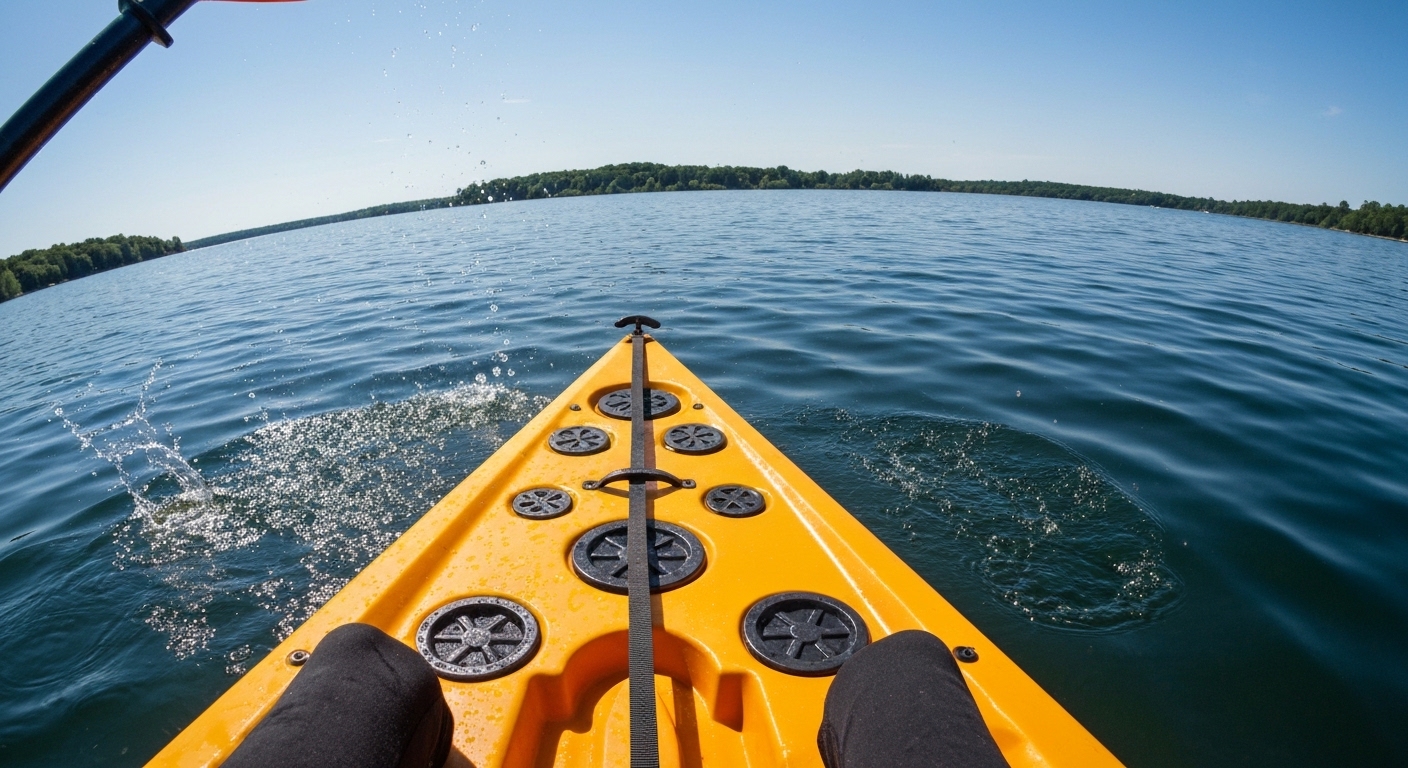
Sit-in vs sit-on-topSit-on-top kayaks are the most popular recreational kayaks sold today — and one of the first questions new paddlers ask is whether they’ll end up soaked. The honest answer is that you will get wetter in a sit-on-top than you would in a sit-in kayak. Water drips off your paddle, spray comes over the bow, and — here’s the part that surprises people — water actually comes up through holes in the hull. None of this means sit-on-tops are a bad choice. It just means you go in knowing what to expect.
Why You Get Wet: The Three Main Sources
Getting wet in a sit-on-top kayak comes from three places, and understanding each one helps you manage all of them.
Paddle drip. Every time you complete a stroke, water runs down the shaft and drips onto your lap and legs. A low-angle touring paddle with drip rings minimizes this, but it never eliminates it. After an hour of paddling, your shorts and thighs will be damp regardless.
Splash and spray. Sit-on-tops sit higher on the water than sit-ins, which means the bow cuts through small waves instead of riding over them cleanly. On a choppy lake or open bay, you’ll catch spray across your cockpit area. Calm flatwater? This is almost a non-issue. Wind chop or coastal paddling? Expect it.
Scupper holes. This one catches beginners off guard. Look down at the floor of a sit-on-top and you’ll see round holes going straight through the hull. Water comes up through them when you sit down — sometimes enough to pool around your ankles. Lighter paddlers notice it less; heavier paddlers push the hull lower and get more water wicking up. On a warm summer day it’s refreshing. In 55°F water it’s a problem.
What Scupper Holes Are Actually For (It's a Safety Feature)
Scupper holes exist for one reason: self-draining. Because sit-on-tops have an open deck with no enclosed cockpit, water from waves, rain, or a wet paddler has nowhere to go — it would just pool and accumulate. The scupper holes let that water drain back out through the hull by gravity.
This is what makes sit-on-tops so forgiving. If a wave washes over the deck, the water runs off the sides and drains through the scuppers within seconds. There’s no bailing, no sponging, no cockpit flood. If you flip — which happens, especially to beginners — you simply roll the boat back over, climb back on, and paddle away. The water that came aboard drains out on its own as you move.
Compare that to a sit-in kayak: water that gets into the cockpit stays there. You need a spray skirt to prevent it or a pump to remove it. The sit-on-top trades a drier ride for a much simpler recovery, and most recreational paddlers make that trade happily. For a full side-by-side breakdown, see our guide on sit-in vs sit-on-top kayaks.
The key takeaway: scupper holes aren’t a design flaw. They’re the feature that makes the whole boat work.
Scupper Plugs: When and Why to Use Them
Scupper plugs are tapered rubber or foam inserts that block the scupper holes from below. They prevent water from wicking up through the hull, which keeps your seat and feet drier on calm days.
Use them when:
- You’re paddling flat, calm water with no wave action
- The water or air temperature is cold enough that wet feet are uncomfortable or dangerous
- You’re fishing and want to keep your gear dry
- You’re a lighter paddler who sits high enough that scupper flow is minimal anyway
Don’t rely on them when:
- You’re in choppy conditions where waves regularly wash the deck — you need the drainage
- You’re a newer paddler still working on balance — the self-draining function is a real safety benefit
Plugs typically cost $10–$20 for a set and are kayak-specific, so check your hull diameter before ordering. Many new kayaks include them in the box. They take about 30 seconds to install and remove, so you can adjust based on conditions at the put-in.
Cold Water Changes Everything
In summer on a warm lake, getting wet in a sit-on-top is a feature, not a bug. The splash keeps you cool, and if you flip, you just swim back to the boat. Easy.
Cold water is a different situation entirely. Cold water shock can incapacitate a swimmer in seconds. Hypothermia can set in within minutes in water below 60°F. The paddle drip and scupper seep that felt refreshing in July feel genuinely dangerous in April.
The rule paddlers use: dress for the water temperature, not the air temperature. If the water is cold, you need either a wetsuit (neoprene that keeps you warm even when wet) or a drysuit (a waterproof outer layer that keeps you dry). A wetsuit rated for the water temp is the minimum — a drysuit is the right answer for water below 50°F.
This applies to sit-on-tops more than sit-ins because your exposure is higher. Your legs are out in the open, scupper water contacts your feet, and re-entry after a flip means a few moments in the water. Check our full guide on what to wear kayaking for layering recommendations by water temperature.
Why Sit-On-Tops Are Still Worth It
Given all of the above, why are sit-on-tops the bestselling recreational kayak category? Because the trade-offs are genuinely worth it for most paddlers.
Stability. The wider, flatter hull design that comes with most sit-on-tops makes them harder to flip than narrow touring kayaks. Beginners can focus on paddling instead of balance anxiety.
Easy re-entry. Flip a sit-in kayak in deep water and you’re in a serious situation — getting back in requires real skill and often a paddle float or rescue partner. Flip a sit-on-top and you push down on one side, kick your legs, and you’re back on board. Kids, older paddlers, and swimmers all appreciate this.
Fishing. Anglers love sit-on-tops because you can stand up (on wide models), reach over the sides easily, and your gear stays accessible on the open deck. Most fishing kayaks are sit-on-tops for exactly this reason.
No claustrophobia. Some paddlers feel anxious in an enclosed cockpit. A sit-on-top eliminates that entirely.
If you’re shopping for your first kayak and trying to decide which design fits your paddling style, our guide to the best recreational kayaks walks through the top picks in both categories with honest assessments of who each one suits.