
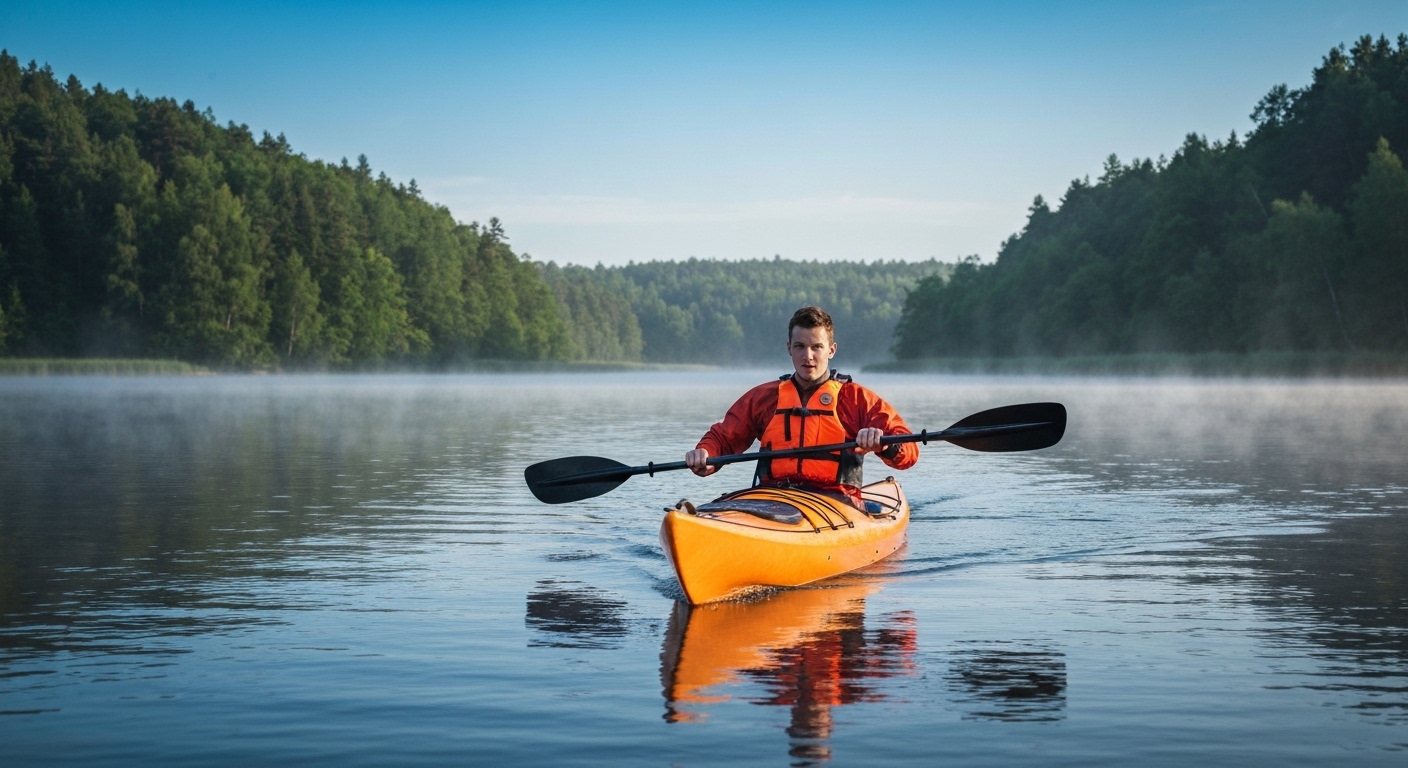
What to Wear Kayaking
What you wear on the water can be the difference between a great day and a dangerous one. Here's how to dress smart for every season.
Kayak accessoriesKayaking clothing gets one rule wrong more than any other: people dress for the air temperature and forget about the water. A sunny 75°F day feels warm on shore, but if the water is 52°F and you flip your kayak, you have minutes before cold-water shock starts affecting your ability to swim, think, and stay safe. This guide covers what to wear kayaking in every season — from summer flatwater paddles to cold spring river runs — so you stay comfortable, protected, and prepared for whatever happens.
The Golden Rule: Dress for the Water, Not the Air
Before anything else, commit this to memory: dress for the water temperature, not the air temperature. It is the single most important rule in kayaking clothing, and it saves lives.
Here is the practical version: add the air temperature and the water temperature together. If that number is below 120°F, you need thermal protection — a wetsuit or drysuit — regardless of how warm the day feels. If both numbers are high and the total clears 120°F comfortably, lighter clothing is generally safe for calm conditions. But the water number always carries more weight.
Why does this matter so much? Cold-water immersion is a genuine emergency. When a person enters water below 60°F, the body’s cold shock response triggers involuntary gasping, hyperventilation, and rapid loss of swimming ability — often within the first 30 to 90 seconds. Even strong swimmers lose muscle control before they lose consciousness. A wetsuit or drysuit buys you critical time to self-rescue or be rescued.
Warm Weather Kayaking: Summer Essentials
When both the air and water are warm — late summer flatwater paddling, coastal trips in southern climates — the goal shifts from thermal protection to sun protection and comfort over long hours on the water.
Base layer and swimwear: A swimsuit or board shorts work fine as your bottom layer. On top, skip the cotton T-shirt entirely (more on that below) and reach for a rash guard or quick-dry paddle shirt. Rash guards block UV rays, dry fast when wet, and prevent chafing from your PFD straps over a full day of paddling. Long-sleeve versions give better sun coverage without adding heat, because they breathe well and the fabric stays cool when damp.
Sun protection: The sun reflects off the water and doubles its intensity. A wide-brim hat — ideally one that stays on in wind or has a chin strap — is non-negotiable. Add polarized sunglasses with a retention strap: polarized lenses cut glare off the water surface, which reduces eye fatigue on long paddles and lets you read shallow water better. Losing your sunglasses mid-trip is miserable. A strap costs almost nothing and prevents it.
Apply a broad-spectrum SPF 30 or higher sunscreen to all exposed skin before launch, and carry it in your drybag for reapplication. Zinc-based formulas hold up better on the water than chemical sunscreens. Don’t forget the back of your hands, your neck, and the part in your hair.
Pair your summer clothing with smart kayak accessories — a drybag for your phone and wallet, a water bottle mount, and a paddle leash so you don’t spend half the trip chasing your paddle.
Cool Weather Kayaking: Spring and Fall Layering
Spring and fall are the trickiest seasons for dressing. Air temperatures can feel mild while the water is still dangerously cold from winter runoff or hasn’t had time to warm up. This is the time of year when the 120-degree rule matters most, because the gap between how it feels and how cold the water actually is can be deceptive.
Wetsuit basics: A wetsuit is the most practical thermal option for most recreational paddlers. It works by trapping a thin layer of water against your skin and using your body heat to warm it. A 3mm shorty wetsuit covers your torso and upper legs and works well for water in the 55–65°F range in mild air. For colder water or longer trips, a 3mm full wetsuit gives more coverage. Wetsuits are widely available, much less expensive than drysuits, and easy to move in.
Layering over a wetsuit: A neoprene top or a thin fleece mid-layer over your wetsuit adds insulation and wind protection without bulk. On cool, breezy days, a paddle jacket — a lightweight, water-resistant shell designed for kayaking — worn over your insulating layer is extremely useful. It cuts wind chill and keeps splash off without restricting your paddle stroke.
Neoprene accessories: As temperatures drop into the cool range, add neoprene gloves and a thin neoprene beanie or paddling cap. Heat loss from your hands and head is significant, and cold fingers lose grip and dexterity quickly. Neoprene 2mm gloves are enough for most cool-weather paddling without sacrificing feel on the paddle shaft.
Cold Weather Kayaking: When to Use a Drysuit
When water temperatures drop below 50°F — late fall, winter, or early spring in most of the country — a drysuit is the right answer. A drysuit keeps you completely dry by sealing at the neck and wrists with neoprene gaskets. Unlike a wetsuit, which manages heat after you get wet, a drysuit prevents you from getting wet at all.
You wear insulating layers underneath a drysuit: a moisture-wicking base layer, a mid-layer of fleece or synthetic insulation, and the drysuit over the top. This lets you adjust warmth by swapping layers for different conditions, which makes drysuits more versatile across a wider temperature range.
Drysuits are a serious investment. Entry-level options start around $500 and quality expedition suits run well over $1,000. The gaskets require maintenance and eventual replacement. For paddlers who regularly kayak in cold water, a drysuit pays for itself in safety. For occasional cold-weather outings, a quality wetsuit combined with good layering is a more realistic starting point.
Either way, pair cold-weather gear with a reliable PFD. Your best beginner kayaks and most rec kayaks sit low in the water, and a capsize in cold conditions requires immediate flotation.
Footwear: What to Wear on Your Feet
Your feet take a beating kayaking — launching from rocky shores, dragging the boat, wading through shallows, and standing in cold water. Bare feet are a bad idea in almost every condition.
Water shoes are the standard warm-weather solution. Look for shoes with a rubber sole that grips wet rock, drainage ports, and a secure fit that won’t pull off in current. Mesh uppers dry quickly and don’t hold water like canvas does.
Neoprene booties are the cold-weather and cold-water upgrade. A 3mm neoprene bootie keeps your feet significantly warmer when launching in cold water or paddling through early-season conditions. They work inside many kayak cockpits and provide enough sole to walk on rocky put-ins.
Avoid sandals with thin straps for anything more than flatwater paddling in summer — they come off easily and provide no ankle support. Flip-flops are a put-in shoe only; leave them in the car.
If you’re gearing up for your first season, our roundup of our kayak guides covers everything from boat selection to accessory picks in one place.
Never Wear Cotton on the Water
Cotton is the single most common clothing mistake among new kayakers, and it’s worth its own section.
Cotton absorbs water and holds it against your skin. Wet cotton provides zero insulation, dries very slowly, and in cold conditions actively accelerates heat loss by pulling warmth away from your body. A wet cotton T-shirt in 60°F air with any wind is a recipe for hypothermia, even without a capsize.
This applies to everything: shirts, pants, base layers, and socks. Replace cotton with synthetic fabrics like polyester or nylon, wool (merino wool is excellent as a base layer in cold weather), or neoprene. These materials either wick moisture away from your skin (synthetics, merino) or insulate even when wet (neoprene, some wools). Quick-dry fabrics are widely available and are not significantly more expensive than cotton equivalents.
The phrase paddlers use is simple: cotton kills. It’s a bit dramatic for a warm summer flatwater day, but it is not an exaggeration in cold or wet conditions. Leave the cotton hoodie in the car.
Seasonal Quick-Reference: What to Wear Kayaking
Here is a fast breakdown of clothing by season for most North American conditions. Adjust based on your specific water temperatures — always check before you launch.
- Summer (water 70°F+): Swimsuit or board shorts, rash guard or quick-dry paddle shirt, PFD, wide-brim hat, polarized sunglasses with strap, water shoes, SPF 30+.
- Late Spring / Early Fall (water 55–70°F): Wetsuit (full or shorty depending on temp), paddle jacket for wind, neoprene booties, PFD, hat, sunglasses. Check the 120-degree rule before swapping to lighter clothing.
- Cold Water / Winter (water below 55°F): Drysuit with insulating layers underneath (or thick full wetsuit minimum), neoprene gloves, neoprene cap or balaclava, neoprene booties, PFD. No exceptions on thermal protection.
- All seasons: PFD always on the water, never cotton, footwear at all times, sun protection year-round (UV reflects off water even on overcast days).
Dressing right is part of being a prepared paddler. Gear knowledge matters just as much — browse kayak accessories to round out your kit with the essentials that keep every trip running smoothly.