
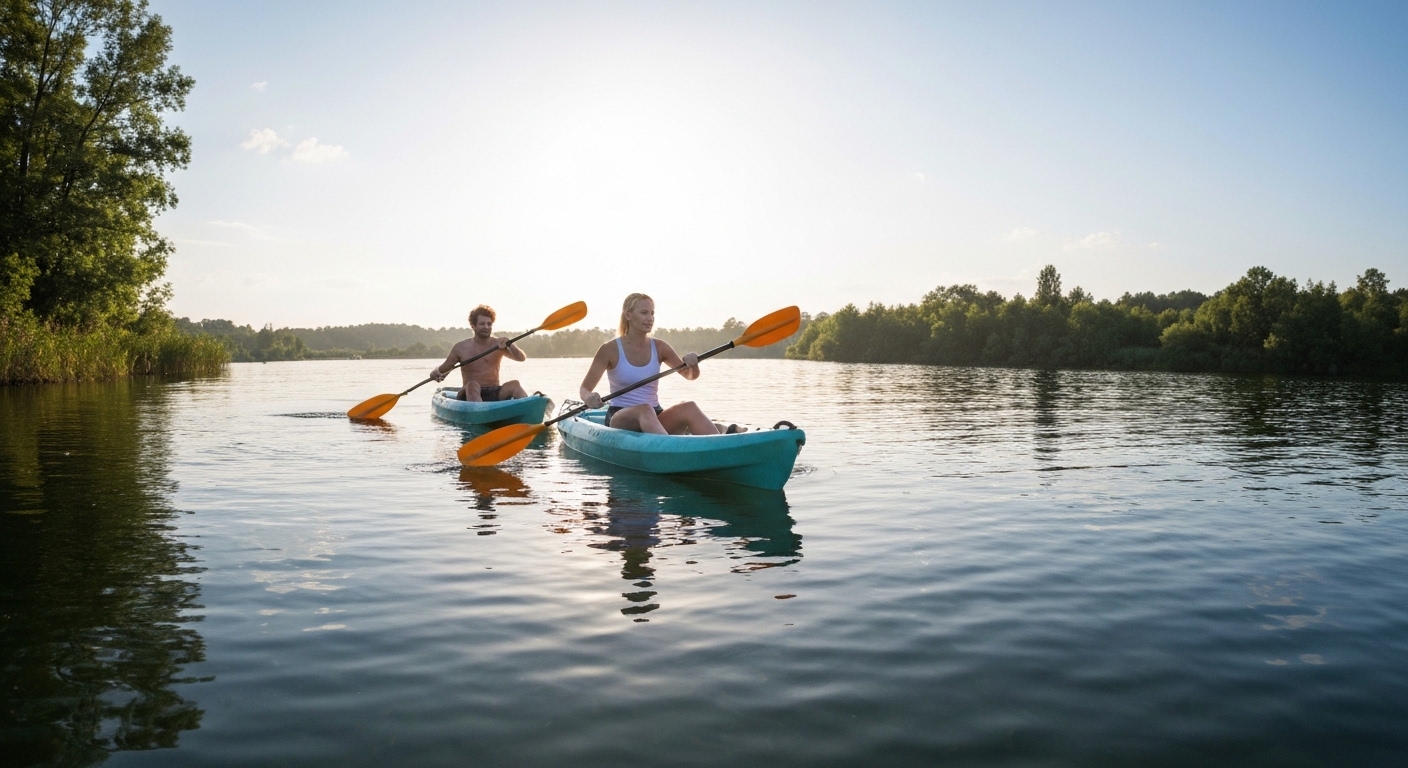
Best Tandem Kayaks of 2026
The best tandem kayak for most people isn't the most expensive one — it's the one that fits your water, your budget, and your paddling partner without ending the relationship.
See the top picks →Tandem kayaks promise a shared adventure. What they actually deliver depends heavily on which boat you pick. The wrong choice means one person doing all the work while the other steers badly, a kayak too heavy to car-top alone, or an inflatable that handles like a pool toy on moving water. The right choice means more time on the water, less time arguing about whose fault the zigzag was. We cut through the noise and picked four real tandem kayaks — one for every budget and use case — with honest cons sitting right next to the pros.
At a Glance
| Kayak | Best for | Specs | Price |
|---|---|---|---|
| Intex Explorer K2 | Best Budget Inflatable Tandem | — | ~$110 |
| Sea Eagle SE370 | Best Durable Inflatable Tandem | — | ~$350 |
| Ocean Kayak Malibu Two | Best Sit-On-Top Tandem | — | ~$900 |
| Pelican River Gorge 130X | Best Budget Hardshell Tandem | — | ~$500 |
The Top Picks, Reviewed
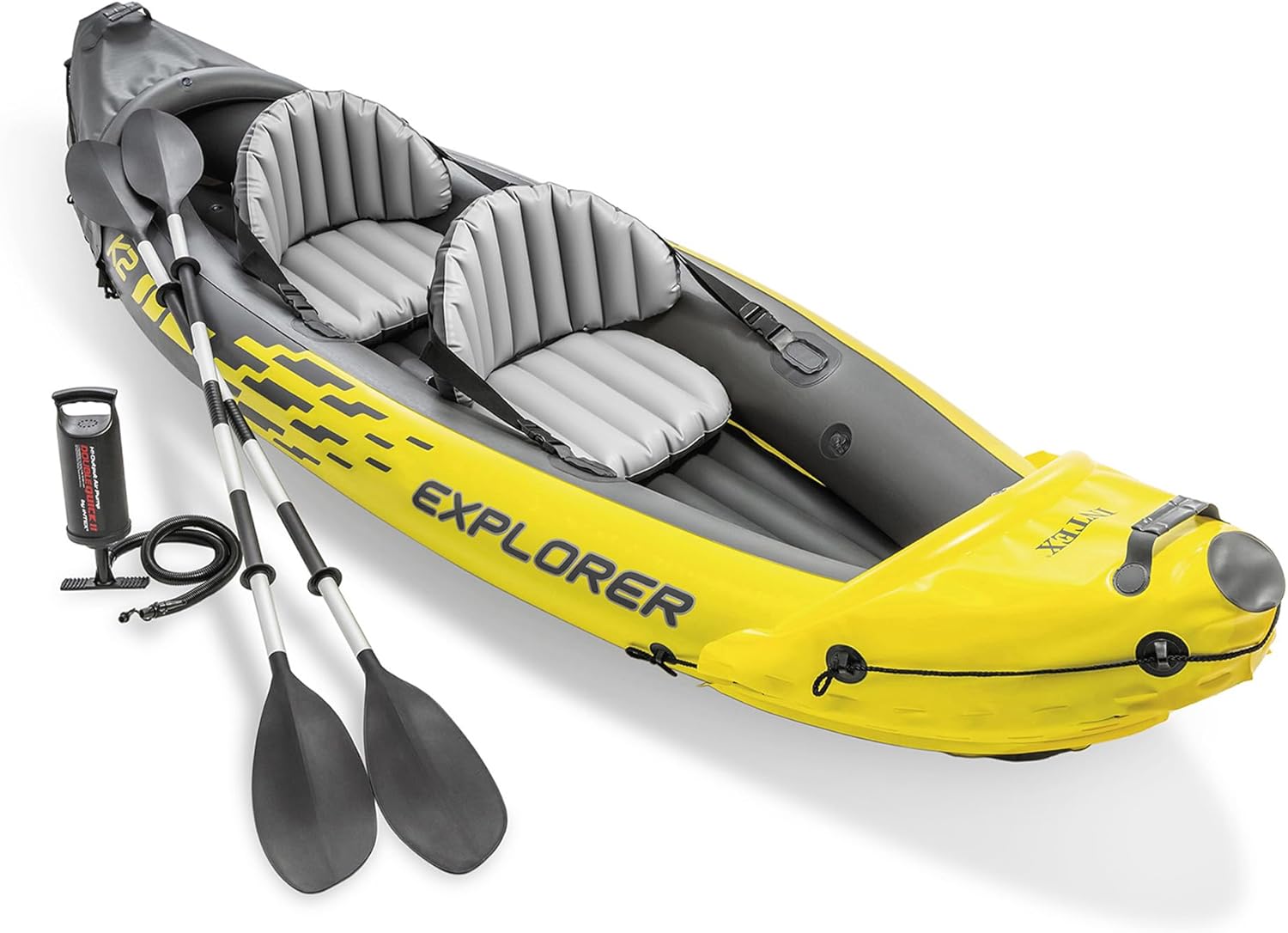
Intex Explorer K2
The kayak that gets two people on the water for the price of a nice dinner — with real paddles and a pump included. If your budget is firm around $100 and you want a weekend lake kayak for two, the Explorer K2 delivers genuine value. Just know what you’re buying: an entry-level vinyl inflatable built for calm water. It’s not a long-term boat, but it’s a real boat — and it gets beginners on the water without a huge financial commitment. For more inflatable options at every price point, see our full guide to best inflatable kayaks.
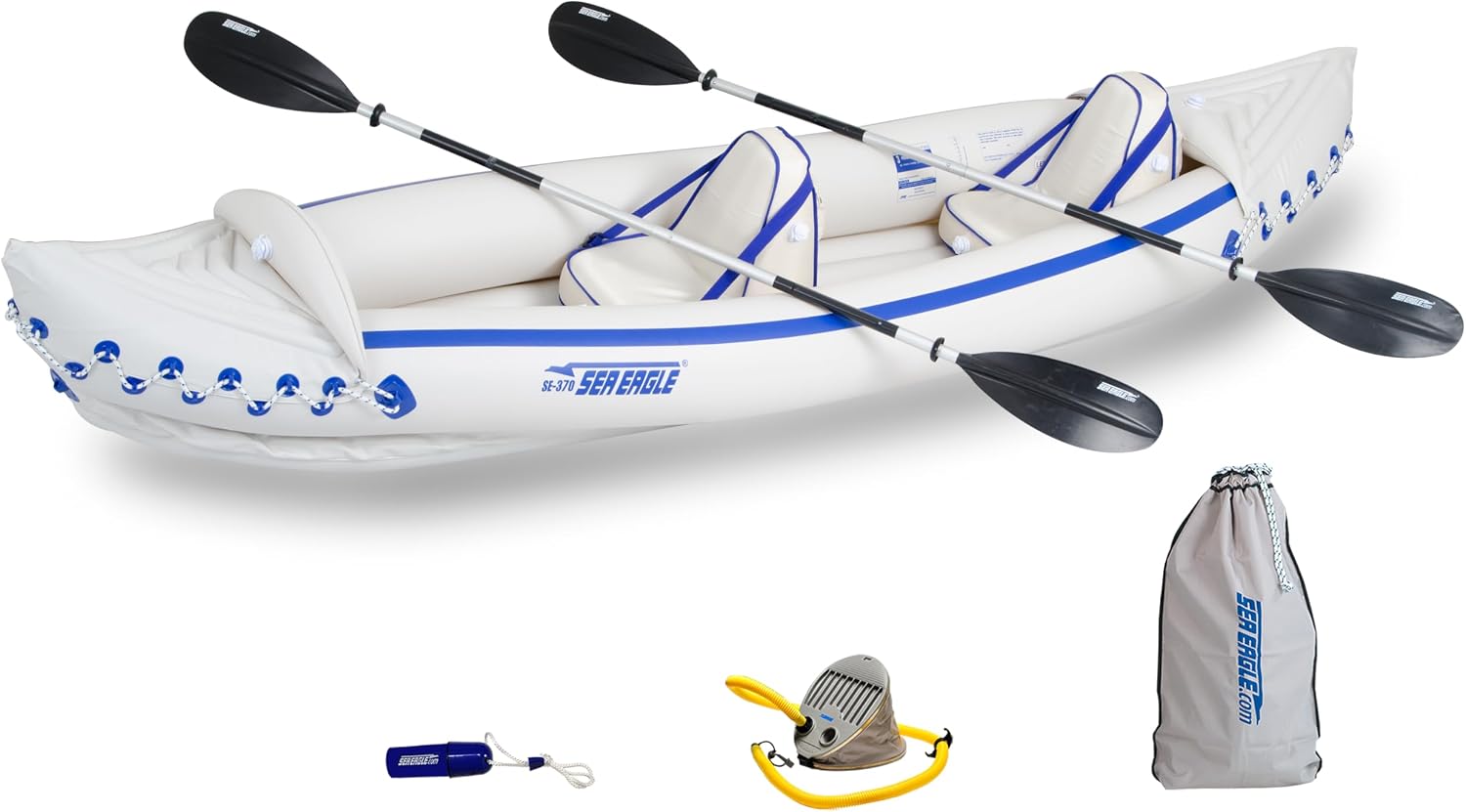
Sea Eagle SE370
A genuinely tough inflatable that handles moving water and earns its keep over multiple seasons. The SE370 earns the step up from the Explorer K2 if you need durability and want to paddle more than just glassy lakes. The PolyKrylar material is the real differentiator — this is an inflatable that can take a hit on a rocky river bank without immediately ending your day. The bench seats are a genuine drawback, but the core boat is solid. Worth the $350 if you’ll use it on moving water or rough-and-tumble family trips.
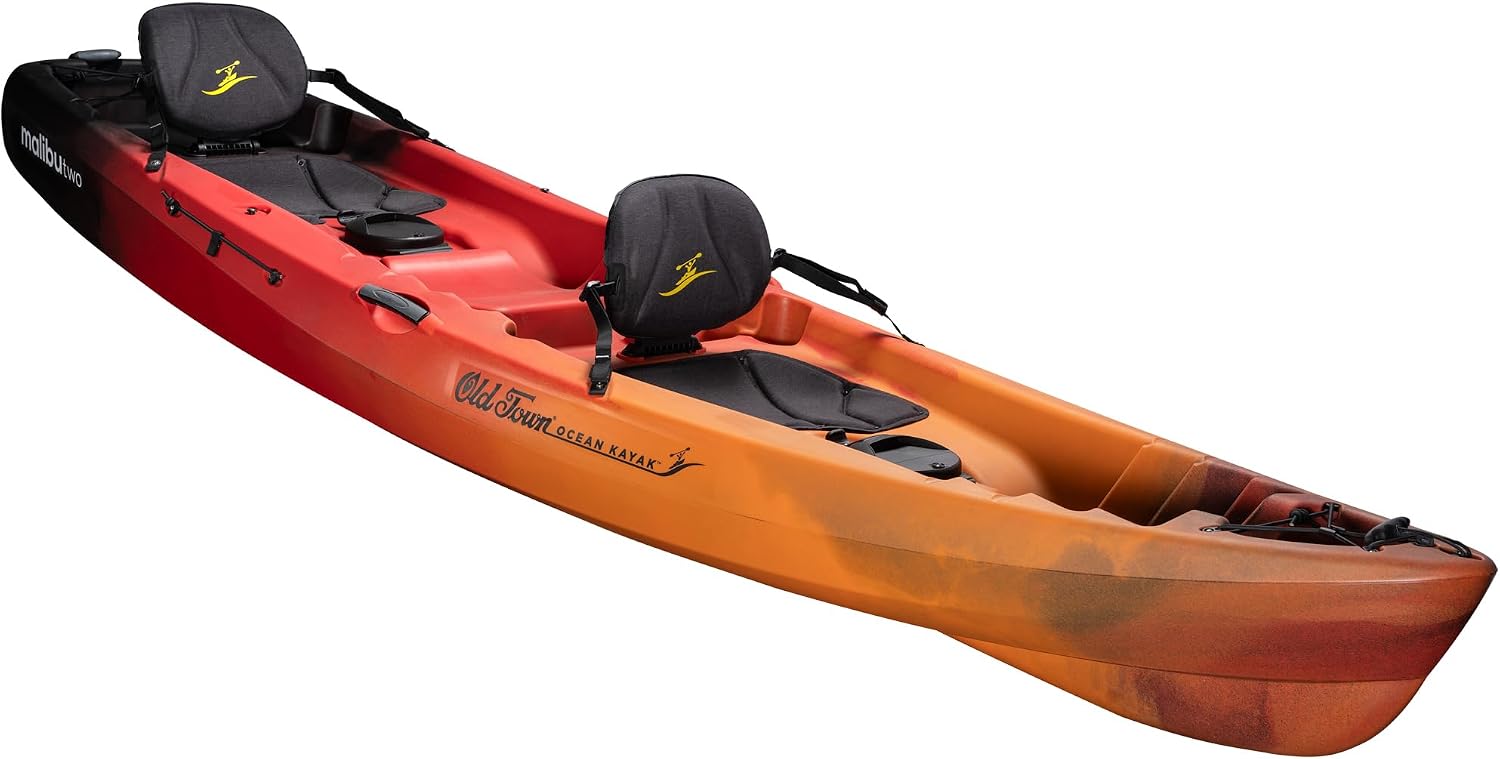
Ocean Kayak Malibu Two
The tandem that handles kids, dogs, open water, and the awkward moment when one person wants to paddle solo. The Malibu Two is the tandem we’d recommend to most families and coastal paddlers who plan to use it consistently. The three-seat-well design solves the “we only have one paddler today” problem elegantly, and the stability genuinely matters when you’re dealing with dogs shifting their weight or kids who won’t sit still. The weight is a real logistical consideration — know your car-topping situation before buying. For a broader look at stable, versatile options, see our guide to best recreational kayaks.
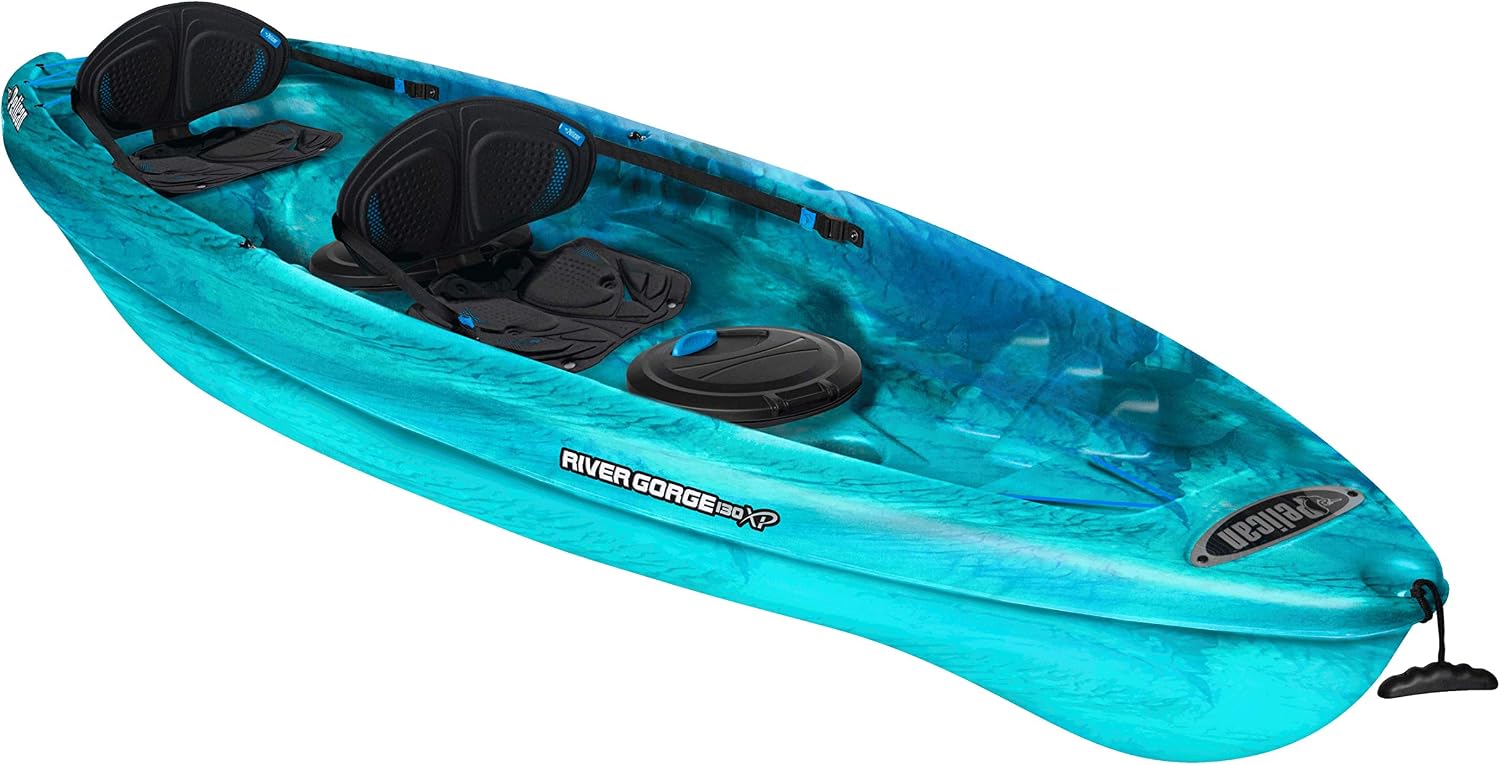
Pelican River Gorge 130X
A real hardshell tandem at a price that makes sense for casual paddlers who don’t want to deal with inflatables. The River Gorge 130X is the practical choice when you want a hardshell tandem under $500 and don’t need high performance. It’s stable, it’s durable, and it doesn’t require inflation or deflation. The trade-offs — weight, seat comfort, speed — are real but manageable for casual lake and river paddling. If you’re new to kayaking and want a low-maintenance first tandem, this is worth a serious look alongside our picks in the best beginner kayaks guide.
The Tandem Reality: What Nobody Tells You Before You Buy
There’s a reason tandem kayaks are sometimes called “divorce boats.” Two people in a kayak need to paddle in sync, agree on direction, and communicate clearly — or they spend the trip spinning in circles and blaming each other. That’s not a gear problem, it’s a coordination problem. But the right boat can make it easier.
The person in the back (stern) steers. The person in front (bow) sets the pace. If those roles aren’t established before you launch, expect confusion. If the stronger paddler is in the bow and the weaker paddler is in the stern trying to steer, expect frustration. Get the roles sorted on shore, not on the water.
The honest upside: a tandem kayak is genuinely more efficient than two solo boats when both paddlers are working together. You cover more water with less effort, you can carry more gear, and the boat is harder to flip. For families with kids, dogs, or paddlers of very different experience levels, a tandem is often the smarter call than two separate boats. You just need to go in with realistic expectations about the communication it requires.
Inflatable vs. Hardshell Tandem: Which Is Actually Right for You
The biggest decision in tandem kayaking isn’t which brand to buy — it’s inflatable versus hardshell. Both are legitimate options. Neither is universally better.
Inflatable tandems win on storage and transport. You can fold one into a bag, carry it in a car trunk, store it in a closet. For apartment dwellers, people without roof racks, or anyone who needs to pack the kayak into a remote location, that flexibility is real. The trade-off is setup time, durability concerns with entry-level materials, and performance that generally trails hardshells on tracking and speed.
Hardshell tandems launch faster, track better, and tend to last longer with normal care. The catch is storage (they’re big) and transport (they’re heavy and need a roof rack or truck bed). If you have the space and the vehicle, a hardshell tandem is the more capable long-term investment.
A third option worth knowing about: inflatable kayaks made from higher-end materials like Sea Eagle’s PolyKrylar sit in the middle — they fold for storage but handle more demanding water than vinyl-based inflatables. They’re also more expensive. Our full best inflatable kayaks guide breaks down the material differences in detail.
Solo-Convertible Tandems: Worth the Premium
One of the most underrated features in tandem kayaking is the ability to paddle the boat solo when your regular partner isn’t available. Most tandems can technically be paddled solo — but they’re awkward to do it with, because the seats are fixed at bow and stern, leaving you fighting the wind with a long empty hull in front of you.
The Ocean Kayak Malibu Two solves this cleanly with a third center seat well. You sit in the middle, the hull balances properly, and the solo experience is actually decent. Not all tandems offer this.
If solo paddling is something you’ll want to do regularly, verify the boat’s solo capability before buying. It’s worth paying for. A tandem that only works with two people is a boat that sits in the garage every time your partner doesn’t feel like going.
Capacity, Kids, and Dogs: Getting the Numbers Right
Every tandem kayak has a stated weight capacity. Treat that number as a maximum, not a target. In practice, loading a tandem to its rated capacity makes it sit low in the water, handle sluggishly, and become genuinely harder to paddle. A good rule of thumb is to stay at 70–75% of rated capacity for a comfortable, maneuverable experience.
For families with kids or dogs, that math matters. A 500 lb rated tandem carrying two 180 lb adults is already at 72% capacity before you add a child or a dog or any gear. Lean toward boats with higher capacity ratings if you’re regularly adding extra passengers or a full day’s worth of camping gear.
Dogs specifically: sit-on-top designs are far better for canine paddling companions than sit-inside designs. There’s room for them to shift position, and if they jump off (they will), getting back in is straightforward. The Ocean Kayak Malibu Two is the most dog-friendly boat on this list. The Intex Explorer K2 is probably the least — a large dog moving around in an inflatable vinyl kayak is a recipe for an early afternoon.
What to Skip and What Matters More Than You'd Think
Skip: Manufacturer-included paddles on budget kayaks. They work, but they’re almost universally low-quality. A $40–60 upgrade to a proper aluminum-shaft paddle per person makes a measurable difference in how the boat handles, especially over longer distances.
Skip: Overspending on a boat for conditions you won’t actually paddle in. If 90% of your trips are calm lake days with kids, you don’t need a whitewater-capable inflatable. Buy for your real use case, not your aspirational one.
Don’t skip: Seat comfort. Budget kayak seats are almost universally uncomfortable after two hours. If you’re planning paddles longer than a couple of hours, either buy a boat with a good seat or budget for an aftermarket upgrade. Back pain ends trips early and makes people want to sell their kayaks.
Don’t skip: Verifying your transport situation before buying a hardshell. A 57 lb kayak that needs a roof rack you don’t have is a kayak that lives in your garage. Measure your car, check your roof rack capacity, and have a plan for both getting the boat to the water and carrying it those last 50 yards on the bank.
For more guidance on matching a boat to your experience level, our best recreational kayaks roundup covers the broader category with the same approach.