
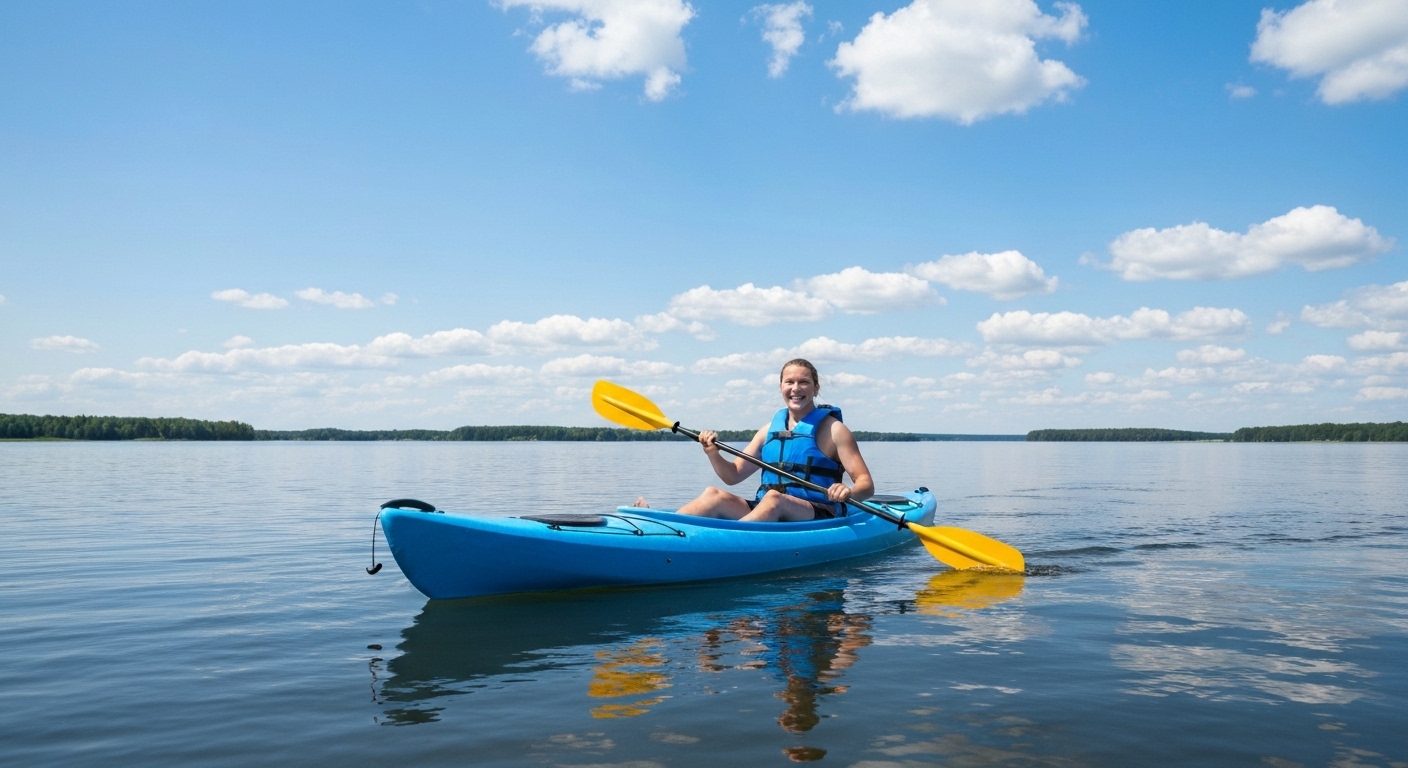
Best Kayaks Under $500
Best Kayaks Under $500 (2026 Budget Guide)
See the top picks →A decent kayak under $500 is absolutely real — but “decent” has limits you should understand before you buy. We tested and researched the four most popular budget picks on the water in 2025 and early 2026. Every pick below has a real use case and a real catch. No filler, no fake five-star spin.
At a Glance
| Kayak | Best for | Specs | Price |
|---|---|---|---|
| Pelican Argo 100X | Best Overall Under $500 | — | $330 |
| Lifetime Lotus 80 | Best Ultralight | — | $250 |
| Sun Dolphin Aruba 10 | Cheapest Sit-In | — | $280 |
| Intex Explorer K2 | Best Inflatable Under $500 | — | $110 |
The Top Picks, Reviewed
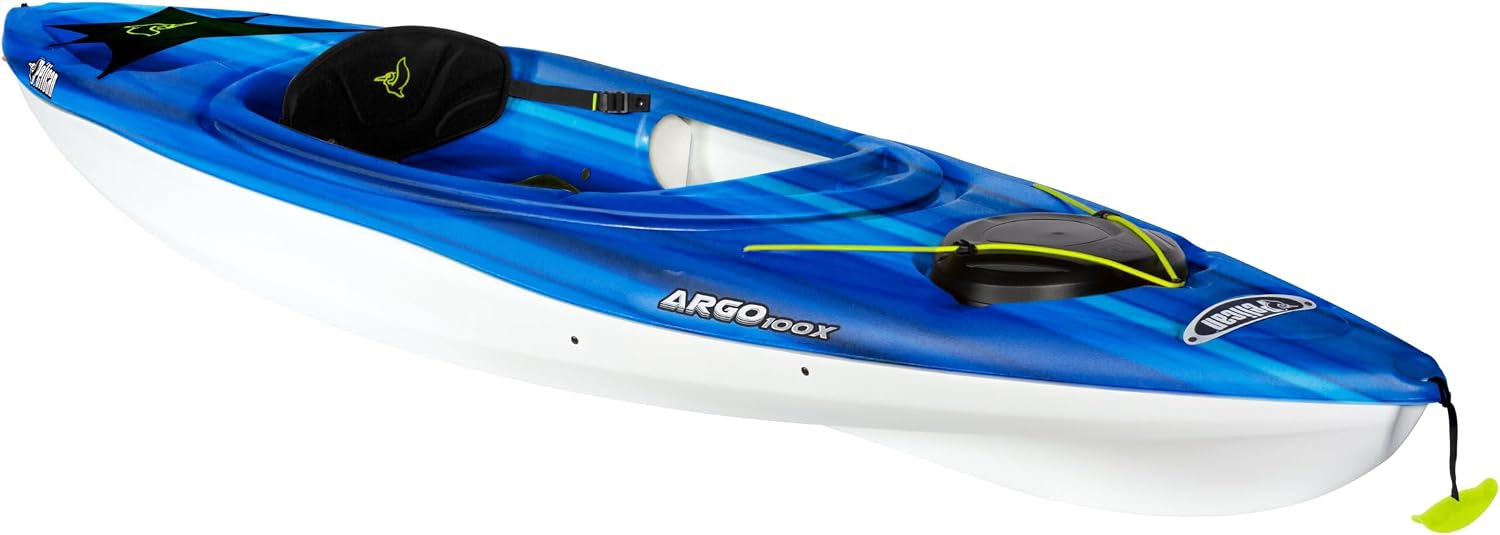
Pelican Argo 100X
The most well-rounded sub-$500 sit-in kayak you can buy right now — stable, light, and built by a company that’s been doing this for decades. If you want one budget kayak for calm lakes, slow rivers, and occasional light bay paddling, the Argo 100X is the pick. It won’t embarrass you on the water, and the build quality holds up. Just know you’re buying a capable starter, not a touring boat.
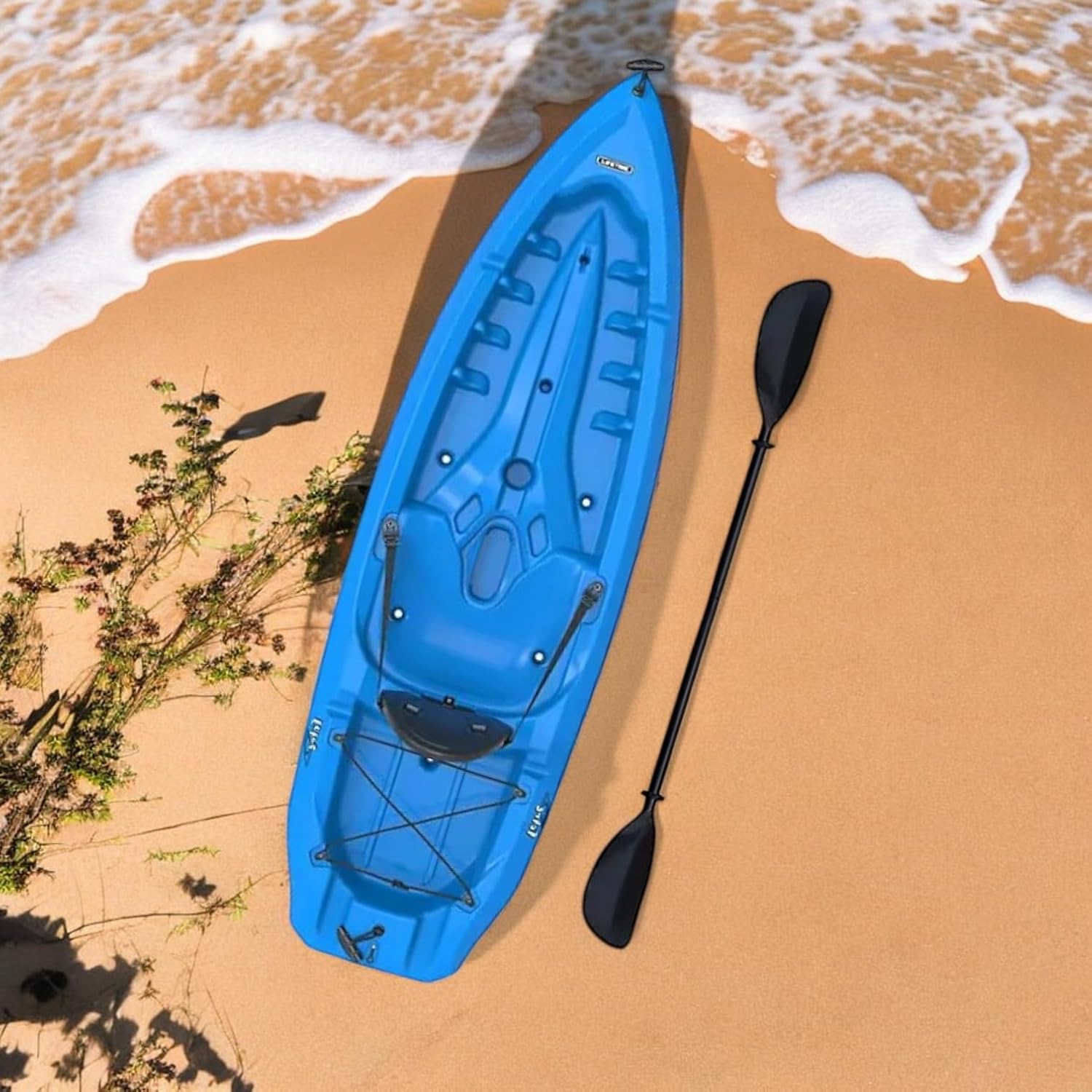
Lifetime Lotus 80
Eight feet and 28 pounds makes the Lotus the easiest budget kayak to own — perfect for kids, smaller paddlers, and anyone without a roof rack system. The Lotus 80 makes the most sense for younger paddlers, smaller adults, or someone who wants an “intro kayak” without a big financial bet. Tall adults will feel cramped within 30 minutes. Everyone else will enjoy how easy it is to toss on the car and go.
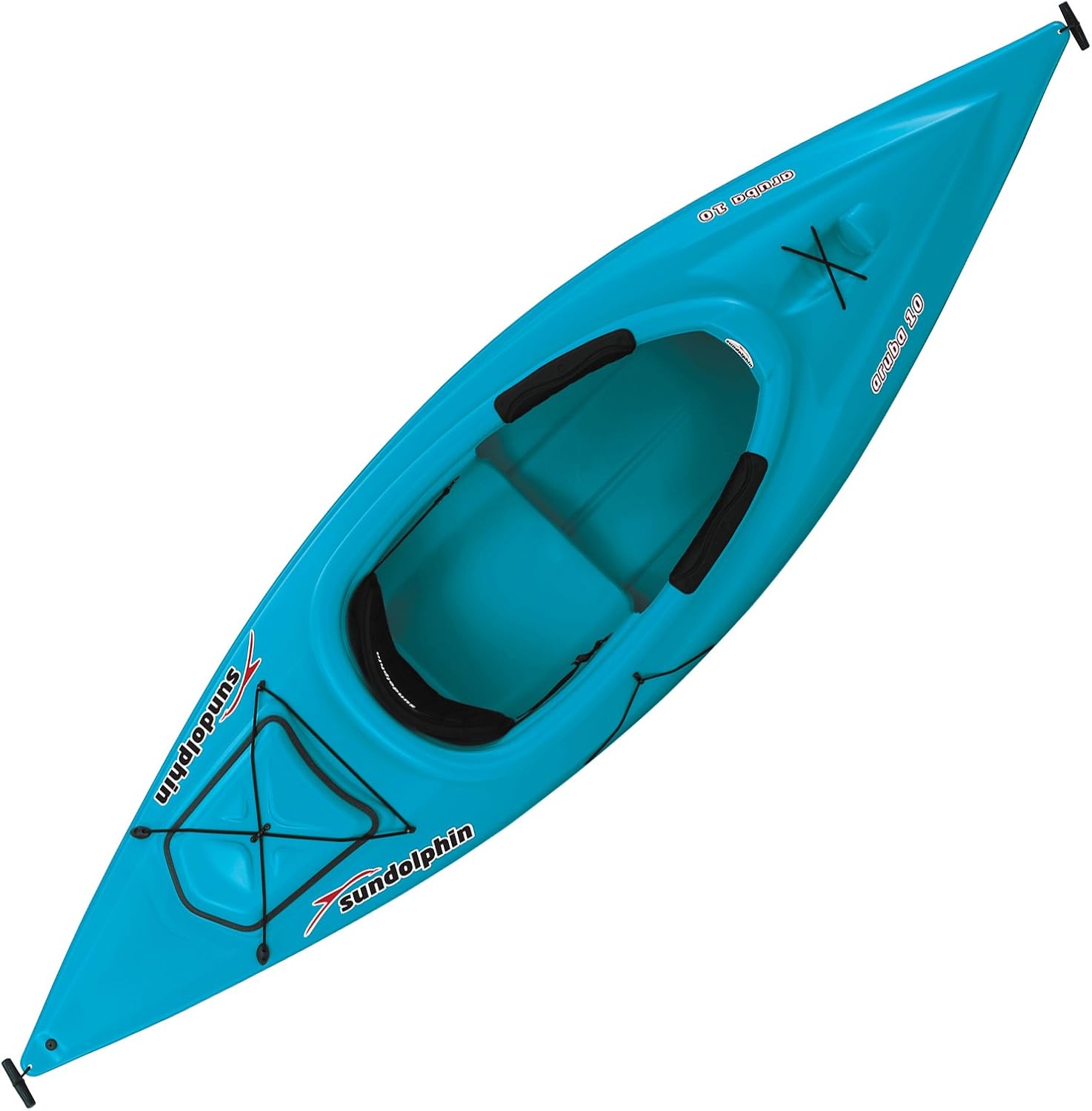
Sun Dolphin Aruba 10
The Aruba 10 undercuts almost everything at this length, with a large open cockpit that’s easy to get in and out of — making it a solid pick for casual paddlers who hate feeling trapped. The Aruba 10 gets the job done for casual lake paddling and slow-moving rivers. It’s not a premium experience, but at $280 it doesn’t pretend to be. If open cockpit access matters to you and your budget is tight, this is worth considering — just don’t push it into rough water.
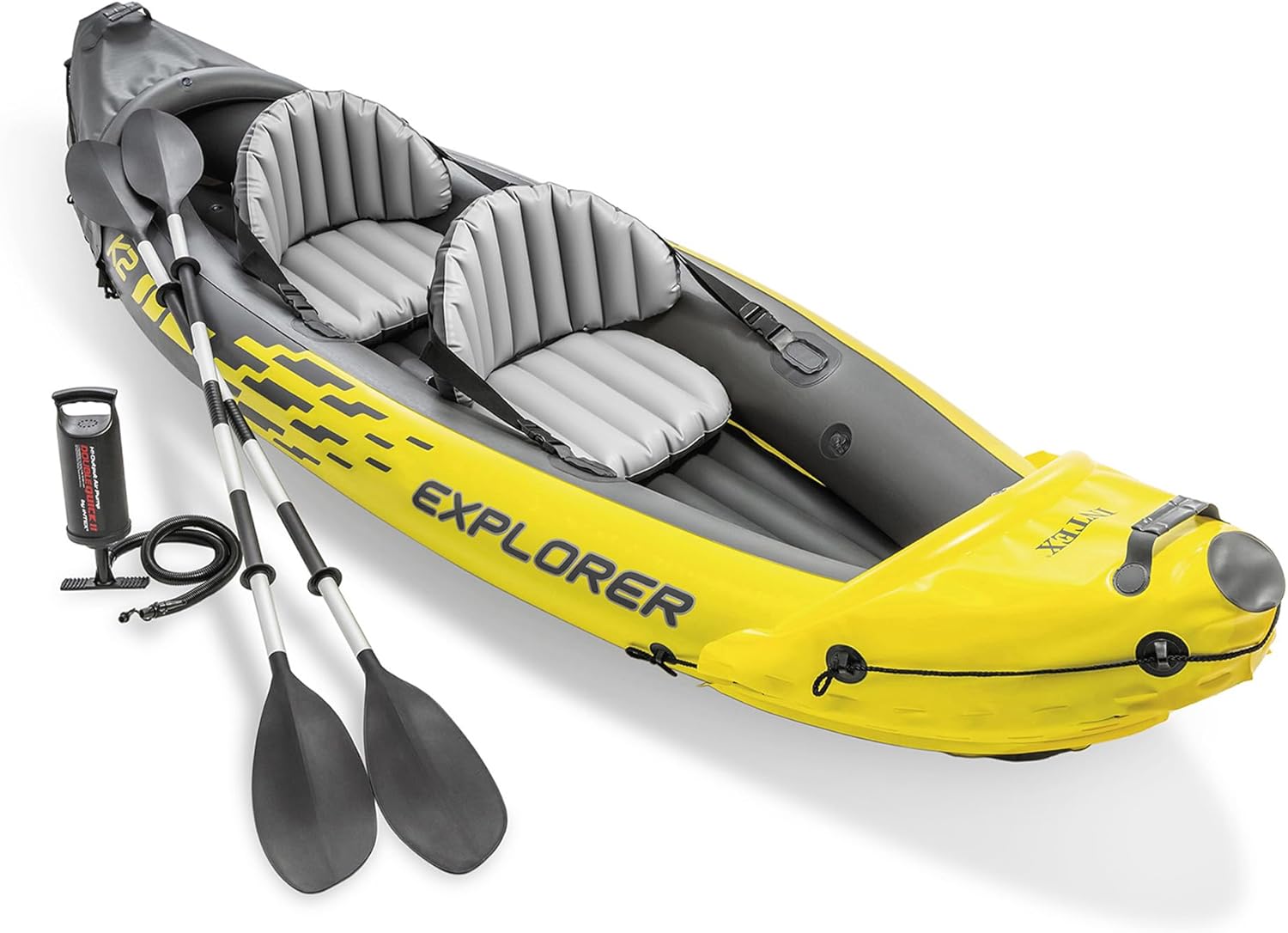
Intex Explorer K2
At $110, the K2 is the only inflatable in this roundup that legitimately earns a recommendation — and the only pick here you can store in a closet. The K2 belongs in this roundup because no other inflatable at this price is worth recommending, and its use case is real: apartment dwellers, casual pairs, and anyone who wants to try kayaking without committing to a hard-shell. For calm water days, it delivers. Don’t expect it to replace a proper kayak. For more options at this category, see our full best inflatable kayaks guide.
What You Realistically Get Under $500
The under-$500 kayak market is real — there are genuinely usable boats in this range, and millions of people paddle them without issue. But it helps to know what you’re actually buying.
At this price point, you’re getting high-density polyethylene (HDPE) or RAM-X construction, a basic molded or adjustable seat, minimal storage, and a kayak designed for flatwater use. The hulls are rotationally molded, which keeps costs down but limits hydrodynamic efficiency. You won’t get a fast-tracking, storage-rich, feature-loaded boat — and that’s fine if calm lake paddling or slow rivers are your goal.
What changes dramatically above $500 is seat comfort, hull performance, and storage. A $700–$900 kayak — like the Pelican Catch or the Old Town Loon — paddles noticeably more efficiently, has a proper outfitting system, and holds up better over years of use. But for someone who wants to get on the water without spending a lot, the picks in this guide are legitimate starting points.
For a broader look at what’s worth owning, check our best recreational kayaks guide, which covers the full range from budget to mid-tier.
Sit-In vs. Sit-On-Top vs. Inflatable on a Budget
All three kayak styles exist in the sub-$500 range, and each makes sense for a different paddler.
Sit-in kayaks (like the Pelican Argo and Sun Dolphin Aruba) enclose your lower body inside the cockpit. They stay drier in mild chop, are slightly warmer in cooler temps, and tend to track better. The trade-off: they feel more confined, and re-entry from the water after a capsize is harder for beginners.
Sit-on-top kayaks are not represented in this specific under-$500 roundup because the quality budget options in this style tend to be heavier and wider, making them better fits for fishing setups rather than general paddling. If you want a sit-on-top, check our best beginner kayaks guide for options across a wider price range.
Inflatable kayaks (the Intex K2 here) pack away completely and require no storage or roof rack. At the sub-$200 price point they’re entry-level in every way, but they serve a real niche. If you’re in an apartment or don’t own a vehicle with a rack, an inflatable may be the only practical way to paddle.
What to Avoid: Knowing a Pool Toy from a Real Kayak
Not everything marketed as a “kayak” under $500 is actually worth paddling on open water. Here’s what to skip:
- Any kayak under 8 feet from an unknown brand: Six- and seven-foot “kayaks” sold on Amazon under generic brand names are essentially pool floats with a seat. They won’t track, they’ll spin in any breeze, and they pose a real safety concern on anything larger than a small pond.
- Very low-weight-capacity boats: If the listed capacity is under 200 lb, most adults are already near the limit before adding gear. An overloaded budget kayak sits low, handles poorly, and increases the chance of swamping.
- Anything with a missing or faked warranty: The brands in this guide (Pelican, Lifetime, Sun Dolphin, Intex) stand behind their products. Generic brands often don’t exist long enough to honor a warranty claim.
- Kayaks sold without paddle compatibility: Some budget kayaks ship without paddles, and the “included” paddles on others are barely usable plastic blades. Budget at least $30–$50 for a decent entry paddle if yours doesn’t come with one worth using.
Where to Spend a Little More — And When It Matters
If you’re on the fence between a $330 and a $500 kayak, it’s worth understanding where the extra money actually goes.
In the $400–$500 range, you start seeing kayaks with better seat outfitting (padded foam with proper lumbar adjustment), slightly more efficient hull designs that improve straight-line tracking, and a bit more storage. Pelican’s Maxim and some Perception Sport models sit in this tier and are meaningfully better than the entry-level picks above.
The jump that really matters is from $500 to $700–$900. That range unlocks kayaks from Old Town, Wilderness Systems entry lineup, and better Pelican models that paddle, fit, and last at a completely different level. If you think paddling will become a regular hobby, buying once at $700 beats replacing a $300 kayak in two seasons.
That said, if you’re genuinely unsure whether kayaking will stick, a $250–$330 budget kayak is a smart low-risk way to find out. Most of the picks in this guide will hold resale value well enough on the used market that you won’t lose much if you upgrade.
Bottom Line: Which Budget Kayak Is Right for You
Here’s the quick-pick summary for different paddler types:
- Best single all-around pick: Pelican Argo 100X. Handles the widest range of conditions, from the best brand in this tier.
- Best for kids or small adults: Lifetime Lotus 80. Lightweight, affordable, safe, and easy to manage.
- Best for claustrophobic paddlers or easy entry/exit: Sun Dolphin Aruba 10. Open cockpit design reduces the “trapped” feeling of traditional sit-ins.
- Best when storage is the problem: Intex Explorer K2. If you can’t store or transport a hard-shell, this is your only real option in this price range.
Any of these will get you on the water. The Pelican Argo is the pick we’d put money behind for someone who doesn’t want to think too hard about it.