
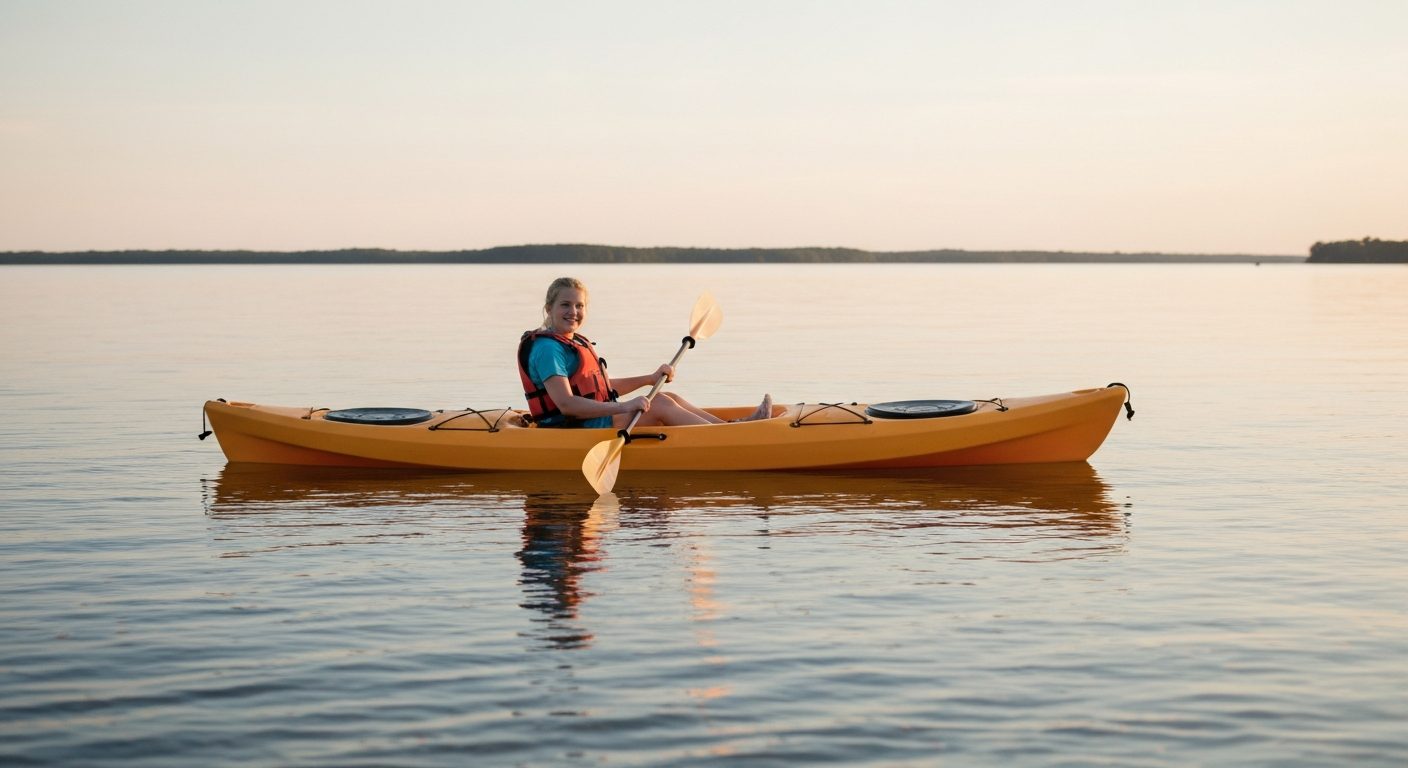
Are Kayaks Easy to Flip?
Most kayaks are harder to flip than people expect — it's usually the paddler, not the boat, that causes a capsize.
Is kayaking safe?When beginners ask us whether kayaks flip easily, our honest answer is: it depends on the kayak — but most recreational and sit-on-top models are genuinely stable in calm water. The ones that flip more readily are narrow by design, built for speed or technical whitewater, not relaxed paddling.
What Makes a Kayak Stable: Primary vs. Secondary Stability
Stability in a kayak isn’t one thing — it’s two things working together.
Primary stability is how steady the kayak feels when you’re sitting flat on calm water. Wide, flat-hulled kayaks (think rec kayaks and fishing kayaks) have high primary stability — they feel rock-solid when you get in. Secondary stability is how well the kayak holds when you edge it on its side. Narrower boats with rounded hulls feel wobbly at first but resist tipping at steeper angles because their hull shape generates resistance as you lean.
Most beginners want high primary stability, and that’s exactly what a wide recreational or sit-on-top kayak delivers. Narrow touring and sea kayaks trade that initial flat-water comfort for efficiency and better secondary stability — useful when you’re leaning into turns or bracing in waves, but disorienting until you learn to trust it.
Which Kayaks Flip More Easily
Not all kayaks are built equal when it comes to tipping. Here’s a quick breakdown by type:
- Recreational sit-in kayaks (28–34″ wide): Very stable primary stability. Hard to flip in flatwater. Great for lakes, slow rivers, and calm bays.
- Sit-on-top kayaks: Generally the most stable type because of their wide, flat decks and low center of gravity. Hard to flip. Learn more at our sit-in vs. sit-on-top comparison.
- Touring and sea kayaks (21–24″ wide): Narrow hulls, lower primary stability. Tippier for beginners but manageable with practice and a good low brace.
- Whitewater kayaks: Short, rounded, and designed to roll. They flip on purpose — and you’re expected to roll back up.
- Fishing kayaks: Often the widest kayaks made. Some are stable enough to stand on.
The American Canoe Association recommends matching hull width and design to your skill level and intended water type — a principle we fully agree with.
How to Avoid Flipping Your Kayak
Most capsizes aren’t random. They happen because of a handful of predictable mistakes — and avoiding them is straightforward once you know what to watch for.
- Boat wakes and waves: The most common cause of unexpected flips in otherwise calm conditions. Turn your bow into a wake at a 45-degree angle rather than taking it broadside.
- Leaning too far sideways: Keep your weight centered over the hull. If you need to reach for something, brace with your paddle first.
- Trying to stand: Standing dramatically raises your center of gravity. Fishing kayaks designed for standing have extra-wide hulls — regular kayaks are not meant for it.
- Entering and exiting poorly: More capsizes happen at the dock than on the water. Step into the center of the cockpit and lower yourself straight down.
- Overloading one side: Gear, coolers, and tackle boxes need to be balanced port-to-starboard.
Choosing the right kayak for your skill level is the biggest lever. Our best recreational kayak guide focuses on models with high primary stability that are forgiving for beginners.
What to Do If You Capsize
Even stable kayaks flip occasionally. Knowing what to do before it happens makes the experience manageable instead of frightening.
First: stay calm. Most recreational kayaks are made of high-density polyethylene that floats even when swamped. Your PFD keeps you at the surface. Don’t fight the water — let the kayak stabilize upside-down, then assess.
For sit-on-tops, re-entry is simple: right the kayak, grab the far edge of the seat, kick your legs to the surface, and haul yourself back on. For sit-ins, it’s a bit more involved — you’ll want to practice a wet re-entry and pump the cockpit dry. We walk through the full process in our guide on how to get back in a kayak.
A few non-negotiables: always wear your PFD, never paddle alone in unfamiliar water, and check the weather before you go. Our kayaking safety overview covers the fundamentals that keep most paddlers out of trouble.