
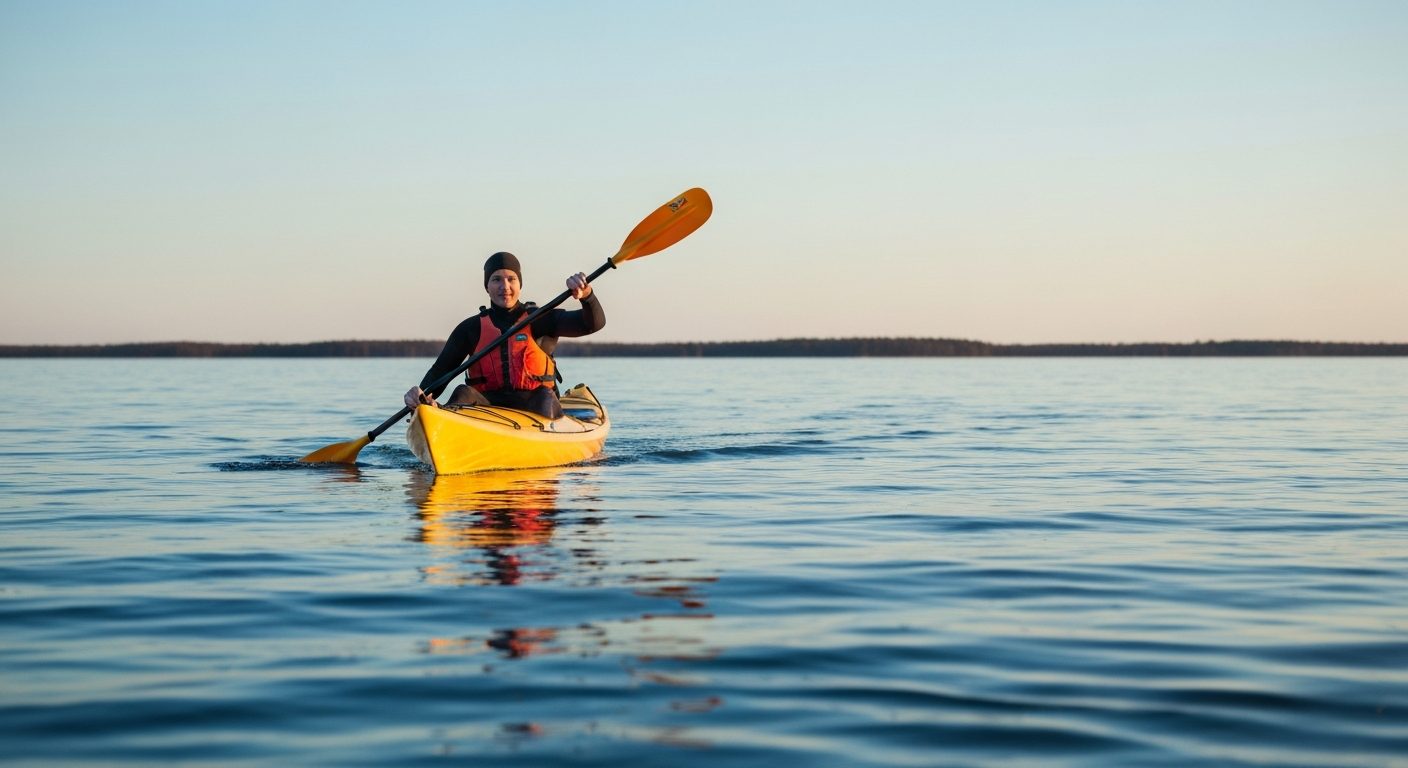
Wetsuit vs Drysuit for Kayaking: Which Do You Need?
One keeps you alive in cold water — here is how to know which one you actually need.
What to wear kayakingThe wetsuit vs drysuit question trips up a lot of paddlers, and getting it wrong can be genuinely dangerous. The short answer: choose a wetsuit for mild-to-cool water with warmer air, and a drysuit any time the water drops below about 60°F or your immersion risk goes up.
How each one keeps you safe
A wetsuit is made from neoprene and works by letting a thin layer of water in between the suit and your skin. Your body warms that water and it acts as insulation. The thicker the neoprene, the more warmth you get — but you are always a little wet, and in truly cold water that thin wet layer is not enough to protect you long-term.
A drysuit seals at the wrists, neck, and ankles (usually with latex or neoprene gaskets) and keeps water completely out. You wear your own insulating base layers underneath — fleece, wool, or synthetic — so you can dial in warmth independent of the suit itself. In cold water immersion, a drysuit buys you dramatically more time before hypothermia sets in.
Neither suit is a life jacket. You still need a properly fitted PFD every time you paddle. But the right thermal protection means you can swim to safety or wait for rescue instead of losing consciousness in minutes.
When a wetsuit is enough
Wetsuits are the right call for the majority of recreational kayaking in three-season conditions. If you are paddling flatwater or mild coastal routes where the water is in the 60–70°F range and air temps are comfortable, a 3mm full wetsuit gives you solid protection without the cost or bulk of a drysuit.
Wetsuits are also a better fit for high-activity paddling — whitewater, surf kayaking, or rolling practice — where you are generating heat and getting wet anyway. The neoprene provides some impact protection, and you are not overheating under layers.
Good scenarios for a wetsuit:
- Summer lake and river paddling where water is above 65°F
- Coastal paddling in moderate conditions with warm-ish water
- Whitewater where you will be swimming regularly
- Beginners learning to roll in a pool or warm-water environment
Check out our guide on what to wear kayaking for a full seasonal breakdown of layering, footwear, and accessories beyond just the suit.
When you really need a drysuit (the cold-water rule)
The golden rule in paddling is simple: dress for the water temperature, not the air. A 70°F sunny day feels warm on the dock, but if that water is 50°F, you have a very short survival window if you capsize and cannot get back in your boat.
The American Canoe Association recommends treating any water below 60°F as cold-water immersion risk, which means drysuit territory. At 50°F water, cold shock sets in within seconds of immersion and swimming ability deteriorates in under five minutes.
You need a drysuit when:
- Water temperature is below 60°F — common in spring runoff, northern lakes, and Pacific coastal paddling most of the year
- You are paddling in cold air even if water looks okay (wet and cold air accelerates hypothermia)
- You are doing open-water crossings with no easy self-rescue option
- You are paddling solo in cold conditions
- You are sea kayaking, expedition paddling, or ice-edge paddling
We also recommend reading our overview of kayaking safety — thermal protection is one piece of a larger picture that includes float plans, rescue skills, and understanding weather windows.
Cost, fit and care
Cost: A decent 3mm full wetsuit runs $80–$200. A quality drysuit is a serious investment — entry-level drysuits start around $500 and go well past $1,500 for expedition-grade shells with relief zippers and reinforced seams. If you paddle cold water regularly, that cost is worth it. If you paddle warm-water lakes in summer, it is overkill.
Fit: A wetsuit should feel snug everywhere — gaps at the wrists, neck, or ankles let cold water flush through and tank the insulation. A drysuit is more forgiving in terms of silhouette since you layer underneath, but gaskets must seal properly. Test gaskets by submerging your arm and watching for bubbles. Latex gaskets need conditioning and eventual replacement; neoprene gaskets are more durable but slightly less watertight.
Care: Rinse both in fresh water after every salt or dirty water paddle. Hang to dry out of direct sun — UV degrades neoprene fast. For drysuits, apply talc or a gasket conditioner to latex seals and store with the zipper fully closed but not stressed. A well-cared-for drysuit lasts a decade or more.
For a deeper look at gear that complements your thermal protection setup, see our roundup of the best kayak accessories including gloves, pogies, and neoprene booties.