
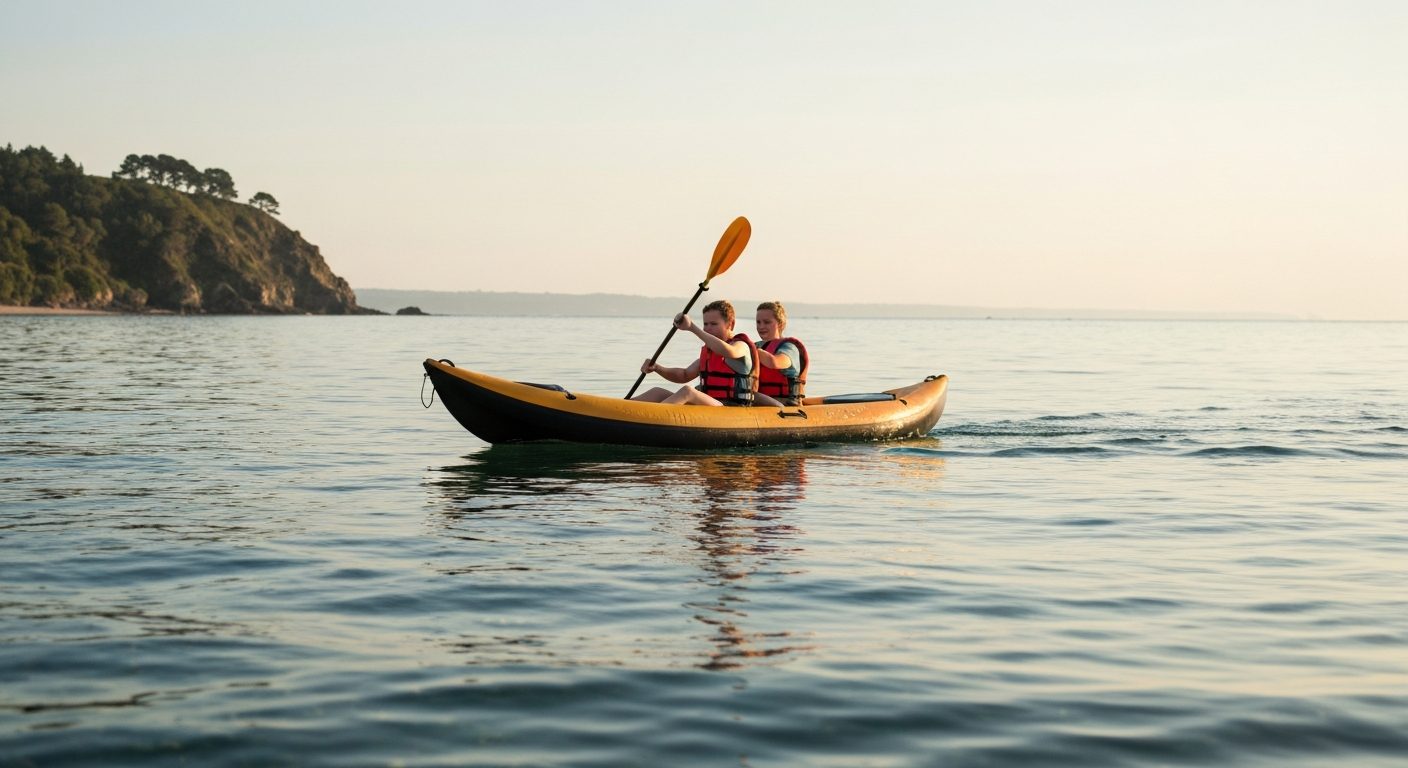
Can You Use an Inflatable Kayak in the Ocean?
A good inflatable kayak can handle the ocean — but calm, sheltered water is the key phrase.
Best inflatable kayaksWe get this question constantly, and the honest answer is yes, with conditions. A quality inflatable kayak in the ocean is doable in calm, protected bays and coastal inlets — but it is not the same as a hardshell sea kayak, and the ocean does not forgive overconfidence.
Can an inflatable handle the ocean?
The short answer is yes — a well-built inflatable kayak can handle the ocean in the right conditions. High-pressure drop-stitch hulls track reasonably straight, shed water, and handle light chop without folding or swamping. Brands like Sea Eagle, Advanced Elements, and Aqua Marina make ocean-rated inflatables that hold up in real coastal use.
The caveats matter, though. “Ocean” covers everything from a glassy morning in a protected harbor to a wind-blown open crossing with three-foot swell. Inflatables are built for the first scenario, not the second. If the water looks like a washing machine or the wind is picking up, you should be on shore — full stop.
If you are still weighing whether an inflatable is right for your paddling style, our honest breakdown of whether inflatable kayaks are good covers performance, durability, and where they shine.
The real risks: wind, chop, drift, and tides
Here is where we get direct with you, because we have seen these risks underestimated too many times.
Wind is the biggest danger. Inflatables sit high on the water and have a lot of surface area. When a sea breeze comes up — and coastal breezes can go from calm to 15 knots faster than a weather app will warn you — an inflatable becomes a sail. You can paddle hard and still lose ground, drifting offshore before you realize what is happening.
Chop and swell do not sink most inflatables, but they slow you down, exhaust you, and make it hard to control direction. A loaded inflatable in two-foot chop is hard work for experienced paddlers and a serious struggle for beginners.
Tidal currents are silent and relentless. Paddling against a one-knot ebb tide in a river channel sounds manageable until your arms give out. Check a tide chart before every ocean outing — the U.S. Coast Guard Boating Safety site has free resources for understanding current and marine weather conditions.
Puncture risk is real but often overstated. Modern multi-chamber inflatables can lose one chamber and still float. That said, rocks, barnacles, and oyster beds are genuine hazards. Stay clear of rocky shorelines in surge conditions.
Safety precautions for ocean paddling
If you take the ocean seriously, inflatables can be a blast. Here is the short list of non-negotiables we follow every time.
- Wear a PFD — always. Not clipped to your stern bungee. On your body, buckled. Cold water shock is fast and real.
- Use a paddle leash. Drop your paddle in ocean chop and retrieving it can turn into a crisis. A simple coiled leash costs under $15.
- Check wind and tide before you launch. A following breeze feels like a gift until you have to paddle back into it. Aim to paddle into the wind first and return with it at your back.
- Stay close to shore. In a hardshell sea kayak, experienced paddlers can handle open crossings. In an inflatable, hug the coast, stay in sight of the beach, and keep an escape route in mind.
- Tell someone your float plan. Where you are launching, where you are going, when you expect to be back. This is basic but people skip it.
- Dress for immersion, not the air temperature. Water temperature and air temperature are different numbers. Cold water requires a wetsuit or drysuit even on warm days.
For a broader look at staying safe on the water, our guide on whether kayaking is safe walks through risk factors that apply to all kayak types.
Which inflatables are ocean-capable?
Not every inflatable is built for coastal use. Here is what to look for.
Drop-stitch or high-pressure air floors give the kayak enough rigidity to track and handle light chop. Soft-floor inflatables designed for flat-water lakes are not appropriate for ocean use.
Multiple air chambers are essential. If one bladder fails, you want the kayak to stay afloat. Single-chamber kayaks are a non-starter for ocean paddling.
Skegs or tracking fins matter more in the ocean than anywhere else. Wind and current will spin a skeg-less inflatable sideways constantly. Look for removable skegs or a built-in tracking fin.
High PSI rating — ocean-capable inflatables typically inflate to 15–20 PSI for the main tubes. This stiffness is what keeps the hull from flexing and slowing you down in chop.
Models we have personally paddled and would recommend for sheltered coastal use include the Sea Eagle 380X, Advanced Elements AdvancedFrame Convertible, and the Aqua Marina Hyper. Our full picks are in our guide to the best inflatable kayaks, which includes ocean-rated options with notes on who each is built for.