Catch Surf Odysea Plank Review
The Odysea Plank is the best soft-top longboard money can buy if you want classic single-fin glide, nose-riding potential, and bulletproof construction — but it's a big, heavy board that tracks straight and demands space, so make sure you actually want a longboard before you go this route.
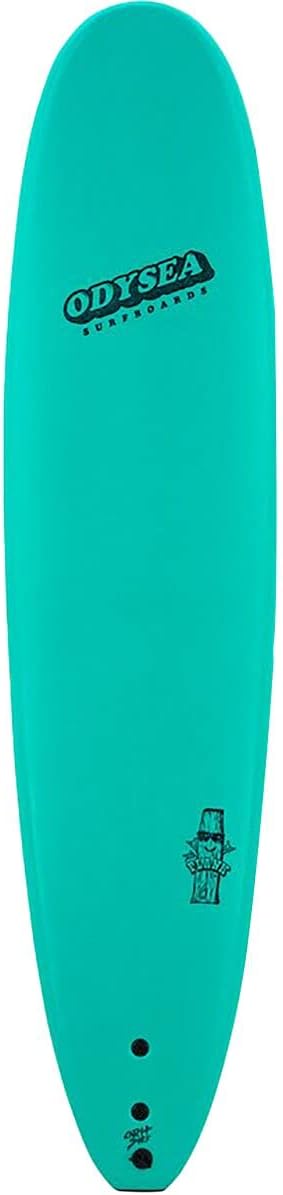
There’s a specific kind of surfing the Catch Surf Odysea Plank is built for: long, smooth rides on small, mellow waves where the goal is glide, trim, and time on the nose rather than snapping off the lip. It’s a true longboard foamie — not a mid-length, not a funboard, not a fish with extra volume. With sizes from 7’0″ up to 10’0″, a classic single-fin setup, and a triple-stringer dual-composite core, the Plank is Catch Surf’s most traditional soft-top. If you’ve been shopping the best longboard surfboards, this one belongs in the conversation.
The Plank fills a distinct gap in the Catch Surf lineup. The Odysea Log is a multi-fin foamie that leans toward versatility and step-up performance. The Odysea Skipper is a quad-fin fish built for speed and turns. The Plank is neither of those things — it’s a dedicated cruiser with a longboard outline, a big flat rocker, and a single fin that tracks straight and rewards patient, stylish surfing. That’s the right tool for a specific kind of session, and a terrible tool for others. We’ll tell you exactly which is which.
At $474.99 for the 8’0″ and $524.99 for the 9’0″, the Plank isn’t cheap. But for bigger and heavier riders who need volume, beginners who want maximum stability and wave-catching power, or any surfer who loves longboard-style glide without the cost and fragility of a glassed board, it’s a serious option. Here’s what the board actually delivers in the water.
Catch Surf Odysea Plank specs
| Length | 8′-10′ |
| Type | Longboard soft-top |
| Fin | Single (incl.) |
| Core | Dual-composite |
| Rider | Beginner-longboarder |
| Best for | Cruising & noseriding |
On the water — glide, trim, and what single-fin really means
The Plank’s single-fin setup is the defining characteristic of the board, and it shapes every aspect of how it surfs. Where quad fins generate speed and pivot, and thrusters let you snap off the tail, a single fin does something more subtle: it channels water cleanly down the centerline, producing a smooth, directional drive that wants to hold a line. On a longboard this is exactly what you want — it’s what creates the glide sensation that makes trimming and noseriding feel effortless.
In practice, paddling the 9’0″ onto a small, rolling wave and feeling it lock in and accelerate is genuinely satisfying in a way that shorter high-performance boards aren’t. The volume (86L in the 8’0″, 98L in the 9’0″, 125L in the 10’0″) means you catch waves early and easily — well before riders on smaller boards even start paddling. Once you’re up, the board holds its trim line and rewards subtle weight shifts forward and back over dramatic turns.
The trade-off is maneuverability. Single-fin longboards don’t pivot — they arc. Tight re-entries, snapping off the top, or riding steep hollow sections isn’t what this board is built for. In those conditions it gets squirrelly and slow to respond. The Plank earns its reputation on waist-to-chest-high, gently sloping beach break or point surf where there’s room to trim and time to set up for the nose. See our best soft-top surfboards roundup for how it compares across the full foamie field.
Construction — triple stringers, OG Deck 2.0, and the HDPE bottom
Catch Surf builds the Plank around what they call a stiff dual-composite core — a dense foam structure reinforced with three full-length maple-ply stringers (the 10’0″ steps up to four). That stringer count puts the Plank well above budget foamies, which typically use one stringer or none. Three maple stringers running nose to tail dramatically reduce torsional flex, meaning energy from your weight shifts actually transfers through the board rather than getting absorbed by a noodling deck.
The deck uses Catch Surf’s OG Deck 2.0 — a dense PE foam skin that’s softer and more forgiving than a glassed board but firm enough to hold your feet without squishing out. It’s comfortable on your knees during paddle-outs and on wipeouts without sacrificing the feedback you need to feel how your weight is distributed on the wave. The bottom is a hard HDPE slick with a bumper-tail — durable enough to handle reef scrapes, fin hits, and years of regular use without delaminating.
What’s in the box
- Odysea Plank board in your chosen size
- Performance single fin (7.5″ on the 7’0″; 9.0″ on all larger sizes)
- Special fin box that accepts any standard longboard fin
- Leash plug pre-installed — leash not included
Sizes, volume, and who fits each
The Plank comes in five sizes, which is more range than most foamies offer. Picking the right size matters more than with shorter boards because volume on a longboard directly determines how early you catch waves and how stable the platform feels underfoot.
7’0″ — 72 liters (22″ x 3.125″)
The smallest and most manageable option. Best for lighter surfers (roughly under 140 lbs) who want the single-fin longboard feel without hauling nine feet of board. Still has plenty of float but is notably easier to carry and transport than the larger sizes.
7’6″ — 78 liters (22″ x 3.25″)
A half-step up in volume. Good for surfers in the 140–165 lb range who want a bit more paddle power without going to a full 8-footer. Still a manageable size.
8’0″ — 86 liters (23″ x 3.375″)
The sweet spot for most adult surfers and the most widely available size. At 86 liters you have serious wave-catching advantage over shorter boards, and the 8-foot length gives enough rail to trim properly. Most riders in the 155–200 lb range will find this the best all-around size.
9’0″ — 98 liters (24″ x 3.5″)
Heavier-side adult surfers or anyone who wants maximum glide and absolute stability. The extra volume makes wave-catching almost automatic, and the longer rail line gives you more room to walk toward the nose. Note: in-store pickup only due to shipping restrictions on this size.
10’0″ — 125 liters (25″ x 3.5″)
The big one. Four stringers, 125 liters, and enough float for very large riders or surfers in the smallest, most marginal surf imaginable. In-store pickup only. Not a board for anyone small — at this size the board can feel unwieldy for lighter surfers to paddle and maneuver.
Plank vs Log vs Skipper — choosing the right Catch Surf
The Plank, Log, and Skipper are three genuinely different boards aimed at three different kinds of surfing. If you’re comparing them — or you’ve already read our reviews of the siblings — here’s the honest breakdown.
The Odysea Log is the versatile middle ground: a multi-fin longboard-style foamie with a tri-quad fin setup that lets you adjust the feel from mellow cruiser to something more lively. It’s the board that crosses over the most use cases and is the better pick if you want flexibility. The Plank is more single-minded — it’s optimized for the classic single-fin experience, and it gives up the multi-fin adaptability to get there.
The Odysea Skipper is the opposite of the Plank in almost every way: short, wide, quad-fin, fish outline, swallow tail, built to turn fast. It’s the choice for surfers who want to generate speed and throw the board around. If you’re deciding between the Skipper and the Plank, the question is simple: do you want to glide or do you want to turn? There’s no wrong answer, but they’re not the same board.
The Catch Surf Beater is in its own category — a short twin-fin novelty board for small slop. It doesn’t compete with the Plank at all. Our best beginner surfboards guide and best surfboards for beginner adults put all of these in context if you’re still deciding where to start.
What we liked
- Massive volume (86L–125L) catches waves earlier than almost anything else in the lineup — perfect for heavier riders and beginners
- Classic single-fin glide and trim feel is genuinely satisfying on small, mellow waves
- Triple maple-ply stringers keep the deck stiff and responsive — no noodle-flex killing your energy
- Standard longboard fin box accepts any 9"–10" longboard fin — not locked into proprietary hardware
- Durable HDPE slick bottom and OG Deck 2.0 handle real abuse without delaminating or denting
- Performance single fin included — ready to surf out of the box
The catches
- Big and heavy to carry and handle, especially the 9'0" (~20 lbs) and 10'0" — a real factor at the beach
- Single fin tracks straight and doesn't pivot — noticeably less maneuverable than the quad Skipper or multi-fin Log
- Not suited for steep, hollow, or faster waves — the flat rocker and longboard outline wash out in punchy surf
- The 10'0" is in-store pickup only and can feel overwhelming for smaller or lighter surfers