Catch Surf Beater Review
The Catch Surf Beater Original is a legitimately fun, bomb-proof foam board built for small mushy surf, skimming, and messing around — it earns its cult following. Just don't buy it expecting to learn to stand up for the first time; at 54 inches it's short and skatey, and first-timers need something much longer.
We’ve ridden a lot of foam boards, and most of them feel like they’re apologizing for existing — soft, safe, forgettable. The Catch Surf Beater Original is the opposite. It’s loud, it’s weird-looking, and it does exactly what it promises: delivers a goofy, high-energy session in waves that would bore you on a real shortboard. We’ve had more fun on this thing in shin-to-waist-high slop than we have any right to admit.
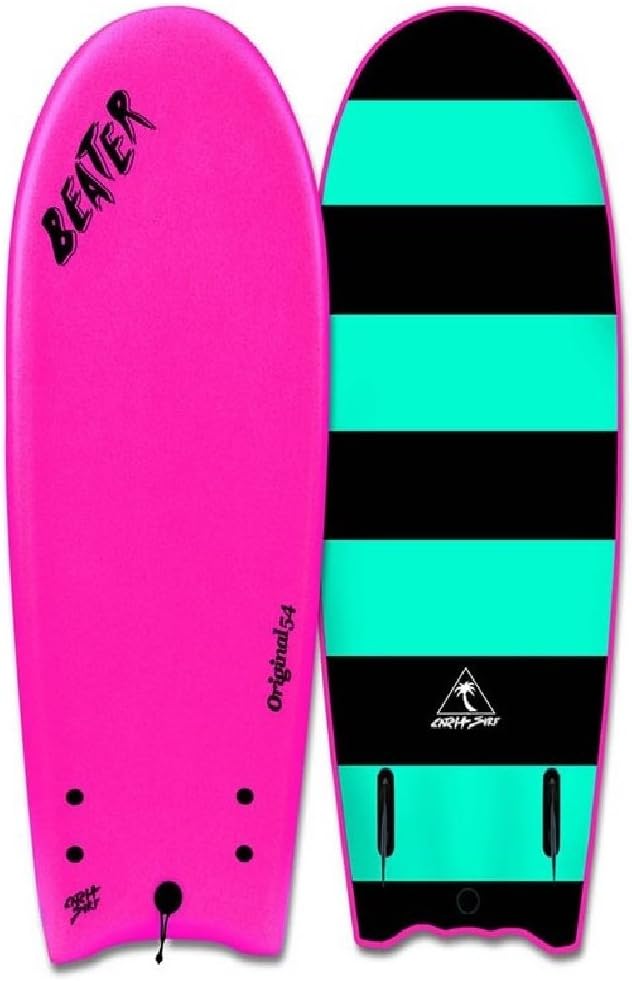
At around 54 inches and $160, the Beater sits in a strange category. It’s not a traditional surfboard, not quite a skimboard, and definitely not a learner board. It’s a soft-top fun machine designed for people who already know how to surf and want something silly and indestructible for small days, beach breaks, and travel. Once you understand what it actually is, the rating makes a lot of sense.
We’ve been testing foam boards for our best soft-top surfboards guide and the Beater kept coming up as a fan favorite. Here’s our full breakdown after putting it through its paces.
Catch Surf Beater Original specs
| Length | ~4’10”-54″ |
| Type | Foam fun board |
| Fins | Twin (soft) |
| Rider | All levels |
| Skill | Intermediate fun |
| Best for | Skim/surf small waves |
What the Beater is (and isn't)
Let’s get this out of the way first: the Catch Surf Beater Original is not a beginner surfboard. If someone in your family is trying to stand up on a surfboard for the first time, they need an 8-foot-plus foamie with real volume and stability — something from our best beginner surfboards roundup. The Beater, at 54 inches, is short, loose, and reactive. It will wash out beginners repeatedly and teach them nothing useful about paddling or popping up.
What it is is a twin-fin soft foam novelty board that straddles the line between a skimboard and a surfboard. The shape is wider and stubbier than a normal shortboard, and the twin soft fins give it a slidey, skatey feel that’s totally its own thing. The International Surfing Association classifies boards like this under the broad surf craft umbrella, but most shops just call it a “fun board” and leave it at that.
The foam construction is what makes it genuinely special. Catch Surf uses a dense, durable foam that shrugs off dings, fins to the face, and the general abuse that comes with sharing waves at a crowded beach break. We beat ours against rocks, dropped it on concrete, and let a ten-year-old have at it — still looks basically fine.
On the water — small-wave fun
In the right conditions, the Beater is genuinely one of the most fun things we’ve ridden. “Right conditions” means small, mushy, gutless waves — the kind that would be an embarrassing session on anything else. Knee to waist high? The Beater turns it into a party. You can spin it, shove-it, get sideways on a section, and generally act like you’re skateboarding a parking lot bump instead of surfing.
The twin fin setup is the key to that feel. Twin fins are looser and more pivoty than a thruster (three-fin setup), and on a short, wide board like this they amplify that characteristic into something that feels almost surreal. You’re not going to be carving huge rail-to-rail turns — that’s not the point. You’re going to be sliding, spinning, and laughing at how fun mush can be.
Paddling is the honest weak spot. At 54 inches, it doesn’t glide the way a longer board does, and catching waves requires more hustle than you’d expect. Intermediates adapt quickly, but if you’re used to a 7-foot mid-length you’ll notice the extra effort in the paddle-out and takeoff. It’s not a dealbreaker, but it’s real.
For travel, the size is actually an asset. It fits in a standard board bag with room to spare, slides into overhead bins on some carriers, and doesn’t need a full-size travel bag. We’ve taken ours to beach vacations where renting was the only other option and we were genuinely glad to have it.
Durability and versatility
This is where the Beater genuinely earns its reputation. The soft foam construction is tough in a way that traditional soft-tops often aren’t. Most foam boards use a thin foam skin over an EPS core, and that skin delaminates, dents, and waterloggs over time. The Beater uses a thicker, denser foam that just doesn’t care about impact. It bounces off things that would crack a fiberglass board and dent or chip a lesser foamie.
The fins are also soft rubber, which matters more than people realize. Hard plastic fins to the shin or the back of someone’s head is a real injury risk at busy breaks. Soft fins reduce that risk significantly, which is part of why these board types get recommended so often for crowded beach environments.
Versatility is limited but intentional. This board does small waves well and does skimboarding-style riding well. It does not do overhead surf, it does not do serious paddling, and it does not do anything that requires real buoyancy or rail engagement. That’s fine — it was never trying to. If you’re looking for a board that covers the full range, check our best surfboards guide for options with broader performance envelopes.
One thing we’d flag: the grip on the deck is decent but not exceptional in warm water when things get slippery. A small tail pad or a sprinkle of wax solves it immediately, but it’s worth knowing going in.
Who it's for (and who should skip it)
The Beater hits hardest for a specific kind of surfer: someone who already knows the basics, surfs small beach breaks regularly, and wants a second board that’s cheap, indestructible, and pure fun on bad days. If that’s you, $160 is an easy yes. It also works well as a travel board for the reasons mentioned above — size, durability, and the fact that you won’t cry if it gets roughed up by an airline.
It’s also a genuinely solid option for surfers who are intermediate on bigger boards and want something low-stakes to develop their small-wave reading and footwork. The skatey feel translates to better hip engagement and timing in a way that’s actually useful for board sports crossover.
Who should skip it? First-time surfers, full stop. We want to be direct about this because we’ve seen people buy the Beater as a “starter board” and then wonder why they can’t stand up. The board is short, reactive, and offers almost no beginner forgiveness. Start on an 8-foot-plus foamie, get comfortable, and then come back to the Beater when you want to play.
Also skip it if you’re primarily surfing waves overhead or bigger. The Beater will get pushed around in anything with real power, and you’ll be fighting it instead of riding it. It’s a small-wave specialist, and it’s an excellent one.
What we liked
- Exceptionally durable — shrugs off impacts, dings, and abuse that would damage other boards
- Twin soft fins make it genuinely fun and skatey in small, mushy surf
- Compact size is a real travel advantage — fits most board bags with room to spare
- Soft fins reduce injury risk at crowded breaks
- At ~$160, it's an easy add as a second or fun board without breaking the budget
- High fun ceiling in conditions that would bore you on a performance shortboard
The catches
- Absolutely not a beginner learn-to-surf board — short and loose, beginners need 8'+ foamie
- Paddling requires more effort than a longer board; takeoffs demand extra hustle
- Limited performance ceiling — not built for overhead surf or serious rail-to-rail carving
- Deck grip can get slippery in warm water without added wax or a tail pad