
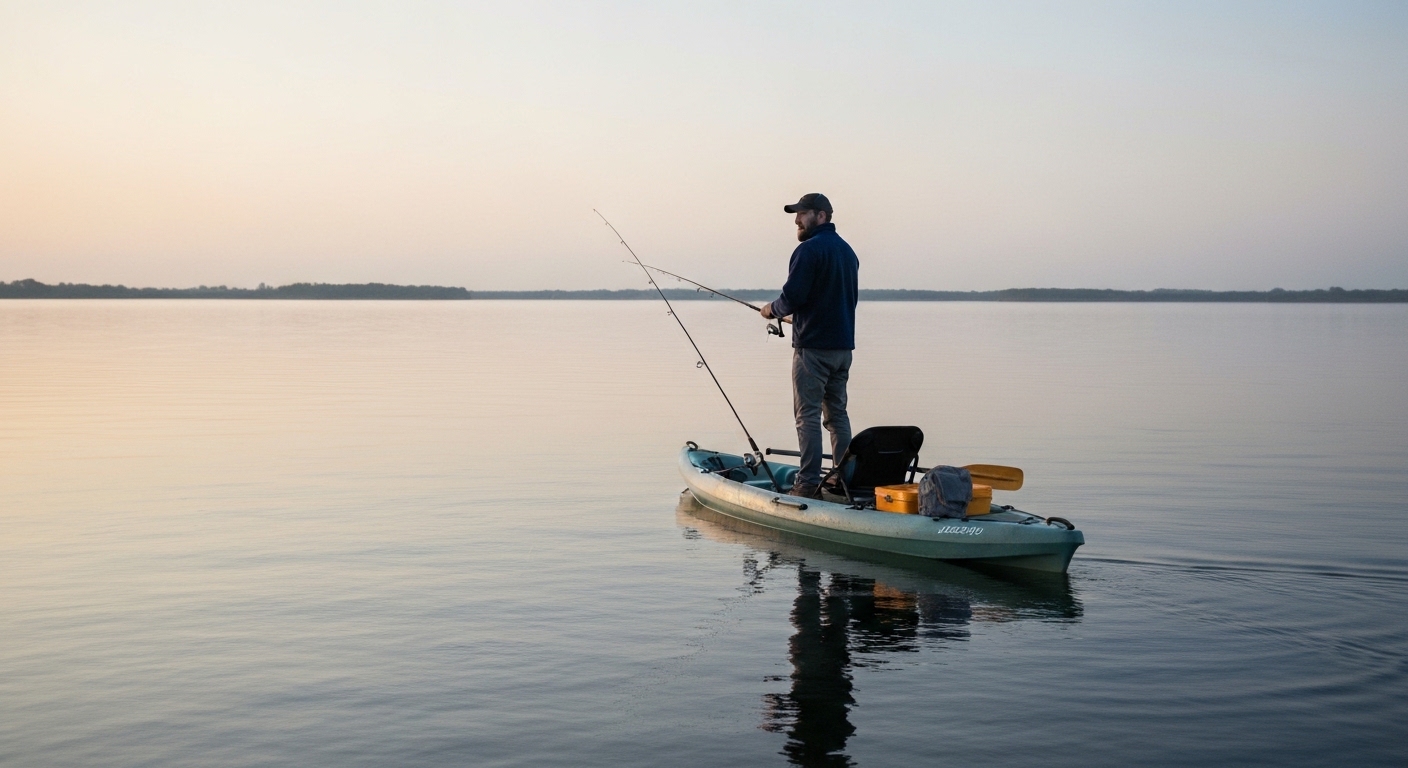
Best Fishing Kayaks of 2026
Four fishing kayaks, four price points, one honest verdict on each.
See the top picks →Fishing kayaks have exploded in variety, and choosing the wrong one wastes money fast. These four picks cover every realistic budget and fishing style, with real cons included so you know exactly what you’re signing up for.
At a Glance
| Kayak | Best for | Specs | Price |
|---|---|---|---|
| Intex Excursion Pro K2 | Best Budget / Inflatable | 2-person inflatable | 12'7" | 400 lb | 2 rod holders | ~$280 |
| Lifetime Tamarack Angler 100 | Best Cheap Hardshell | Sit-on-top | 10' | 275 lb | 3 rod holders (2 flush + 1 top-mount) | ~$330 |
| Perception Pescador Pro 10 | Best Value Sit-On-Top | Sit-on-top | 10.5' | 375 lb | gear tracks + elevated seat | ~$700 |
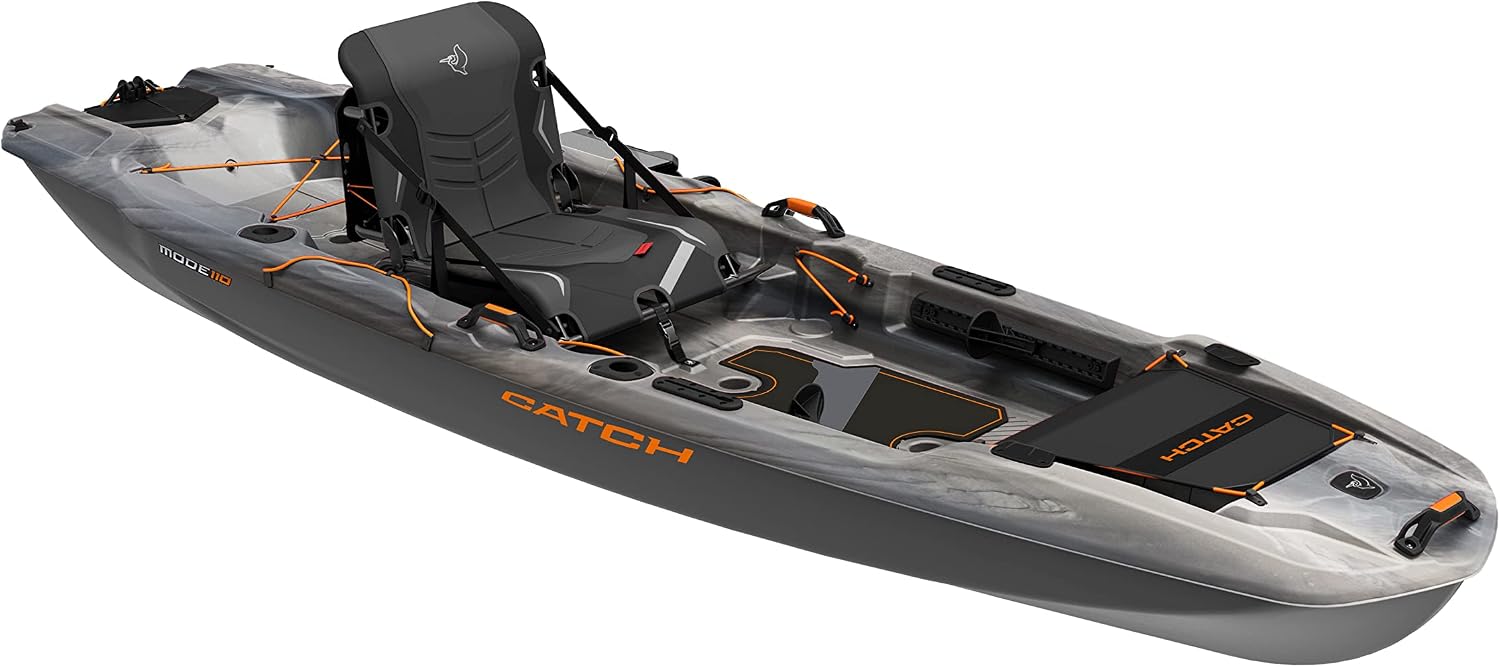
| Pelican Catch Mode 110 | Best for Standing | Sit-on-top | 11' | 425 lb | ExoPak hull | stand-and-cast deck | ~$700 |
The Top Picks, Reviewed
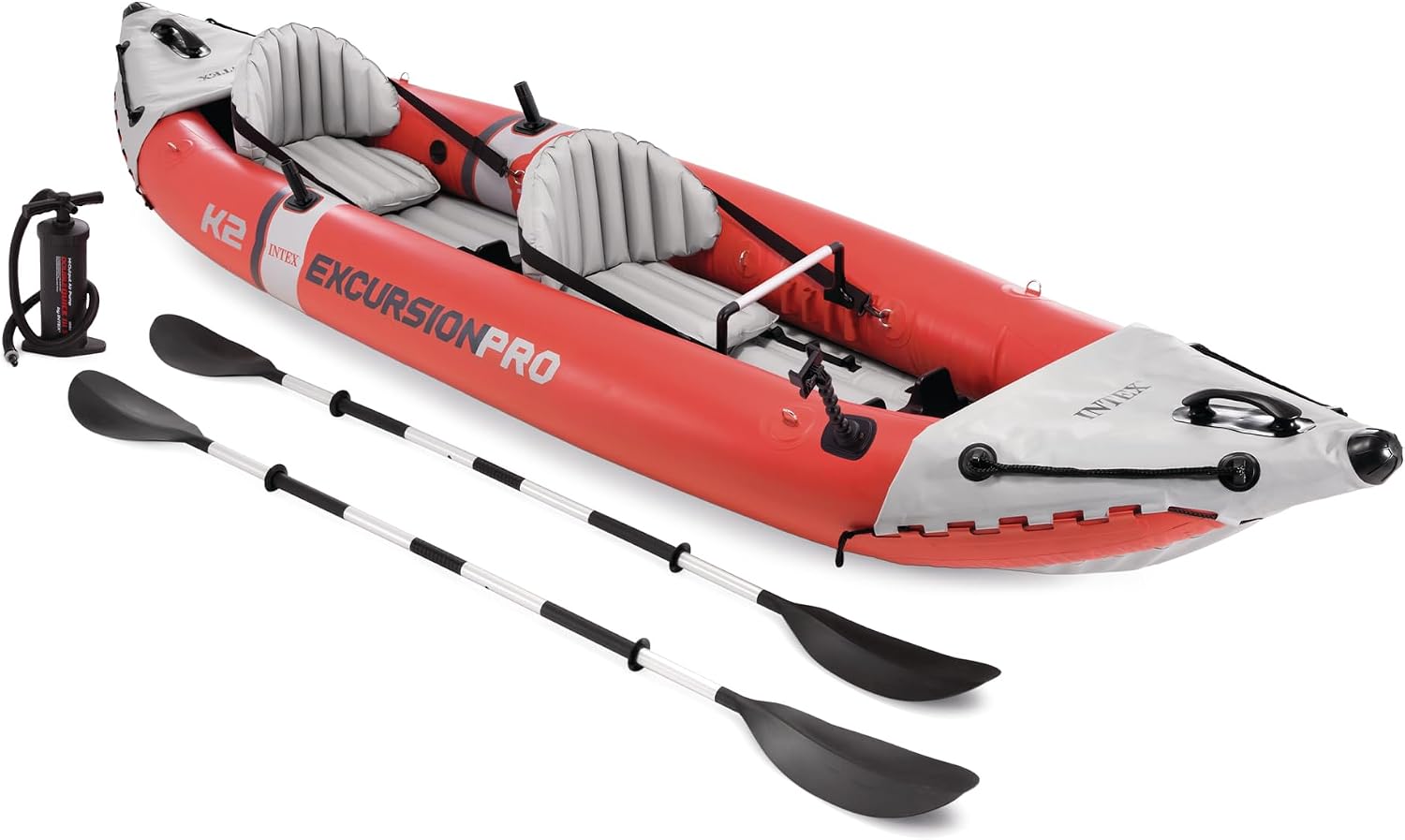
Intex Excursion Pro K2
If budget is the ceiling and storage is the floor, the Intex Excursion Pro K2 solves both. The super-tough laminate construction handles rocks and rough launches better than you’d expect for an inflatable at this price, and the two rod holders plus removable skegs make it genuinely fishable, not just a floaty novelty. It packs into a duffel, which means no roof rack, no trailer, and no storage headaches between trips. The honest catch: it’s slower and less rigid than any hardshell at a similar price, and while it seats two, packing serious gear alongside a second angler makes things cramped fast—solo trips with the extra space are where this kayak really shines.
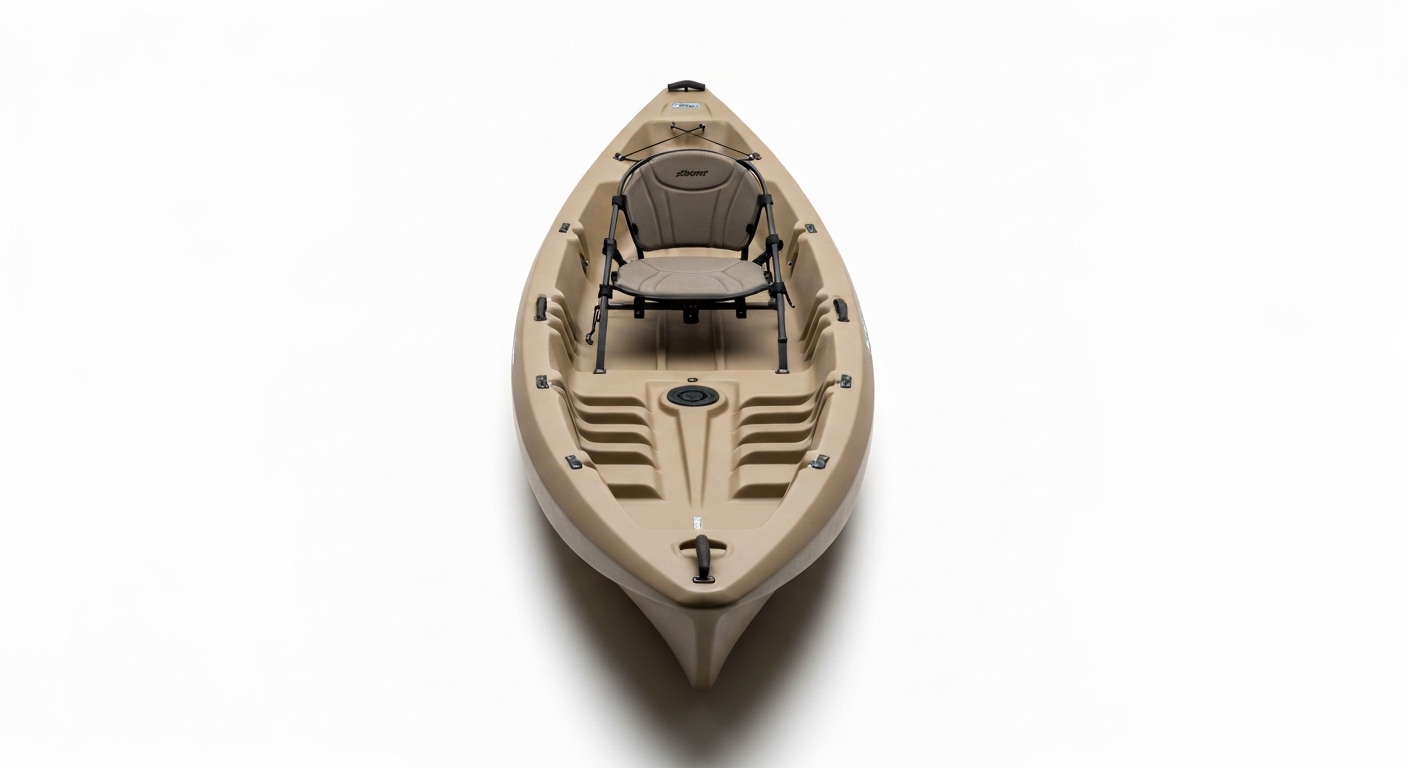
Lifetime Tamarack Angler 100
The Tamarack Angler 100 is the entry point for anglers who want a real hardshell without financing one. At 10 feet, it’s maneuverable in tight coves and still tracks reasonably well on open water. The three rod holders—two flush-mount plus one top-mount—cover multiple setups, and the molded footwells give you stable footing whether you’re casting or repositioning. The honest catches are real: at around 52 pounds, car-topping it solo is a genuine workout, the stock seat is basic enough that you’ll feel it after two hours, and the shorter length means you’ll cruise slower than paddlers in longer boats. For a first fishing kayak on a tight budget, though, it earns its place.
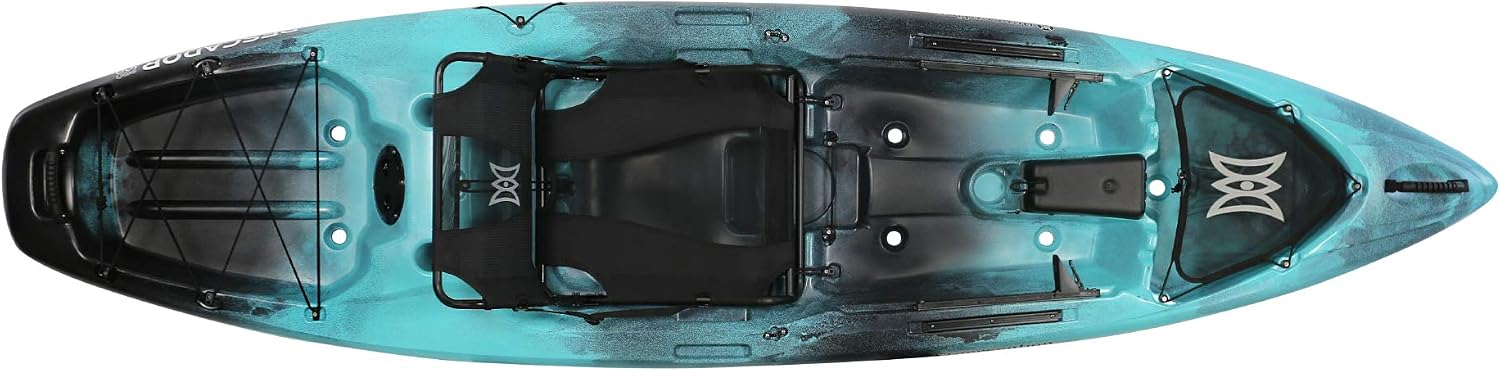
Perception Pescador Pro 10
The Pescador Pro 10 sits at the sweet spot where comfort, stability, and fishability all converge without crossing into four-figure territory. The elevated lawn-chair-style seat is the first thing every angler notices—it puts you up high enough for a decent sight-cast without the wobble you’d expect at that height. Gear tracks let you mount accessories without drilling, and the hull is stable enough to fish confidently across most conditions. The Pescador Pro is also a genuine all-rounder: equally at home on flatwater bass ponds, slow rivers, and coastal bays. The downside is weight—it’s heavier than it looks—and the price is a real step up from budget options, though the comfort and rigging versatility justify it for anyone fishing more than a few times per season.
Pelican Catch Mode 110
If standing to cast is non-negotiable, the Catch Mode 110 is the most affordable platform that actually delivers on that promise. Pelican’s ExoPak hull is wide and flat enough that standing feels stable rather than terrifying, and the open deck gives you room to move without shuffling around tackle piled at your feet. The ergo seat handles long days reasonably well, and the 425-pound capacity means you can pack for a full day without worrying about riding low. The trade-offs are worth knowing upfront: it is heavy, and the wide beam that makes standing possible also makes paddling slower and more tiring over distance. Plan shorter paddles or bring patience—this kayak rewards anglers who find a spot and work it rather than covering miles of water.
Stability and Standing: Know What You're Getting Into
Stability is the number-one concern anglers raise when buying their first fishing kayak, and for good reason—capsizing with $400 worth of tackle is a bad day. Kayak stability comes in two forms: primary stability (how steady it feels sitting flat) and secondary stability (how it responds when tilted). Wider, flatter hulls offer stronger primary stability, which is what matters for fishing.
Standing is a different bar entirely. Only dedicated stand-and-cast platforms like the Pelican Catch Mode 110 are built with the hull geometry to make standing reliable. On a standard sit-on-top, standing is possible but situational—calm water only, feet wide, low center of gravity. Don’t let a manufacturer’s “you can stand” claim substitute for a hull actually designed for it.
Sit-On-Top vs. Sit-In vs. Inflatable: Which Hull Type Fits You
Each hull type makes real trade-offs, and the right answer depends on where and how you fish.
- Sit-on-top: The most popular fishing platform. Self-draining scupper holes mean splashes drain out automatically. Easy re-entry after a swim, and you can rig gear across the entire deck. The downside is exposure—you’ll get wet on the legs in rougher water, and wind hits you fully. The Lifetime Tamarack and Perception Pescador Pro are both sit-on-tops.
- Sit-in: Drier, warmer, and faster-tracking, but harder to exit and re-enter, and a swamped cockpit is a serious problem. Better for cold climates and flatwater touring than for casual fishing.
- Inflatable: The storage and transport winner. Check our roundup of the best inflatable kayaks if portability is your top priority. They’re slower and less rigid than hardshells, but for anglers without roof racks or garage space, they solve a real problem the other hull types can’t.
Length and Capacity: Size Has Consequences
Kayak length directly affects speed and maneuverability. Longer kayaks (12+ feet) track straighter and move faster through the water with less effort—useful on open water or when covering distance. Shorter kayaks (10 feet and under) turn more easily and fit into tighter launch spots, which matters enormously on narrow rivers and brushy ponds.
Capacity matters more than most buyers realize. A kayak rated for 300 pounds doesn’t mean you should load it to 300 pounds—most manufacturers build in a 20-30% performance buffer, meaning a 300-pound rated hull starts riding noticeably lower in the water around 220-240 pounds of combined angler-plus-gear weight. Calculate your actual load before buying and aim for a kayak with rated capacity at least 75 pounds above your real number.
Rigging, Rod Holders, and Gear Tracks
A kayak without rigging options is just a floating chair. Serious fishing setups need rod holders, a place for a fish finder mount, paddle clips, and somewhere to stash tackle bags without them sliding overboard. Here’s what to look for:
- Flush-mount rod holders: Built into the hull, low profile, keep rods secure while paddling. Two is the minimum; three gives you real flexibility.
- Top-mount rod holders: Angled upright holders that keep rods accessible for quick casts. Good for trolling and active retrieval setups.
- Gear tracks (also called accessory rails): Slotted rails that accept universal mounts without drilling. The Perception Pescador Pro’s gear tracks let you reposition accessories trip to trip. If you plan to add a fish finder or GPS, gear tracks are essentially mandatory.
- Tank well and bungees: The rear storage area. A roomy tank well with solid bungee cords handles crates, coolers, and dry bags without cluttering the cockpit.
Pedal Drive vs. Paddle: When Each Makes Sense
Pedal-drive kayaks free your hands completely for fishing but add significant cost, weight, and mechanical complexity. Entry-level pedal kayaks rarely appear below $1,200, and the drive units require maintenance that a simple paddle never does. They’re genuinely excellent for offshore fishing, trolling presentations, and situations where hands-free propulsion changes the catch rate—but they’re overkill for a weekend pond angler on a $500 budget.
Paddle kayaks dominate the value end of the market precisely because they’re simpler: no drive to foul on weeds, no motor to service, lighter total weight, and lower purchase price. Every kayak in this roundup is paddle-powered, which keeps all four picks accessible, portable, and low-maintenance. If pedal drive is where you’re headed eventually, budget for it separately rather than compromising a paddling kayak purchase trying to get there early.