
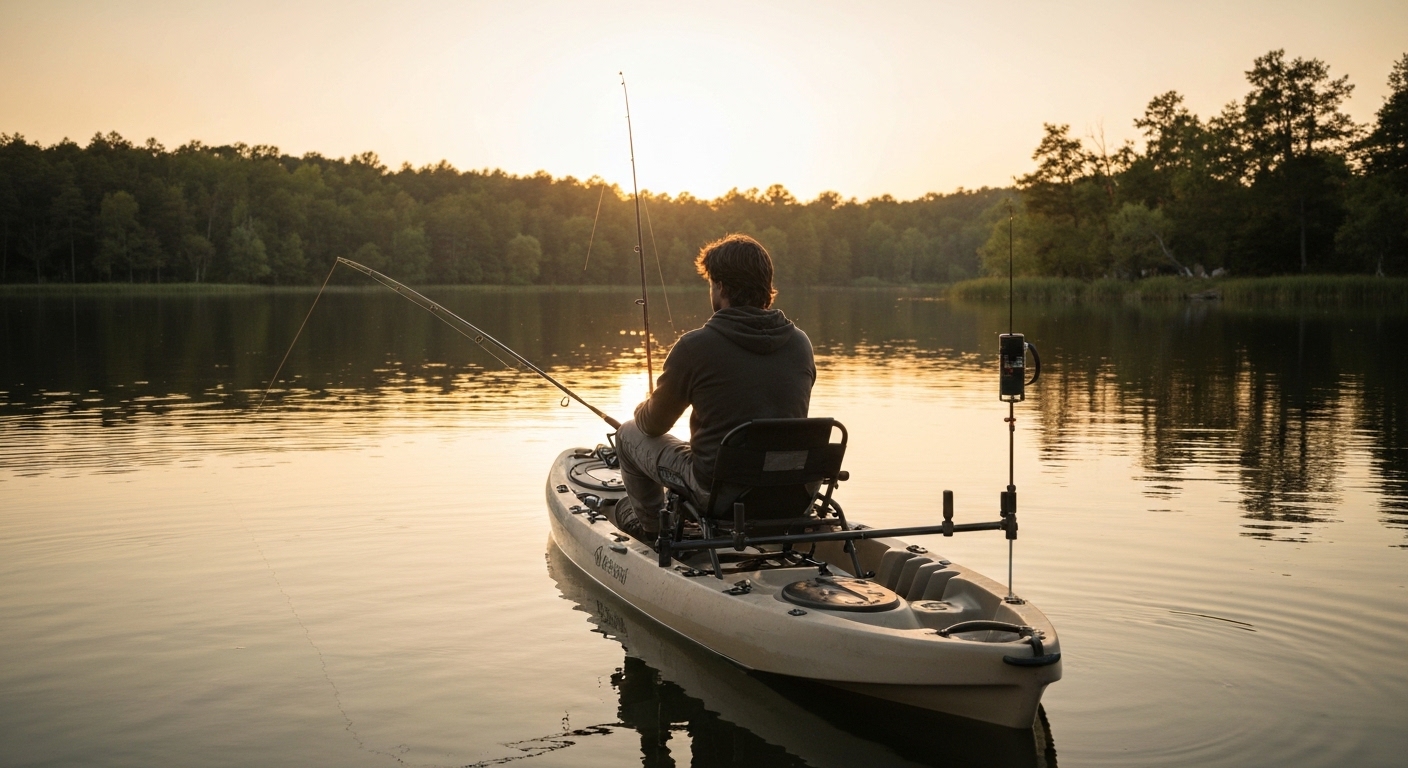
Best Fishing Kayaks Under $1,000
Four fishing kayaks under $1,000 that actually hold up—with the catches spelled out up front.
See the top picks →The under-$1,000 fishing kayak market is bigger and better than it’s ever been—but it’s also full of kayaks that look great on a product page and frustrate you on the water. This guide covers four real picks across a real price range, from a $330 entry-level hardshell to an $800 big-water platform. Every pick includes the honest catches, not just the selling points, because the wrong kayak wastes more money than stretching your budget slightly for the right one.
At a Glance
| Kayak | Best for | Specs | Price |
|---|---|---|---|
| Perception Pescador Pro 10 | Best Overall Under $1,000 | Sit-on-top | 10.5’ | 375 lb capacity | gear tracks | elevated lawn-chair seat | ~$700 |
| Pelican Catch Mode 110 | Best for Standing | Sit-on-top | 11’ | 425 lb capacity | ExoPak hull | stand-and-cast deck | ergo seat | ~$700 |
| Ascend FS128T | Best Big-Water Stability | Sit-on-top | 12.8’ | tunnel hull | stand-up stable | removable frame seat | high capacity | ~$800 |
| Lifetime Tamarack Angler 100 | Best Cheap Option | Sit-on-top | 10’ | 275 lb capacity | 3 rod holders (2 flush-mount + 1 top-mount) | ~$330 |
The Top Picks, Reviewed
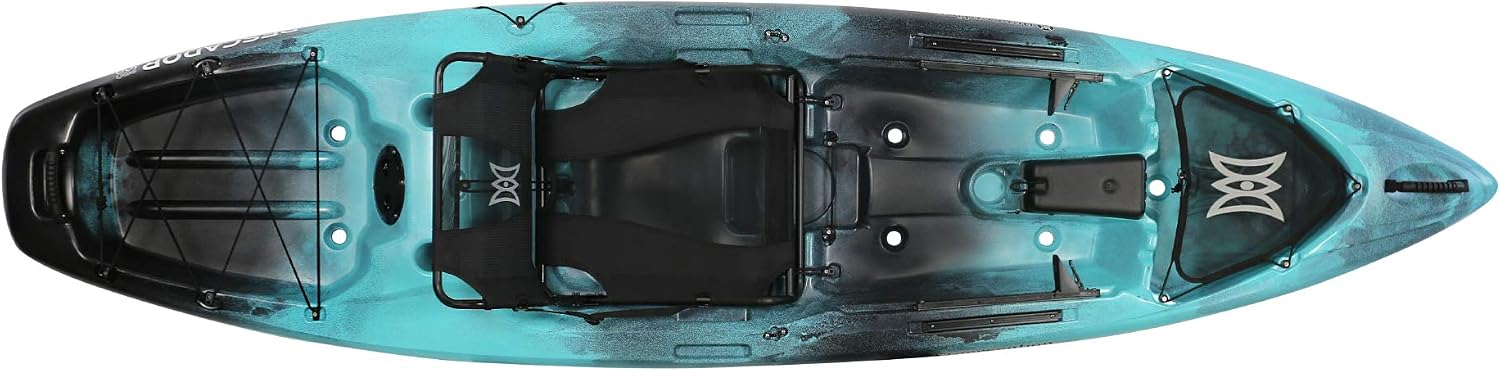
Perception Pescador Pro 10
The Pescador Pro 10 is the kayak most experienced anglers point to when someone asks what to buy under $1,000—and the reputation is earned. The elevated lawn-chair seat is the first thing you notice on the water: it puts you high enough for a real sight-cast angle without the instability you’d expect at that height. The hull is genuinely stable across flatwater bass ponds, slow rivers, and protected coastal bays, making this a true all-rounder rather than a kayak optimized for one scenario. Gear tracks let you add fish finders, rod holders, and GPS mounts without drilling holes in the hull, which keeps resale value intact and your rigging flexible trip to trip. The hull stays predictable even when you load it with a full day’s worth of tackle and a cooler. The honest catches: this is a heavy kayak for its length—car-topping it solo is a real workout—and the price is a genuine step up from the budget end. There’s also no pedal drive option at this price point, so if hands-free propulsion is a priority, you’re looking at a different category entirely. For anglers who want the best balance of comfort, rigging, and fishability without crossing into four figures, the Pescador Pro 10 is the answer.
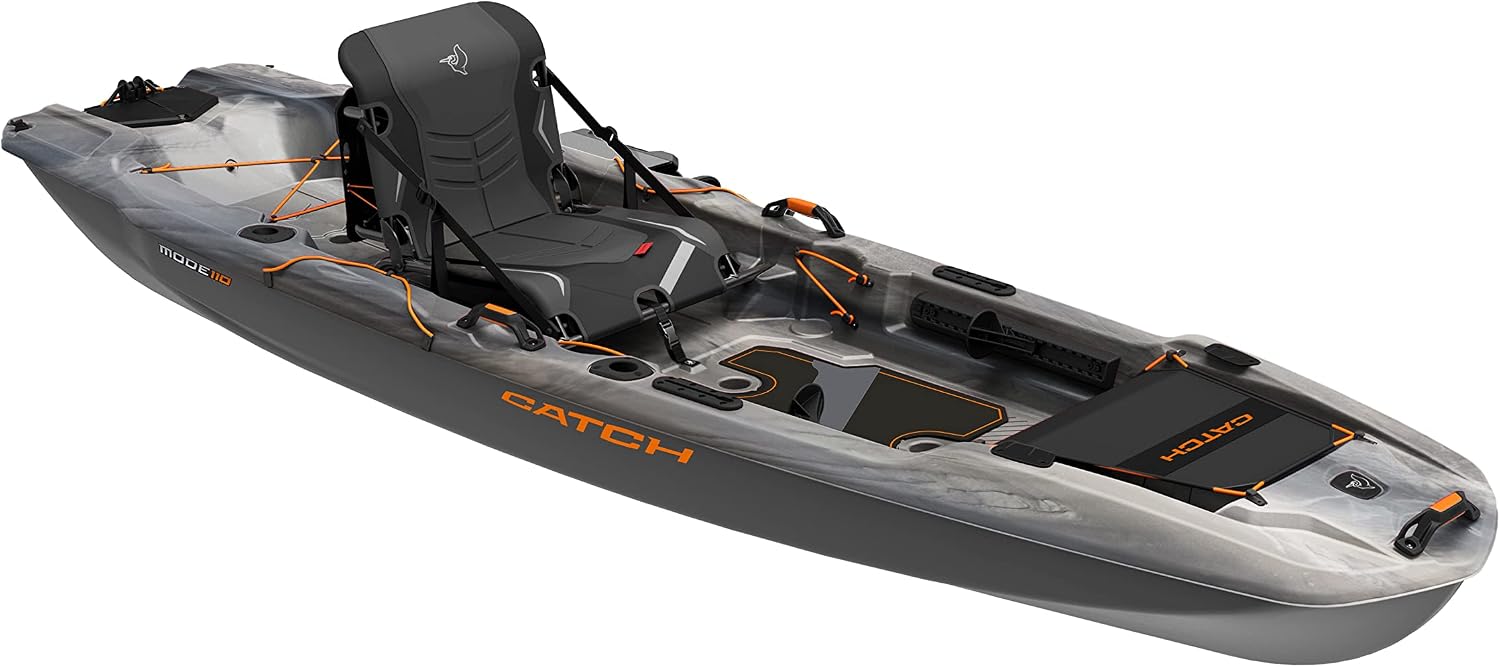
Pelican Catch Mode 110
If standing to cast is non-negotiable and spending $1,500 on a specialized platform isn’t in the plan, the Catch Mode 110 is the most affordable kayak that actually delivers on the standing promise. Pelican’s ExoPak hull design uses a wide, flat bottom that makes standing feel stable rather than like a gamble—this isn’t a kayak where you stand up once in calm water and call it a win, it’s a kayak designed with that use case built into the hull geometry. The open stand-and-cast deck gives you room to reposition without shuffling over piled tackle, and the 425-pound capacity means you can pack for a full day without riding low. The ergo seat handles longer sessions reasonably well, though it’s not at the same level as the Pescador Pro’s elevated seat for pure comfort. The honest catches are worth knowing before you buy: the wide beam that makes standing possible is also why this kayak is slower and more tiring to paddle over distance. It’s also heavy, which makes transport and launching by yourself more demanding. The Catch Mode 110 rewards anglers who find a productive spot and work it thoroughly rather than covering miles of water. If your fishing style is anchoring up and sight-casting, this hull is built for you.
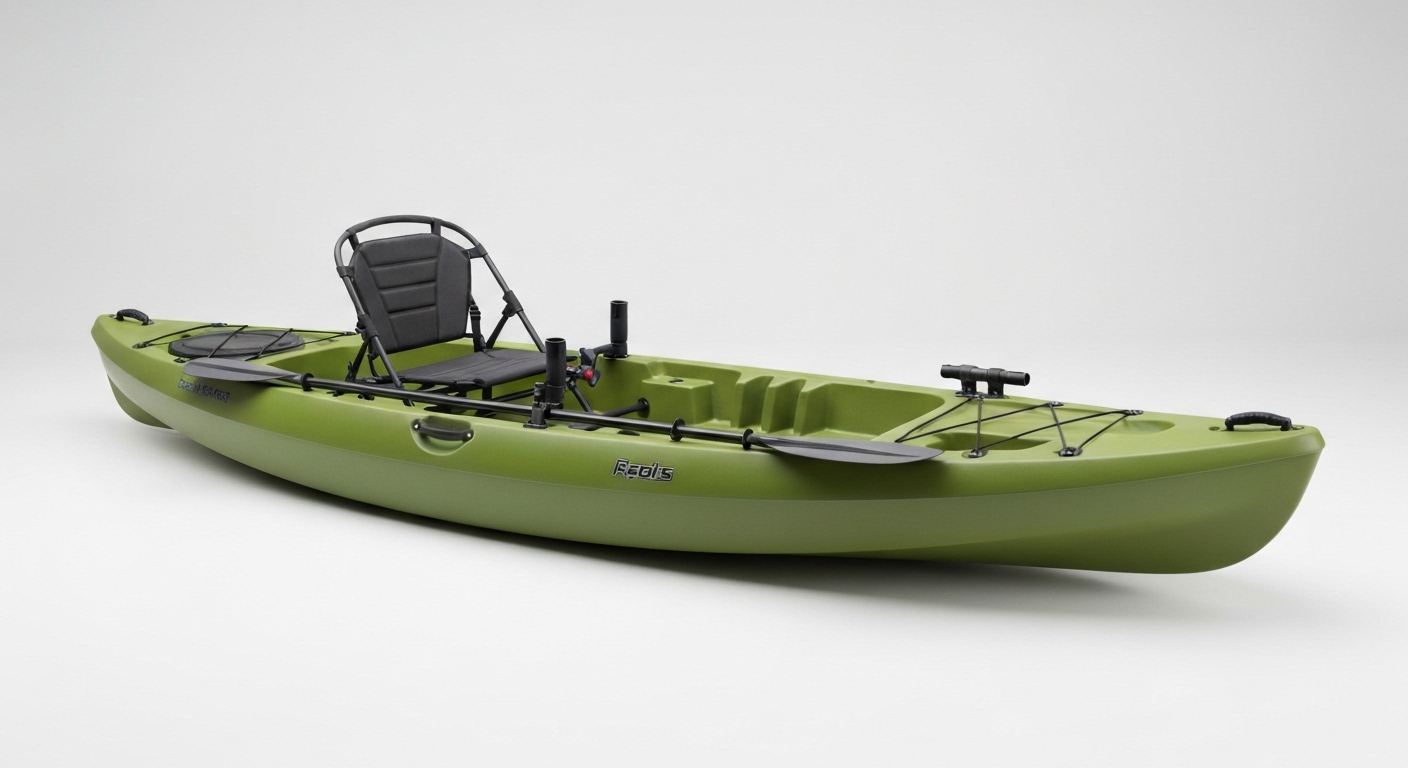
Ascend FS128T
The Ascend FS128T is Bass Pro Shops’ house brand, and it punches well above its price point for anglers who fish open water, large reservoirs, or anywhere that chop and wind are regular variables. The tunnel hull design—two raised pontoon-style rails flanking a lower center channel—creates a stability platform that’s genuinely impressive. You can stand up and cast on this kayak without the white-knuckle concentration that standing requires on a conventional sit-on-top. The removable frame seat is more comfortable than the fixed molded seats on most kayaks in this price range, and the overall length means it tracks well and covers water efficiently. Capacity is substantial, making it one of the better platforms for anglers who fish with a lot of gear or who are on the larger end of the angler weight range. The catches are significant and worth factoring into your logistics: the FS128T weighs over 75 pounds, which makes solo car-topping genuinely difficult and transport a two-person job on most rigs. It’s also a bulky kayak that takes up serious storage space. If you have the truck, the trailer, or a partner to help with the lift, the stability and fishability payoff is real. If you’re a solo angler with a sedan and no help, factor the transport problem into your decision.
Lifetime Tamarack Angler 100
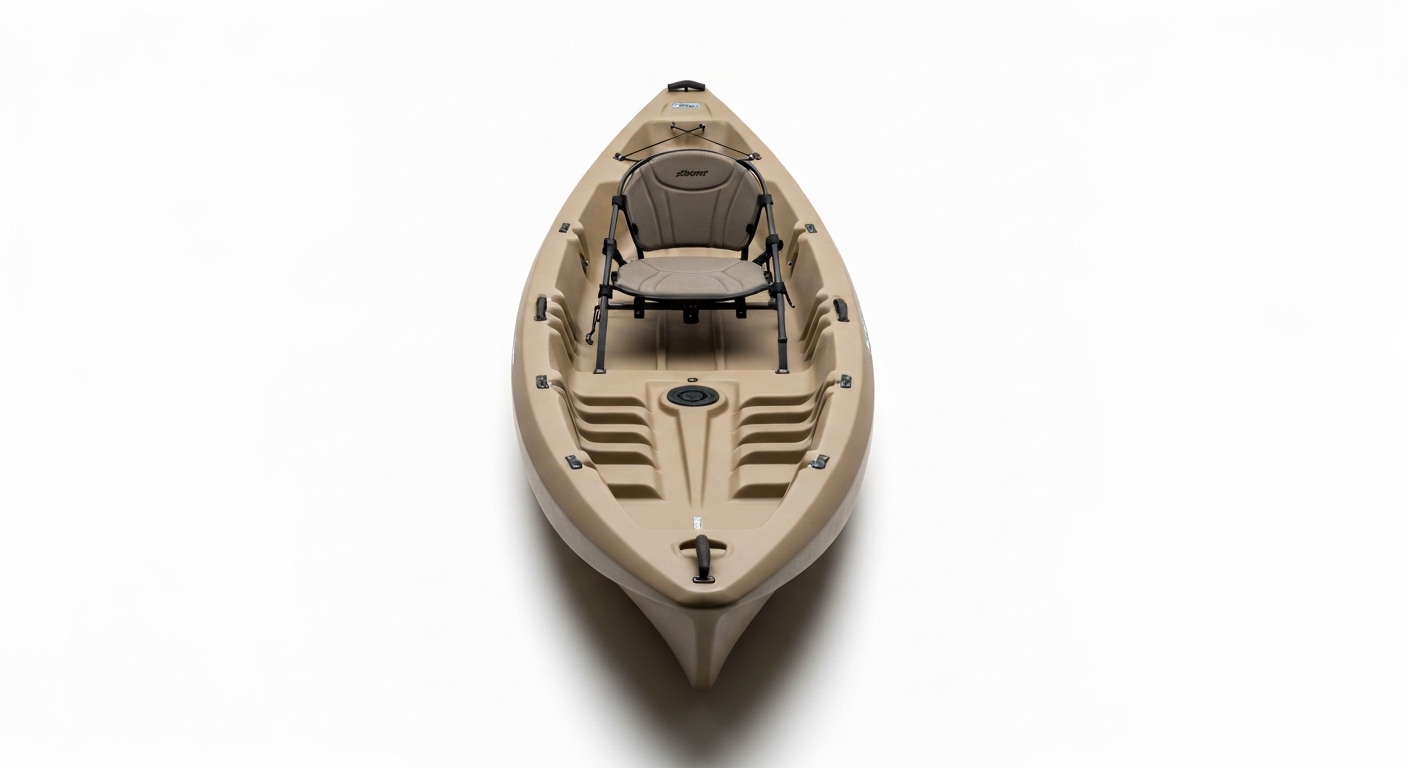
The Tamarack Angler 100 is the kayak that gets more people onto the water fishing than almost anything else in the market, and that counts for something. At $330, it comes with three rod holders—two flush-mount and one top-mount—which is a complete setup for most freshwater scenarios right out of the box. The hull is wide and flat enough that first-time paddlers feel stable quickly, and the 10-foot length is easy to maneuver in tight coves and narrow rivers where longer boats become a liability. For anyone who wants to know if kayak fishing is for them before spending real money on it, this is the correct place to start. The honest catches are real and worth knowing upfront: the stock seat is basic, and you’ll feel it after a couple of hours on the water. The shorter length means you’ll be slower than paddlers in 12-foot boats, and at around 52 pounds, it’s surprisingly heavy for its size relative to more expensive kayaks. The 275-pound capacity is the tightest in this roundup—larger anglers or anglers who pack heavily should look at higher-rated options. As a first kayak or a backup lake kayak that lives in a garage, though, the Tamarack Angler 100 earns its spot.
What You Actually Get for Under $1,000
A thousand dollars used to be a hard ceiling below which fishing kayaks were mostly compromises. That’s changed. The $700–$900 range now includes kayaks with elevated seats, accessory tracks, high weight capacities, and hull designs purpose-built for fishing—not just recreational paddling with rod holders bolted on. The $300–$400 range has also improved: the Lifetime Tamarack Angler 100 ships with more rod holder options than kayaks that cost twice as much did a decade ago.
What you don’t get under $1,000 is pedal drive, carbon fiber construction, or factory-installed fish finders. Pedal kayaks—where you propel the boat with your feet and keep your hands free for fishing—reliably start above $1,200 and often push $1,800 or more. If that’s where you’re headed, it’s worth saving up rather than buying a paddle kayak now and replacing it in a year. But for the vast majority of freshwater anglers, a well-chosen paddle kayak under $1,000 is a fishing platform that can last a decade without apology.
Browse the full best fishing kayaks guide if you want to see how these under-$1,000 picks stack up against the wider market, including pedal-drive and premium options above this price threshold.
Sit-on-Top Stability: How Much Is Enough and When Standing Matters
Stability is the most talked-about spec in fishing kayaks and the most misunderstood. Kayak stability exists in two forms: primary stability (how steady the hull feels sitting flat on calm water) and secondary stability (how it responds when tilted and whether it rights itself or keeps rolling). Fishing kayaks prioritize primary stability because most fishing happens on flat or mildly choppy water, and the wobble from casting and reeling is the main challenge to manage.
Wider, flatter hulls deliver stronger primary stability. All four picks in this roundup are sit-on-top designs, which are the dominant choice for fishing—they’re self-draining through scupper holes, easy to re-enter after a swim, and let you rig gear across the full deck. The trade-off is exposure: your legs and lower body are in the weather and light splash, which matters more in cold climates than warm ones.
Standing is a separate category of stability. The phrase “stable enough to stand” gets thrown around loosely by manufacturers and retailers. Only a hull specifically designed with standing in mind—like the Pelican Catch Mode 110’s ExoPak platform or the Ascend FS128T’s tunnel hull—provides reliable standing under real fishing conditions. On a conventional sit-on-top, standing is possible in calm water with low wind, but it’s situational and requires active concentration. Plan accordingly: if you’re standing every trip to sight-fish, buy a hull built for it.
Rigging Your Kayak: Gear Tracks, Rod Holders, and Fish Finder Mounts
A fishing kayak’s usefulness beyond bare fishing depends almost entirely on its rigging options. Here’s what the terms actually mean and which setups to prioritize:
- Flush-mount rod holders: Built into the hull at a low angle, keeping rods horizontal and out of the way while you paddle. These are the baseline—any serious fishing kayak should have at least two.
- Top-mount (upright) rod holders: Angled vertical holders that keep rod tips up and handles accessible for quick grabs. Better for trolling setups and actively swapping between rods.
- Gear tracks (accessory rails): Slotted mounting rails that accept universal kayak hardware without drilling. The Perception Pescador Pro 10 ships with gear tracks as a standard feature, which means you can add and reposition fish finder arms, cup holders, paddle clips, and camera mounts trip to trip without permanent modifications. If you plan to add electronics, tracks are the cleanest solution.
- Tank well and bungees: The open storage area behind the seat. Roomy tank wells with solid bungee systems handle milk crates, soft coolers, and dry bags without cluttering your cockpit.
- Paddle clips/keepers: Small detail, real-world impact. Paddle clips let you set your paddle down hands-free without it sliding overboard while you work a fish. Check for them before assuming they’re included.
If you plan to add a fish finder eventually, prioritize a kayak with gear tracks or a dedicated transducer mount location from day one. Retrofitting electronics onto a hull without mounting infrastructure is doable but messier and more expensive than starting with the right platform.
Paddle vs. Pedal at This Budget: The Honest Breakdown
Pedal-drive kayaks are genuinely excellent fishing tools: hands-free propulsion changes how you can work a lure, hold position against current, and cover water while keeping your rod in hand. But pedal kayaks introduce real trade-offs that are worth naming honestly before you decide whether the upgrade is worth waiting for.
At the under-$1,000 price point, pedal drive doesn’t exist as a real option from reputable manufacturers. Entry-level pedal kayaks from brands like Pelican and Old Town start around $1,200, and the category leaders (Hobie Mirage, Native Watercraft) run $2,000–$3,500 or more. Attempting to hit both “under $1,000” and “pedal drive” in the same purchase leads to offshore brands with poor quality control and drive units that foul on weeds or fail on the first trip.
Paddle kayaks at this price are simpler: no moving parts to service, lighter than pedal equivalents by 15–25 pounds on average, less fouling risk in vegetation-heavy water, and dramatically lower purchase cost. All four picks in this roundup are paddle kayaks, which keeps them accessible, portable, and low-maintenance. The fishing trade-off is real—you’re managing the paddle while working a bait—but experienced paddle anglers develop techniques (paddle clips, drift fishing, anchoring) that make it work cleanly.
If pedal drive is where you’re ultimately headed, the right move is saving for it rather than buying a paddle kayak as a temporary placeholder. If you’re starting out or aren’t sure yet, a paddle fishing kayak under $1,000 is a complete fishing tool, not a compromise.
Choosing the Right Length and Capacity for Your Fishing Style
Length and capacity interact with your fishing style in ways that aren’t obvious until you’re on the water. Here’s how to think through both:
Length: Longer kayaks (12+ feet) track straighter and move faster with less effort per paddle stroke. They handle open water and reservoirs better and cover distance more efficiently. Shorter kayaks (10 feet and under) turn more easily and fit into tighter spots—narrow creek mouths, fallen timber, shallow brushy coves. The Lifetime Tamarack and Perception Pescador Pro are both in the 10–10.5-foot range, making them easier to handle in tight quarters. The Ascend FS128T at 12.8 feet is the open-water tool in this group.
Capacity: Manufacturers’ rated capacities include a performance buffer, meaning the hull starts losing efficiency well before the stated maximum. A kayak rated for 275 pounds carrying 260 pounds of angler plus gear will ride noticeably lower, respond sluggishly, and take on water more easily in small chop. A reliable working rule: add your body weight, your gear, your tackle, and any water or food, then find a kayak rated at least 75 pounds above that number. Serious anglers who fish with a full crate, rod tubes, a cooler, and electronics should be looking at 375-pound capacity minimums.
If you’re newer to the sport and aren’t sure what kayak style fits your fishing, the best beginner kayaks guide walks through the decision from the ground up, including how to match hull type to the water you’ll actually fish.