
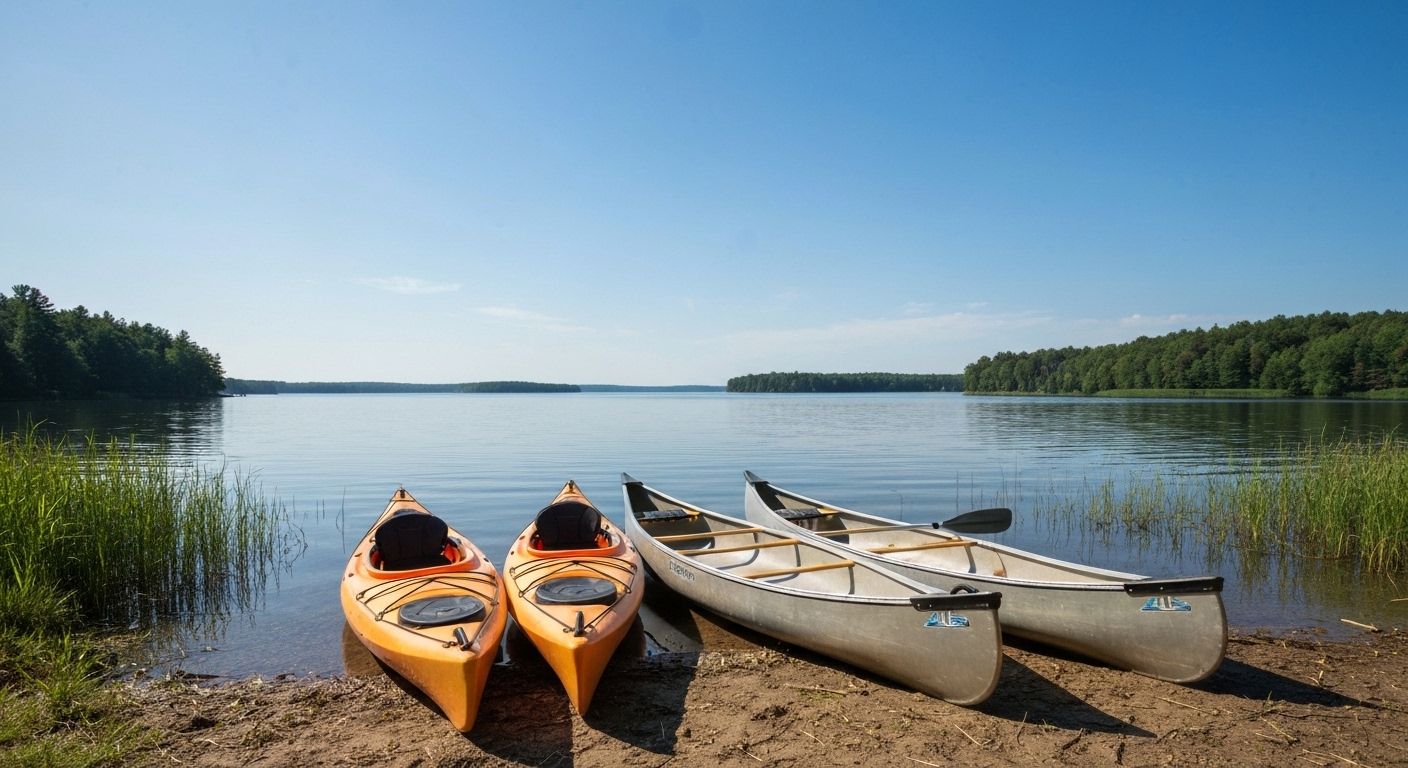
Standing at the water’s edge staring at a rack of boats, it’s easy to feel like the choice between a kayak and a canoe should be obvious. It isn’t — not always. Both float, both paddle, and both will get you out on the water. But they behave differently, suit different people, and reward different trips. This guide cuts through the noise so you can pick the right one on the first try.
The Core Differences at a Glance
Before diving into the details, here is the short version:
- Kayak: Enclosed or semi-enclosed cockpit, low seat, legs extended forward, double-bladed paddle (one blade on each end), faster and drier in rough or choppy water.
- Canoe: Open hull, higher seat or kneeling position, single-bladed paddle, more interior space for gear, kids, dogs, and coolers.
That single-blade vs double-blade distinction matters more than most people expect. A kayak paddle gives you a stroke on each side with every pull — efficient, rhythmic, naturally balanced. A canoe paddle requires switching sides or using correction strokes to keep straight. It takes more technique but also gives you finer control once you learn it.
The other difference you feel immediately is seating height. Kayakers sit low and close to the water, which lowers the center of gravity and makes the boat feel planted. Canoeists sit higher on a thwart or bench, which opens up visibility and legroom but raises the center of gravity — meaning initial tippy-feeling is more pronounced until you trust the hull.
Speed and Efficiency
If speed matters to you, kayaks win. The combination of a lower profile (less wind resistance), a longer waterline relative to beam, and a double-blade paddle that keeps momentum going continuously makes a kayak measurably faster on flat water. Recreational kayakers typically cruise at 3–4 mph without strain. In a comparably sized recreational canoe, solo paddlers average closer to 2.5–3 mph.
That gap widens on windy days. Canoes catch wind like a sail — particularly loaded canoes with gear piled above the gunwales. Experienced canoeists learn to manage this with J-strokes and trim adjustments, but beginners get humbled fast.
For long-distance day trips or any paddling where you want to cover ground efficiently, a kayak is the pragmatic pick. Check out our best recreational kayaks for solid options at every price point.
Capacity, Comfort, and Cargo
Canoes exist in a different league when it comes to hauling stuff. A standard 17-foot recreational canoe can carry 800–1,000 lbs — meaning two adults, a large dog, a week of camping gear, and a cooler with room to spare. That kind of capacity is impossible in a recreational kayak, which typically maxes out around 250–350 lbs all-in.
Canoe trips are fundamentally different experiences because of this. Think multi-day wilderness routes where you’re portaging between lakes with a mountain of gear. Think family outings where kids can stretch their legs, trade seats, or fall asleep on a dry bag. Think bringing the Labrador without worrying about a capsize.
Kayaks handle cargo differently — gear gets stuffed into sealed hatches fore and aft, kept low and centered. This is actually better for rough water since weight stays close to the hull. But there is a hard ceiling on volume, and loading a kayak is less intuitive than loading a canoe.
Leg comfort is another consideration. Kayaks require sitting with legs extended in the cockpit, which some paddlers find cramped on long trips, especially taller paddlers. Canoes let you shift positions — sit on a thwart, kneel, stretch out — which reduces fatigue on full-day outings.
Stability: What "Tippy" Actually Means
Beginners almost always ask about stability, and the honest answer is more nuanced than a simple winner declaration.
Stability in boats comes in two forms: primary (how stable it feels when sitting flat and still) and secondary (how stable it feels when heeled over at an angle before capsizing). Canoes tend to have higher primary stability — they feel solid and wide when you first get in. But tip one past a certain point and it goes over decisively. Kayaks, especially those with rounded hulls, can feel initially wobbly but have excellent secondary stability — they can lean quite far before flipping.
In practice: novices often feel safer in a canoe at dock, then feel less safe in a canoe once wakes and currents arrive. Many beginners actually find wide recreational kayaks more forgiving on open water. Wide, flat-bottomed recreational kayaks — the kind covered in our best beginner kayaks guide — are specifically designed to give beginners both primary and secondary stability.
Re-entry after a capsize also favors kayaks. A swamped canoe is heavy, awkward to right, and difficult to climb back into without a dock or assistance. A kayak can be rolled upright and re-entered in deep water with practice, or drained and climbed back into at shore.
Learning Curve: Solo vs. Group Paddling
Kayaking has a gentler entry curve for solo paddlers. Grab a double-blade paddle, sit down, and you will be moving reasonably straight within ten minutes. The alternating blade keeps the boat tracking, and basic forward strokes are intuitive.
Solo canoe paddling is harder. Without a partner on the other side to balance strokes, you need to learn draw strokes, pry strokes, and the J-stroke to keep straight. It’s absolutely learnable — experienced solo canoeists look effortless — but plan on a longer adjustment period than solo kayaking.
Two-person and family paddling, however, is where canoes shine. A tandem canoe with a paddler at each end is self-correcting and stable. Communication matters more than technique. It’s genuinely accessible for families with young children, even those who have never paddled before. Tandem kayaks exist but are often called “divorce boats” for a reason — the cockpit geometry makes communication and synchronization harder.
For group trips on calm lakes with mixed abilities (including non-paddlers along for the ride), a canoe almost always wins on practicality.
Portaging, Fishing, and Specialty Uses
Portaging: Canoes were built for portaging — the carries between water bodies on backcountry routes. A properly balanced canoe goes over a person’s head on their shoulders via a yoke. Kayaks are typically dragged, carried by two people using toggles, or lugged with a cart. Long portages in kayak country are miserable. Long portages in canoe country are just part of the trip.
Fishing: Both work, but for different styles. Kayak fishing has exploded in popularity because fishing kayaks can be rigged with rod holders, fish finders, anchor systems, and even pedal drives that free your hands entirely. They access shallow backwater areas larger boats can’t reach. Canoe fishing is a quieter, more traditional approach — great for rivers and calm lakes where you drift and cast. The canoe’s open layout and standing room (in stable models) appeal to anglers who like to move around. Explore all your options in our kayak guides.
Rivers: Whitewater versions of both exist, but the crossover is minimal. Recreational kayaks handle mild moving water better than recreational canoes, which can swamp easily in even modest current without spray covers. If rivers are your goal, that’s a separate buying decision involving specific hull designs.
Kayak vs Canoe Comparison Table
| Feature | Kayak | Canoe |
|---|---|---|
| Paddle type | Double-blade | Single-blade |
| Hull style | Closed/semi-enclosed cockpit | Open hull |
| Seating position | Low, legs forward | High bench or kneeling |
| Typical speed (recreational) | 3–4 mph | 2.5–3 mph |
| Typical capacity | 250–350 lbs | 800–1,000 lbs |
| Learning curve (solo) | Gentle | Steeper |
| Learning curve (tandem) | Moderate | Gentle |
| Best for families/groups | Moderate | Excellent |
| Best for solo efficiency | Excellent | Moderate |
| Portaging | Awkward | Purpose-built |
| Fishing rigs | Excellent (kayak fishing) | Good (traditional) |
| Wind resistance | Low | Higher |
| Re-entry after capsize | Easier (with training) | Harder |
| Price range (recreational) | $300–$1,200+ | $500–$1,500+ |
Which Should You Choose?
The right answer depends on what you’re actually going to do on the water.
Choose a kayak if:
- You’re paddling solo most of the time
- You want to cover distance efficiently
- You paddle in choppy, open water or mild rivers
- You’re interested in fishing from a kayak
- You want a lower price of entry to the sport
- You’re a beginner who wants a quick learning curve solo
Choose a canoe if:
- You’re regularly paddling with a partner, kids, or a dog
- You’re doing multi-day trips with serious gear loads
- You’re paddling on calm lakes or slow rivers
- You want the ability to stretch out and change positions
- You plan to portage between lakes on backcountry routes
- You value tradition and don’t mind a longer learning curve
The honest verdict: For most solo adults buying their first boat, a recreational kayak is the more practical, more efficient, and easier starting point. For families and expedition paddlers, a canoe’s capacity and group-friendly design often win out. Neither is objectively better — they solve different problems. Know which problem you have, and the answer becomes obvious.
Ready to go further? Browse our best recreational kayaks, dig into our best beginner kayaks roundup, or explore everything in our kayak guides.