
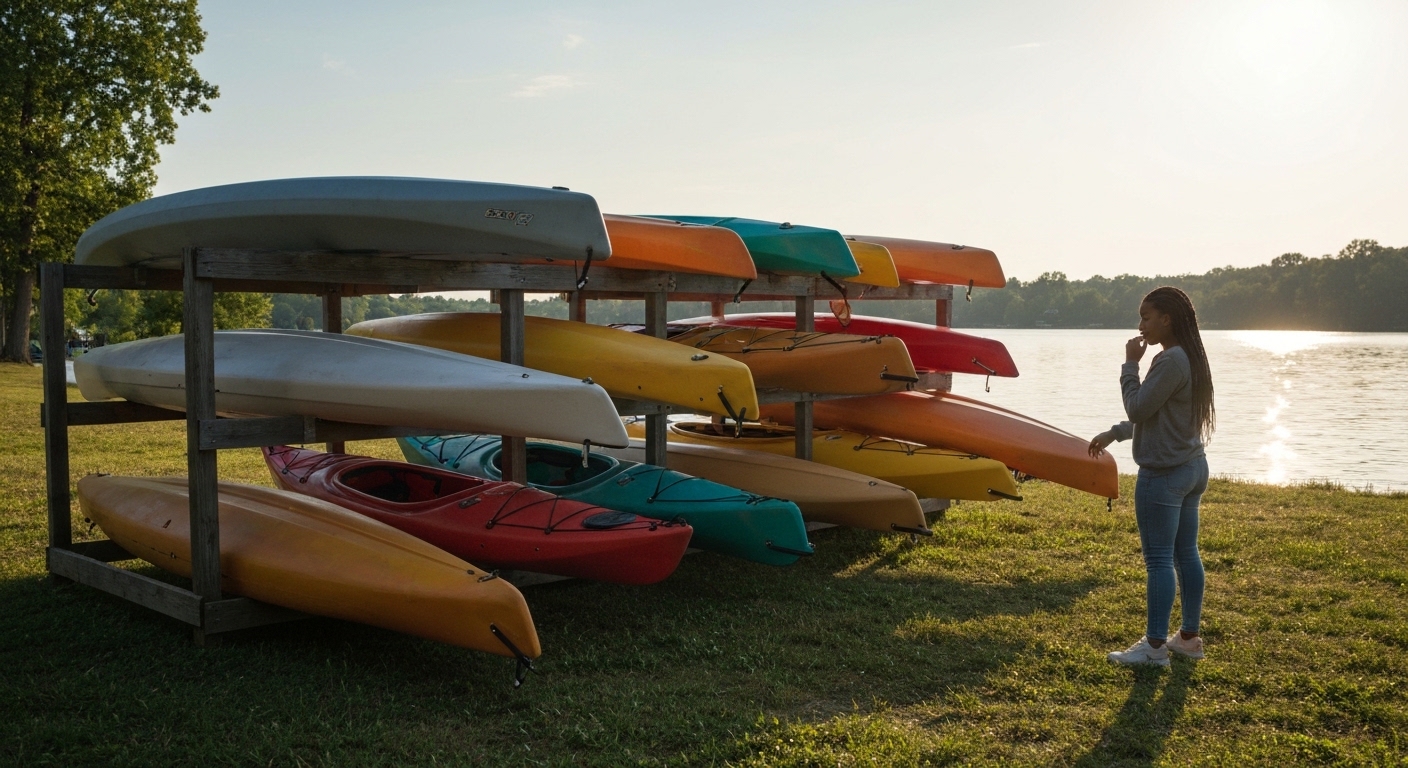
Kayaks cost anywhere from $150 for a basic inflatable to well over $3,000 for a high-end pedal drive rig. That’s a massive range, and the difference between tiers isn’t just marketing — it’s real materials, real performance, and real durability. This guide breaks down exactly what you get at each price point, what hidden costs to plan for, and where it’s smart to save versus splurge.
Budget Kayaks: $150–$400
This is the entry tier — and it’s bigger than most people expect. At $150–$400 you’ll find two main categories: basic recreational hardshells and entry-level inflatables.
Basic recreational hardshells ($200–$400) are typically 8–10 ft polyethylene sit-on-top or sit-inside kayaks. They’re wide, stable, and slow. Think: calm lake days, short river floats, occasional use. Brands like Pelican and Sun Dolphin dominate here. The plastic is thinner, the seats are minimally padded, and the outfitting is bare-bones. You won’t be covering miles in one of these, but they float fine and they’re nearly indestructible.
Entry inflatables ($150–$350) — brands like Intex and Advanced Elements’ entry models — give you something packable for the price of a cheap hardshell. They’re genuinely useful for calm flatwater. Just know: tracking is poor, speed is limited, and you’ll be reinflating more often than you’d like as the season goes on.
Who this tier is right for: casual paddlers who want to get on the water a few times a summer without a big commitment. If you’re not sure kayaking will stick, starting here is reasonable. If you already know you’ll paddle more than 10 times a year, skip it — the upgrade will come fast and you’ll spend twice.
See our picks for best recreational kayaks across all budgets.
Mid-Range Kayaks: $400–$900 (The Sweet Spot)
Most paddlers end up here, and for good reason. The $400–$900 range is where quality takes a genuine jump. Seats get comfortable enough for multi-hour trips, hull designs improve tracking noticeably, and build quality means the kayak will last 10+ years with basic care.
Quality recreational kayaks ($400–$650) in this range — Perception, Old Town, Wilderness Systems entry models — give you better outfitting, real thigh braces, decent hatches, and hull shapes that actually move through water efficiently. A 10–12 ft recreational boat in this price range handles well on lakes, slow rivers, and protected bays.
Entry touring kayaks ($600–$900) open up longer water. These are typically 12–14 ft, narrower, with bow and stern hatches for overnight gear. If you’re planning all-day paddles or want to explore coastline, this is the minimum sensible starting point. Brands like Necky, Perception’s touring line, and Old Town’s Loon series sit in this range.
Mid-range inflatables ($400–$800) — Sea Eagle, Advanced Elements Advanced series — are a different animal from budget inflatables. Better valves, stiffer drop-stitch construction, real tracking fins. A Sea Eagle 370 Pro or Advanced Elements AdvancedFrame actually paddles reasonably well and earns its price.
Check out our full list of best kayaks under $500 for top picks in the lower half of this range.
Premium Kayaks: $900–$2,000+
Above $900 you’re buying serious performance, advanced materials, or specialized capability. The jump from mid-range to premium is real — but it’s only worth it if your paddling demands it.
Touring and sea kayaks ($900–$2,000) in this range — Wilderness Systems, NDK, Valley, Delta — are typically 14–18 ft composite or high-grade polyethylene. They track like a rail, handle rough water with confidence, and carry enough gear for multi-day expeditions. A composite (fiberglass or Kevlar) kayak in this range is also significantly lighter than plastic, which matters when you’re carrying it to and from the water repeatedly.
What composite buys you: a 50 lb fiberglass touring kayak versus an 80 lb plastic equivalent is a real difference after the third carry of the season. Composite also transmits paddle feedback better — experienced paddlers notice and prefer it.
High-end recreational ($900–$1,400): Some premium recreational boats also hit this range — think Jackson Kayak, Dagger, Eddyline’s entry composites. These are built for paddlers who want the outfitting and durability of a premium boat but don’t need full touring capability.
Who needs premium: Paddlers logging 30+ days a year, expedition planners, anyone covering open water or surf zones regularly. If you’re a weekend lake paddler, $900+ is money you don’t need to spend.
Pedal Kayaks: $1,000–$3,000
Pedal drive kayaks use either a fin-drive (like the Hobie MirageDrive) or a propeller system to let you power with your legs instead of a paddle. They’re heavier, wider, and more complex — and significantly more expensive.
Entry pedal kayaks ($1,000–$1,500): Brands like Perception’s Pescador Pilot and Old Town’s Sportsman PDL sit here. You get a real pedal drive at a price that doesn’t require a second mortgage. These are sit-on-top designs aimed primarily at fishing but usable for general recreation.
Mid-range pedal ($1,500–$2,200): Hobie Mirage Compass, Native Watercraft Slayer Propel — the most popular category. The Hobie MirageDrive system is the gold standard; hands stay free for fishing or photography while your legs do the work. These kayaks are heavy (70–90 lbs) but stable and capable.
Premium pedal ($2,200–$3,000+): Hobie Pro Angler, Old Town Sportsman BigWater — these are full fishing platforms. Rod holders, tackle storage, elevated seating, trolling motor mounts. At this price you’re building a fishing machine, not just a kayak.
Is the upgrade worth it? For fishing, absolutely — hands-free maneuvering over structure is a genuine advantage. For recreational paddling, probably not unless you have a physical reason to avoid paddling with your arms.
Fishing Kayaks: $400–$3,000+
Fishing kayaks span nearly every price tier, and the right budget depends entirely on how seriously you fish.
Budget fishing ($400–$700): Wide, stable sit-on-tops with rod holders and basic tackle storage. Pelican Catch series, Lifetime Sport Fisher. Perfectly functional for calm water bass fishing. Slow, but they get the job done.
Mid-range fishing ($700–$1,400): Better stability, more gear organization, often compatible with fish finders and anchor systems. Jackson Bite, Wilderness Systems ATAK — these boats are designed by anglers for anglers and it shows.
Premium and pedal fishing ($1,400–$3,000+): As covered above, pedal drives, elevated seating, and full rigging systems. See our full breakdown of the best fishing kayaks at every price point.
Key fishing-specific costs to factor in: fish finder ($100–$600), anchor trolley kit ($30–$80), rod holders ($15–$60 each), and often a heavier-duty roof rack or trailer for transport.
Hidden and Ongoing Costs to Budget For
The kayak price tag is just the start. Here’s what most first-time buyers don’t account for:
- PFD (life jacket): $50–$200. Non-negotiable — wear one every time. A cheap foam PFD works, but a paddling-specific vest ($80–$150) is far more comfortable and you’ll actually keep it on all day.
- Paddle: $40–$400. Entry kayaks often come with a paddle, but it’s usually heavy and inefficient. A quality fiberglass or carbon paddle ($100–$250) makes paddling noticeably easier. This is one place to spend more than minimum.
- Roof rack or transport: $100–$600. Unless you have a truck, getting a kayak to the water requires a roof rack system (Thule, Yakima) or a trailer. Roof racks run $150–$400 installed; trailers $300–$800+. Factor this in before you buy.
- Dry storage: $20–$100. Dry bags for your phone, keys, and gear. Essential.
- Leashes and safety gear: $30–$80. Paddle leash, bilge pump (for sit-insides), whistle — required by law in many states.
- Spray skirt (touring): $60–$150. If you’re buying a sit-inside touring kayak, a skirt keeps water out in rough conditions.
New vs. Used | Inflatable vs. Hardshell | Rent Before You Buy
Buying used: The kayak used market is excellent. Polyethylene kayaks are nearly indestructible — a well-cared-for 10-year-old Wilderness Systems or Old Town is often as paddleable as new. Expect to pay 40–60% of retail for a good used kayak. Check for deep gouges, UV damage (chalky, faded plastic), and cracks around the seat and footpegs. Facebook Marketplace and Craigslist are the best hunting grounds; spring listings are plentiful.
Inflatable vs. hardshell cost comparison: A quality inflatable ($400–$800) is genuinely cheaper than a comparable hardshell — and solves the transport problem completely. The trade-offs: slower speed, softer feel, and more maintenance. For apartment dwellers or anyone without roof rack access, a premium inflatable is a real solution, not a compromise. For anyone who can transport a hardshell easily, the hardshell paddles better at every price point.
Renting before buying: Kayak rentals typically run $25–$60 for a half day, $50–$100 for a full day. If you’ve never kayaked or are uncertain about which type you want, renting two or three different boats across a season is genuinely worth it. You’ll know exactly what you want before committing $600+. Most outfitters rent recreational, touring, and sit-on-top styles — ask specifically for the type you’re considering buying.
Where to save: Transport and accessories (generic dry bags work fine; anchor systems can be DIY’d). Used hardshells from reputable brands. Entry inflatables if you’re truly a once-a-year paddler.
Where to spend: The paddle (you feel it on every stroke). The PFD (comfort = actually wearing it). And the hull itself — buying the right boat once beats upgrading twice.