
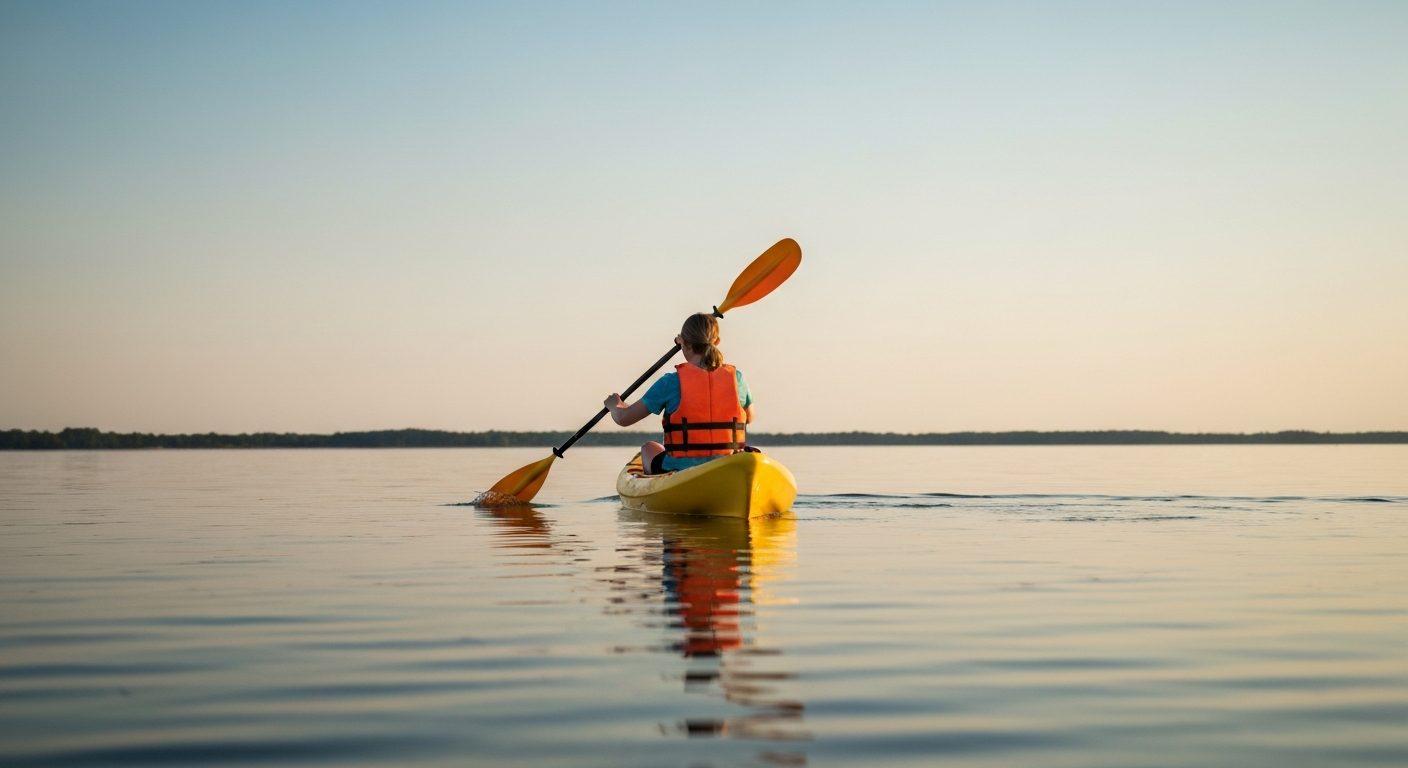
Can You Kayak If You Can't Swim?
You don't have to be a swimmer to get on the water — but you do have to be smart about it.
Is kayaking safe?One of the most common questions we hear from new paddlers is whether swimming ability is a hard requirement for kayaking. The honest answer: no, it isn’t — but there are non-negotiable precautions that can make the difference between a great day and a dangerous one.
Is it safe to kayak if you can't swim?
Kayaking without swimming ability carries real risk — but it’s a manageable risk, not an automatic disqualifier. Every year, people who don’t swim paddle lakes, rivers, and bays without incident. The key is that they layer up their safety margins so that a capsize stays a recoverable inconvenience rather than a life-threatening emergency.
The danger isn’t falling into the water per se. It’s falling in, panicking, and not having the gear or support to get back out. A non-swimmer who wears a properly fitted PFD and stays on calm, shallow water with other paddlers present is in a fundamentally different situation than one who goes out alone on a fast-moving river. Environment and preparation matter as much as ability.
That said, swimming ability is a genuine safety margin. If your PFD fails, if you get disoriented under a capsized kayak, or if conditions change faster than expected, knowing how to swim can keep a scary situation from becoming fatal. We’d never tell anyone not to bother learning. The more layers of protection you have, the better. But lacking that layer doesn’t mean you’re barred from paddling — it means you rely more heavily on the other ones. Learn more about overall paddling risks in our guide to is kayaking safe.
The non-negotiable: wear your PFD
If there’s one thing we’ll say without qualification, it’s this: a non-swimmer in a kayak who isn’t wearing a life jacket is taking an unjustifiable risk. Full stop.
A well-fitted personal flotation device (PFD) will keep your head above water even if you’re unconscious. It buys you time to be rescued, to self-rescue, or simply to catch your breath and think clearly instead of panicking. For non-swimmers, it’s not optional gear — it’s the gear that makes everything else possible.
“Properly fitted” matters here. A PFD that’s too large can ride up over your face in the water. One that’s too small won’t provide rated buoyancy. Buckle every strap, check that you can’t pull it over your head, and make sure it’s rated for your weight. The U.S. Coast Guard’s boating safety resources explain exactly what to look for in a compliant PFD. We also cover the specifics in our deep dive on whether you need a life jacket for kayaking.
Precautions for non-swimmers
Wearing a PFD is the foundation, but it works best when it’s part of a broader set of habits. Here’s what we recommend for anyone who can’t swim and wants to paddle safely:
- Start on calm, shallow water. A glassy lake or slow pond is very different from a tidal estuary or a river with current. Keep your first sessions in water where, if you did fall in, you could stand up. Depth and current dramatically change the math.
- Never paddle alone. A paddling partner isn’t just company — they’re your first line of rescue if you capsize and can’t get back in. Ideally, at least one person in your group should be a confident swimmer.
- Learn to get back in before you need to. Practicing a wet re-entry in controlled conditions — shallow water, someone nearby — means that if it happens for real, you have a plan. Our guide on how to get back in a kayak walks through the steps for both sit-on-top and sit-inside designs.
- Dress for the water temperature, not the air. Cold water is a serious hazard. Hypothermia impairs your ability to self-rescue far faster than most people expect. A wetsuit or drysuit in cold conditions is a meaningful safety layer for any paddler, but especially for non-swimmers who may be in the water longer.
- Choose a sit-on-top kayak for your first outings. Sit-on-tops are much easier to remount after a capsize and don’t trap you inside a cockpit. They’re the forgiving choice while you’re building confidence. See our full breakdown in kayaking for beginners.
- Tell someone your float plan. Know where you’re going, tell someone who isn’t on the water with you, and set a check-in time. This is good practice for every paddler but especially critical when you’re still building your water skills.
Building confidence on the water
The goal isn’t to stay a non-swimmer forever — it’s to paddle safely now while working toward having more options. Swimming lessons for adults are widely available and take far less time than most people assume. Even basic open-water comfort and a functional backstroke dramatically increase your margin of safety on a kayak.
Beyond swim lessons, consider a beginner kayak course through a local paddling club or outfitter. These courses typically cover wet exits, paddle strokes, and self-rescue in a controlled environment with an instructor present. Learning those skills with a knowledgeable person watching is far better than figuring them out mid-crisis on the water.
Building water confidence is a process, and everyone starts somewhere. Plenty of experienced paddlers started out nervous about the water. The combination of proper gear, smart environment choices, and gradual skill-building means you don’t have to choose between waiting until you’re a strong swimmer and never paddling at all. You can do both in parallel — get on the water responsibly now, and become a stronger, safer paddler over time.