
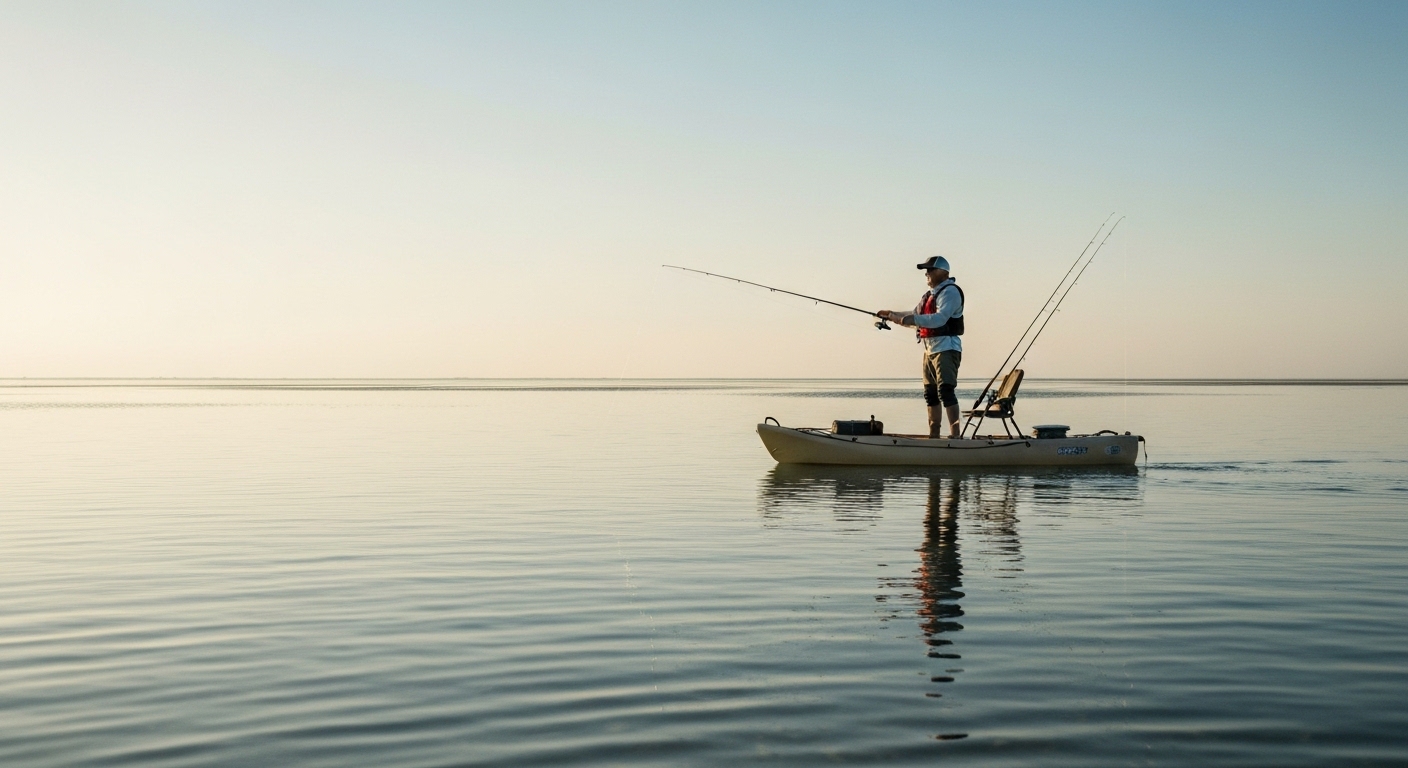
Best Stand-Up Fishing Kayaks of 2026
The best stand-up fishing kayak gives you a stable casting platform without costing a fortune — here are four that actually deliver.
See the top picks →Standing up to cast covers more water, spots fish holding in structure, and just plain feels better than hunching over a rod all day. But not every fishing kayak will let you do it safely. The best best fishing kayaks built for standing share a few traits: wide hull, low center of gravity, and a deck clear enough to plant your feet. We picked four models that nail those marks across four price points — from a $700 budget buy to an $1,100 workhorse. Every pick comes with straight talk on what it does well and where it falls short.
At a Glance
| Kayak | Best for | Specs | Price |
|---|---|---|---|
| Vibe Sea Ghost 130 | Best Overall | Sit-on-top | 13' | 550 lb capacity | stand deck | ~$1100 |
| Perception Outlaw 11.5 | Best Value Standing | Sit-on-top | 11.5' | 375 lb capacity | open deck | ~$900 |
| Pelican Catch Mode 110 | Best Budget Standing | Sit-on-top | 11' | 400 lb capacity | stand-up deck | ~$700 |
| Ascend FS128T | Best Stability | Sit-on-top | 12.8' | 500 lb capacity | tunnel hull | ~$800 |
The Top Picks, Reviewed
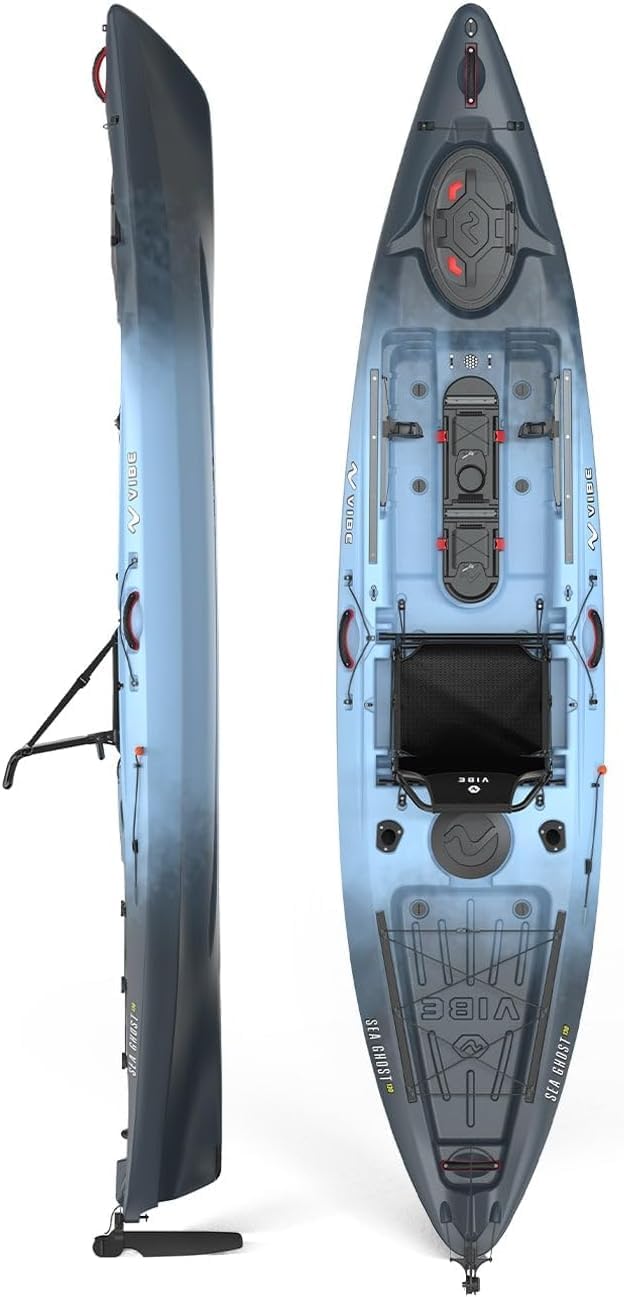
Vibe Sea Ghost 130
The Vibe Sea Ghost 130 earns its top spot with a wide, flat stand-and-cast deck that gives you a real platform — not just a vague suggestion that you might balance upright. The MOD frame seat is genuinely comfortable on long days, the built-in rudder makes tracking in wind manageable, and the storage options (tankwell, bow hatch, side pockets) handle a full day of gear without juggling. At around $1,100 it punches well above the price, delivering features you’d normally pay $1,400 or more to get. The honest catches: at 78 pounds it is a heavy carry, and the 13-foot length means you need real storage space at home and a truck or roof rack to haul it.
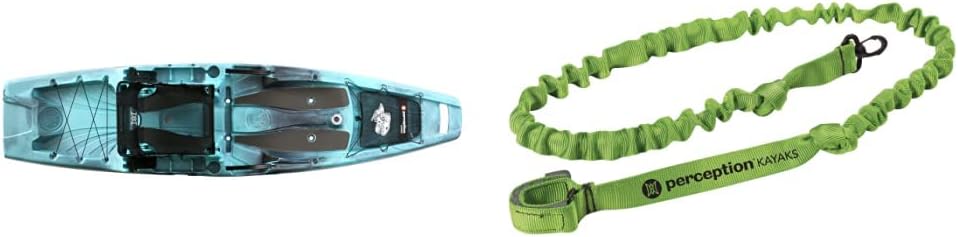
Perception Outlaw 11.5
Perception built the Outlaw 11.5 around a massive, uncluttered open deck that makes standing feel natural from the first time you try it. The hull is wide and predictable — you get a real confidence-inspiring base under your feet, not a balancing act. The lawn-chair-style seat keeps you comfortable between casts, and the price sits right in the sweet spot for anglers who want stand-up capability without the top-tier outlay. The tradeoffs are real though: that wide hull that makes standing easy also makes paddling slower and harder in a headwind, and at roughly 74 pounds it is still a two-person carry for most people.
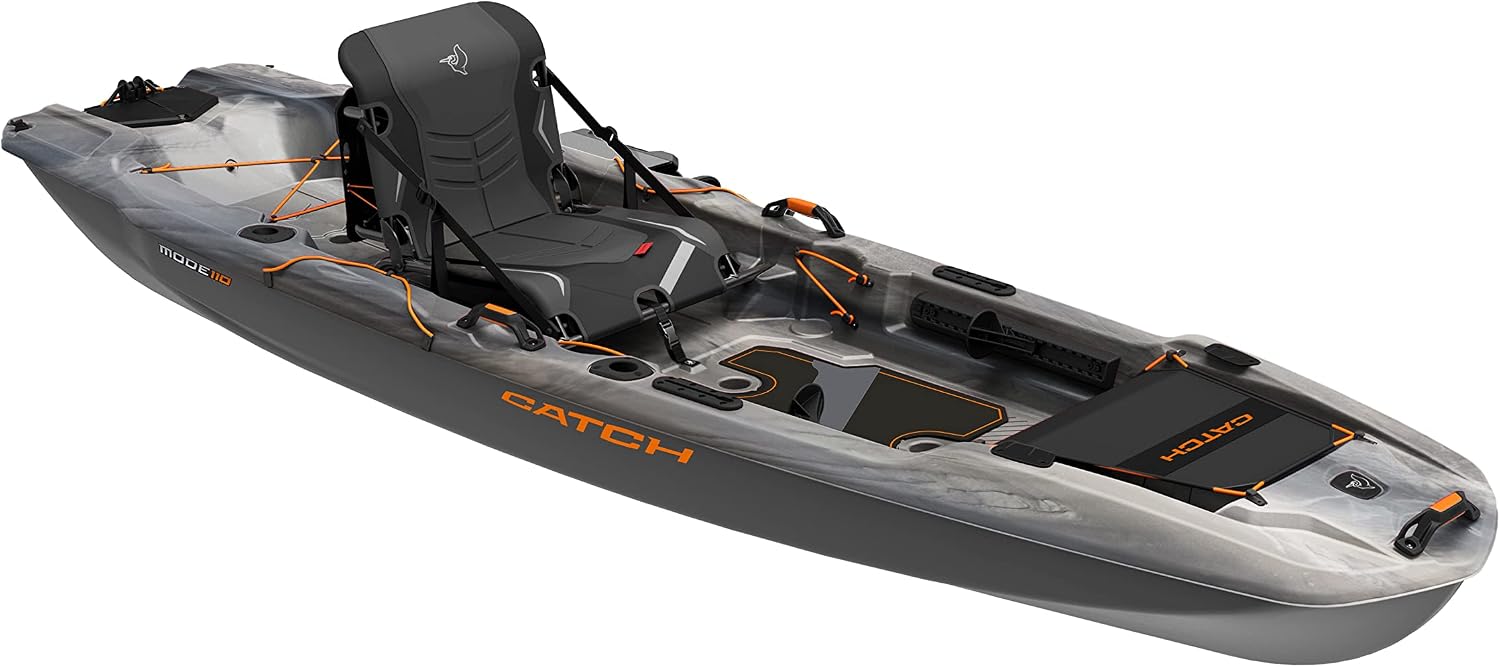
Pelican Catch Mode 110
The Pelican Catch Mode 110 is the honest answer when someone asks what the cheapest fishing kayak is that you can actually stand on safely. The ExoPak hull gives it a stable, flat deck, the ergo seat is more supportive than you’d expect at this price, and Pelican’s build quality holds up to regular use. It is a genuine stand-up kayak at a budget price, not a marketing claim. Where it gives ground: the shorter 11-foot hull means you lose speed and tracking compared to longer boats, and the feature set — rod holders, storage, accessory tracks — is basic. It is a great entry point, but you will feel the limits if you fish big water or paddle long distances. Check out more options in our roundup of best fishing kayaks under $1000.
Ascend FS128T
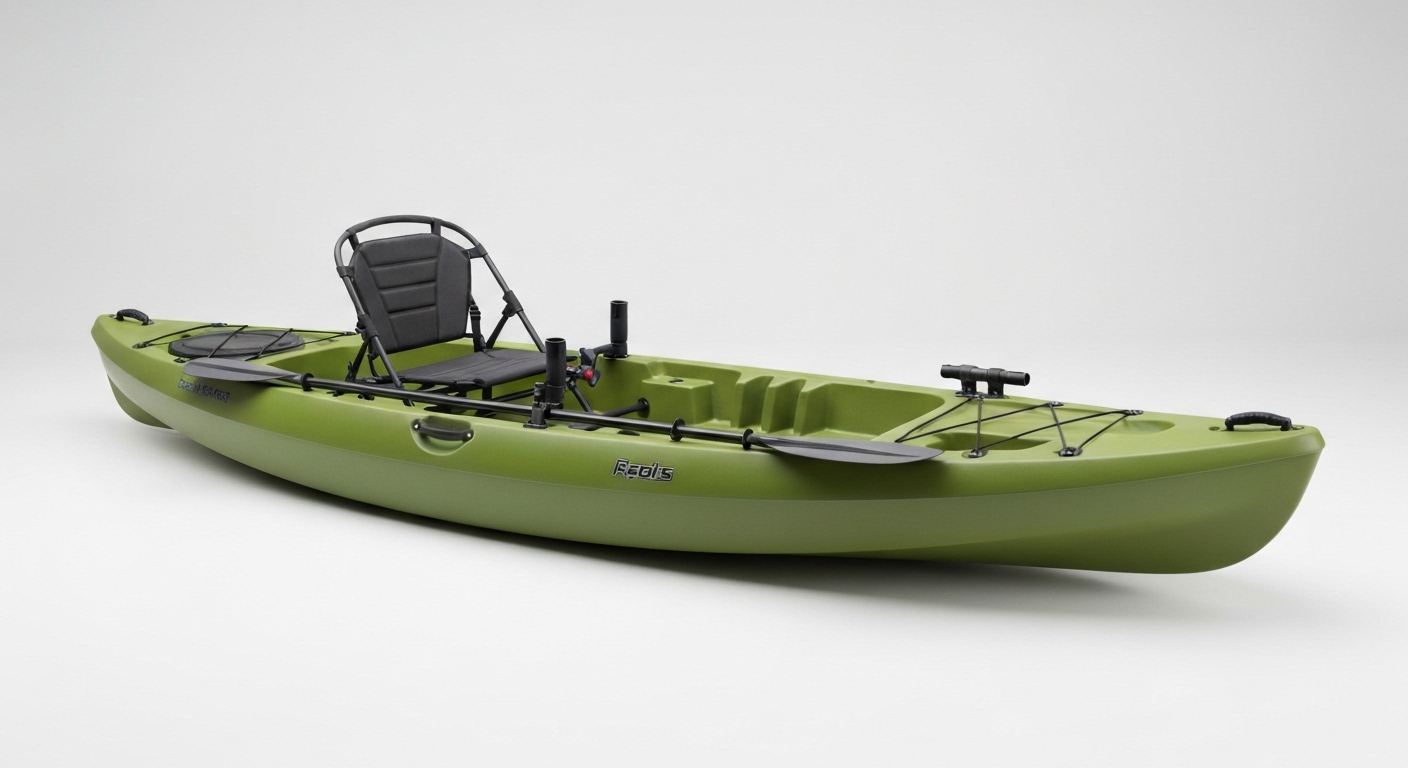
The Ascend FS128T uses a tunnel hull — a design that puts two hull rails in the water rather than one rounded bottom — and the difference in stand-up stability is immediately noticeable. You can stand almost anywhere on this kayak without the nervous edge-of-balance feeling that plagues narrower boats. The removable frame seat and massive 500-pound capacity make it viable for larger anglers or anyone who loads up on gear. If you prioritize standing stability above all else, this is the pick. The significant downsides: at 75-plus pounds it is genuinely heavy and the wide tunnel hull makes it bulky to car-top or store. Transporting it solo takes real effort and the right setup. If you want alternatives that use pedals instead of paddling, see our guide to best pedal kayaks.
What Actually Makes a Kayak Stand-Up Stable
Three things determine whether a fishing kayak lets you stand safely: width, hull design, and deck clearance. Width is the most straightforward — a kayak needs to be at least 32 inches wide to give most anglers a confident standing platform, and 34 inches or more is better. Narrower kayaks track well and paddle fast, but they tip the moment you shift your weight upright.
Hull shape matters just as much as width. A flat-bottomed hull offers the best primary stability — that immediate, planted feel when you first stand up. A rounded or V-shaped hull may actually be more stable in rough water (secondary stability), but it feels unstable when you first stand up, which most anglers find unsettling. Tunnel hulls, like the Ascend FS128T uses, give you two points of contact with the water and deliver the highest initial stability of any design.
Deck clearance is the often-overlooked factor. A kayak can be wide and flat-hulled but still be difficult to stand on if it is cluttered with raised molded features, gear rails at ankle height, or a seat that sits too high. The best stand-up fishing kayaks have a clear, low-profile deck where you can plant both feet flat and comfortably hip-width apart.
The Stability vs. Speed Tradeoff
Here is the honest reality of stand-up fishing kayak design: the hull features that make a kayak stable are mostly the opposite of what makes it fast and efficient to paddle. A wide, flat-bottomed hull has high drag. A tunnel hull has even more. This is not a flaw — it is a deliberate engineering choice made for anglers who prioritize a casting platform over covering miles.
If you plan to paddle long distances to reach your fishing spot, that tradeoff matters. A 13-foot boat with a narrower hull might outpace a 12-foot wide-body by a significant margin over a three-mile paddle. If your fishing is mostly close to the launch or involves mostly drifting and casting rather than long hauls, the stability-first design is almost always worth it.
The sweet spot for most stand-up fishing kayaks is a length between 11.5 and 13 feet with a beam of 33 to 36 inches. That range gives you adequate speed and tracking without sacrificing the stability that makes standing worthwhile. Boats shorter than 11 feet tend to feel cramped and slow; longer than 13 feet and you start dealing with transport and storage challenges that frustrate most recreational anglers.
Standing Technique and Safety on a Fishing Kayak
Even the most stable stand up fishing kayak on this list will dump you if you stand up carelessly. Good technique makes the difference between a confident cast and an unplanned swim. Start by making sure your kayak is fully stationary — either anchored, drift-socketed, or staked out with a pole anchor. Trying to stand on a moving kayak is significantly harder.
To stand up: keep your weight centered, use your paddle across the cockpit as a brace if needed, and rise slowly from a kneeling or squatting position rather than popping straight up. Keep your feet roughly shoulder-width apart, slightly bent knees, and your core engaged. Once upright, move your weight by bending your knees and shifting at the hips — not by leaning your upper body.
Wear your PFD every time you stand. It is not optional on a kayak. A leash on your paddle keeps it from drifting away when you are mid-cast. If you are fishing near boat traffic or in moving water, use an anchor system that lets you release quickly. And practice standing in calm, shallow water near shore before you commit to it on open water — it only takes a few sessions to build real confidence.
Rigging Your Stand-Up Fishing Kayak
A stand-up fishing kayak is most useful when it is rigged to support standing — which means keeping the deck clear and placing your gear where you can reach it without looking down. Rod holders should be positioned so rods are not in your standing path. Side-mounted flush-mount holders or stern-angle holders work better than bow-facing holders for stand-up anglers.
An anchor system is close to mandatory. A stake-out pole works in water under about four feet and is fast to deploy; a folding anchor on a cleat-mounted rope system works in deeper water. Without one, you will spend half your time sitting back down to reposition instead of fishing.
Fish finders and electronics should mount low — at the bow or on a side-mount arm — not in a position that requires you to look down steeply when standing. A Scotty or RAM mount arm keeps your fishfinder screen at a usable angle. For tackle, consider a crate system in the tankwell with tube holders and soft bags rather than spreading gear across the deck where it becomes a foot hazard. Keeping the standing zone — typically the center third of the kayak — completely clear of loose gear is the single best rigging upgrade you can make.
How to Choose the Right Stand-Up Fishing Kayak for Your Water
The right pick depends heavily on where you fish. Small ponds, slow rivers, and calm backwater flats are forgiving — almost any wide, stable kayak will work, and you can prioritize other factors like weight or price. Open bays, large reservoirs, and coastal waters raise the stakes: you need a longer hull for better tracking in wind, more secondary stability for chop, and ideally a rudder to manage crosswinds while paddling.
Weight capacity is worth taking seriously. The ratings on these kayaks assume a centered, evenly distributed load. If you weigh 200 pounds and add 50 pounds of gear, you want a kayak rated for at least 350 pounds, not 300 — loading a kayak near its limit makes it ride low and sluggish and reduces its effective stability. A good rule of thumb is to stay at or below 70 to 75 percent of the stated capacity.
Portability is the factor most buyers underestimate until they own the kayak. A 78-pound boat is genuinely difficult for one person to car-top safely. If you fish alone and do not have a kayak cart and a vehicle with good roof clearance, the lighter option in your shortlist is worth the tradeoff in features. The best kayak is the one you actually use — and heavy boats have a way of staying on the trailer.
For a broader look at top-rated options at every price, see our full guide to best fishing kayaks.