
Best Pedal Kayaks of 2026
Hands-free fishing starts here. We cut through the noise on the best pedal kayaks of 2026 — honest picks with real tradeoffs so you know exactly what you're buying.
See the top picks →Pedal kayaks changed fishing. The moment you stop paddling and start steering with your feet, your hands stay on the rod, your bait stays in the water, and you actually catch more fish. But not every pedal drive is equal — and at prices ranging from $1,000 to $2,000+, picking the wrong one stings. We evaluated four real kayaks across propulsion smoothness, stability, portability, and bang-for-buck. Every pick includes the catches, not just the hype. Whether you’re looking at the best fishing kayaks on the market or hunting specifically for the best fishing kayaks under $1000, this guide has you covered.
At a Glance
| Kayak | Best for | Specs | Price |
|---|---|---|---|
| Pelican Catch PWR 100 | Best Value Pedal | Length: 10 ft | Weight: 88 lb | Capacity: 425 lb | Drive: Propeller | Reverse: Yes | $1,299 |
| Perception Crank 10 | Best for Beginners | Length: 10 ft | Weight: 86 lb | Capacity: 325 lb | Drive: Propeller | Reverse: Yes (instant) | $1,299 |
| Old Town Sportsman PDL 106 | Best Premium | Length: 10.6 ft | Weight: ~117 lb rigged | Capacity: 500 lb | Drive: PDL (fin) | Reverse: Yes (instant) | $1,999 |
| Brooklyn Kayak PK11 | Best Budget Pedal | Length: 11 ft | Weight: 84 lb | Capacity: 400 lb | Drive: Propeller | Reverse: Yes (rudder-assisted) | $999 |
The Top Picks, Reviewed
Pelican Catch PWR 100
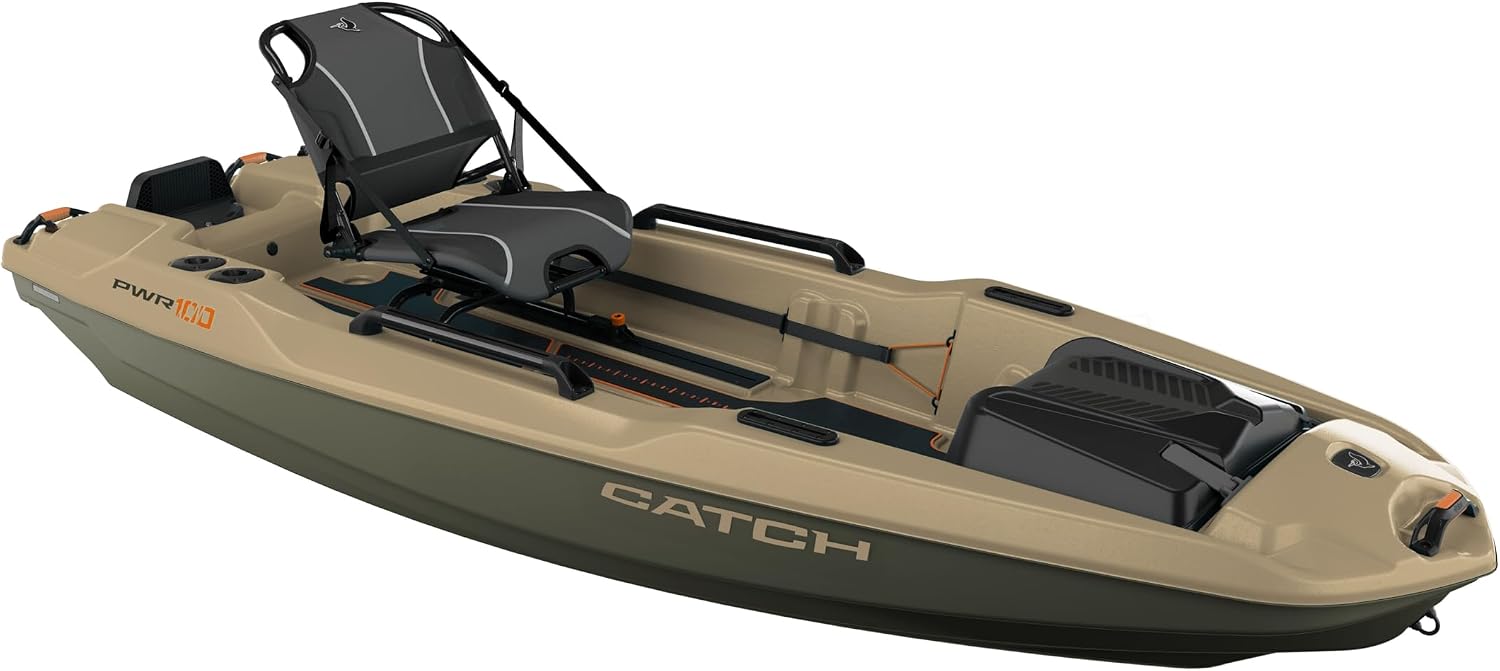
The Catch PWR 100 hits a sweet spot that most pedal kayaks at this price miss: a genuinely stable stand-up deck, a well-padded ergo seat, and a smooth propeller drive that lets you fish hands-free from the jump. Pelican’s propulsion system is easy to swap in and out, and the wide hull keeps you rock-steady when you rise to cast. At ~$1,300, you’re getting premium-feeling functionality at a mid-tier price. The catch? It’s heavy — 88 lb is a real number when you’re loading solo. The 10-foot hull also means you’ll sacrifice a few knots of top speed compared to 12- or 13-foot rigs. But if you fish calm lakes and slow rivers and want the best pedal value for the money, this is the one.
Perception Crank 10
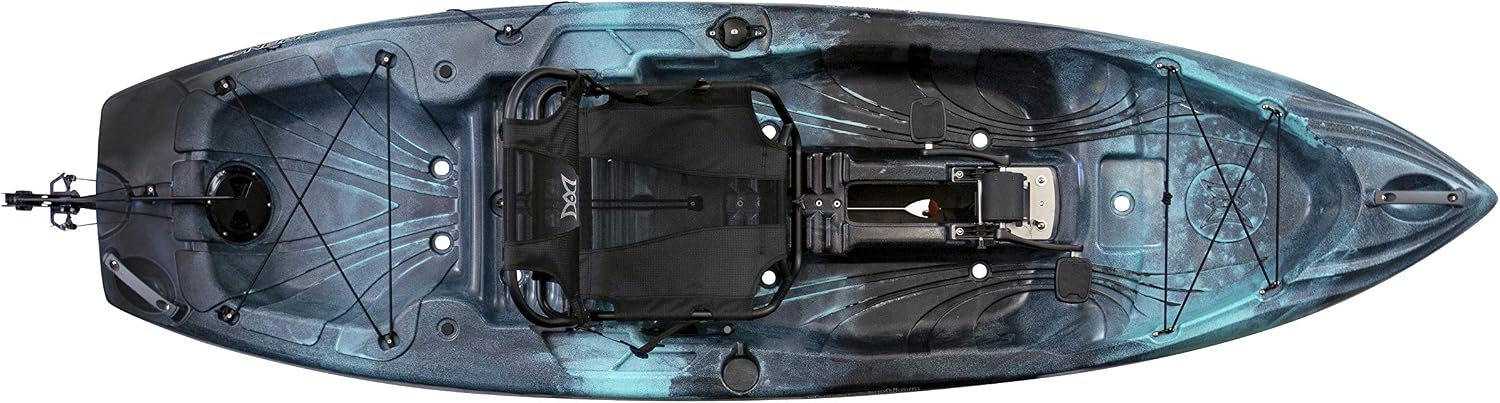
If you’ve never sat in a pedal kayak before, the Perception Crank 10 is where you start. The hull is wide and forgiving — it shrugs off rookie weight shifts that would make narrower boats nervous. The propeller drive engages smoothly with very little learning curve, and instant reverse makes docking and repositioning in current genuinely stress-free. The padded seat is better than most in this class, which matters when you’re out for a full day. Perfect for best beginner kayaks shoppers making their first pedal purchase. The catches are the same as most 10-footers in this bracket: 86 lb is heavy to solo-launch, and the shorter waterline limits top-end speed. If you’re an experienced angler who wants to cover serious distance, you’ll outgrow it. For beginners who want confidence on the water fast, it delivers.
Old Town Sportsman PDL 106
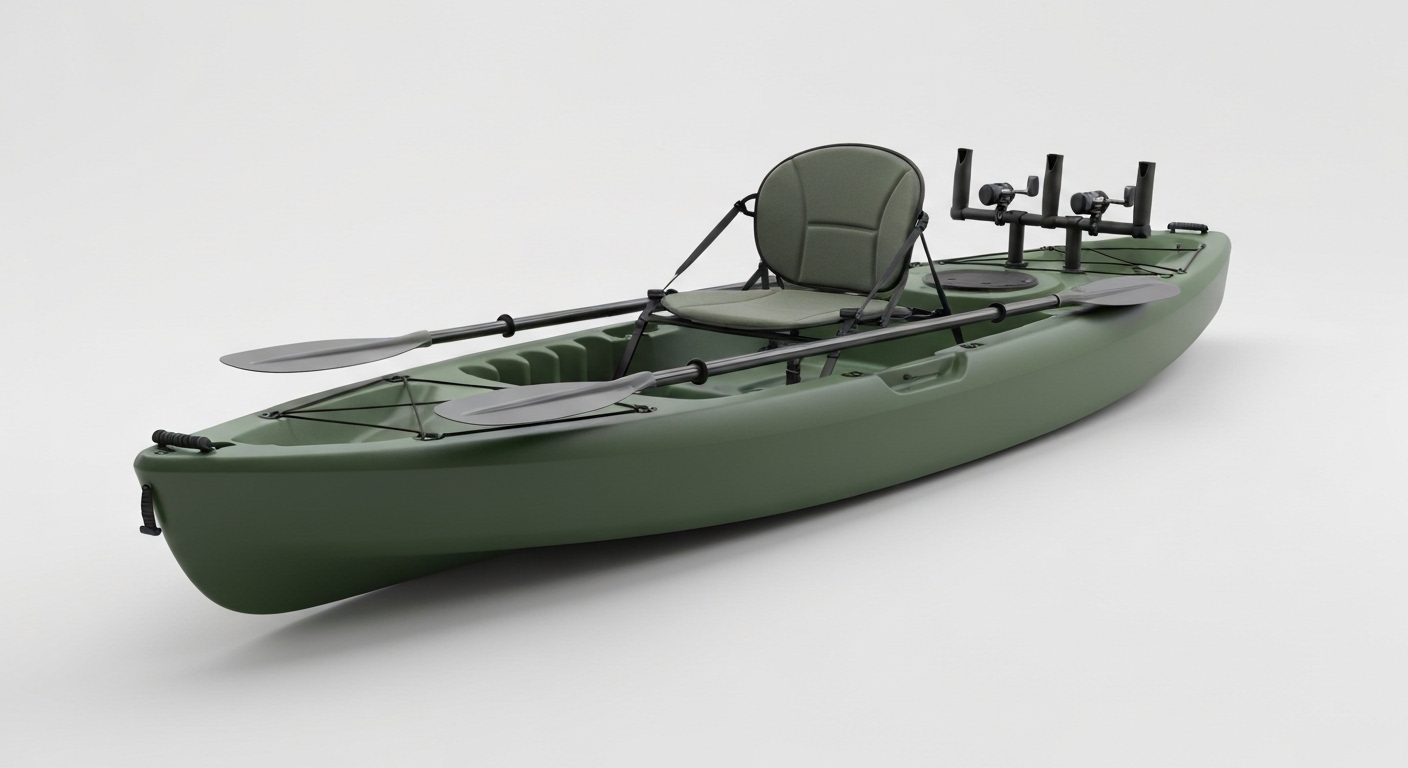
The Old Town Sportsman PDL 106 is what happens when a manufacturer refuses to cut corners. The PDL drive system uses wide, flexible fins that sweep through the water with an efficiency propeller drives can’t match in shallow or weedy conditions — you glide over mats, through grass, and over sandbars that would jam a prop. Instant reverse is a genuine game-changer when you’re maneuvering solo. The hull is bomber-stable, the double-action seat adjusts to almost any body, and the overall build quality is a clear step above anything under $1,500. If you’re serious about fishing — especially from the best fishing kayaks on the market — this is the rig. The catches: it’s expensive at $2,000, and at ~117 lb fully rigged, you need either a cart or a strong second person to launch it. It’s also just a hair over 10 feet, so it won’t win any speed races against longer hulls.
Brooklyn Kayak PK11
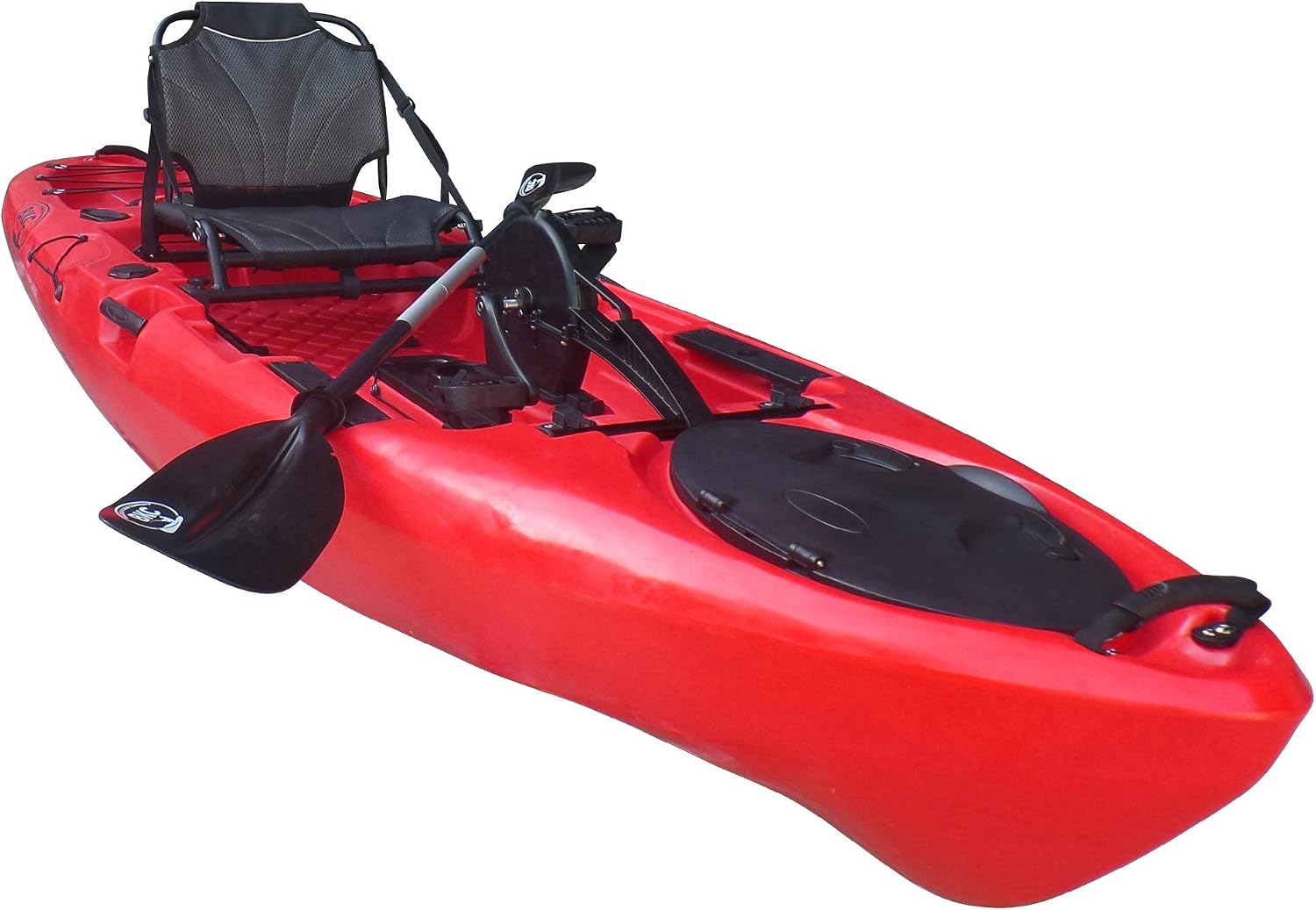
The Brooklyn Kayak PK11 does something rare: it gets you into a pedal fishing kayak for under $1,000. At 11 feet, it’s actually longer than some pricier 10-foot competitors, which helps with tracking and speed. The rudder system is included and functional. Stability is decent for flat water. If you’re budget-constrained and want hands-free pedaling without breaking $1,100, this is your entry point — and it’s worth checking against the best fishing kayaks under $1000 list before you decide. The catches are real though: the propeller drive is noticeably less refined than Pelican or Perception units — it’s a little noisy, a little draggy, and the tolerances aren’t as tight. Fit and finish throughout the hull is basic. Heavy at 84 lb. For serious anglers, the drive quality gap will frustrate. For casual fishers who want to try pedal kayaking without a big investment, it earns its spot.
How Pedal Drives Work: Propeller vs. Fin
There are two main pedal drive technologies, and they work very differently on the water.
Propeller drives (used by Pelican, Perception, and Brooklyn Kayak) spin a submerged prop via a rotating shaft connected to your pedals. They’re efficient in open, clean water and generally less expensive to manufacture, which is why you see them in the $1,000–$1,300 bracket. The trade-off: props can snag weeds, grass, and debris. In heavily vegetated water, you’ll spend time clearing the drive.
Fin drives (used by Old Town’s PDL system) use wide, flexible fins that oscillate forward and back — similar to a fish tail. They shed weeds naturally and push a lot of water per stroke, which translates to smooth, quiet propulsion. They also reverse more fluidly. The trade-off: fin systems cost more to engineer and are typically found on premium rigs.
For clear-water lake fishing: either system works well. For rivers, grass flats, and weedy shallows: a fin drive earns its premium price fast.
Pedal Kayak vs. Paddle Kayak: Which Is Right for You?
Paddle kayaks are lighter, cheaper, and simpler. There’s nothing mechanical to break, they’re easier to car-top solo, and they still get the job done for casual anglers. If you fish from shore half the time and only occasionally want to cover water, a paddle kayak likely makes more sense.
Pedal kayaks make their case when fishing distance and presentation matter. Hands-free movement means you’re always fishing — drifting over structure while both hands are on the rod, repositioning without spooking fish, and holding position in light current without anchoring. Over a full day on the water, the difference in fish contact is measurable.
The honest trade-offs for pedal rigs: they’re heavier (80–120 lb), they cost $600–$1,200 more, and the mechanical drive adds a maintenance variable. If solo transport is a concern, factor in a kayak cart — it turns a back-breaking launch into a one-minute roll.
Weight and Transport: The Number Nobody Talks About Enough
Every pedal kayak on this list weighs between 84 and 117 lb. That’s not a typo. These are genuinely heavy boats, and the weight is not distributed kindly — a wide, flat fishing hull is awkward to lift and carry even at 84 lb.
Before you buy, answer two questions: How far is the carry from your vehicle to the water? Can you manage the weight solo, or do you need a partner?
A kayak cart (flat-bed style with wide tires) solves most transport problems. You can roll an 88 lb kayak across a parking lot or a gravel ramp without straining. Budget $40–$80 for a cart and consider it mandatory gear for solo anglers.
Roof-racking a pedal kayak solo is legitimately hard. Most serious pedal kayak anglers run a pickup bed, a trailer, or a hitch-mounted rack that loads at bumper height. If you drive a sedan and fish alone, work that constraint into your decision before you swipe the card.
Stability and Standing: How Much Matters?
Stand-up casting is one of the main reasons people buy wide fishing kayaks. The ability to rise, scan the water, and sight-cast changes how you fish — especially for bass in clear shallows or redfish on flats.
All four kayaks on this list offer reasonable primary stability (resistance to initial tipping). The Pelican Catch PWR 100 is specifically marketed as a stand-up platform, and its wide, flat hull backs that claim up. The Old Town Sportsman PDL 106 is similarly bomber at rest.
Secondary stability (what catches you when you lean hard) varies more. Heavier anglers or those who fish choppy water should prioritize beam width (beam = widest point of the hull). As a rule: 34″+ beam = stable standing platform; 30″–33″ = stable seated, cautious standing; under 30″ = sit-down only.
If standing is a top priority, verify the hull’s beam spec — manufacturer “stand-up ready” marketing is not always consistent.
What to Look for Before You Buy
A few practical checkpoints before you commit to any pedal kayak:
- Drive compatibility: Is the drive system proprietary, or does it use a universal track mount? Proprietary systems lock you into that brand’s replacement parts.
- Seat quality: You will sit in this seat for 6–8 hours. Sit in it if you can, or verify it has a high backrest and adjustable support. A $100 aftermarket upgrade seat is common for a reason.
- Rod holder placement: Flush-mount holders in front of the cockpit are nearly useless while pedaling. Look for side-mounted or aft-positioned holders that keep rods accessible and out of the pedal path.
- Rudder or skeg: Without a rudder, you steer by varying pedal pressure — possible, but imprecise. A deployable rudder dramatically improves tracking, especially in crosswind.
- Warranty: Pelican, Perception, and Old Town all offer multi-year hull warranties. Brooklyn Kayak Company’s warranty terms are more limited. Read them before you decide.