
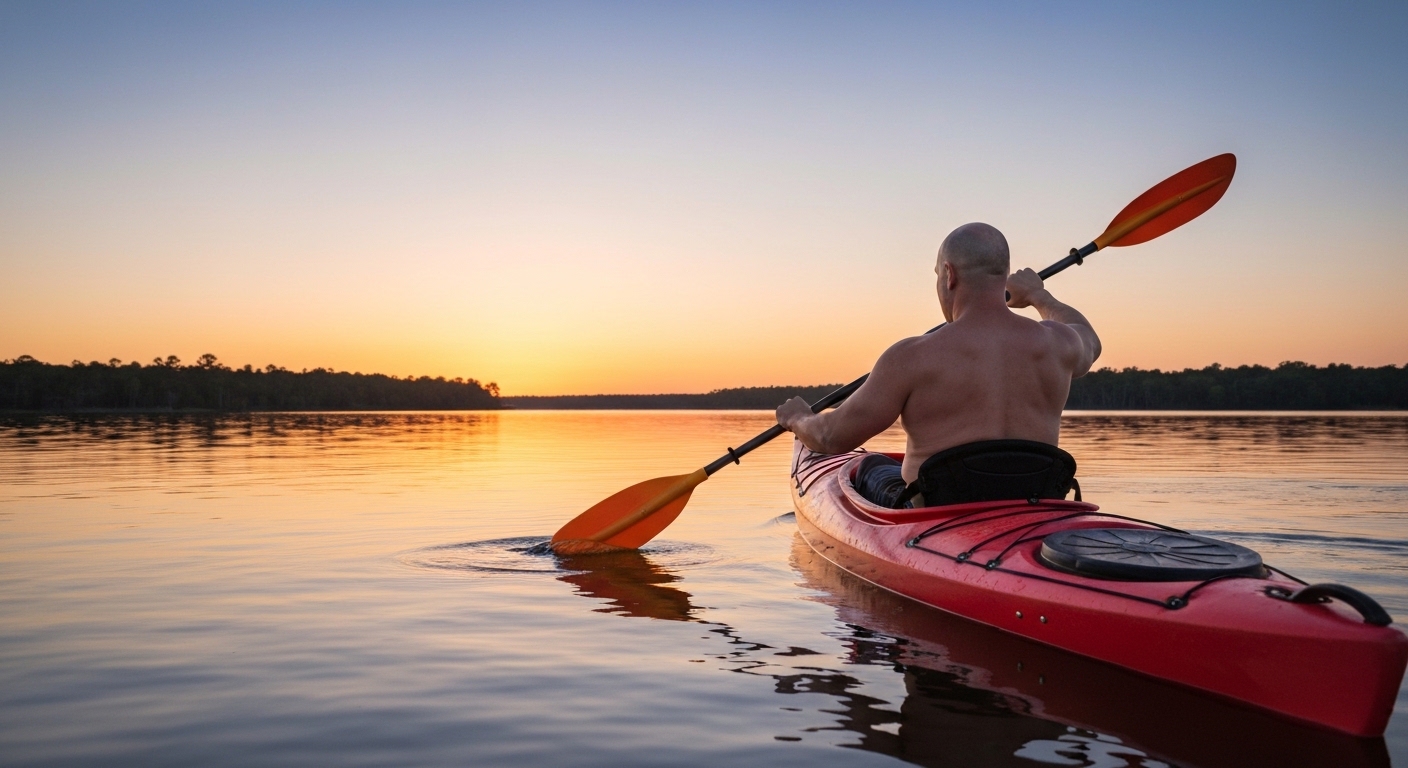
Best Kayaks for Big Guys & Heavy Paddlers
Bigger paddlers deserve kayaks built for them — not boats that barely float the math on paper.
Best fishing kayaksMost kayak marketing assumes you weigh 170 pounds and have the agility of a competitive gymnast. If that’s not you, welcome — this guide was written with you in mind. Whether you’re a heavier paddler looking for a stable recreational boat, a big guy who wants to fish from the water, or someone who just needs a little more legroom and a cockpit that doesn’t feel like a vice, the right kayak is absolutely out there. You just need to know what to look for — and what to ignore.
The Capacity Math (And Why Manufacturers Get It Wrong)
Every kayak lists a maximum weight capacity. That number is almost always optimistic. It represents the theoretical limit before the boat sinks — not the weight at which the kayak actually performs well.
Here’s the rule that actually works: your total load (your body weight plus gear, clothing, food, and water) should stay at or below 70% of the rated maximum capacity. That buffer keeps the hull riding high enough to track properly, gives you freeboard (the gap between the waterline and the rim of the cockpit), and ensures the kayak responds the way it’s supposed to.
Run the numbers before you buy. If a kayak is rated for 350 pounds and you weigh 265 pounds with 20 pounds of gear, your total load is 285 pounds — which is 81% of the max. That boat will feel sluggish, low in the water, and hard to steer. A kayak rated for 450 pounds would put that same paddler at 63% of capacity, and the difference on the water is immediate and significant.
For most bigger paddlers, look for kayaks with a rated capacity of at least 350 pounds, and strongly consider models in the 400–550 pound range if you carry any gear at all.
Hull Width: Why 31 Inches Is the Minimum for Stability
Width — or beam — is the single most important spec for paddlers who prioritize stability. Narrower kayaks are faster, but they require active balance from the paddler. For recreational paddling, fishing, or anyone who wants to feel planted on the water rather than perched on it, width is your friend.
A hull width of 31 inches or more provides what paddlers call primary stability — the initial resistance to tipping when you sit still or shift your weight. This matters enormously for larger paddlers, because more body weight means more leverage when you lean, reach for something in a hatch, or turn to cast a line.
Wide hulls in the 32–36 inch range are common on fishing kayaks and high-capacity recreational models, and they’re worth every inch. You’ll give up a little top speed, but for most paddlers — especially those just getting into the sport — stability isn’t a luxury, it’s safety.
Check out our roundup of best fishing kayaks for excellent examples of wide, stable designs built with bigger paddlers firmly in mind.
Sit-On-Top vs. Sit-Inside: What Bigger Paddlers Should Know
This is one of the most important decisions a larger paddler will make, and the answer for most people is clear: sit-on-top kayaks are generally better for bigger and heavier paddlers, especially for recreational use and fishing.
Here’s why:
- Getting in and out is dramatically easier. You climb on, you climb off. There’s no cockpit rim to navigate, no legs to fold, no need to lower yourself into a narrow tube. For paddlers with limited flexibility or joint issues, this matters enormously.
- Cockpit size is a non-issue. Sit-on-tops don’t have cockpits. You sit on a molded seat on top of the hull, which means leg length, hip width, and thigh circumference are far less constraining.
- They self-drain. Sit-on-tops have scupper holes that drain water automatically. If you flip (rare on a wide, stable hull), you can right the boat and climb back on without bailing.
- More legroom options. Many sit-on-top fishing and recreational models offer adjustable foot bracing with generous range, so taller paddlers can actually stretch out.
Sit-inside kayaks aren’t off-limits for bigger paddlers — there are high-capacity models with large cockpits that work well — but they require more careful sizing. Look for cockpit openings of at least 20 x 36 inches and thigh braces positioned to accommodate wider builds.
Our best recreational kayaks guide covers both styles with notes on fit for larger paddlers.
Kayak Types That Work Best for Heavier Paddlers
Not every category of kayak is built with capacity and stability in mind. These three types consistently perform well for bigger paddlers:
Wide Fishing Kayaks
Fishing kayaks are arguably the best-fit category for heavier paddlers on the market right now. They’re designed from the start to be stable platforms — anglers need to stand, cast, and lean — which means wide hulls, high weight capacities, and comfortable seating are built-in features rather than afterthoughts. Many models are rated for 400–550 pounds and measure 33–36 inches wide. The tradeoff is weight and speed, but for casual paddling and fishing, neither matters much.
High-Capacity Recreational Kayaks
The recreational kayak category has improved significantly for larger paddlers. Modern designs from major brands now routinely hit 350–400 pound capacities with beam widths of 31–33 inches. These boats are beginner-friendly, easy to transport, and well-suited to lakes, slow rivers, and coastal calm water. They’re less specialized than fishing kayaks but easier to store and often lighter to carry.
Tandem Kayaks
Here’s a less obvious option: tandem kayaks — built to carry two paddlers — have very high weight ratings (often 500–600 pounds) and wide, stable hulls. Paddled solo from the rear seat, a tandem can be an excellent choice for a large paddler who wants extra capacity and stability without paying premium prices for a specialty model. They’re longer and harder to transport, but the value-per-pound-of-capacity is hard to beat. See our best tandem kayaks guide for the top-rated options.
Getting In and Out: The Part Nobody Talks About
For bigger paddlers, entry and exit isn’t a minor consideration — it can be the difference between a kayak you use and one that collects dust. A few things that make a genuine difference:
Sit-on-top design. As covered above, this removes the hardest part of the equation. You approach from the side, put your hands on the hull, and swing on. Getting out is equally simple.
Low seat height relative to the waterline. A lower center of gravity makes the boat feel more stable during the awkward moment of entry. Some kayaks have seats that can be adjusted down for more stability or up for easier leg extension.
Wide, open cockpit area. If you’re going sit-inside, look for keyhole or oversized cockpit designs. These give your hips room to drop in and let you exit without having to contort.
Where you launch matters too. A gradual sandy beach or a low dock makes entry far easier than a steep bank or a rocky shore. If possible, scout your usual put-in before committing to a specific kayak design. Some paddlers use a paddle float or a small step stool at the dock for extra stability.
Practice in shallow water first. Even experienced paddlers benefit from practicing wet exits and re-entries in a safe, controlled environment. Know your kayak before you’re in a situation where it matters.
What to Avoid: Kayaks That Won't Work for Big Paddlers
Knowing what to skip saves time and money. These are the red flags to watch for when shopping:
- Anything with a max capacity under 300 pounds. Even if the number technically covers your weight, you have no buffer for gear, and the boat will ride low and handle poorly.
- Narrow hulls under 28 inches. Touring and sea kayaks are built for speed and efficiency over long distances. They’re narrow by design, which means they require active balance. For most bigger paddlers, they’re the wrong tool for the job.
- Small cockpits on sit-inside designs. If the listing doesn’t give cockpit dimensions, ask before buying. A cockpit opening under 17 x 32 inches will be uncomfortable or unusable for larger builds.
- Inflatable kayaks with low PSI ratings. Some inflatable models are fine for smaller paddlers but become spongy and unstable under heavier loads. If you’re looking at inflatables, check the max capacity and read reviews specifically from heavier users.
- Bargain-basement builds with thin hull plastic. A heavier paddler puts more stress on hull flex points, especially during entry and exit. Thicker polyethylene or rotomolded construction holds up better over time.
Where to Find Our Tested Picks
We don’t believe in recommending kayaks we haven’t spent real time with. Rather than list every model here, we’ve organized our tested picks into focused roundups by use case — because the best kayak for a big guy who fishes is different from the best option for a casual weekend paddler.
Start with one of these depending on what you’re looking for:
- Fishing from the water: Our best fishing kayaks guide covers wide, stable, high-capacity designs purpose-built for anglers — many with excellent specs for larger paddlers.
- Casual lakes and slow rivers: The best recreational kayaks roundup highlights beginner-friendly models with solid capacity ratings and easy entry.
- Maximum capacity with a stable platform: Check the best tandem kayaks guide — paddled solo, several of these are the highest-capacity options on the market at any price point.
Each guide includes notes on fit for larger paddlers, real-world stability assessments, and direct links to current pricing. No filler, no padding — just the boats worth buying.