
Are Cheap Kayaks Worth It?
A cheap kayak can be a genuinely smart buy — if you're honest about how you'll actually use it.
Best kayaks under $500We’ve paddled a lot of budget kayaks, and the truth is more nuanced than the reviews on Amazon suggest. For the right paddler in the right conditions, a $200–$400 boat earns every dollar — but there are real trade-offs you should understand before you swipe your card.
When a cheap kayak is absolutely worth it
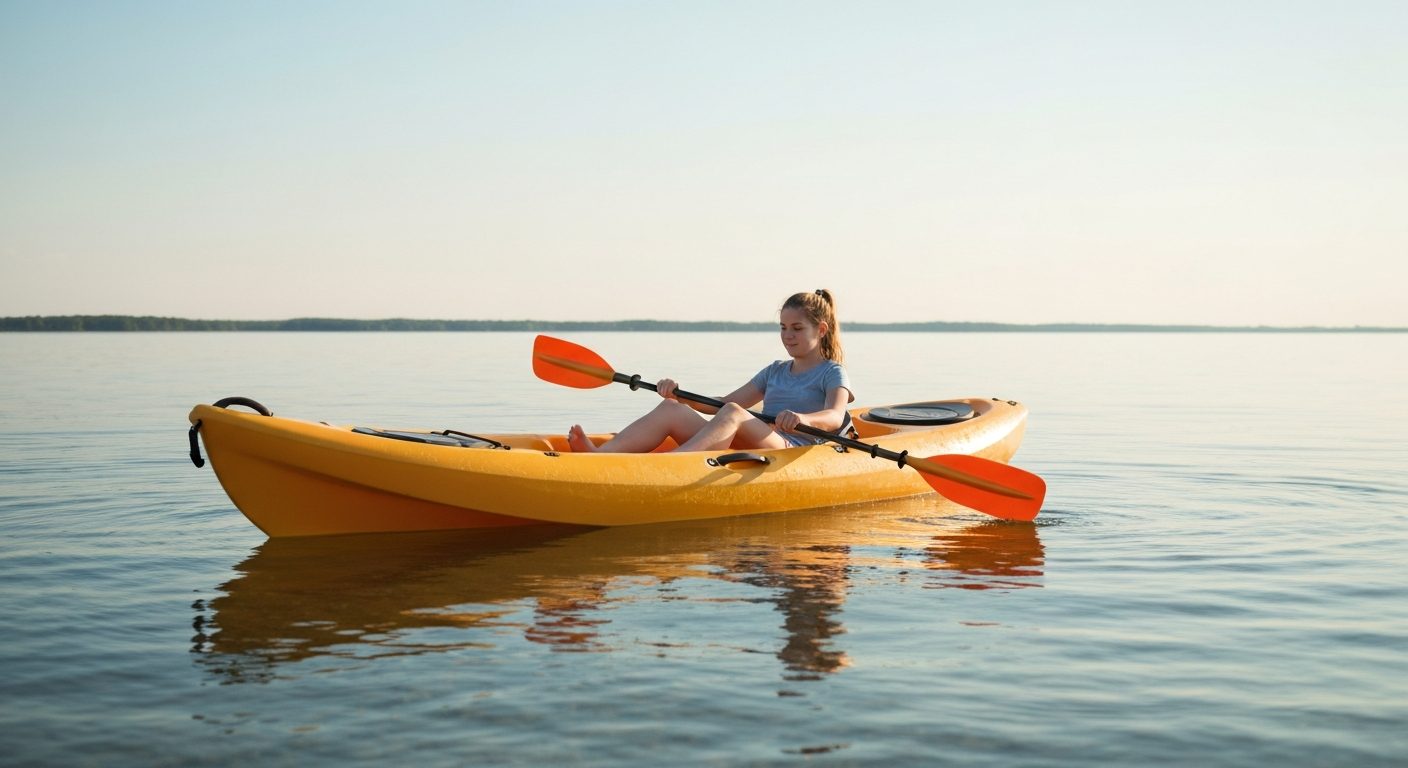
If you’re a beginner paddler who wants to get on the water a few times a summer, a cheap kayak is not just acceptable — it’s probably the right call. Spending $800 on a kayak before you know whether you’ll love the sport is a genuinely bad financial decision. A $250 Pelican Argo or a $300 Lifetime Tamarack gets you on calm lakes and slow rivers without any regret if the kayak ends up collecting dust in your garage.
Recreational paddlers — people who go out once or twice a month on flat water, maybe fish a little, and don’t cover serious distances — often find that a budget boat does everything they need. The stability is fine for calm conditions, the storage is basic but functional, and the seats, while not luxurious, are usable for a couple of hours. We’ve seen plenty of paddlers get years of good use out of a $300 Sun Dolphin without ever wishing they’d spent more.
Cheap inflatables like the Intex Challenger are a special case: they’re portable, store in a closet, and work surprisingly well on calm water. If space or transport is a constraint, an inflatable in the $100–$200 range is a legitimate option. See our rundown of whether inflatable kayaks are actually good for a full look at that trade-off.
If you’re buying for a kid, a guest kayak to have on hand, or a first boat for a beginner family member, cheap is smart. Match the tool to the job.
Where cheap kayaks cut corners
Budget kayaks are real kayaks, but they’re made with real compromises. Here’s where manufacturers save money — and where you’ll feel it.
Hull thickness and plastic quality. Most cheap kayaks are made from blow-molded polyethylene that’s noticeably thinner than what you’ll find on a $600+ boat. That means more flex underfoot, more susceptibility to UV degradation over time, and a hull that can dent or warp if stored improperly in the heat. It’s not a dealbreaker, but it does affect longevity.
Tracking. Inexpensive recreational kayaks are typically short (9–10 feet), wide, and have flat hulls designed for initial stability. They’re easy to balance but they wander. Every few strokes you’ll need a corrective sweep stroke to stay on course. For a casual paddle around a lake this is fine. For covering distance on a river or open water, it’s exhausting.
Seats and comfort. The molded-in seat pads and basic strap-and-buckle backrests on most budget kayaks become uncomfortable after 90 minutes. This is one of the clearest quality differences between a $300 and a $600 kayak. If you plan to paddle for three or four hours at a stretch, comfort becomes a real issue fast.
Hatch storage and outfitting. Most cheap kayaks have open cockpit storage only — no sealed bow or stern hatches. Gear gets wet, and swamping the boat is more of an issue. For fishing or multi-hour trips where you’re bringing real kit, the lack of dry storage matters.
According to the American Canoe Association, proper fit and outfitting are key factors in paddling safety and efficiency — areas where budget boats often lag behind.
Cheap vs mid-range: what the extra money buys
When you step from the $200–$400 range into the $500–$800 range, you’re not just paying for a brand name. You’re getting meaningful upgrades that change how the kayak actually feels to paddle.
Mid-range kayaks — think Pelican Catch 100, Old Town Vapor 10, or Perception Pescador 10 — typically offer a stiffer hull with better plastic, a proper phase-3 adjustable seat with padded backrest, and a longer waterline that tracks significantly better. The difference in paddling efficiency between a 10-foot budget rec boat and an 11-foot mid-range hull is immediately noticeable on a longer paddle.
You also get better outfitting: actual hatch covers for dry storage, bungee deck rigging, adjustable footpegs, and in fishing-oriented models, rod holders and gear tracks. These aren’t luxury features for most paddlers — they’re quality-of-life upgrades that matter on a real day on the water.
Our best kayaks under $500 guide covers the models that sit right at the edge of budget and mid-range — boats that won’t break the bank but step meaningfully above the cheapest options. If you’re on the fence, that’s the tier worth considering.
For beginners who are confident they’ll paddle regularly, we’d honestly push toward a mid-range boat. The extra $200–$300 buys a lot of real-world usability, and you’re much less likely to outgrow it in your first season.
How to buy a cheap kayak that doesn't disappoint
If you’ve decided a budget kayak is right for you, here’s how to avoid the ones that frustrate and find the ones that genuinely deliver.
Stick to established brands. Pelican, Lifetime, and Sun Dolphion have real distribution, real warranties, and real parts availability. The no-name import kayaks on Amazon for $149 often use even thinner plastic, have no warranty support, and come with hardware that strips out on the first use. Pay the extra $50–$80 for a name you recognize.
Go longer if you can. Within the budget tier, a 10-foot kayak will track noticeably better than a 9-footer. Length costs more, but if you can find a 10-foot or 10.5-foot option in your budget, the paddling experience improves meaningfully. A kayak that tracks well is a kayak you’ll actually use.
Try before you buy if possible. Many outdoor retailers and rental operations let you demo boats. Even 20 minutes on the water will tell you more about fit and feel than any review — including ours. If the seat is uncomfortable in 15 minutes on the pond, it’s going to be miserable at the two-hour mark.
Check for used boats. The used market for recreational kayaks is strong. A lightly used mid-range kayak at a budget price is almost always a better boat than a new cheap one. Craigslist and Facebook Marketplace regularly have $400–$600 kayaks listed at $200–$250 after one season.
For more guidance on choosing your first boat, our best beginner kayak guide and our best recreational kayak picks both walk through exactly what to prioritize at each price point.
Frequently Asked Questions
Are cheap kayaks safe?
Yes, for their intended use. A $250 recreational kayak is safe on calm flatwater with a PFD and basic paddling awareness. Where safety concerns arise is using a budget boat outside its design envelope — open water, significant wind, fast current, or cold-water conditions where the stability and outfitting limitations become real hazards. Match the boat to the water.
How long do cheap kayaks last?
With proper care, five to ten years is realistic. The main killers are UV degradation from sun exposure and heat warping from poor storage. Store your kayak out of direct sunlight, off the ground, and never leave it sitting in a hot car or trailer for days at a time. A $25 UV protectant spray applied each season adds meaningful life to the plastic.
Is a $200 kayak any good?
For casual flatwater use, yes — genuinely. A $200 Pelican or Lifetime kayak will get you on a calm lake or slow river with no trouble. You’ll notice the basic seat and softer tracking compared to pricier boats, but for a beginner or occasional paddler, those compromises are easy to live with. It’s a real kayak, not a toy, and it does the job it’s designed for.
Cheap hardshell or cheap inflatable — which is better?
For performance and durability, a cheap hardshell wins. For portability and storage, a cheap inflatable wins. If you have a truck or roof rack and somewhere to store a 10-foot boat, go hardshell — it’ll paddle better and last longer. If you live in an apartment, take public transit, or need to fly with your kayak, a quality inflatable like the Intex Explorer K2 is a smart trade-off.