What Size Waves Is a Longboard Good For?
Longboards were built for small, slow, mellow waves — and that's not a limitation, it's a superpower.
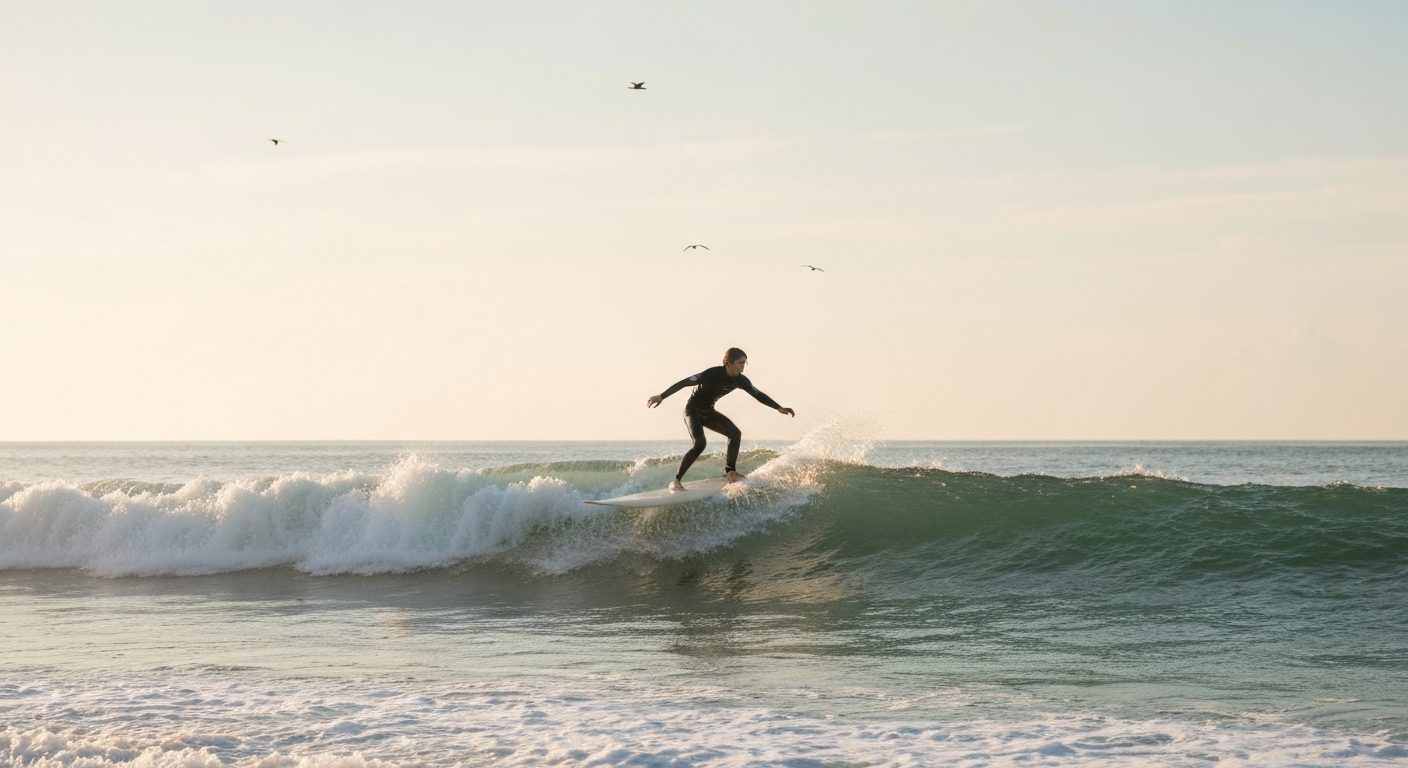
Best longboard surfboardsIf you’ve ever watched someone glide effortlessly across a knee-high wave while shortboarders flailed looking for something to ride, you’ve already seen the answer. Longboards thrive where most boards struggle — in soft, rolling, slow surf that other surfboards simply can’t generate speed on.
The Longboard Sweet Spot
The honest answer: longboards are most at home in waves roughly ankle-to-shoulder high — call it 1 to 4 feet on the face. That range covers a huge slice of real-world surfing days, especially at beach breaks and point breaks with slow, peeling walls.
In that sweet spot, a longboard’s length (usually 8’6″ to 10’+) and high volume work together. You can paddle into waves early, trim smoothly across the face, and walk to the nose without the board bucking underneath you. The glide is effortless in a way that a 6-foot shortboard simply cannot replicate in weak surf.
This is also why longboards are so popular at classic point breaks and mellow reef breaks — spots where waves unzip slowly down the line and give you time to cross-step, hang five, and actually surf rather than just survive.
Why Longboards Love Small, Slow Waves
The physics are simple. A longboard catches waves earlier because it displaces more water and generates more paddling momentum. Where a shortboarder has to be in exactly the right spot at exactly the right moment, a longboard buys you time and margin for error.
Volume is the other piece. A 9’6″ noserider might carry 75–85 liters of foam. All that buoyancy means the board planes and glides even on waves with almost no push behind them. A shortboard in those same conditions sinks, stalls, and goes nowhere.
Slow, crumbly, mushy waves also reward the smooth, flowing style longboarding demands. You’re not snapping off the lip — you’re trimming high on the face, controlling speed through footwork, and making the most of every section. Check our surfboard types guide for a full breakdown of how hull shape and length affect wave-catching ability.
For context on how wave height and quality are rated, Surfline’s forecasting guides are a solid reference when you’re learning to read conditions.
Where Longboards Struggle
Here’s the honest part: longboards are not all-condition boards. Once waves push past shoulder-high and start getting steep, fast, or hollow, a longboard becomes more of a liability than an asset.
The problems stack up fast in bigger surf:
- Duck diving is nearly impossible. You can’t push 80+ liters of foam under a breaking wave. You’re turtling and getting dragged back, which is exhausting and sometimes dangerous.
- Steep drops become sketchy. A 9-foot board on a steep, pitching wave is hard to control. The nose can catch, the tail can slip, and wipeouts get consequential.
- Speed management gets tricky. On fast waves, a longboard accelerates quickly and can outrun itself. Controlling that speed takes real experience.
- Paddling out is brutal. In overhead-plus surf with any power, getting outside on a longboard is a serious workout — and not in a good way.
Most experienced longboarders draw the line around head-high to slightly overhead depending on wave shape and power. A slow, peeling point break at head-high? Manageable. A punchy, steep beach break at the same size? Time to swap boards. Our surfboard size and volume calculator can help you figure out when to make that call based on your weight and skill level.
Matching Your Longboard to Conditions
Not all longboards are the same, and the right board for a given day depends on more than just wave height. Here’s how to think about it:
Single-fin noseriders (classic longboards): Best in small, slow, perfectly peeling waves. The wide nose and single fin setup is designed for trimming and noseriding — not for power surfing. Keep these in the 1–3 ft range.
2+1 or thruster longboards (performance longboards): More versatile. The extra fins add drive and pivot, making them manageable in faster or slightly bigger surf. You can push these into the 3–5 ft range at quality breaks.
Funboards and mini-malibus (7’–8’6″): These split the difference between a longboard and a mid-length shortboard. They’re more maneuverable in overhead surf while still catching small waves well. If you regularly surf a range of conditions, these deserve serious consideration — see our best longboard surfboards roundup for current picks across all categories.
If you’re newer to surfing and trying to figure out what board fits your local break, our best beginner surfboards guide walks through exactly that, including wave-size recommendations for each board type.
The bottom line: when the surf is small and soft, a longboard is the best board in the lineup — full stop. When it gets big, steep, or powerful, respect the conditions and reach for something more appropriate. Knowing when to switch is half the skill.
Frequently Asked Questions
Can you longboard in big waves?
Technically yes, but it’s not ideal. Experienced longboarders do ride head-high to occasionally overhead surf at mellow point breaks. The problems are duck diving (nearly impossible), handling steep drops, and getting caught inside. Most surfers swap to a shorter board once waves consistently hit overhead and have real power behind them.
Are longboards good for small surf?
Longboards are arguably the best boards for small surf. Their length and volume let them catch waves that a shortboard would miss entirely. Knee-to-waist-high days that send shortboarders home frustrated are exactly the conditions where a longboard shines. This is the core reason longboards remain popular even among advanced surfers.
What's the biggest wave a longboard is practical for?
At most breaks, shoulder-to-head-high is the practical upper limit for a traditional longboard. At slower, mellower point breaks, some experienced surfers push into slightly overhead surf. Beyond that, the difficulty of paddling out and duck diving, combined with the challenge of controlling a 9-foot board on steep drops, makes it more work than it’s worth.
Is a longboard good for beginner waves?
Yes — longboards are ideal for beginner waves, which are typically small, slow, and forgiving. The extra length and volume make paddling and wave-catching much easier, which means more practice and faster progression. Most surf instructors start beginners on longboards or foam boards for exactly this reason. Just make sure the waves aren’t too crowded.