
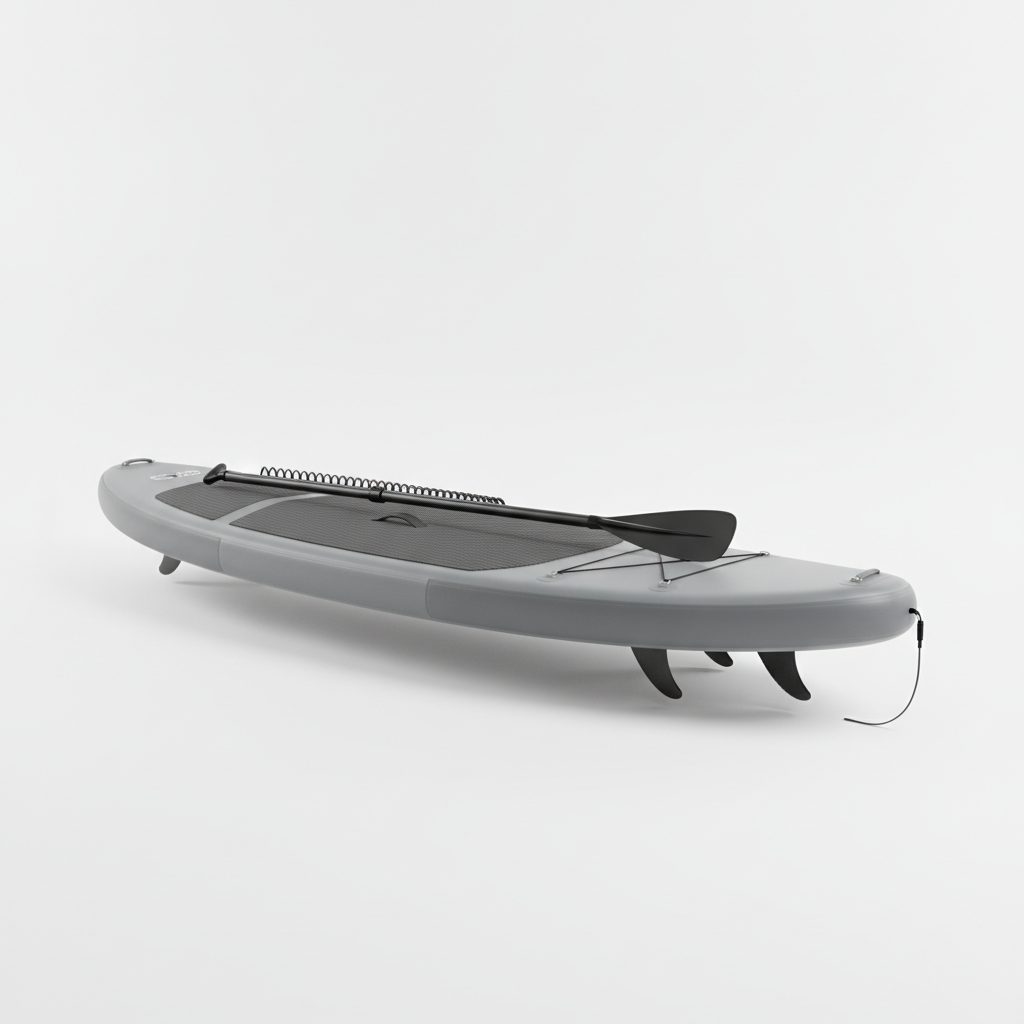
Tower Xplorer Review
The Tower Xplorer is one of the toughest, stiffest inflatables at this price point — if you can live with the bare-bones kit and plain looks, you're getting a board built to last years of hard use.
Tower made a name on Shark Tank and has been quietly building a loyal following ever since. The Xplorer is their flagship all-around inflatable, and it doesn’t try to win you over with flashy graphics or a bursting-at-the-seams accessory box. What it does offer is a genuinely rigid, exceptionally durable board that handles recreational paddling, flatwater fitness sessions, and even mild chop without complaint.
We spent several weeks on the water with the Xplorer — rivers, lakes, and a few open-bay sessions — and came away impressed by the construction quality and paddling feel. We also came away wishing Tower had included a few more tie-down points. That’s the trade-off you accept here, and whether it’s worth it depends entirely on what you prioritize.
If you’re still shopping around, our best inflatable paddle board guide covers the full field, and our best paddle board brands breakdown puts Tower’s reputation in context.
Tower Xplorer specs
| Length | 10’8″ |
| Width | 32″ |
| Thickness | 6″ |
| Capacity | ~400 lb |
| Type | Durable all-around |
| Paddle | Included |
On the water — stiffness and durability
The first thing you notice when you step onto the Xplorer is how little it flexes underfoot. Tower uses a military-grade single-layer-plus construction — a fusion-style build that bonds the PVC layers together rather than gluing them in separate passes. The result is a board that inflates to a genuinely board-like stiffness at the recommended 15 PSI, with almost none of the soft, trampoline feeling you get from cheaper drop-stitch iSUPs.
At 10’8″ x 32″ x 6″, the dimensions sit squarely in all-around territory. The 32-inch width gives you a stable platform that beginners will appreciate, while the length keeps tracking reasonable for casual touring. We paddled with a rider around 220 lbs and had plenty of freeboard; the 400 lb weight capacity is legitimate, not a marketing stretch. Heavier paddlers comparing options should also check our best paddle board for heavy riders roundup.
Tracking is solid for an all-around shape; you won’t mistake it for a dedicated touring board, but it holds a line well enough for longer flatwater paddles. The single-fin setup (a larger center fin) works fine for open water. If touring performance is your main goal, compare it against the options in our best touring paddle board guide before committing.
The no-frills Tower philosophy
Tower is explicit about their approach: cut the extras, keep the price honest, put the money into the board itself. That philosophy shows up everywhere. The graphics are understated to the point of being almost industrial. There’s no action camera mount, no cargo bungee net up front, and no extra D-rings for kayak conversion kits. You get a board, a fin, a pump, and a bag — full stop.
For some paddlers, that’s a relief. You’re not paying a markup for accessories you’ll throw in a closet. For others — especially paddlers who want to strap down a cooler, a dry bag, or a dog leash anchor — the lack of D-rings is a genuine frustration. Tower’s position is that the board is the product; everything else is packaging.
The construction savings go into materials rather than marketing or bundled gear, and it shows in the longevity reports from long-term Tower owners. Boards from their early production runs are still in active use years later, which is harder to say about some competitors selling comparable price points with thinner PVC walls and a shinier unboxing experience.
What's included
The Xplorer kit is minimal by current market standards. In the box: the board, a single-chamber high-pressure hand pump, a removable fin, a repair kit, and a carry bag. No paddle. That’s a deliberate choice — Tower sells paddles separately and argues (reasonably) that bundled paddles are usually cheap aluminum throwaway pieces that most serious paddlers replace immediately anyway.
The carry bag is functional without being premium — it holds the rolled board and accessories without drama, and the backpack straps are padded well enough for reasonable carries. Don’t expect the rolling bag or hard-shell backpack treatment you see on boards twice the price.
The hand pump gets the job done but requires real effort to hit 15 PSI. If you’re pumping up multiple boards or have shoulder issues, budget for an electric pump. This is true of most iSUPs at this price tier, not a knock unique to Tower — but worth knowing going in. USCG boating safety guidelines recommend wearing a PDA on all SUP outings, which is another item you’ll need to source separately.
Who it's for — and who should skip it
The Tower Xplorer is a strong fit if you want a durable, stiff all-around board that you plan to paddle hard and store carelessly, and you don’t need it to come loaded with accessories. It’s especially well-suited to heavier riders, paddlers who want a board that will genuinely last, and anyone who’s already had a budget iSUP delaminate or go soft after a season.
It’s a harder sell if accessory ecosystem matters to you. Paddlers who want kayak seat compatibility, front bungee cargo nets, or multiple D-rings for leashes and gear will find the Xplorer frustrating out of the box. You can add some of this with aftermarket gear, but that adds cost and hassle.
The plain looks are also worth acknowledging honestly. The Xplorer won’t turn heads at the put-in. If aesthetics matter — and for some paddlers they genuinely do — there are more attractive boards at similar prices. What you’re trading for the understated look is a construction quality that tends to outlast the flashier competition.
At around $500 with no paddle included, it’s priced fairly for what it delivers: a board, not a kit. Know what you’re buying and you’ll likely be happy with it for years. Go in expecting a complete setup and you’ll feel shortchanged.
What we liked
- Exceptional stiffness for an inflatable — genuinely board-like feel at 15 PSI
- Military-grade single-layer-plus PVC construction holds up to hard use and UV
- Legitimate 400 lb weight capacity with real freeboard for heavier riders
- Honest ~$500 price reflects construction quality rather than accessory padding
- Long ownership track record — early Tower boards still in active use years later
The catches
- No paddle included — budget an additional $50–$150 for a decent one
- Very few D-rings and no cargo bungee net limit gear-hauling and kayak conversions
- Heavier than some rivals at this size — carries like a board, not a daypack
- Plain, utilitarian aesthetics won't satisfy paddlers who want a good-looking board