
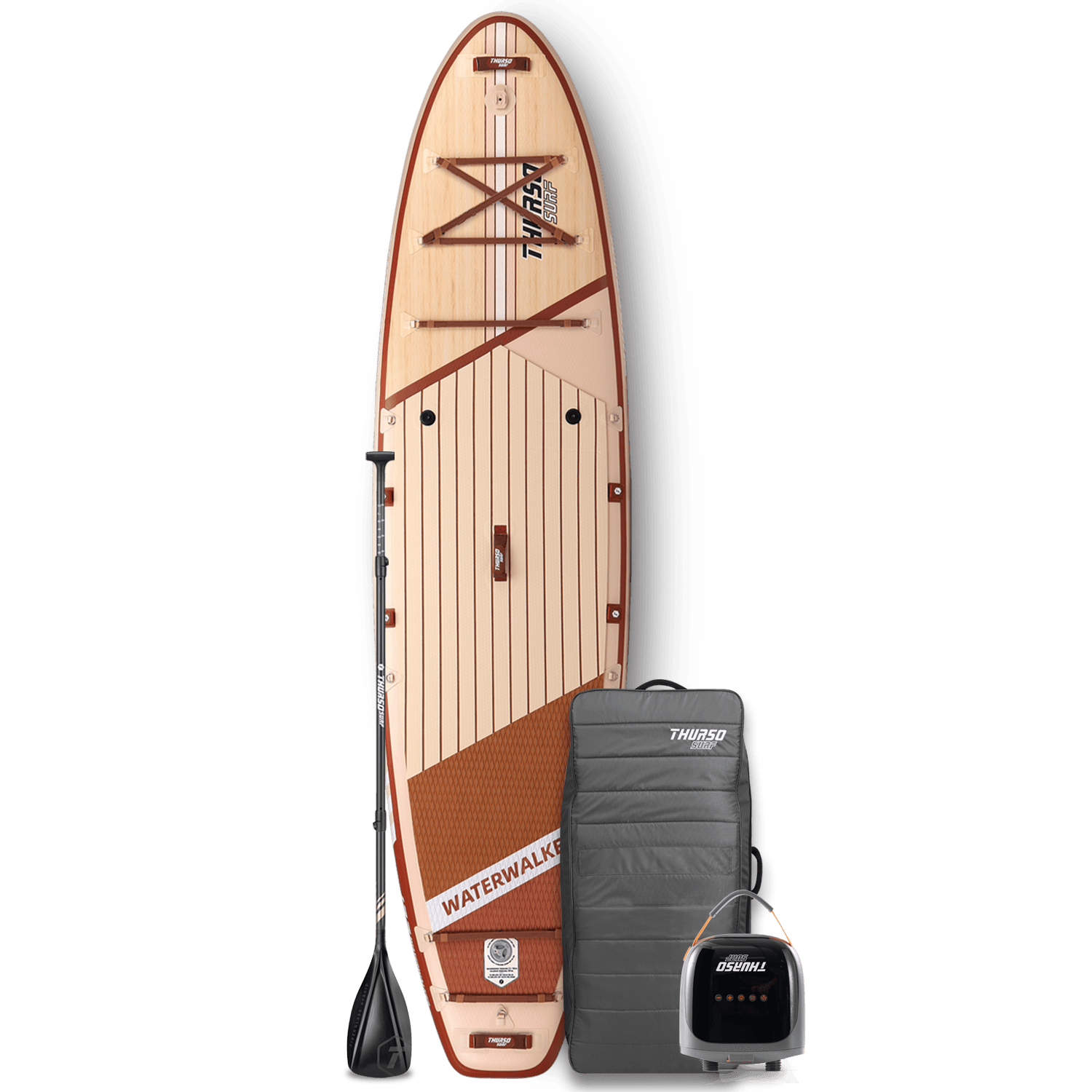
Thurso Waterwalker 132 Review
The Thurso Waterwalker 132 is one of the most stable, polished all-around iSUPs on the market — ideal for bigger riders, nervous beginners, or anyone who wants a premium board that looks as good as it performs. The weight and price are real trade-offs, but if stability and build quality are your priorities, this board delivers.
The Thurso Surf Waterwalker 132 is the flagship of Thurso’s all-around lineup, and it earns that title with a wide, forgiving platform, genuinely premium construction, and one of the most complete kit packages you’ll find at its price point. I’ve paddled it across flat water, light chop, and even let a friend’s 70-lb dog ride up front — and the board handled all of it without drama.
This review covers everything: how it rides, what the build is actually like up close, what’s in the box, and — honestly — where it falls short. If you’re comparing it against other boards, check out our roundup of the best inflatable paddle boards to see how it stacks up across the field.
Thurso Surf Waterwalker 132 specs
| Length | 11′ |
| Width | 32″ |
| Thickness | 6″ |
| Capacity | ~370 lb |
| Type | All-around |
| Paddle | Carbon-shaft (included) |
Stability & Ride
The Waterwalker 132 measures 11 feet long by 32 inches wide by 6 inches thick — a combination that puts primary stability firmly in the “very easy to stand on” category. At 32 inches of beam, even riders who have never stood on a paddle board before will feel planted. I handed it to a first-timer on a mild-wind day and she was standing confidently within about ten minutes, with no previous board experience. That’s not unusual for this shape; it’s exactly what 32 inches of width buys you.
The 6-inch thickness keeps the deck well clear of the water even when loaded up, which reduces the slow wobble you sometimes get on thinner boards when a rider shifts weight. Thurso rates the 132 at roughly 370 pounds — a realistic number that accounts for a larger rider plus gear, or two smaller people paddling together. For lighter riders, that extra volume makes the board feel almost locked-in, like standing on a floating dock.
What you give up for all that stability is speed and tracking. This is not a touring board. The rounded nose and wide tail are tuned for easy maneuverability and forgiveness, not efficiency. On longer paddles you’ll notice you’re working harder per mile than you would on a narrower displacement hull. If covering distance is the goal, a dedicated touring shape makes more sense. For casual paddling, lakes, yoga sessions, or exploring with a passenger or pet, the Waterwalker’s ride feel is exactly right.
Build Quality & Looks
Thurso uses a double-layer woven drop-stitch construction throughout the Waterwalker line, and you can feel the difference versus single-layer budget boards the moment you inflate it. At 15 PSI the board is genuinely rigid — no flex underfoot, no soft spots near the rails. The PVC fusion lamination keeps weight lower than traditional double-layer bonding, though the 132 still comes in on the heavier side at around 26–28 lbs depending on configuration. That’s worth knowing before you commit to hauling it to a remote launch.
Aesthetically, Thurso made a real choice here: the wood-grain deck print is polarizing in photos but looks legitimately sharp in person. It reads premium rather than gimmicky, especially paired with the clean white rails and understated logo placement. The traction pad covers the full standing area with a diamond-groove EVA foam that grips bare feet well without being harsh on the knees during yoga or kneeling paddling. D-ring placement is thoughtful — front cargo bungee, a center carry handle that’s actually wide enough to grip comfortably, and side rings for leash or accessories.
For a deeper look at how Thurso’s production standards compare across their full lineup, our Thurso brand review covers construction details across multiple models.
Paddle, Pump & Accessories
One area where the Waterwalker package genuinely stands out is the included kit. Thurso ships the board with a carbon-shaft, fiberglass-blade adjustable paddle — not the flimsy aluminum paddle that comes with most boards in this price range. The carbon shaft makes a meaningful difference on longer sessions; less swing weight means less arm fatigue over two or three hours of paddling. The blade shape is a mid-sized all-around design, appropriately sized for the board’s intended use.
The pump is a dual-action design that moves air on both the push and pull stroke, which cuts inflation time noticeably compared to single-action pumps. Getting the Waterwalker to 15 PSI still takes real effort — budget around 8–10 minutes — but it’s faster than it would be otherwise. A coil leash, fin, repair kit, and waterproof phone pouch round out the package.
The roller bag deserves a specific mention. Most boards at this price ship in a basic backpack-style bag that’s technically functional and practically miserable when loaded. Thurso’s wheeled roller bag changes the carrying experience entirely — you can pull it through a parking lot or airport without putting the full 27-lb weight on your back. It’s a small detail that signals Thurso has thought about the actual ownership experience, not just the spec sheet.
Who It's For
The Waterwalker 132 is best matched to a specific kind of buyer. If you’re a larger rider — say, 200 lbs or above — and want maximum stability without stepping into a dedicated “wide body” board, the 132 is the version to get over the 120 or 126. It’s also the right call for nervous beginners who want to build confidence without fighting the board for balance every session. Yoga paddlers will appreciate the wide, firm platform and the full-coverage traction pad.
It also earns its place for calm family paddling — bringing along a young kid or a medium-to-large dog on the front cargo area works well given the weight capacity and beam width. Light touring on lakes, sheltered bays, and slow rivers is comfortable, though again, don’t expect the efficiency of a purpose-built touring shape.
If budget is the primary concern, there are capable all-around boards available for $100–$200 less. They won’t match the construction quality, the paddle, or the bag, but they’ll float you adequately. Our paddle board brand comparison lays out where the major brands sit on the price-to-quality spectrum so you can make an honest comparison before spending $700.
Who should look elsewhere: lighter riders who want a nimble, fast board; anyone planning serious distance touring; buyers who need to carry their board on foot for long distances and can’t afford the weight.
What we liked
- Exceptional primary stability — 32" width is genuinely forgiving for beginners and larger riders
- Double-layer woven drop-stitch construction feels rigid and premium compared to budget boards
- Carbon-shaft paddle included — a meaningful upgrade over the aluminum paddles common at this price
- Wheeled roller bag is a practical quality-of-life upgrade that most competitors don't include
- 370-lb capacity handles bigger riders, gear, or a passenger/pet without performance compromise
The catches
- Heavy at ~27 lbs — carrying to and from the water is a workout, especially without the roller bag
- Priced at ~$699, it costs noticeably more than budget all-arounds that cover the same basic use case
- Wide, rounded shape prioritizes stability over speed — not the board for distance paddling or open-water touring