
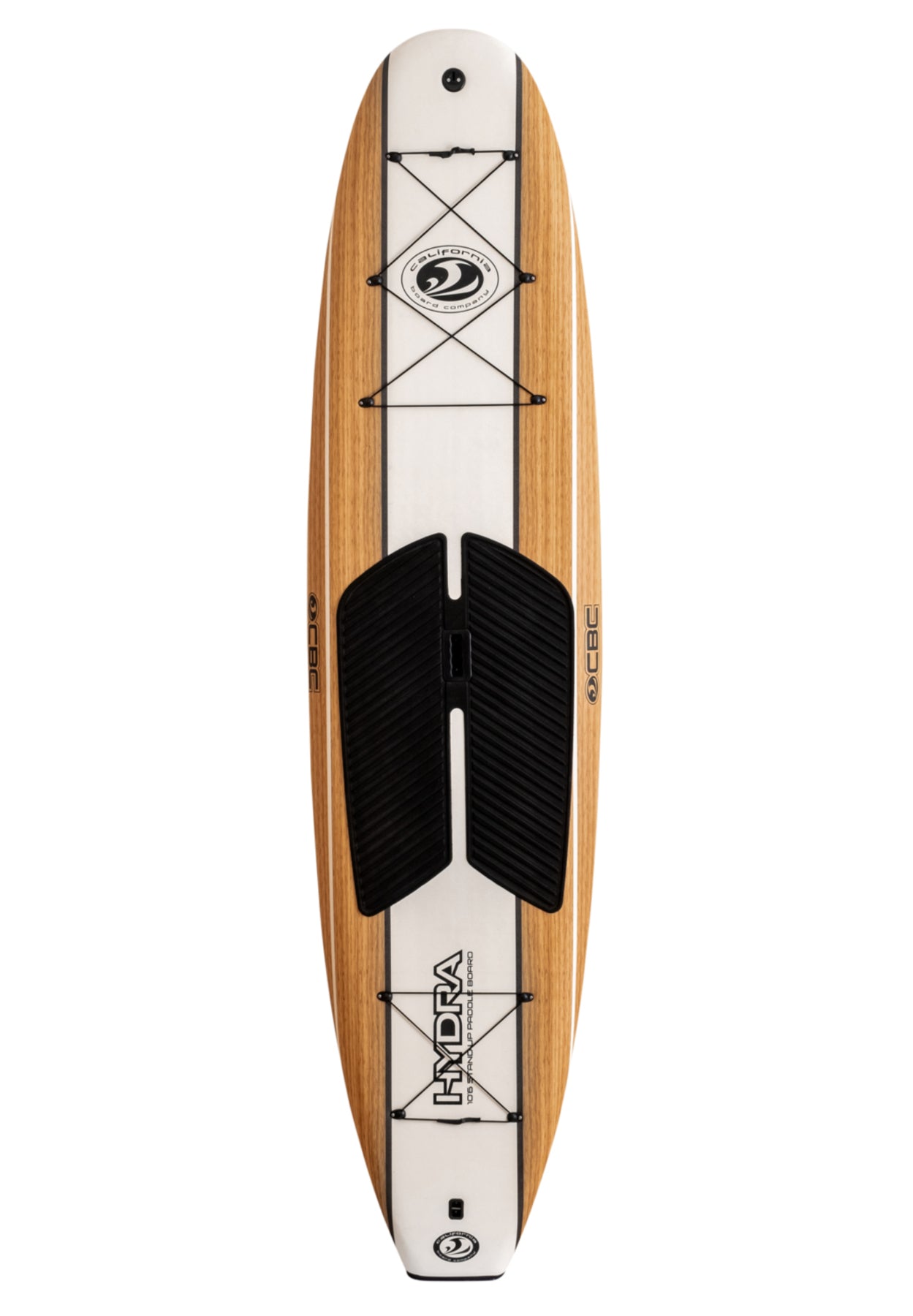
California Board Company Stand-Up Paddleboard Review
The California Board Company stand up paddleboard is a solid beginner-to-intermediate foam SUP — affordable, lightweight at 25 lbs, and complete enough out of the box to get on the water the same day you buy it.
If you’re new to paddleboarding, you may be initially surprised at how expensive this water sport can be. On average, a decent board can run close to a thousand dollars, and no beginner wants to fork over that kind of money before they even know if they’ll stick with it. Fortunately, California Board Company built their flagship foam SUP specifically to solve that problem — a capable, ready-to-paddle package at a price that doesn’t require a commitment you haven’t made yet.
The California Board Company (CBC) stand up paddleboard is a 10’6″ foam soft-top built around a high-density EPS core with a 100% waterproof construction. At 25 lbs, it’s light enough to carry solo from the car to the water, and the 300 lb weight capacity means it works for most adults without compromise. The package includes an adjustable paddle, ankle leash with padded neoprene anklet, stabilizer fin, bungee cargo system, camera mount, and padded roof straps — which is a genuinely complete kit at this price point.
CBC launched about a decade ago with a clear mission: design well-built, affordable boards that don’t sacrifice real performance. Based on the sustained customer response to this model — consistently rated 4.5 out of 5 stars by buyers across retail channels — they appear to have hit that target. This review covers what the board does well, where its limits are, and who it’s the right fit for.
California Board Company CBC Hydra 10'6" (Classic SUP) specs
| Length | 10’6″ |
| Width | 30.7″ |
| Thickness | 6″ |
| Weight | 25 lbs |
| Capacity | 300 lbs |
| Type | Foam soft-top (EPS core, HDPE bottom) |
| Fins | 3-fin: 1 removable center fin + 2 fixed side fins |
| Paddle | Adjustable aluminum, 5-length settings, 63″–87″ |
Construction: EPS Foam Core and What It Means for You
The CBC board is built from molded high-density EPS (expanded polystyrene) foam with a 100% waterproof core. The bottom is finished with a smooth layer of polyethylene (HDPE) that lets the board slice cleanly through the water and reduces drag — a detail that noticeably helps the board track and paddle efficiently even for beginners who haven’t developed their paddle technique yet.
On the deck, a textured traction pad gives your feet grip in wet conditions. The board weighs just 25 lbs, which puts it well below many hard epoxy boards of similar length, and means you’re not fighting the board before you even get in the water. Because it’s built from foam rather than fiberglass, one ding or minor puncture won’t sink the board or require expensive repairs — a meaningful advantage if you’re still learning how to handle a SUP around rocky shores or boat ramps.
The trade-off with foam construction is real: EPS dents more easily than fiberglass or carbon. The deck surface can take impressions if you’re not careful when strapping it to the roof of your car or dragging it across rough pavement. Put a folded towel or piece of cardboard between the board and the straps when car-topping. Keep it off gravel. Handle it with the same care you’d give any board you want to last.
On the Water: Stability, Tracking, and Who This Board Suits
At 10’6″ long and with a 6-inch thickness, the CBC board delivers meaningful stability for beginners. The extra thickness stiffens the platform and increases volume, which translates directly to better buoyancy under load. Reviewers consistently note that the board paddles well at or near its 300 lb maximum — it doesn’t turn sluggish or sink uncomfortably at capacity, which not all budget boards can claim.
The smooth HDPE bottom and the three-fin setup (two small side fins plus a removable large center fin) help the board track reasonably well in a straight line for its category. For open water and flatwater paddling, keep the large center fin installed — it does the most for directional stability. For very shallow water, pop it out and leave the two side fins; they’re low-profile enough to handle most conditions without catching bottom.
The board handles calm lakes, slow rivers, and gentle ocean conditions (calm bays, protected coves) without drama. It’s not a performance touring board and it won’t win races, but that’s not what it’s designed for. Beginners and casual paddlers will find it forgiving and confidence-building. More experienced paddlers may find the 25-pound weight and foam construction useful for teaching kids or guests without worrying about a board that can hurt someone if it hits them.
What's in the Box: Accessories Breakdown
The CBC board ships as a complete package — meaning you don’t need to budget separately for the basics before you can paddle. Here’s what’s included and an honest assessment of each piece:
- Adjustable paddle: Durable plastic/rubber construction with five length adjustment settings ranging to accommodate different heights. It adjusts to fit adults and children alike, which is practical for family use. It’s not a carbon-fiber paddle and you’ll feel the weight difference on long sessions, but it’s functional for learning and casual paddling.
- Ankle leash with neoprene anklet: The padded neoprene cuff makes wearing the leash comfortable for extended sessions. The leash is a non-negotiable safety accessory — if you’re in open water and you fall, a leash keeps the board from drifting away from you. Don’t skip it. Per U.S. Coast Guard guidelines, stand-up paddle boards are classified as vessels; check your local rules on PFD requirements.
- Three-fin system: One large removable center fin and two fixed side fins. The center fin clips in with a push-in system that’s secure once seated. Install takes about 30 seconds with no tools.
- Bungee cargo system: Positioned just forward of the traction pad. Works well for securing a dry bag, PFD, or a light cooler. Easy access while paddling.
- D-ring system: Multiple D-rings including a front tow ring, rear ring, and four center rings that can be used to attach an optional aftermarket kayak-style seat (sold separately). Useful for customizing the board’s versatility.
- Camera mount: Universal nose-mounted camera mount for action cameras. A useful bonus for documenting sessions.
- Padded roof straps: Not a full roof rack — two padded straps that let you secure the board to most vehicles. Use a towel or cardboard between the board and straps to protect the foam from strap abrasion.
Price, Availability, and 2026 Market Context
The CBC Classic/Hydra 10’6″ package has historically been priced in the $350–$600 range depending on the retailer and any ongoing promotions. As of mid-2026, Keeper Sports (CBC’s direct retail channel) lists the Classic SUP package at $599.99, though inventory fluctuates and the board periodically sells out. It has also appeared at Big 5 Sporting Goods and Costco at various price points through seasonal promotions.
On Amazon, the ASIN B007722X40 corresponds to the Hydra 10’6″ (CBC’s updated name for what was originally marketed as the “Classic”). Check current availability and pricing directly — listings change seasonally and the board moves in and out of stock.
If the CBC board is out of stock when you’re shopping, the closest alternatives in the same foam soft-top category and price range are the Wavestorm lineup and similar EPS foam boards from Liquid Shredder and Boardworks. For buyers open to inflatables in the same price tier, see our best paddle board guide for current recommendations across the full market.
The CBC board has been in the market since roughly 2012 and has maintained a loyal following — which, for a budget-priced foam SUP, is a meaningful signal about real-world durability and user satisfaction. The 4.5-star average across hundreds of verified purchaser reviews across multiple retail channels reflects genuine owner experience, not just initial impressions.
Fin Configuration and Deck Features in Detail
The fin setup on the CBC is straightforward and practical. The large removable center fin is the primary tracking fin and is designed for open water use. It seats into the fin box at the tail with a push-clip system — no tools, no fumbling with a screw-and-plate setup. Once clipped in, it’s solid and doesn’t rattle or shift during a paddle session. Remove it for shallow water launches where a large center fin would drag bottom.
The two small side fins are fixed and sit low enough to be essentially invisible in most paddling conditions. They contribute a small amount of additional stability and lateral resistance without complicating your launch routine in shallow water.
The molded carrying handle is centered on the board and is a genuine quality-of-life feature. At 25 lbs, the board is easy enough to carry with one hand for short distances — important if you’re walking from a parking lot to a beach entry, or navigating a dock. The handle won’t slip or fatigue your grip the way some aftermarket handles do.
The leash plug for the ankle leash attachment is located at the tail of the board. The D-ring system scattered across the board opens up the option of adding an aftermarket kayak seat ($30–$50 for a basic SUP seat) that converts the board for seated paddling — useful for longer paddles, fishing, or paddlers who want the option to sit when tired.
Honest Assessment: Pros, Cons, and Who Should Buy It
The California Board Company stand up paddleboard earns its reputation as one of the more sensible entry points into the sport. Its strengths are real: at 25 lbs it’s genuinely easy to carry, the 300 lb capacity is honest (the board doesn’t wallow at max load), and the complete package means you’re not hunting for accessories before your first session. The EPS foam construction absorbs impact without catastrophic failure, which matters for beginners who are still learning how to launch and land without drama.
Its limits are equally real and worth naming plainly. The foam deck will dent if mistreated — don’t drag it over rocks, don’t let the roof straps bite in without padding, and don’t store it on a surface that concentrates pressure on one point. The included paddle is functional but heavy by performance standards; if you end up doing distance paddles, an aftermarket aluminum or carbon paddle upgrade ($60–$120) is worth the investment. Some paddlers note the deck surface can feel slick in certain conditions — a pair of SUP water shoes or booties solves this without any modification to the board.
The CBC is the right board if you’re a beginner or casual recreational paddler who wants to get on the water affordably, wants a complete ready-to-paddle package, and doesn’t need to impress anyone at a race start line. It’s a good family board, a good guest board, and a good first board that you won’t feel foolish using a few seasons later once you’ve decided this sport is worth investing in further. It’s the wrong board if you have serious performance intentions, need a board that fits in a car trunk without a roof rack, or paddle in conditions where a higher-performance platform would meaningfully improve your experience.
What we liked
- Lightweight at 25 lbs — genuinely easy to carry and transport solo
- 300 lb weight capacity handles most adults and paddles well near that limit
- Complete package includes paddle, leash, fin, bungee system, camera mount, and roof straps
- EPS foam construction is forgiving on falls and doesn't require expensive repairs from minor dings
- Three-fin setup (large removable center fin + two fixed side fins) works well for tracking in open water
- D-ring system supports optional kayak seat conversion for seated paddling or fishing
The catches
- EPS foam dents under concentrated pressure — requires care during car transport and storage
- Included paddle is functional but heavier than aluminum or carbon upgrades; long sessions may feel fatiguing
- Deck surface can feel slick to some paddlers in wet conditions; water shoes help
- Solid foam construction requires roof-rack transport; not roll-up portable like an inflatable iSUP
- Inventory can be inconsistent — the board periodically sells out at major retailers
Frequently Asked Questions
What is the California Board Company stand up paddleboard made of?
The CBC board uses a molded high-density EPS (expanded polystyrene) foam core that is 100% waterproof — meaning water won’t saturate the core and cause rot or mold issues. The bottom surface is a smooth layer of polyethylene (HDPE) that reduces drag and helps the board track through the water. The deck has a textured traction pad for grip. This soft-top foam construction is lighter and more impact-forgiving than fiberglass or epoxy boards, making it well-suited to beginners.
What are the dimensions of the CBC paddleboard?
The California Board Company stand up paddleboard measures 10 feet 6 inches long with a 6-inch thickness. Width is approximately 30.7 inches on the current production model. It weighs 25 lbs and has a maximum weight capacity of 300 lbs. The 10’6″ length places it in the all-around category — long enough to track reasonably well and stable enough for beginners, without being cumbersome to maneuver.
What comes included with the CBC board package?
The package includes the 10’6″ foam paddleboard, an adjustable paddle (five length settings to fit different rider heights), an ankle leash with a padded neoprene cuff, a removable center stabilizer fin, a bungee cargo system at the nose, a universal camera mount, and padded roof straps for vehicle transport. It’s a complete ready-to-paddle setup — you don’t need to purchase additional accessories before your first session.
Is the California Board Company stand up paddleboard good for beginners?
Yes — the CBC board is specifically designed with beginners in mind. The 6-inch thickness and 10’6″ length provide a stable platform for learning balance and paddle technique. The foam construction is forgiving: it doesn’t hurt as much if it hits you during a fall, and minor surface dings don’t compromise the board the way fiberglass damage would. The complete kit means new paddlers don’t have to source accessories separately. Customer reviews consistently highlight it as an easy, confidence-building first board.
What is the difference between inflatable and hard (foam) paddleboards like the CBC?
Inflatable paddleboards (iSUPs) deflate and roll into a backpack, making them ideal for paddlers with limited storage or those who travel to different paddling spots. Hard foam boards like the CBC can’t compress for storage — they require roof-rack transport — but they offer better rigidity and tracking performance, particularly in chop or at higher speeds. The CBC’s EPS foam construction sits between true inflatables and rigid fiberglass boards: it has the impact forgiveness of a soft-top with better real-water performance than a budget inflatable.
Where can I buy the California Board Company paddleboard and what does it cost?
As of mid-2026, the CBC Classic/Hydra 10’6″ package is available through Keeper Sports (CBC’s direct retailer) at $599.99, as well as through Amazon (ASIN: B007722X40), Big 5 Sporting Goods, and Costco during seasonal promotions. Pricing varies by retailer and promotional timing. Inventory can be limited — the board periodically sells out. Check current availability directly through those channels for the most accurate stock and pricing information.