
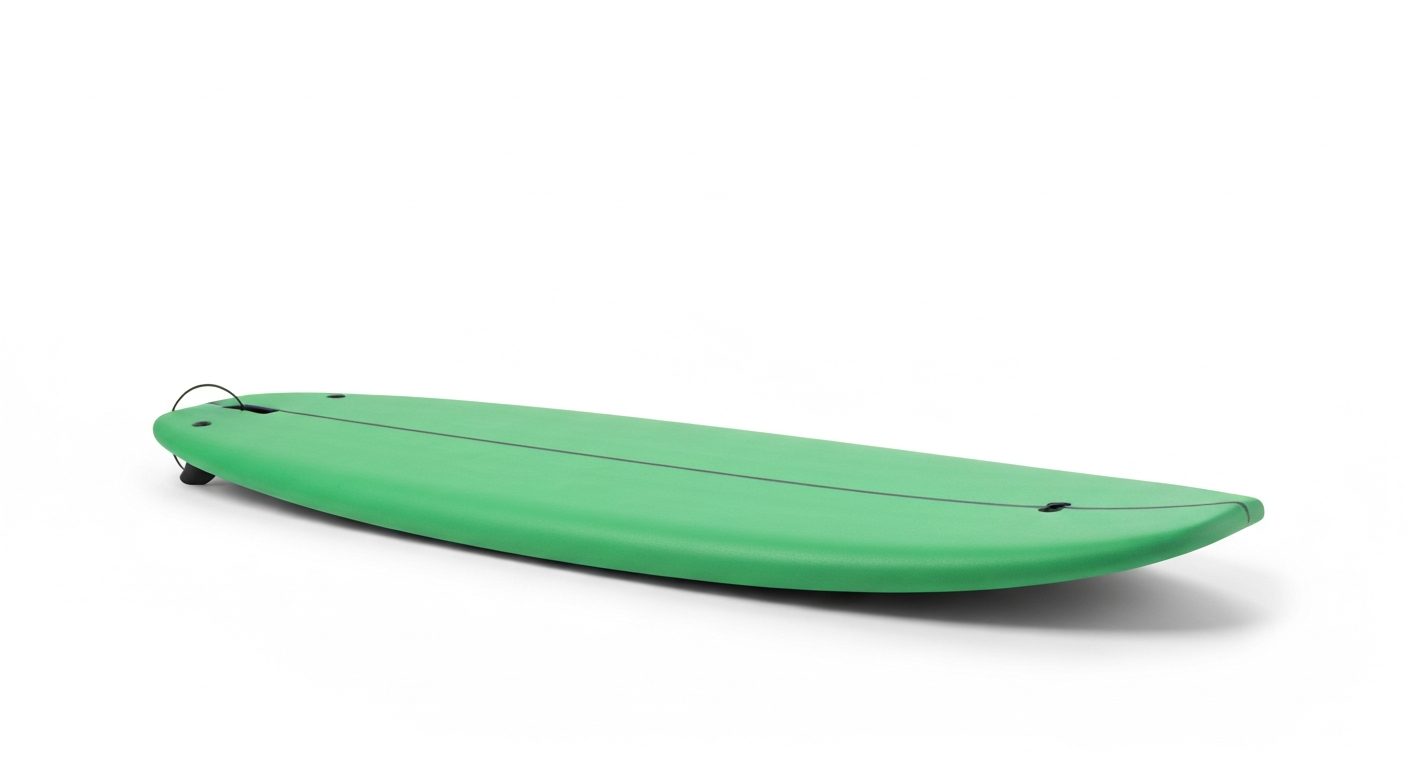
Ocean & Earth Ezi-Rider Review
The Ocean & Earth Ezi-Rider is one of the best-built foam boards on the market — noticeably more solid than most beginner soft-tops — and it delivers the wide, stable ride that new surfers need without feeling cheap underfoot. At around $350, it costs a bit more than the budget foamies, and the quality difference is real.
Most foam surfboards feel like foam boards. The Ocean & Earth Ezi-Rider doesn’t. The first time you pick it up, the higher-density deck and tight construction make it feel more like a proper surfboard that happens to be soft on the outside. That’s not an accident — Ocean & Earth is an Australian surf-accessory brand that’s been making products for serious surfers since 1977, and they brought that same attention to materials to their learn-to-surf lineup.
We paddled the Ezi-Rider in small beach-break conditions — mostly waist-to-chest-high whitewater and the occasional lined-up green wave — and came away genuinely impressed for a board in this category. If you’re looking at the best beginner surfboards and want something a step above the bargain-bin foamies, this one belongs on your shortlist.
It comes in several lengths, typically from around 7′ up to 9′, and the choice matters more than most buyers realize. We’ll walk you through the water performance, the construction, the sizing decision, and who this board actually makes sense for. Here’s what we found.
Ocean & Earth Ezi-Rider specs
| Length | 7′-9′ options |
| Type | Soft-top / foam |
| Deck | High-density |
| Rider | Beginner |
| Skill | Beginner |
| Best for | Well-built stable foamie |
On the water — stability & paddle
Paddle into the lineup on the Ezi-Rider and the first thing you notice is how settled it feels. The wide outline and generous foam volume mean the board sits high on the water and tracks straight without demanding much effort to keep balanced. For beginner surfers who are still nervous just lying flat on a board, that planted, stable feel is genuinely reassuring — you can focus on reading the wave instead of white-knuckling the rails.
Paddling is easy. The board generates speed quickly with a relaxed, unhurried stroke, which means you’re in position to catch waves without wearing yourself out in the first twenty minutes. We caught waves earlier in their cycle than expected, partly because the length and volume let you match the wave’s speed well before it breaks. On whitewater — the broken, foamy waves right near shore — the Ezi-Rider is almost foolproof. Ride it forward or backward over the foam pile and it stays under your feet.
The tri-fin setup gives enough hold and direction to let the board respond to your weight shifts without becoming twitchy. It’s not built for snapping turns or riding steep, fast waves — but for the mushy, slow beach-break conditions where most beginners (and casual intermediate surfers) do their surfing, it performs exactly as it should. The ride is smooth, predictable, and forgiving of sloppy technique, which is the whole point at this stage.
Build quality
This is where the Ezi-Rider genuinely separates itself from the crowded foam-board field. The high-density EVA foam deck is noticeably firmer underfoot than most soft-tops — it doesn’t feel spongy or hollow when you press on it, and pressure dents (the inevitable footprint dings that form on soft boards after repeated use) develop much more slowly. After several weeks of regular sessions, ours showed minimal compression compared to lower-density boards we’ve tested in the same conditions.
The construction throughout feels intentional rather than budget-driven. The rails are clean, the tail is well-finished, and the fin boxes sit flush and tight. Ocean & Earth is a brand with deep roots in the surf industry — they make board bags, leashes, wax, and accessories used by competitive surfers — and that background shows in how they built the Ezi-Rider. It’s not a piece of injection-molded foam with a logo slapped on it.
The soft foam exterior also does its job on the safety side. The International Surfing Association (ISA) recommends foam soft-tops for learn-to-surf programs specifically because the soft rails and deck reduce injury risk when the board comes back at you after a wipeout. On a crowded beginner break, that matters — both for the rider and for anyone nearby. The Ezi-Rider’s quality construction means you’re not sacrificing that safety advantage just to get a better-built board.
One honest note: at around $350, it costs more than a Wavestorm or a no-name foam board off Amazon. You’re paying for the construction quality and the brand’s surfing heritage, and in our opinion, the difference is worth it if you plan to surf more than a few times a season.
Which length to choose
The Ezi-Rider comes in multiple lengths — typically starting around 7 feet and going up to 9 feet — and the right choice depends on your size, experience level, and what you want the board to do. Getting this decision right matters more than most beginners think.
For most adult beginners, the 8′ or 8’6″ is the sweet spot. You get plenty of volume for easy paddling and wave-catching, enough length to feel stable during the pop-up, but not so much board that it becomes unwieldy to carry or maneuver in the water. If you’re a heavier rider (over 190–200 lbs) or on the taller side, go longer — the extra volume helps keep you floating high and paddling efficiently.
The 7′ models are better suited for lighter riders, kids, or anyone with some prior surfing experience who wants a foam board that’s a bit more maneuverable. You’ll sacrifice some of the raw wave-catching ease but gain a livelier feel underfoot. At 7 feet, a rider with a few sessions under their belt can start working on longer, trimming rides rather than just standing up and going straight.
The 9′ option is the most stable and easiest-paddling of the lineup — good for larger adults or anyone who wants the maximum ease of entry. It’s a bit of a handful on the beach, but once you’re in the water it practically catches waves by itself.
We compare the full range of foam options in our best soft-top surfboards guide — worth a read before you commit to a size, especially if you’re buying for a group or a family with different body types in the mix.
Who it's for (and who should skip it)
The Ocean & Earth Ezi-Rider is the right call for beginner surfers who want a foam board that won’t embarrass them as they get better — one that’s well enough built to survive a full season of regular use and stable enough to actually teach you something about reading waves and controlling your weight placement. It’s also a smart pick for parents buying a board for a teenager or pre-teen who’s serious about learning, because the quality construction means it holds up to the abuse that teenage surfers reliably deliver.
If you’re an intermediate surfer who wants a second board for small, lazy days or for lending to friends, the Ezi-Rider makes sense here too. The build quality means it won’t feel like a throwaway even after the novelty wears off.
Who should skip it: if you’re a complete beginner on a tight budget and you just want to see if surfing sticks before spending real money, the Ezi-Rider is great but a lower-cost foamie gets the job done for less. There’s no shame in starting on a Wavestorm. On the other end, if you’ve been surfing for two-plus years and you’re consistently riding green waves and working on your turns, you’ve outgrown this category — check out our best surfboards overview for what to step up to.
The Ezi-Rider also isn’t built for powerful, hollow, or fast-breaking surf. It’s a small-wave, forgiving-conditions board by design. Don’t take it out in overhead beach break or you’ll be fighting the board instead of surfing it. Stick to the conditions it’s designed for and it’s excellent; push it past those conditions and you’ll hit the limits fast.
What we liked
- Higher-density foam deck resists pressure dents better than most soft-tops in this class
- Wide, stable outline with generous volume makes it easy to paddle and catch waves
- Quality construction from a brand with real surf-industry heritage — feels solid underfoot
- Available in multiple lengths (approx. 7'–9') to fit different rider sizes and experience levels
- Soft foam deck and rails reduce injury risk — ISA-recommended board type for learn-to-surf
- Smooth, predictable ride on small beach-break waves; forgiving of beginner technique
The catches
- At ~$350, it costs more than budget foam boards — the quality is real but the price is higher
- Not designed for powerful or fast-breaking surf; hits its limits quickly in bigger conditions
- Longer models (8'6"+) can be cumbersome to carry and transport without a roof rack or board bag