
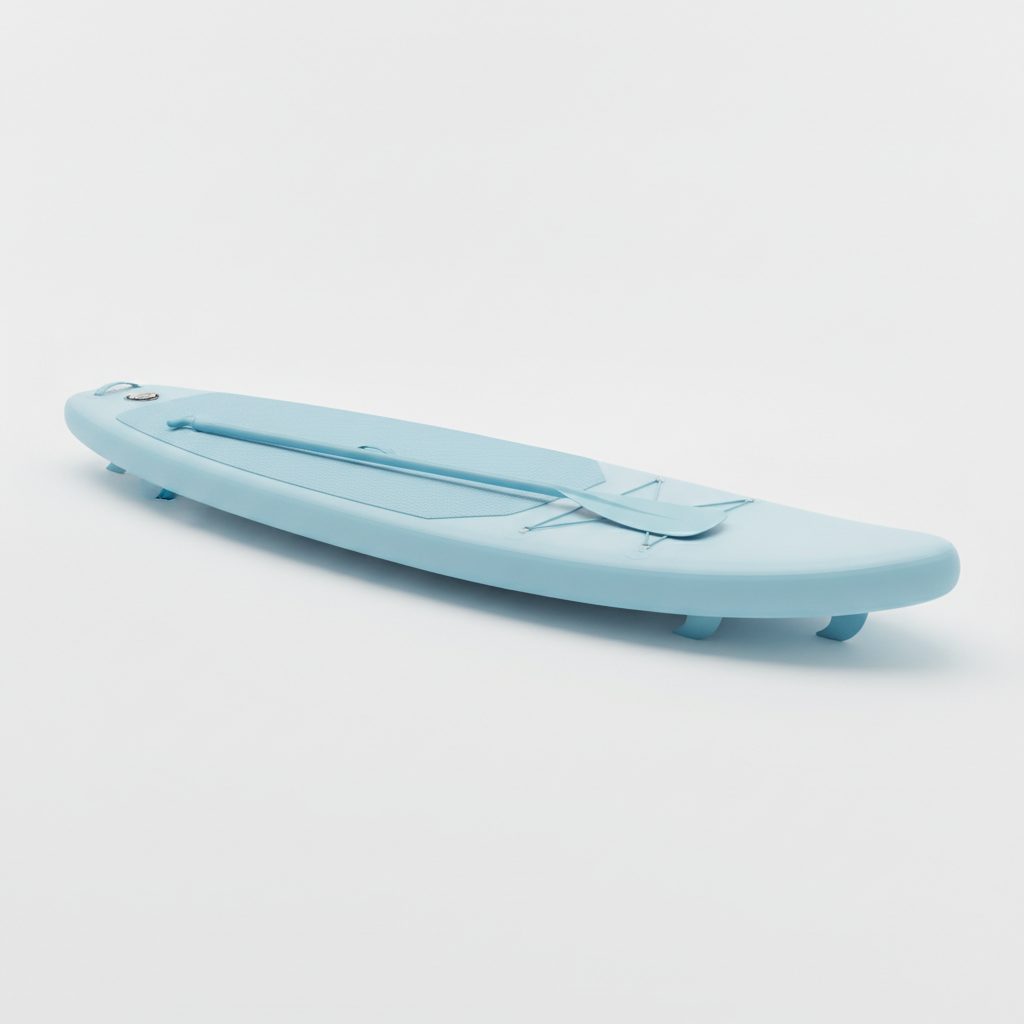
Glide Lotus Review
The Glide Lotus is one of the most purpose-built yoga iSUPs we've tested — absurdly stable, beautifully padded, and built to last. The premium price is real, but so is the quality.
Yoga on a paddle board sounds like a gimmick until you actually try it on the right board. Most all-around iSUPs tolerate yoga; the Glide Lotus is genuinely designed for it. At 10’8″ long and a full 35 inches wide, it gives you more standing room than a lot of studio yoga mats — and it floats the whole thing on open water.
We’ve paddled and practiced on the Lotus across flat lakes and calm bays, logging enough sessions to know where it excels and where it asks you to make trade-offs. Spoiler: the trade-offs are real, but for the right paddler they’re worth it.
If you’re still sorting out whether an inflatable is right for you at all, our best inflatable paddle board guide covers the full landscape. And if you’re specifically hunting for yoga-friendly options at multiple price points, start with our best paddle board for yoga roundup before committing to any single board.
Glide Lotus specs
| Length | 10’8″ |
| Width | 35″ |
| Thickness | 6″ |
| Capacity | ~400 lb |
| Type | Yoga / wide |
| Paddle | Included |
On the water — yoga stability
The first thing you notice on the Lotus is how little it wants to tip. That 35-inch width is doing a lot of work. We ran through a standard vinyasa flow — warrior sequences, balance poses, low lunges — and the board barely flinched. Choppier water introduced some wobble during single-leg poses, as it always does on any board, but on calm mornings the Lotus genuinely rewards you with a platform that feels closer to a floating dock than a SUP.
Credit goes partly to the 6-inch thickness, which keeps the board riding high and distributes weight evenly across the inflated hull. At max PSI (the Glide spec calls for 15 PSI), the deck has almost no flex underfoot during transitions. We weighed in our test crew between 140 and 210 lbs and all reported the same confident, locked-in feel during flows.
For fitness use beyond yoga — stretching, Pilates-style core work, resistance band routines — the wide platform is equally forgiving. Standing balance drills that would send you into the water on a 32-inch touring board are genuinely doable here. According to the U.S. Coast Guard’s boating safety guidelines, wearing a PFD is required in most jurisdictions even on SUPs, so we kept a belt pack clipped on during all water sessions — easy enough given how stable the Lotus kept us.
The full deck pad and build quality
Glide has been around long enough to know what a yoga paddler actually needs, and the deck pad on the Lotus reflects that. It runs the full length of the board, front to back, with no bare EVA gaps around the tail. The texture is firm enough to grip bare feet during poses but forgiving enough that kneeling doesn’t leave marks after a long session. We tested this over 90-minute practices and nobody complained about knee pain, which is the real benchmark.
The drop-stitch construction feels dense and well-finished. Seams are clean, the PVC skin shows no delamination or bubbling after repeated inflation cycles, and the valve seats flush without any air bleed. Glide backs this with a warranty program that reflects genuine confidence in the build — not something you always see from brands that source generic overseas blanks and slap a logo on them.
The included kit is legitimately complete: an adjustable fiberglass-blend paddle, a dual-action hand pump, a wheeled backpack bag, a leash, and a fin. The paddle is functional rather than exceptional — experienced paddlers may want to upgrade to carbon — but for yoga-focused sessions where you’re doing more flowing than grinding miles, it does the job.
Beyond yoga — all-around use
Here’s where we have to be straight with you: the Lotus is wide by design, and width costs you paddling efficiency. If you picture yourself doing long open-water crossings, keeping pace with recreational paddlers on narrower all-arounders, or covering distance quickly, this board will frustrate you. Our test paddler who normally rides a 31-inch touring board clocked noticeably more effort per mile on the Lotus and called it “like paddling a barge” — affectionately, but accurately.
For casual flat-water paddling — puttering around a lake, keeping up with kids, crossing a small bay to a sandbar — it’s perfectly capable. It tracks reasonably straight with the center fin installed, and the 400 lb capacity means you can bring a pet, a toddler, or a cooler without stressing the hull. If you want a more versatile daily driver, check our paddle board size chart to see how width and length trade-offs actually play out across different use cases.
At 26–28 lbs (depending on configuration), it’s also on the heavier side for an iSUP. Getting it from the car to the water is a two-trip situation unless you’ve got help or use the backpack. That’s worth factoring in if you’re a solo paddler with a long carry to the launch.
Who it's for (and who should skip it)
Buy the Glide Lotus if yoga, Pilates, or fitness-on-water is your primary reason for owning a SUP. It’s also a strong pick if you paddle with beginners or kids who need a forgiving, ultra-stable platform, or if you’re a larger paddler who finds narrower boards feel tippy. The build quality justifies the ~$700 ask if you plan to actually use it — Glide boards hold up over seasons in a way that cheaper inflatables don’t.
Skip it if you want one board that does everything. The width penalty is real for fitness paddling, touring, or any session where covering water matters. Paddlers who split time between yoga sessions and longer recreational paddles would be better served by a quality 32-inch all-around iSUP and accepting slightly less yoga stability. Also skip it if budget is tight — there are capable yoga-friendly boards in the $400–$500 range that close some of the gap, even if they don’t quite match the Lotus on deck pad quality or build longevity.
At the end of the day, the Lotus does one thing exceptionally well and does it better than almost anything else in the inflatable category. That’s worth an 8.5 from us — high marks with honest caveats attached.
What we liked
- Exceptional stability for yoga and fitness — 35-inch width is genuinely class-leading
- Full-length deck pad covers the entire board, no bare spots for knees or feet
- 400 lb weight capacity handles larger paddlers, passengers, or gear
- Solid Glide build quality — clean seams, dense drop-stitch, durable PVC
- Complete kit included (paddle, pump, bag, leash, fin) — nothing extra to buy to get on the water
- Established US brand with real warranty support
The catches
- Premium price (~$700) puts it out of reach for casual or first-time buyers
- 35-inch width makes distance paddling slow and tiring compared to narrower boards
- Heavier than average iSUP — solo carry from car to water is a workout in itself