
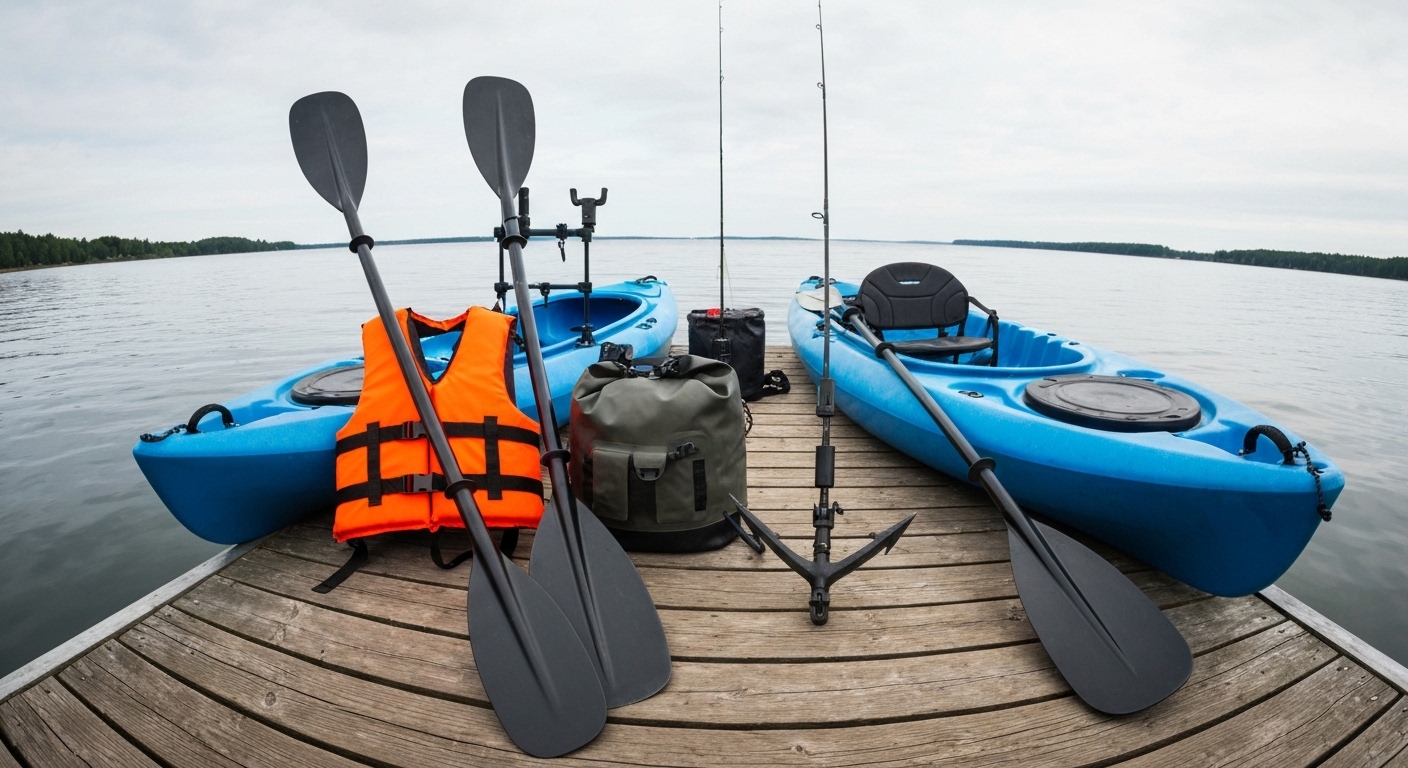
Best Kayak Accessories of 2026
Best Kayak Accessories of 2026 — Must-Have Gear
See the top picks →You bought the kayak. Now what? The right accessories are the difference between a frustrating trip and a day you want to repeat every weekend. We’re not talking about gimmicks — we mean the gear that keeps you safe, keeps your stuff dry, and actually makes paddling easier. Whether you’re chasing bass on a flat reservoir or exploring a coastal estuary, these six picks cover the essentials without blowing your budget. Every item on this list has been selected for real-world usefulness, not because it looks good in a product photo. Check out our best fishing kayaks guide if you’re still shopping for the boat itself.
At a Glance
| Item | Best for | Specs | Price |
|---|---|---|---|
| NRS Chinook Fishing PFD | Best Life Jacket | Fishing PFD | high-back | USCG-approved | ~$140 |
| Bending Branches Angler Classic | Best Paddle | Angler paddle | hook retrieval notch | lightweight aluminum/fiberglass | ~$120 |
| Gradient Fitness Anchor Kit | Best Anchor | 3.5 lb folding grapnel anchor | rope included | buoy marker | ~$30 |
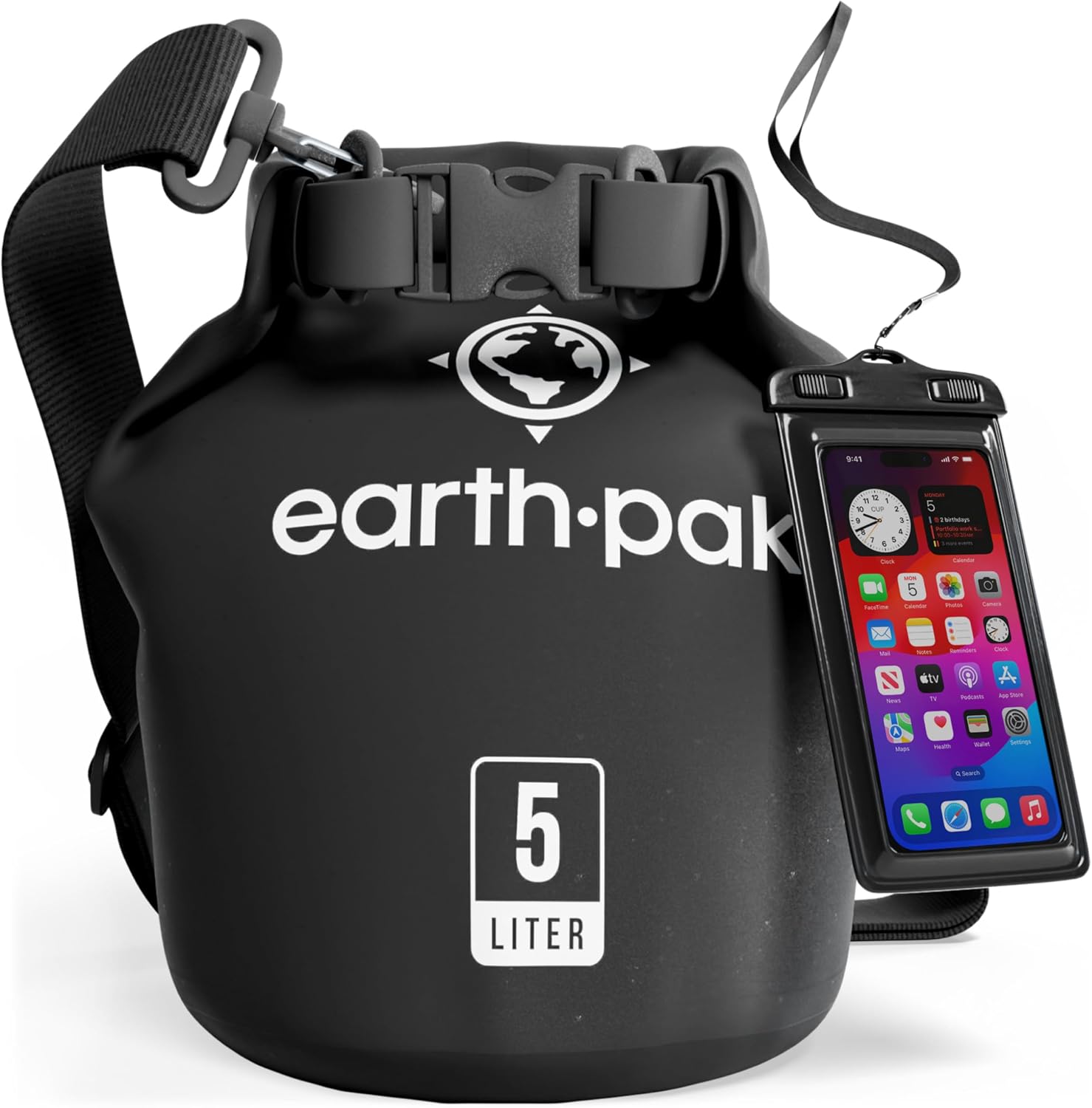
| Earth Pak Dry Bag | Best Dry Bag | Roll-top waterproof | multiple sizes | floats when sealed | ~$25 |
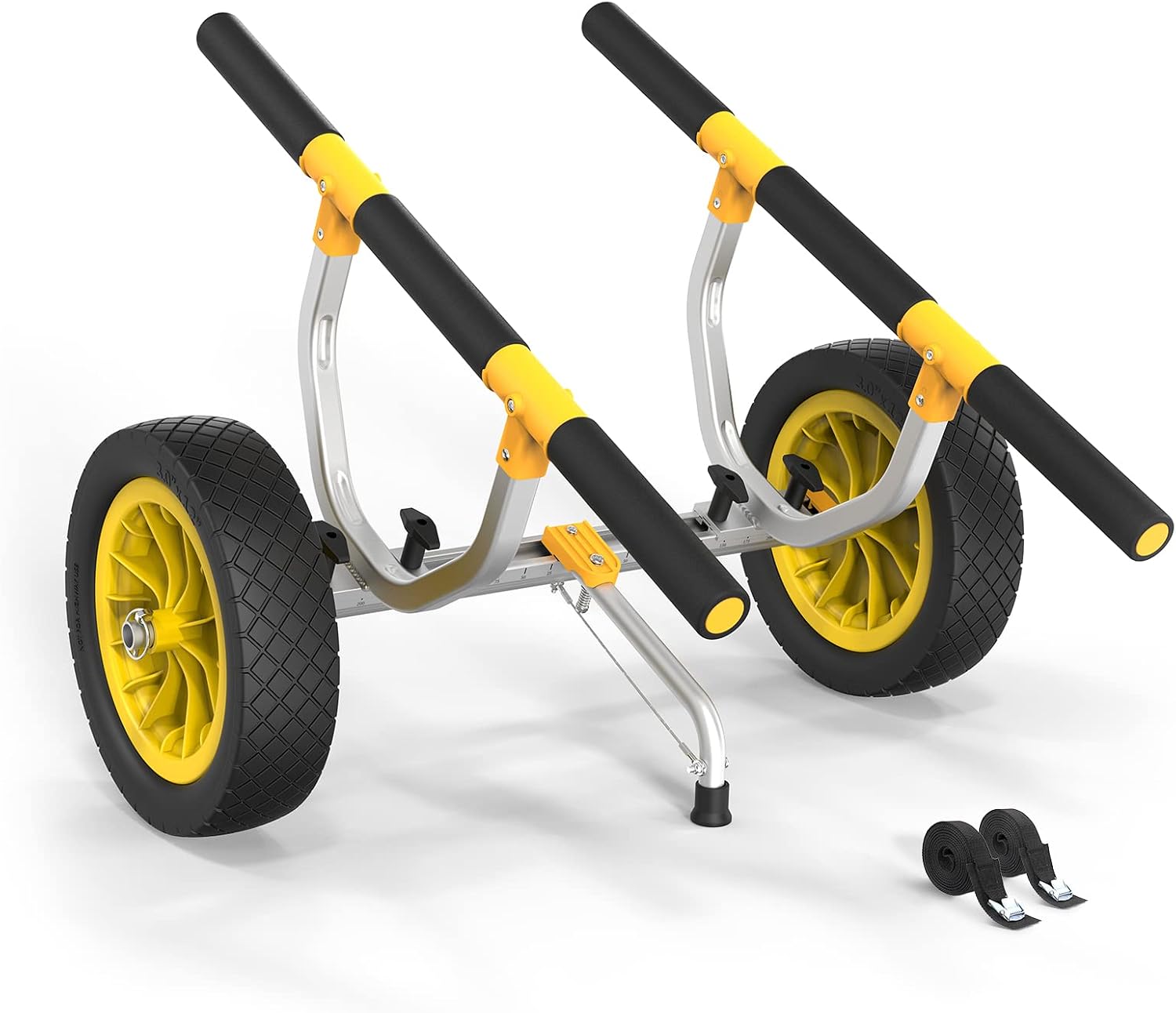
| Bonnlo Kayak Cart | Best Cart | Folding trolley | no-flat foam wheels | adjustable cradles | 165 lb capacity | ~$70 |
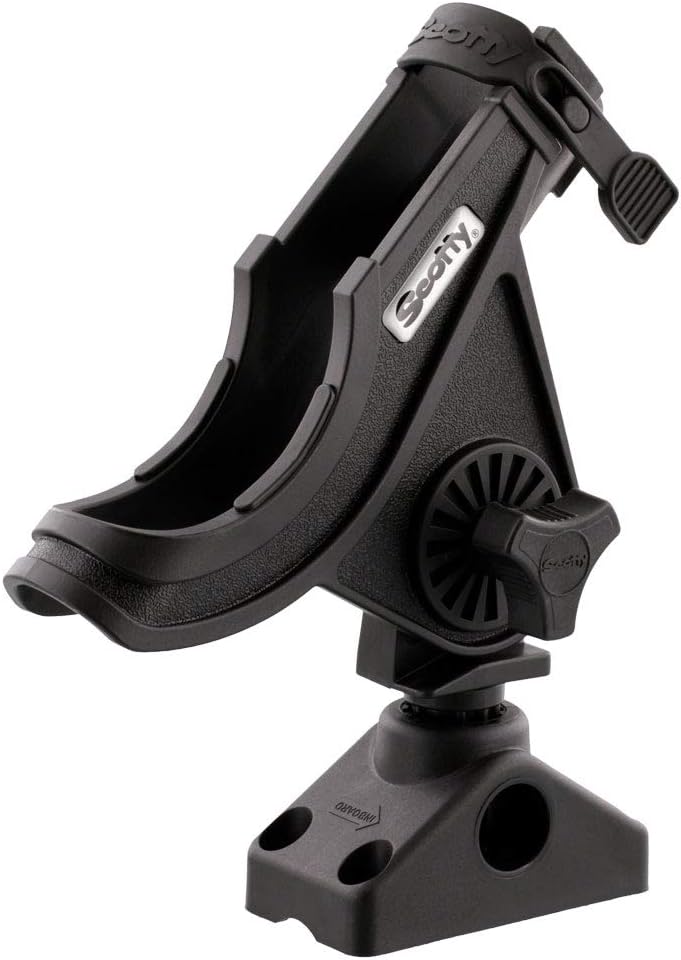
| Scotty Baitcaster Rod Holder | Best Rod Holder | Mountable | adjustable angle | fits most rod handles | universal base compatible | ~$30 |
The Top Picks, Reviewed
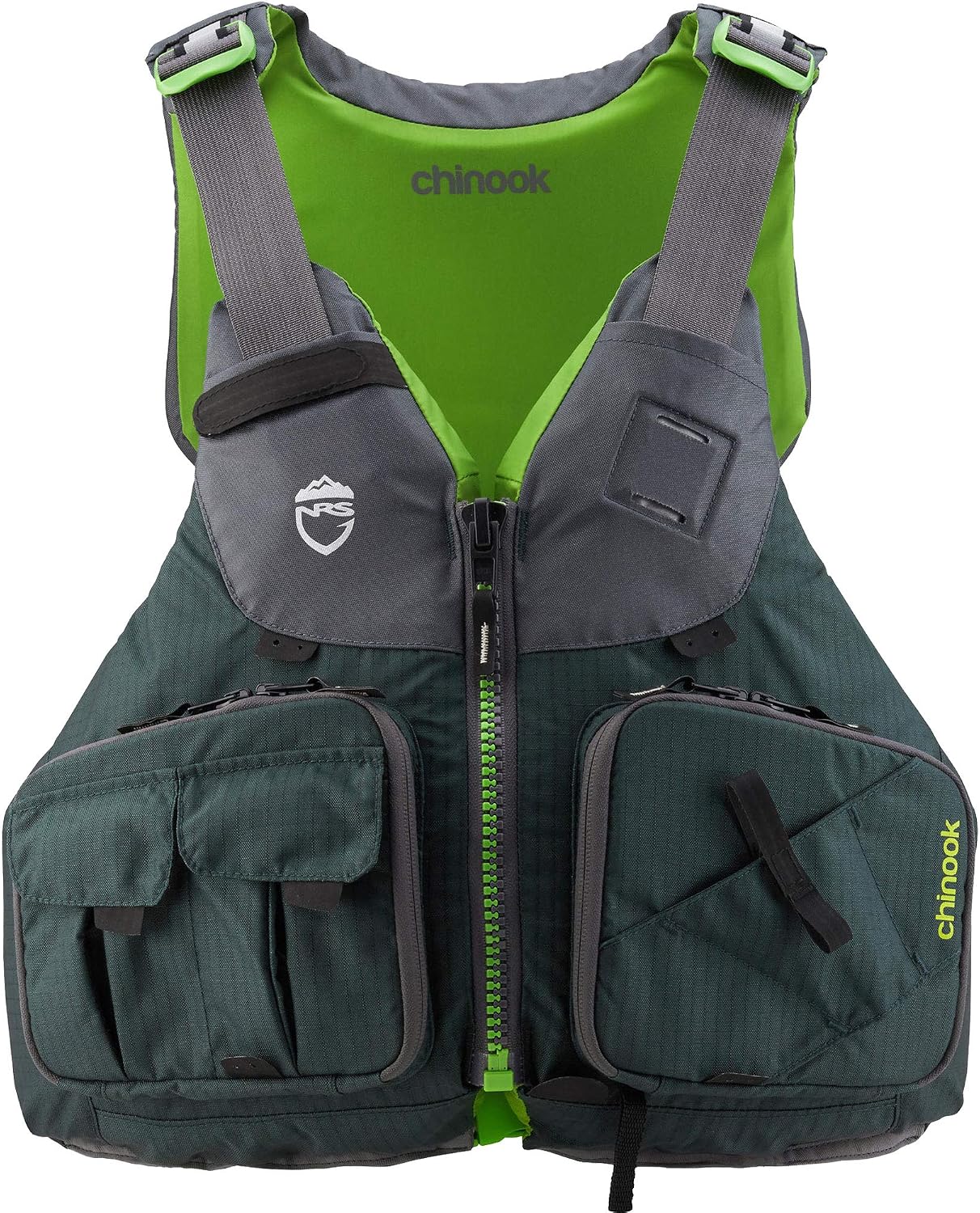
NRS Chinook Fishing PFD
The NRS Chinook is purpose-built for kayak fishing — the high-back design sits clear of a kayak seat so you’re not squirming all day, and it’s stacked with pockets for pliers, tippet, and tackle. The mesh back panel lets airflow through on warm days, which matters when you’re sitting still waiting for a bite. It’s USCG-approved, so it counts as your required flotation device. If you only buy one item on this list, make it a quality PFD — no fish is worth your life. Read up on PFD & life jacket rules before you hit the water.
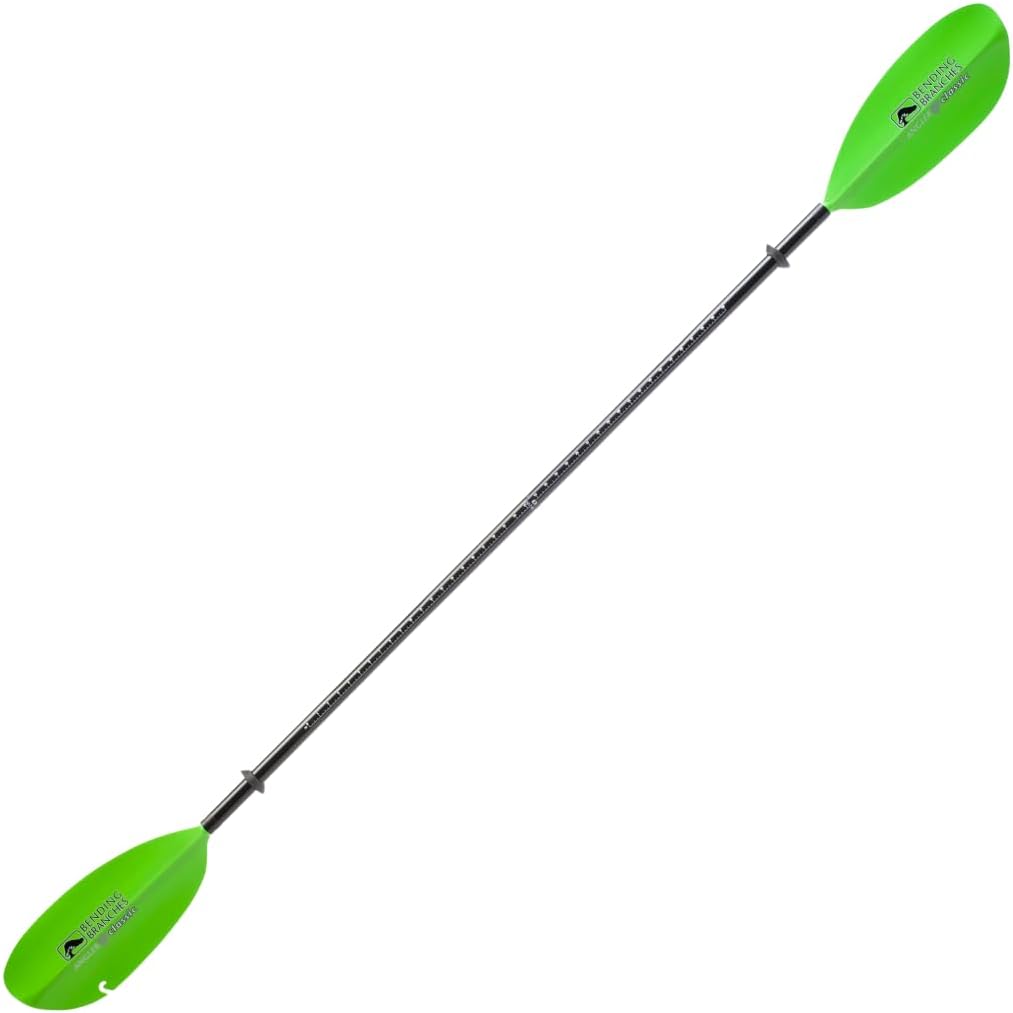
Bending Branches Angler Classic
Most entry-level paddles are heavy, flexy, and just plain annoying after a few miles. The Bending Branches Angler Classic solves that without asking you to spend paddle-board money. It’s well-balanced, light enough that your shoulders don’t ache by noon, and it has a built-in hook retrieval notch on the blade — a small detail that saves a lot of frustration. The durable construction holds up to being dropped on rocks, leaned against gunwales, and generally treated like the tool it is. A great paddle makes every stroke feel less like work.
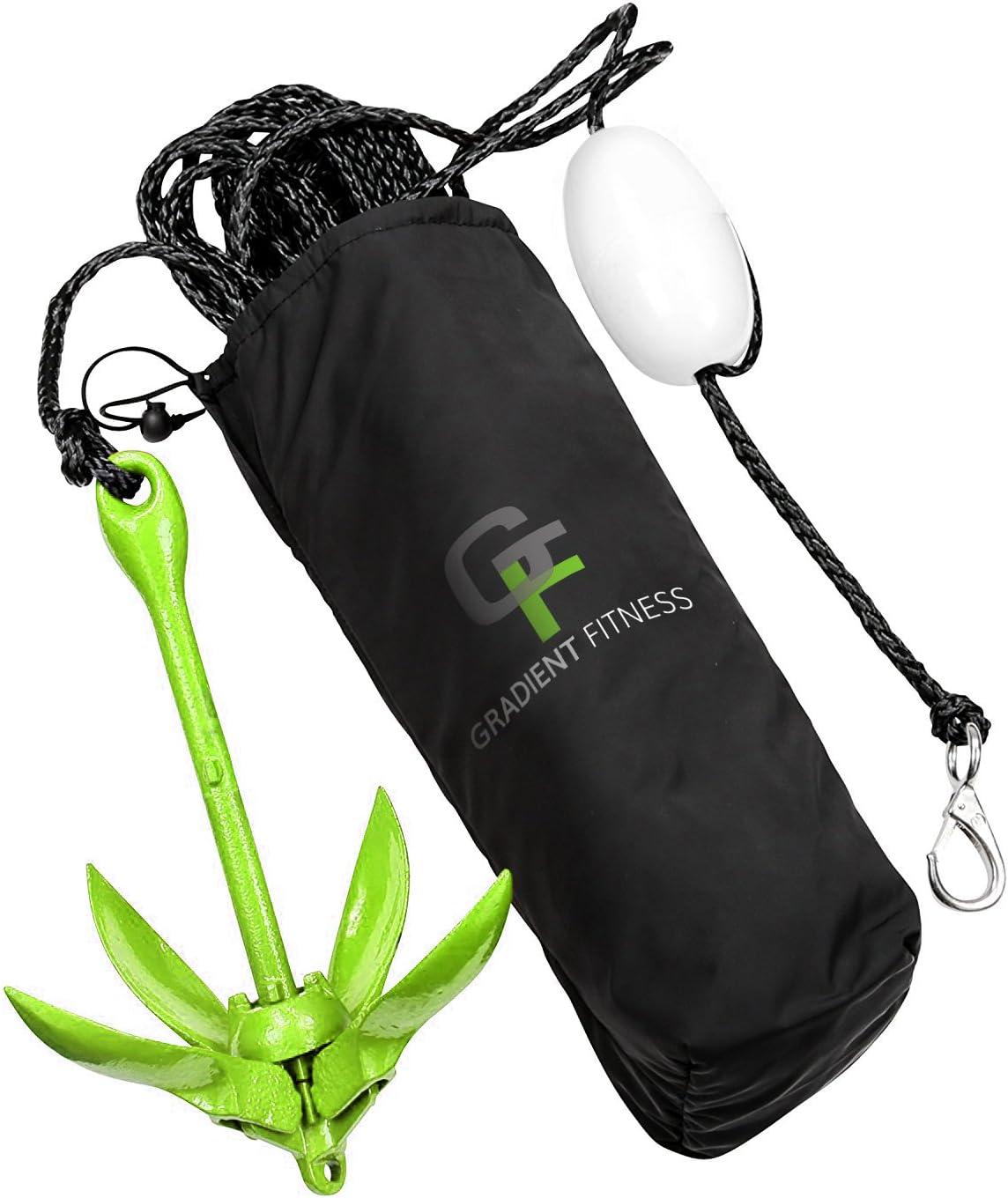
Gradient Fitness Anchor Kit
Drifting off your spot is one of the most annoying things about kayak fishing, and a $30 anchor kit fixes it completely. The Gradient Fitness set includes a 3.5-pound folding grapnel anchor, a length of rope, and a buoy — everything you need to lock onto structure and stay there. The grapnel folds flat for storage so it’s not taking up cockpit space on the way out. It holds well on rocky or weedy bottoms, which are exactly the spots fish like to hang out. Simple, affordable, and genuinely useful.
Earth Pak Dry Bag
Your phone, wallet, and car keys have no business being in an open cockpit on the water — full stop. The Earth Pak roll-top dry bag is the affordable fix: seal it, toss it in the kayak, and stop worrying. The welded seams are genuinely waterproof (not just water-resistant), and the bag will float if it goes overboard, which means your stuff is recoverable. It comes in multiple sizes; the 10L is perfect for a day’s essentials. At $25, there’s no excuse not to have one. If you’re shopping for your first kayak too, our best beginner kayaks guide pairs well with this.
Bonnlo Kayak Cart
Dragging a 55-pound kayak across a gravel parking lot or down a sandy beach is a miserable way to start a paddle day. The Bonnlo cart has no-flat foam wheels that roll over rough terrain without going soft, and the adjustable cradles fit most hull shapes without scratching. It folds down small enough to wedge behind your seat or bungee to the deck. Your back will thank you on trip one. It’s one of those accessories that seems unnecessary until you use it — then you can’t imagine not having it.
Scotty Baitcaster Rod Holder
Holding a rod in your lap while you paddle is a great way to snap a tip or miss a strike. The Scotty Baitcaster rod holder mounts to a Scotty base (sold separately, widely available) and holds your rod at an adjustable angle so you can troll or watch a bobber hands-free. It’s the kind of accessory serious kayak anglers treat as non-negotiable. The build quality is solid — Scotty has been making rod holders for decades and they don’t feel cheap. Pair it with an anchor kit and you’ve got a legitimate fishing setup without spending kayak money.
The Non-Negotiables: What You Actually Need Before You Launch
There are three items that belong on every kayak, every single time: a PFD (personal flotation device), a leash, and a whistle. These aren’t suggestions — in most states, they’re the law, and more importantly, they’re what keeps a bad situation from becoming a tragedy.
PFD: A life jacket only works if you’re wearing it. The NRS Chinook above is a great option for anglers, but any USCG-approved Type III PFD does the job. The key is fit — it should be snug enough that it won’t ride up over your face in the water. Read our full breakdown of PFD & life jacket rules to understand what’s required where you paddle.
Paddle leash: Lose your paddle in moving water or a sudden wind gust, and you’re in real trouble. A simple coiled leash clips your paddle to your wrist or the kayak — costs under $15 and takes 10 seconds to attach.
Whistle: Coast Guard regulations require a sound-producing device on any human-powered vessel. A pealess whistle (like the Fox 40) clips to your PFD and carries a long way over water. It’s how you signal for help when your voice won’t cut through wind and distance.
Nice-to-Haves That Quickly Become Essentials
Once you’ve covered the safety basics, a few more accessories transform the experience from “this is fine” to “I’d rather be nowhere else.”
Dry bag: The Earth Pak above is our top pick, but any roll-top waterproof bag works. Put your phone, keys, wallet, and any electronics in it before you launch — every time, without exception. Even a calm-water paddle can turn into an unexpected swim.
Kayak cart: If you’re launching from anything other than a boat ramp right next to your car, a cart saves your back and your hull. Gravel lots, sandy beaches, and uneven terrain are brutal without one.
Bilge pump: A hand bilge pump fits behind your seat and lets you clear water from your cockpit after a wave or a capsize. Inexpensive and compact — worth keeping onboard.
Waterproof phone case or mount: Even if your phone is in a dry bag, a mounted waterproof case means GPS navigation and music without digging through your gear. A quality RAM or Scotty mount keeps your phone visible and protected at the same time.
Fishing-Specific Gear Worth the Investment
If you’re rigging a fishing kayak specifically, a few more items earn their keep quickly. Check out our best fishing kayaks guide to make sure your boat is set up to support these add-ons.
Rod holders: The Scotty Baitcaster above is the standard for good reason. Mount one or two on your kayak and you’ve got hands-free trolling, a place to rest your rod during a paddle sprint, and the ability to manage multiple setups at once.
Anchor system: A drift sock or anchor kit keeps you positioned over structure without burning energy paddling against wind and current. The Gradient Fitness kit above is the budget-friendly way in. More serious setups use a dedicated anchor trolley system, which lets you reposition your anchor point without re-anchoring entirely.
Fish finder mount: If you use a fish finder (and once you try one, you won’t go back), a dedicated kayak mount keeps it stable and at the right viewing angle. RAM Mounts and YakAttack both make kayak-specific options that work with most popular fish finders.
Crate or milk crate system: A kayak crate in the stern well is old-school and still great — rod holders clip in, tackle boxes sit inside, and your whole setup is modular and swappable between boats.
Staying Safe on the Water: What the Gear Can't Do For You
Good gear reduces risk, but it doesn’t eliminate it. A few habits matter as much as any accessory on this list.
Tell someone your float plan. Before every paddle, tell someone where you’re launching, where you’re going, and when you expect to be back. This is the single most important safety habit in paddling — and it costs nothing.
Check the weather, not just the forecast. Wind speed matters more than temperature for kayakers. A calm morning can turn into a 20-mph wind chop by early afternoon, especially on open water. Check marine forecasts if you’re on any body of water larger than a small pond.
Know your limits. New paddlers sometimes overestimate how quickly conditions can change and how much energy open-water paddling actually takes. Start close to shore, in calm water, and work your way up to bigger challenges as your skills develop. Our best beginner kayaks guide is a good starting point for those just getting into the sport.
Dress for the water temperature, not the air temperature. Cold water is far more dangerous than cold air. Hypothermia can set in quickly after a capsize — a wetsuit or drysuit is the right call on any paddle where water temperature is below 60°F.