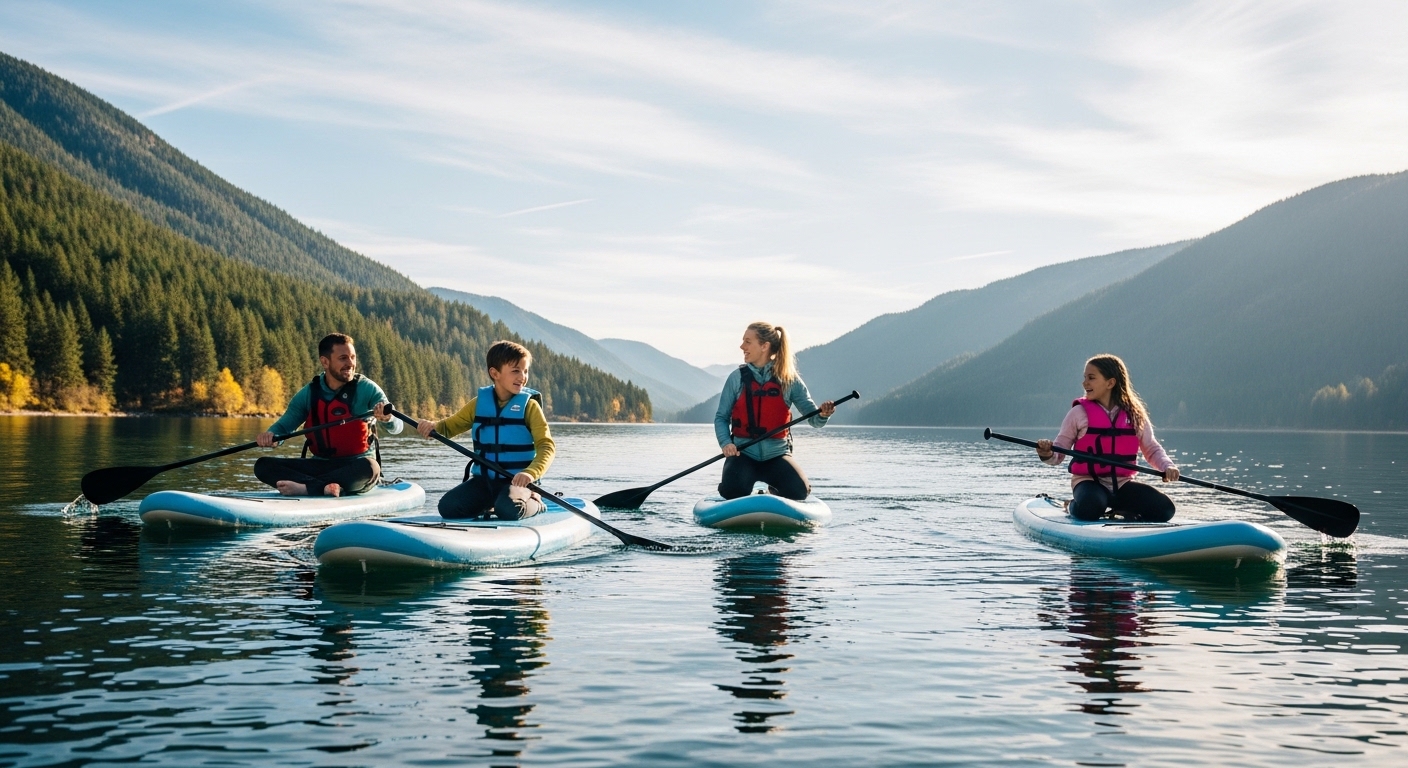
Why Paddleboarding is the Perfect Family Activity
One board, some sunshine, and the whole family together — paddle boarding might just be the outdoor hobby you've been looking for.
Finding an activity that actually works for everyone — the restless six-year-old, the skeptical teenager, and the parents who haven’t done anything athletic since college — is surprisingly hard. Paddleboarding manages to pull it off. It’s gentle enough for beginners but engaging enough that nobody gets bored. It gets everyone off screens and into fresh air. And it creates the kind of unhurried, side-by-side time that families don’t get nearly enough of. Here’s why SUP (stand-up paddleboarding) has become one of the most family-friendly outdoor activities around — and how to make it work for your crew.
Every Age Can Join In
One of the biggest challenges with family hobbies is that someone always gets left behind — either the little ones can’t keep up, or the adults are bored doing something too simple. Paddleboarding sidesteps that problem almost entirely.
Toddlers and young kids can ride along on a parent’s board, seated up front while Mom or Dad paddles. Most best 2-person paddle boards are wide and stable enough to carry an adult and a small child comfortably — some families fit two kids on a single board with room to spare. Older kids (roughly six and up, depending on the child) can learn to paddle their own board in a single afternoon. Teens tend to love it because there’s genuine skill involved — balancing, reading the water, picking up speed — and they can progress at their own pace. Adults of any fitness level can enjoy a gentle paddle, and grandparents often find it more accessible than hiking or biking because there’s no jarring impact on joints.
The result is a rare activity where a seven-year-old and a sixty-five-year-old can genuinely enjoy the same outing, at the same time, in the same place.
Low Barrier to Entry — Anyone Can Learn
A lot of outdoor activities that look fun from the shore take months to feel comfortable. Paddleboarding is different. Most beginners — adults and kids alike — can stand up and paddle in a straight line within the first thirty minutes on calm water. There’s no motor to manage, no complex technique to memorize before you can have fun, and falling in (which will happen) is almost always harmless and usually hilarious.
The learning curve is gentle by design. Wide, inflatable boards are incredibly stable, so the initial fear of tipping over fades quickly. Kids especially adapt fast — their lower center of gravity actually gives them a balance advantage over adults. If you want to give your family a proper foundation, a solid how to paddleboard guide covers the basics: stance, paddle grip, stroke technique, and how to get back on after a fall. But even without formal instruction, most families figure out the fundamentals naturally within a session or two.
Genuinely Affordable Compared to Other Family Hobbies
Family hobbies have a way of getting expensive fast. Ski trips, youth sports leagues with gear and travel, theme park passes, boating — the costs stack up in ways that can make outdoor recreation feel exclusive. Paddleboarding has a much more accessible price structure once you own gear.
A quality inflatable board runs anywhere from $400 to $800. That sounds like real money upfront, but consider what you’re buying: years of use, no ongoing fees, no lift tickets, no memberships. Most lakes, rivers, and coastal access points are free. The per-outing cost, spread over a season of regular use, is genuinely low. And because boards last — inflatables in particular are durable and easy to store — the initial investment pays off over many summers.
For families just testing the waters (literally), rentals are a smart first step. Most paddleboard rental shops charge $20–$40 per board per hour, which gives you a low-stakes way to find out if the whole family enjoys it before buying anything.
Choosing the right board matters too. For beginners, best beginner boards that prioritize stability over speed will make early sessions far more enjoyable — and reduce frustration for kids who are still finding their balance.
Screen-Free Time That Doesn't Feel Like a Punishment
Getting kids away from screens is one of those parenting goals that sounds simple and is anything but. Telling a child to “go outside” while their phone sits on the counter usually ends in a standoff. But take that child to a lake with a paddleboard, and something different happens.
The water demands attention in a way a backyard doesn’t. There’s always something to watch — a fish breaking the surface, a heron standing at the shoreline, the way light moves across the water. There’s a physical challenge to stay engaged with. And there’s the simple pleasure of being somewhere beautiful, moving through it under your own power.
Families consistently report that paddleboarding produces the kind of easy, unforced conversation that’s hard to manufacture at home. Side by side on the water, without the usual distractions, kids talk. Parents listen. It’s not magic — it’s just what happens when there’s nothing else competing for attention.
It Builds Real Confidence and Skills
There’s something meaningful about learning to balance on moving water and actually succeeding. For kids especially, paddleboarding delivers a genuine sense of accomplishment that translates beyond the water.
The progression is natural and satisfying. First they stand up. Then they paddle in a straight line. Then they figure out how to turn. Then they start exploring further from shore. Each step builds on the last, and every new milestone is something they earned through practice and persistence — not something handed to them. That’s exactly the kind of healthy challenge kids need more of.
Paddleboarding also builds body awareness, core strength, and balance in ways that carry over into other sports and activities. Kids who paddleboard regularly tend to develop better proprioception — the sense of where their body is in space — which helps with everything from soccer to gymnastics to simply not tripping over their own feet.
For anxious kids or those who struggle in competitive sports environments, SUP offers something rare: a non-competitive space where progress is entirely personal. There’s no score, no team to let down, no pressure. Just you and the water and the quiet satisfaction of getting a little better each time out.
If your family includes younger children who want their own board experience alongside you, our guide on paddle boarding with kids has specific advice on age-appropriate boards, how to handle varying skill levels in the same group, and how to keep the experience positive for everyone.
Safety Is Simple — and Shouldn't Be Skipped
Paddleboarding is a genuinely safe activity when handled sensibly. The risks are real but manageable, and basic precautions make a huge difference.
PFDs for everyone. Life jackets are non-negotiable for children, and adults should wear them too — or at minimum have one within reach on the board. This isn’t being overcautious; it’s the law in many states for anyone under 13, and it’s simply good sense on the water. Kids’ PFDs come in bright colors, fit well over swimsuits, and don’t restrict movement the way older designs did.
Leash up. A board leash keeps the board attached to the paddler if they fall. Without a leash, the board can drift quickly — especially if there’s any wind or current. For beginners on calm flat water, a coiled leash is ideal.
Choose calm water for family sessions. Open ocean, moving rivers, and areas with heavy boat traffic are not beginner family territory. A flat lake, a calm bay, or a sheltered cove is the right starting point. Save more dynamic water for when everyone has built real confidence.
Sun and hydration. Paddling in open sun is more taxing than it looks. Bring water, apply sunscreen before you get on the water (not after you’re already out there), and consider sun-protective clothing for kids — especially for longer outings.
How to Get Your Family Started
The easiest first step is a rental. Find a local outfitter or lake concession, rent a few boards for an hour or two, and see how the family takes to it. Most rental operations will give you a quick safety rundown and point you toward the best beginner-friendly stretch of water. This is a low-commitment way to find out whether paddleboarding is going to become a family staple before you invest in gear.
If the family is enthusiastic after that first rental, buying makes sense. For a family with mixed ages and skill levels, the priority is stability. Wide boards (32 inches or more) with good volume are forgiving for beginners and work well for carrying younger passengers. Inflatable boards are ideal for families — they’re easy to transport, easier to store, and far more durable than rigid boards when kids are involved.
When it comes to locations, think flat and calm. A local reservoir, a small lake, or a protected bay are ideal. Many state parks have paddle-friendly water access, often free with a day-use fee. Urban paddlers often have more options than they realize — city parks with lakes, calm rivers through town, or bay areas near marinas frequently have rental operations and beginner-friendly conditions.
Once the family has a few sessions under their belt, the possibilities expand quickly. Paddle to a picnic spot. Explore a new lake. Let the kids lead the route. The activity grows with your family’s confidence, and the memories start accumulating before you even notice it happening.
Frequently Asked Questions
What age can kids start paddleboarding?
Is paddleboarding safe for kids who can't swim well?
What kind of board is best for a family just starting out?
How much does it cost to get a family into paddleboarding?
What's the best type of water for a family's first paddle session?
Paddle boarding with kids →Best 2-person boards →Best beginner boards →How to paddleboard →