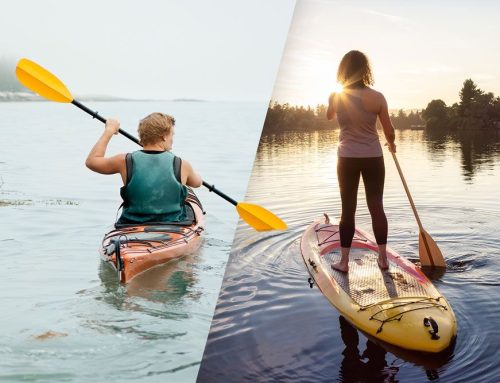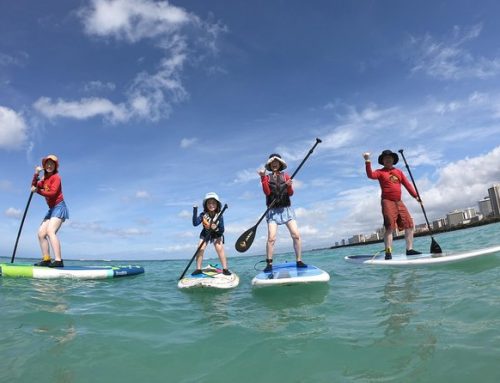
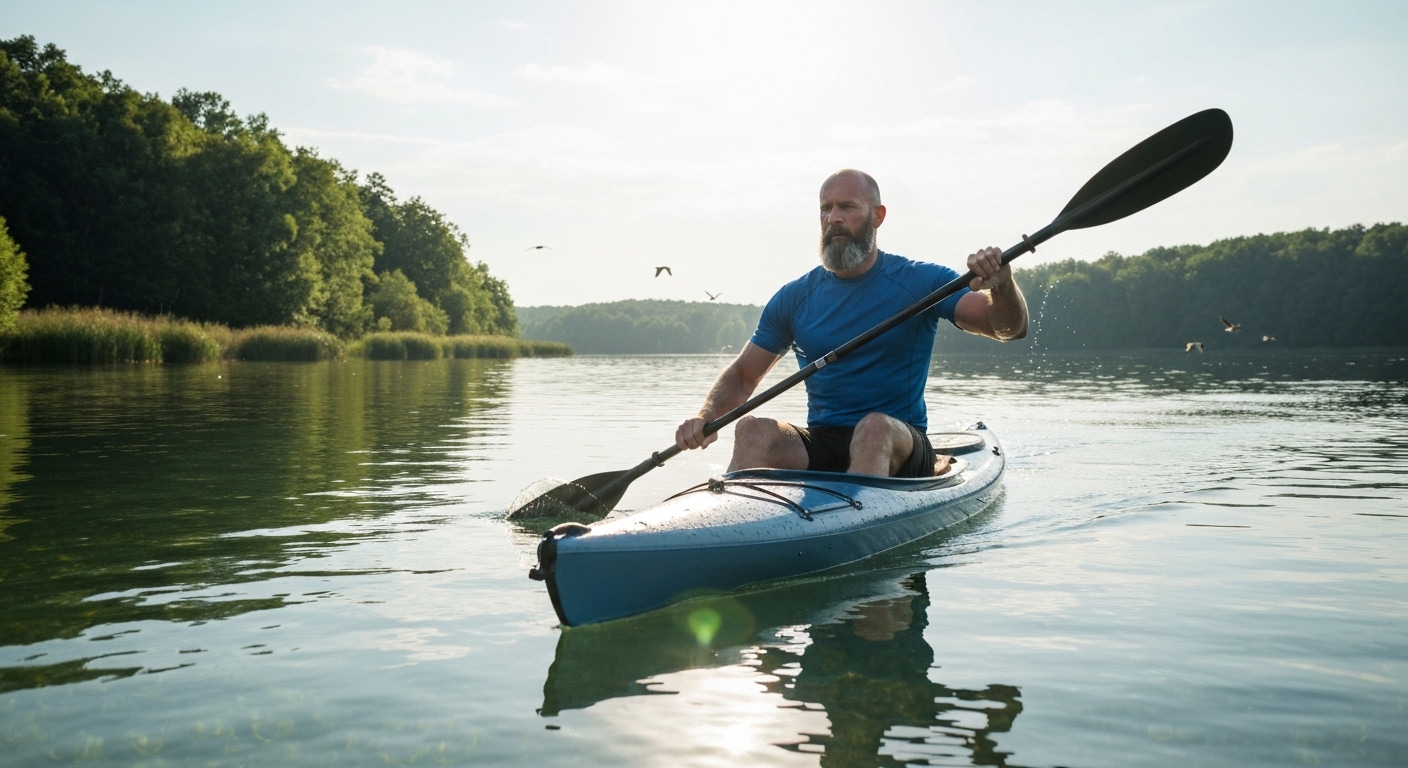
Kayaking is Good for Your Health: Wellness on the Water
Paddling a kayak works your body and calms your mind. Here's the science behind why time on the water is genuinely good for you.
You don’t need a gym membership or a complicated fitness plan to take care of your health. Sometimes all it takes is a paddle, a boat, and a stretch of open water. Kayaking has been quietly delivering full-body workouts and serious mental health benefits to people of all ages for decades — without the joint punishment of running or the monotony of the treadmill. This article breaks down exactly what happens to your body and mind when you paddle regularly, and why it’s one of the most accessible forms of exercise out there.
Low-Impact Cardio That's Easy on Your Body
One of the biggest knocks against conventional cardio is the wear and tear it puts on your joints. Running, jumping, and high-impact aerobics are effective, but they come with real risk of knee, hip, and ankle injuries — especially if you’re heavier, older, or recovering from something. Kayaking sidesteps all of that.
When you paddle, your lower body stays largely stationary and supported. The propulsive work happens through your torso rotation, arms, and shoulders, keeping impact forces on your knees and hips close to zero. Yet your heart rate climbs. A moderate paddling pace — think recreational touring on flat water — can push your heart rate into the aerobic training zone (roughly 50–70% of max heart rate) without you ever feeling like you’re grinding through a workout.
Over time, consistent aerobic exercise in this zone improves cardiovascular efficiency: your heart pumps more blood per beat, resting heart rate drops, and your body gets better at using oxygen. These are the same adaptations you get from cycling or swimming, delivered in a format that most people genuinely enjoy.
Upper Body and Core Strength You'll Actually Notice
Kayaking is often described as an upper-body workout, and that’s true as far as it goes — but the real engine of an efficient paddle stroke is your core. Every time you plant a blade and pull through, you’re rotating your torso, engaging your obliques, and stabilizing through your lower back. Done correctly, it’s closer to a full-body movement than an isolated arm exercise.
The muscles doing the most work include the latissimus dorsi (the large back muscles that give paddlers that characteristic V-shape), rhomboids, trapezius, deltoids, biceps, and the full suite of core stabilizers: rectus abdominis, obliques, and erector spinae. Your forearms and grip strength get a workout too, which has downstream benefits for everyday tasks and hand health as you age.
What makes this particularly valuable is that paddling trains these muscles through a long, functional range of motion rather than isolated, machine-guided movements. That translates into real-world strength — the kind that helps you carry groceries, lift luggage, and stay upright on unstable surfaces.
If you’re just getting started and want equipment that fits your body correctly for efficient paddling, our guides to best recreational kayaks and best beginner kayaks can help you find the right fit.
Calorie Burn and Weight Management
Exact calorie burn depends on your body weight, paddling intensity, water conditions, and how efficiently you paddle. That said, moderate recreational kayaking typically burns somewhere between 280 and 400 calories per hour for a 150–180 lb person. Pick up the pace, add some headwind, or switch to a sea kayak tour with loaded gear, and that number climbs meaningfully.
That puts kayaking roughly in the same caloric-expenditure territory as cycling at a moderate pace or hiking on flat terrain — not extreme, but consistent and sustainable. And sustainability is the thing that actually matters for long-term weight management. Activities people enjoy are activities they repeat. An activity you do twice a week for years will do far more for your weight and metabolic health than an intense program you abandon after two months.
Kayaking also builds lean muscle mass (particularly in the back, shoulders, and core), and muscle tissue burns more calories at rest than fat tissue. The combination of aerobic calorie burn during paddling and increased resting metabolic rate from muscle development makes it a genuinely useful tool for anyone managing their weight over the long term.
Stress Reduction and the "Blue Mind" Effect
The mental health benefits of kayaking are as well-supported as the physical ones — and for many paddlers, they’re the primary reason they keep coming back.
Marine biologist Wallace J. Nichols popularized the concept of “blue mind” in his research on how proximity to water affects the brain. The core idea is that water environments — oceans, lakes, rivers, even large ponds — trigger a measurable shift in the brain toward calmer, more meditative neural activity. Being near, in, or on water tends to reduce the output of stress hormones like cortisol, lower heart rate and blood pressure, and promote a relaxed, present-focused state of awareness.
Kayaking delivers this effect in a particularly concentrated form. You’re not just near water — you’re moving through it, reading its surface, responding to its currents and wind. That level of environmental engagement pulls your attention away from the mental chatter of work stress, to-do lists, and digital overload. The result is something that exercise scientists sometimes call “attention restoration”: your prefrontal cortex gets a break, and you return from a paddle feeling genuinely refreshed rather than just tired.
Research published in leading health journals, including resources from Harvard Health Publishing, consistently supports the mental health benefits of outdoor, nature-based exercise — particularly activities near water.
Mindfulness, Flow States, and Mental Clarity
Kayaking is one of those activities that rewards presence. When you’re on moving water, reading the current and adjusting your line, there is no room to ruminate about what you said in a meeting last Tuesday. The environment demands your attention, and that demand is actually a gift.
Psychologist Mihaly Csikszentmihalyi’s concept of “flow” — the absorbed, effortless engagement you feel when a challenge is well-matched to your skill level — maps perfectly onto kayaking. Beginners experience it when they first figure out how to control direction. Intermediate paddlers find it navigating a technical section of river or reading wind patterns on open water. The challenge scales with you, which means the mental benefit never plateaus.
This kind of focused, present-moment engagement is functionally similar to mindfulness meditation in its effects on the brain. Regular practitioners report lower baseline anxiety, improved ability to focus, and a stronger sense of mental clarity in daily life. You don’t have to sit still on a cushion to get those benefits — you can get them by paddling.
Better Sleep, Improved Mood, and Social Connection
Regular aerobic exercise is one of the most well-documented non-pharmaceutical interventions for improving sleep quality. It helps you fall asleep faster, spend more time in deep restorative sleep stages, and wake up feeling more rested. Kayaking checks that box — and it adds the amplifying effects of outdoor light exposure and physical fatigue from muscle use that differs from what your body does at a desk all day.
The mood benefits come from multiple directions at once. Aerobic exercise triggers endorphin release, the so-called “runner’s high” that actually applies to any sustained moderate-intensity cardio. Being outdoors in green-blue environments independently boosts mood through mechanisms researchers are still unpacking but that appear to involve both psychological (restorative attention, reduced mental fatigue) and physiological (air quality, light spectrum, circadian alignment) pathways. And the sense of accomplishment from developing a real skill — navigating a new route, handling chop confidently, executing a clean ferry across a current — builds self-efficacy that carries over into the rest of your life.
Then there’s the social dimension. Kayaking is inherently shareable. Most people paddle with partners, friends, or club groups. That social connection — research consistently shows it’s one of the most powerful determinants of long-term mental health and even longevity — is built right into the activity. A group paddle is a few hours of exercise, nature exposure, and genuine human connection packaged together.
Accessibility: Who Can Kayak?
One of the most underappreciated things about kayaking is how wide its tent actually is. It’s not a young person’s sport or an athlete’s sport. It’s genuinely available to a broad range of ages and physical abilities.
Older adults benefit enormously from kayaking’s low joint impact. Many people in their 60s, 70s, and beyond who can no longer run or play high-impact sports find that kayaking gives them a meaningful aerobic workout with zero pounding. Sit-on-top kayaks are particularly forgiving for people with limited mobility, as they’re easy to get into and out of without the awkwardness of a cockpit.
People with certain physical disabilities paddle competitively and recreationally. Adaptive kayaking programs exist in many cities for people with limb differences, spinal cord injuries, and other conditions. The sport is also relatively low-risk compared to many alternatives — making it a reasonable choice for people managing chronic conditions — though it’s always worth checking with your doctor first. You can also read our guide on is kayaking safe for a clear-eyed look at the actual risk profile and how to manage it sensibly.
Children as young as five or six can paddle sit-on-top kayaks with supervision. There is almost no upper age limit for calm-water recreational paddling if someone is in reasonable health. If you’re looking for the right starting point, browse our kayak guides for options suited to different body types, experience levels, and uses.