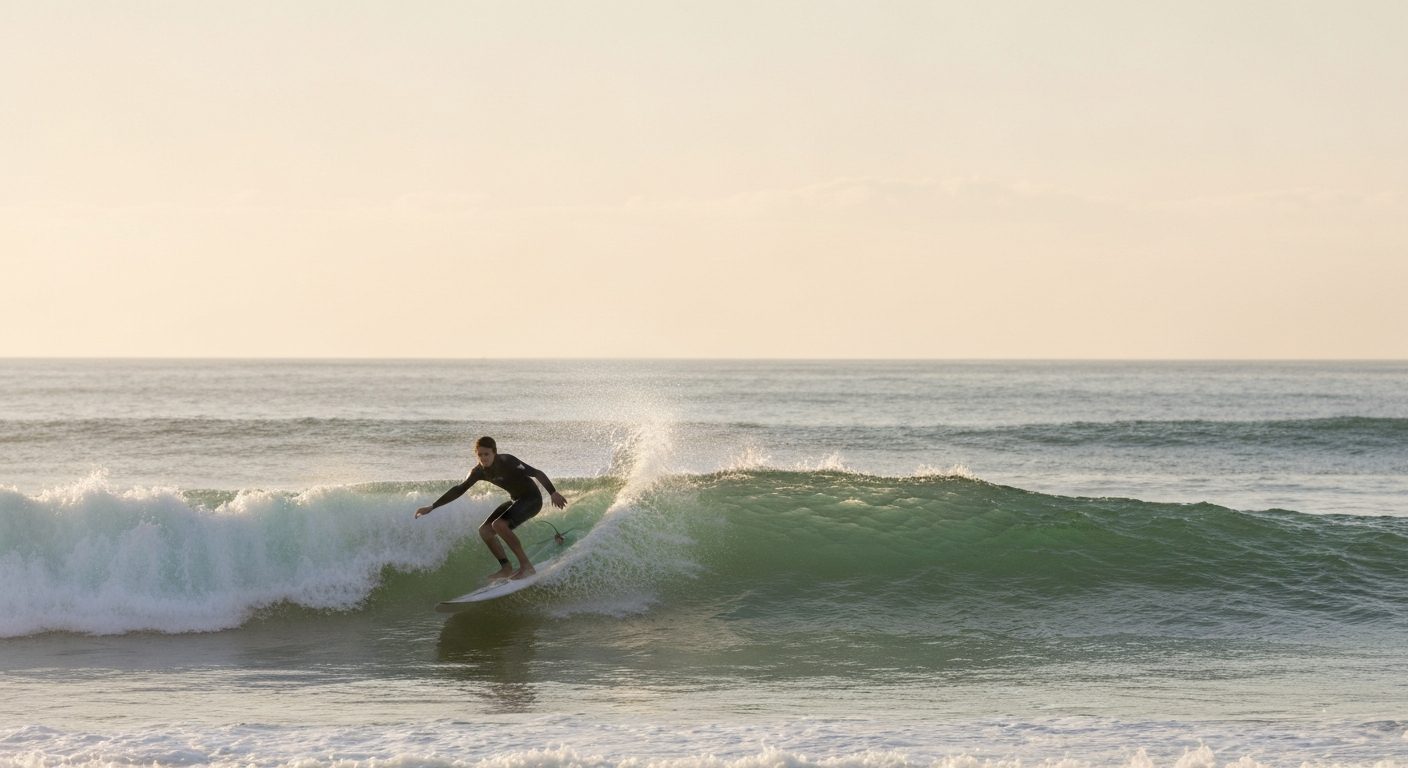
What is Surfing and Buying a Surfboard
Surfing is the act of riding ocean waves on a board — and once you catch your first one, very little else compares.
If you’ve ever watched someone glide across a breaking wave and wondered what exactly is going on — physically, historically, and practically — this is the page for you. We’ll give you a straight, no-fluff answer to the question “what is surfing” and point you toward everything you need to take the next step.
The Definition: What Surfing Actually Is
Surfing is a water sport in which a rider stands (or lies, kneels, or sits) on a buoyant board and uses the energy of an ocean wave to propel themselves across the water’s surface. The wave does the work — the surfer’s job is to position themselves correctly, match the wave’s speed, and then direct the board along the moving face of water before it breaks and closes out.
At its most basic level, surfing converts wave energy into forward momentum. A wave is essentially a pulse of energy traveling through water. When a surfer drops into that wave at the right angle, the slope of the wave face acts like a moving ramp — gravity pulls the board down the face while the wave simultaneously pushes forward from behind, creating a sustained ride.
That’s the physics. The feeling is something else entirely: a brief, weightless window where the ocean is doing exactly what you hoped it would, and your only job is to stay on the board and make it last as long as possible.
How Surfing Works: Paddle, Pop Up, Ride
Understanding surfing mechanically makes it a lot less mysterious. There are four stages to almost every wave ride:
- Paddling out: You lie prone on the board and use your arms to paddle through the whitewater and broken waves until you reach the lineup — the spot just beyond where waves are breaking. This is often the hardest part for beginners. Duck-diving (pushing the nose of the board underwater to pass under a breaking wave) is the key skill here.
- Waiting and reading: Once in the lineup, you watch the horizon for incoming swells. Good surfers learn to read wave sets — identifying which peaks are likely to break cleanly and where to position themselves to catch them.
- The catch (paddling in): When a wave approaches, you turn the board toward shore and paddle hard to match the wave’s speed. The moment the wave lifts the tail of your board and starts pushing you forward is the moment of commitment.
- The pop-up: You push up with both hands, bring your feet underneath you in one explosive motion, and stand up. Front foot roughly centered, back foot over the fins. This happens in under a second.
- Riding the face: Once standing, you shift your weight to steer. Leaning on your heels drives the board toward the wave’s face (toward the “peak”); leaning on your toes drives it down the line. You pump the board to generate speed, trim your line to stay ahead of the breaking section, and ride until the wave closes out or you kick out over the back.
The whole sequence — from paddle to kick-out — might last three seconds on a small beach break or thirty seconds on a point break with a long, peeling wall. Either way, you’ll paddle back out and do it again.
Types of Surfing
Surfing isn’t one thing. The sport has branched into several distinct disciplines, each with its own gear, technique, and culture. Here’s a quick map — we go much deeper in our surfboard types guide:
- Shortboarding: The dominant competitive style. Short (typically 5’6″–6’6″), narrow, three-fin thruster boards built for sharp turns, aerial maneuvers, and powerful surfing in critical sections of the wave.
- Longboarding: Boards 9 feet and longer. More about flow, style, and nose-riding than radical turns. Easier to learn on, and a rich sub-culture of its own.
- Foam/soft-top surfing: Soft-top boards (also called “foamies”) have foam deck surfaces instead of fiberglass. They’re forgiving, durable, and genuinely fun — not just for beginners. Many experienced surfers keep one around for small, casual days.
- Bodyboarding (boogie boarding): Riding a shorter, rectangular foam board in a prone position. Lower barrier to entry, and skilled bodyboarders pull maneuvers that stand-up surfers simply can’t.
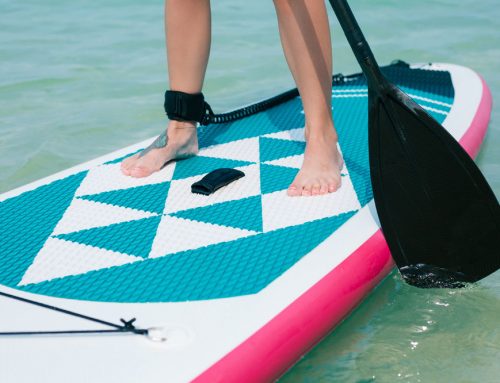
- SUP surfing: Stand-up paddleboarding applied to waves. A longer, wider board and a paddle let you catch waves earlier and ride smaller swells that a shortboarder would ignore.
A Short History: Where Surfing Came From
Surfing is old. Not “a few decades old” — we’re talking centuries of documented wave-riding in Polynesia, with the strongest cultural roots in Hawaii. Ancient Hawaiians called it he’e nalu (wave sliding), and it was woven into spiritual practice, social rank, and daily life. Chiefs rode long, heavy boards called olo; commoners rode shorter alaia boards. Skill in the water was a mark of status.
When European missionaries arrived in the late 1700s and early 1800s, surfing was actively suppressed as part of a broader dismantling of Hawaiian culture. It nearly disappeared entirely. Its revival came in the early 20th century, largely through the efforts of Duke Kahanamoku — an Olympic swimmer and Hawaiian waterman who demonstrated surfing in California and Australia and is widely credited with introducing the sport to the wider world.
From there, surfing spread through California in the 1950s and 60s, generated an entire cultural movement (surf music, surf films, surf fashion), went global by the 1970s, and became an Olympic sport at the 2020 Tokyo Games.
For the full story, our history of surfing post covers it properly.
What You Need to Start Surfing
You don’t need much to get started, but what you need matters. A few quick pointers — our beginner surfing gear checklist covers this in full detail:
- A board: Bigger and more buoyant is better for beginners. An 8–9 foot foam soft-top is the standard starting point. See our best beginner surfboards roundup for current picks.
- A leash: A cord that connects your ankle to the board. Non-negotiable for safety — it keeps the board from washing into other surfers when you fall.
- Wax or traction pad: Surf wax applied to the deck gives your feet grip. Some boards come with a rear traction pad; you’ll still want wax on the front half.
- A wetsuit (maybe): Depends entirely on water temperature. In warm tropical water, board shorts or a swimsuit is fine. In California, the Pacific Northwest, or anywhere cold, a wetsuit is essential.
- Lessons: Seriously consider at least one or two. A good instructor will compress weeks of self-taught trial and error into a single session. Our how to surf for beginners guide is a solid starting point if you’re learning the fundamentals.
The International Surfing Association (isasurf.org) maintains a directory of certified surf schools worldwide if you want to find in-person instruction near you.
Why People Love Surfing
This part is harder to explain in mechanical terms, but it’s the most important part.
Surfing is one of the few activities that demands complete, undivided presence. You cannot scroll your phone in the lineup. You cannot think about your work emails when you’re reading a set wave. The ocean is too loud, too immediate, and too indifferent to your distraction. That enforced presence is, for a lot of surfers, the whole point.
There’s also the physical dimension — paddling works your shoulders, back, and core in ways that are difficult to replicate in a gym. The pop-up is explosive. Riding a wave engages your legs constantly. Surfers tend to be in good shape not because they’re trying to be, but because the sport demands it.
And then there’s the community. Surf culture has its territorial edges (“localism” is real at some breaks), but most lineups — especially beginner-friendly ones — are genuinely welcoming. There’s a shared language among surfers that crosses borders easily. Two strangers who surf will always have something to talk about.
Mostly, though, people love surfing because no two waves are the same. You can surf the same break for twenty years and still get surprised. The ocean doesn’t repeat itself, which means the sport never fully becomes routine. You’re always learning, always chasing something slightly better than the last one.
That’s what surfing is. And that’s why, once most people start, they don’t really stop.
Frequently Asked Questions
What exactly is surfing?
Surfing is the sport of riding ocean waves on a board by harnessing the energy the wave carries as it moves toward shore. The surfer paddles to match the wave’s speed, stands up on the board, and uses body weight and foot pressure to steer along the moving wave face. It can be done on a range of boards — longboards, shortboards, foam soft-tops, and more — in waves ranging from ankle-high to double overhead and beyond.
Is surfing hard to learn?
The basics are learnable in a day or two with the right board and a little instruction — most beginners catch their first whitewater wave within a few hours. Standing up consistently on unbroken waves takes longer, usually a few weeks of regular practice. Surfing well — reading waves, generating speed, linking turns — takes years. That learning curve is part of the appeal. Progress never stops, which means there’s always a reason to get back in the water.
What do you need to start surfing?
At minimum: a board (a foam soft-top in the 8–9 foot range is the standard beginner choice), a leash, surf wax for grip, and access to a beach with beginner-friendly waves. In cold water, add a wetsuit. Lessons aren’t strictly required, but a session or two with a qualified instructor will accelerate your learning significantly and help you avoid the bad habits that self-taught beginners tend to develop. Gear costs can be kept modest by buying used.
What are the main types of surfing?
The main disciplines are shortboarding (high-performance turns and airs on short, narrow boards), longboarding (flow and style on boards 9 feet and longer), foam/soft-top surfing (forgiving boards good for beginners and casual sessions alike), bodyboarding (prone riding on a shorter foam board), and SUP surfing (wave riding on a stand-up paddleboard with a paddle). Each has its own technique, culture, and gear, and many surfers move between disciplines depending on conditions.
Where did surfing come from?
Surfing originated in Polynesia and has its deepest roots in ancient Hawaiian culture, where wave-riding — called he’e nalu — was practiced for centuries and tied to spiritual and social life. It was nearly eradicated by European colonization in the 19th century before being revived in the early 1900s, largely through the efforts of Duke Kahanamoku, a Hawaiian waterman who introduced surfing to mainland America and Australia. From there it spread globally and became an Olympic sport in 2020.