
What is a Paddleboard?
What Is a Paddleboard?
A paddleboard — short for stand-up paddleboard, or SUP — is a large, buoyant board you stand on and propel through the water using a long single-bladed paddle. That’s the one-sentence answer. But the full picture is a lot more interesting: SUP has gone from a niche Hawaiian tradition to one of the fastest-growing water sports on the planet, spanning everything from lazy lake cruising to open-ocean racing to floating yoga classes. Whether you’re curious about trying it or shopping for your first board, this guide covers everything you need to know.
How a Paddleboard Works
The physics are simple: a SUP board is wide and long enough to support a standing adult’s weight without sinking. You stand centered on the board, grip a paddle that’s roughly 6–10 inches taller than you, and use alternating strokes on each side to move forward. The wider and thicker the board, the more stable it feels underfoot — important for beginners. Narrower boards cut through water faster but demand more balance.
Unlike a kayak (where you sit and use a double-bladed paddle) or a surfboard (where you lie prone and paddle with your arms), SUP keeps you upright and active. That elevated vantage point is one of the sport’s great joys — you can see what’s below you, scan the horizon, and chat with people on the shore without shouting.
A Brief History of Stand-Up Paddleboarding
SUP didn’t come out of nowhere. Its roots trace to ancient Polynesia, where warriors used long boards and paddles both for transport and surf training. Modern SUP as we know it emerged in Hawaii in the 1960s and 1970s. Waikiki beach boys — surf instructors who guided tourists into waves — sometimes stood on their longboards and used outrigger paddles to get a better view of incoming students. It was practical as much as stylish.
Two names dominate the origin story: John Ah Choy, who began standing and paddling out of necessity when knee problems made prone paddling difficult, and his sons who kept the practice alive. Laird Hamilton and Dave Kalama brought it mainstream in the early 2000s when they were photographed training on SUPs in Maui. From there, the industry exploded. By the mid-2010s, paddleboarding was outselling kayaks in some markets. Today it’s a global sport with professional race circuits, dedicated yoga studios, and a multi-billion-dollar equipment industry.
The Anatomy of a Paddleboard
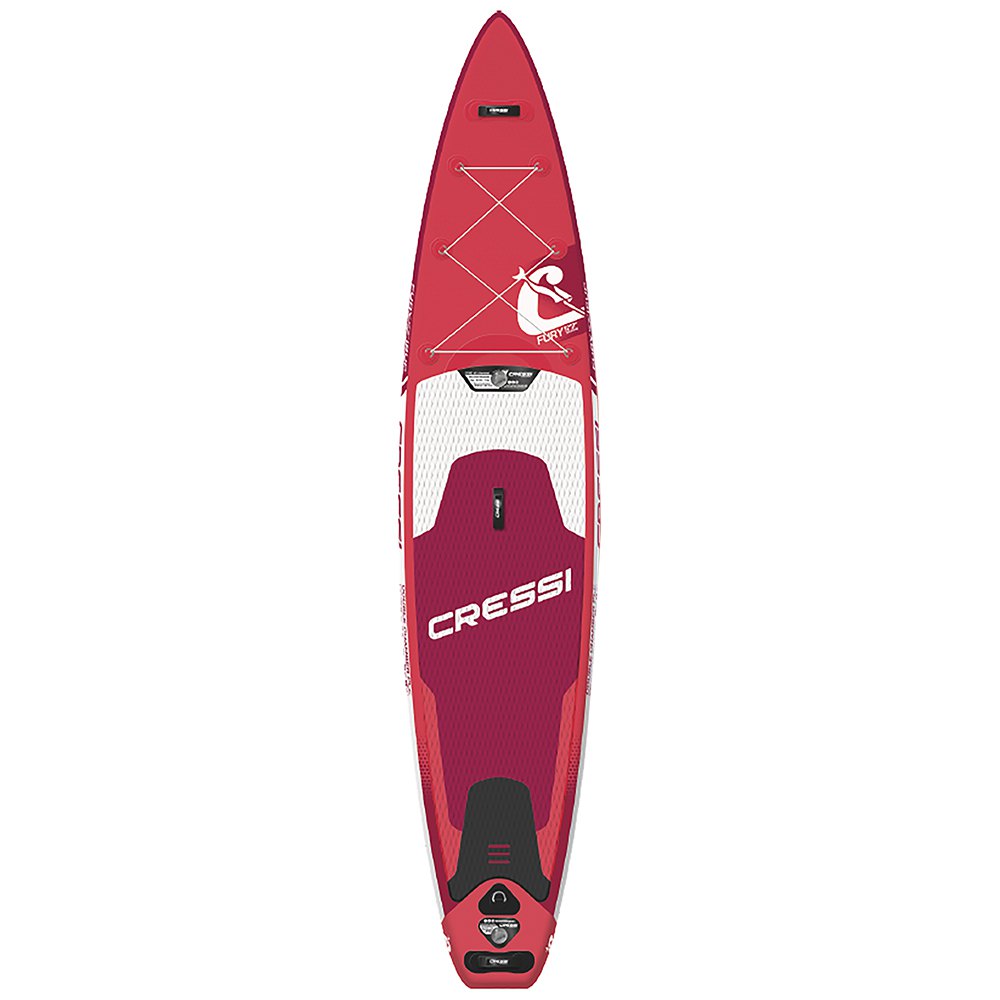
Pick up any SUP board and you’ll encounter the same core parts. Understanding them makes it easier to shop smart and paddle better.
- Deck: The top surface you stand on. Most boards have a textured or padded deck area in the center.
- Deck pad (traction pad): The foam or EVA grip surface underfoot. Good deck pads are thick, grippy, and extend far enough for your stance.
- Nose: The front tip of the board. A pointed nose tracks straighter and cuts through chop; a rounded nose adds stability.
- Tail: The rear end. Wider tails give stability; narrower, pintail shapes improve tracking and surf performance.
- Rails: The side edges running from nose to tail. Rounded rails are forgiving and stable; harder, sharper rails perform better in surf.
- Fins: Located on the underside at the tail, fins prevent the board from sliding sideways and help it track in a straight line. Most boards use a three-fin (thruster) or single-fin setup; fins may be fixed or removable.
- D-rings: Metal loops built into the deck, used to attach bungee cargo nets, leash anchors, kayak seat kits, or dry bags.
- Handle: A molded or fabric carry handle centered on the deck, used to haul the board to and from the water. On inflatable boards, this is usually a rubber grab handle sewn into the seam.
- Vent plug (hard boards): A small screw-in valve that equalizes pressure inside the board as temperature changes — always open when storing, closed when paddling.
For a deeper look at how these features vary across board styles, see our types of paddle boards comparison.
Inflatable vs. Hard Paddle Boards
This is the first real decision most buyers face. Both have genuine advantages — the right choice depends on how and where you paddle.
Inflatable SUPs (iSUPs)
Inflatable boards are made from military-grade PVC drop-stitch construction: thousands of polyester threads connecting two airtight layers. Inflated to 12–15 PSI, a quality iSUP is surprisingly rigid and performs well for all-around use, yoga, fishing, and flat-water touring. Deflated, they roll into a backpack. That portability is the killer feature — you can fly with one, store it in a closet, take it camping, or use it on rivers where rocky entry points would destroy a hard board. They’re also more forgiving if you fall on them.
The trade-off: even the best inflatables flex slightly compared to a hard board, which costs some speed and responsiveness. They also require a pump (or electric pump) and 10–15 minutes of setup time before you can paddle.
Explore our full roundup of the best inflatable paddle boards for vetted picks across every budget.
Hard (Solid) SUPs
Hard boards are made from EPS foam cores wrapped in fiberglass, carbon fiber, or plastic. They’re stiffer, faster, and more responsive — noticeable advantages in surf, racing, and downwinding. A carbon-fiber touring board, for example, glides in a way no inflatable can replicate. Hard boards are the default choice for serious racers and dedicated surfers.
The trade-offs: they’re heavier, require roof racks or a truck bed to transport, and take up real storage space. They also ding and crack if mishandled. For most casual paddlers, those compromises aren’t worth it — which is why inflatables now outsell hard boards in the beginner and intermediate market.
The Main Types of Paddle Boards
SUP boards are purpose-built. The shape, volume, length, and width are all tuned for a specific use. Here’s a quick breakdown of the main categories:
- All-around: 10’–11′ long, 31″–34″ wide. The Swiss Army knife of SUP. Stable enough for beginners, versatile enough for casual surfing, yoga, and flat-water paddling. The best starting point for most people.
- Touring: 11’–14′ long, 28″–32″ wide. Longer and narrower for efficient straight-line travel. Ideal for distance paddling, coastal exploration, and river touring. Usually includes cargo bungees for gear.
- Racing: 12’6″–14’+ long, 23″–28″ wide. Built for speed. Narrow, low-volume boards that demand strong technique and good balance. Not beginner-friendly.
- Surf SUP: 8’–10′ long, 28″–31″ wide. Shorter and more maneuverable for catching and riding waves. Shorter length means they turn faster but track less well on flat water.
- Yoga / Fitness: 10’–11′ long, 32″–36″ wide. Extra wide for maximum stability during poses and high-intensity workouts. Often have full-length deck pads. Many are inflatable for a cushioned, forgiving surface.
- Fishing: 10’–12′ long, 32″–36″ wide. Wide, stable platforms with extra D-rings for mounting rod holders, tackle boxes, and coolers. Some have raised standing platforms or built-in seats.
Our types of paddle boards guide goes board-by-board with performance data and use-case matching.
What Do You Actually Do on a Paddleboard?
The range of activities is wider than most people expect when they first hear “stand-up paddleboarding.”
- Casual cruising: The most common use. You paddle a lake, bay, river, or calm ocean stretch at your own pace — relaxing, scenic, low-impact.
- Fitness and cross-training: SUP activates your core, legs, shoulders, and back simultaneously. A one-hour paddle can burn 400–700 calories. Many athletes use it for active recovery or cross-training.
- SUP yoga: Yoga practiced on a floating board adds a stability challenge that deepens engagement of stabilizing muscles. The setting — outdoors, on water — has become its own draw.
- Touring and exploration: Multi-day paddling trips along coastlines or river systems, camping gear strapped to the board. It’s adventure travel at a walking pace.
- SUP surfing: Using a dedicated surf SUP to catch and ride waves. The long board gives earlier wave entry; the paddle allows powerful, directed turns.
- Fishing: Standing gives anglers a high vantage point for sight-fishing. Wide fishing SUPs are stable enough to cast from and can reach spots no motorboat can access.
- Racing and downwinding: Competitive SUP racing ranges from flat-water sprint events to open-ocean downwind runs using swell energy to assist the paddler.
Ready to get on the water? Our how to paddleboard guide walks through stance, strokes, and safety step by step.
Who Is Paddleboarding For — and What Gear Do You Need?
SUP is one of the most accessible water sports there is. Age range is genuinely wide: kids as young as 5 or 6 can paddle with supervision, and paddlers in their 70s and 80s are active in the community. You don’t need surf experience, swimming ability beyond basic water safety, or prior athletic training to enjoy a calm-water session on a wide all-around board.
That said, if you can’t swim confidently, always wear a PFD and paddle in shallow water with a friend nearby. Water conditions matter: a beginner on flat water is in a very different situation than a beginner trying to handle ocean chop or current.
The Essential Gear Checklist
- Paddle: A SUP-specific paddle, not a canoe paddle. It should be roughly 6–10 inches taller than you. Adjustable aluminum or fiberglass paddles work well for beginners; carbon fiber paddles are lighter and preferred by serious paddlers.
- Leash: A coiled or straight cord that attaches your ankle (or calf) to the board. If you fall off, the board stays with you — your best flotation device. Non-negotiable in any open water. Use a coiled leash for flat water; a straight leash for surf.
- Personal Flotation Device (PFD): In the US, the Coast Guard classifies SUPs as vessels. You’re required to have a Coast Guard-approved PFD on board (adults) and worn (children under 13 in most states). Inflatable belt-pack PFDs are popular because they don’t restrict movement.
- Pump (for inflatables): A dual-action hand pump is included with most iSUPs. An electric pump (12V or battery) is worth the investment if you paddle regularly — it cuts inflation time to 5–8 minutes with no effort.
- Sun protection and water: Not glamorous, but you’re on the water in open sun. Sunscreen, a hat, UV-protective clothing, and a hydration pack or water bottle make a real difference on longer sessions.
For our curated equipment picks across all budgets, see the best paddle boards guide.