Is PaddleBoarding Good Exercising
Is paddleboarding good exercise? The short answer is yes — and it earns that answer in ways that might surprise you.
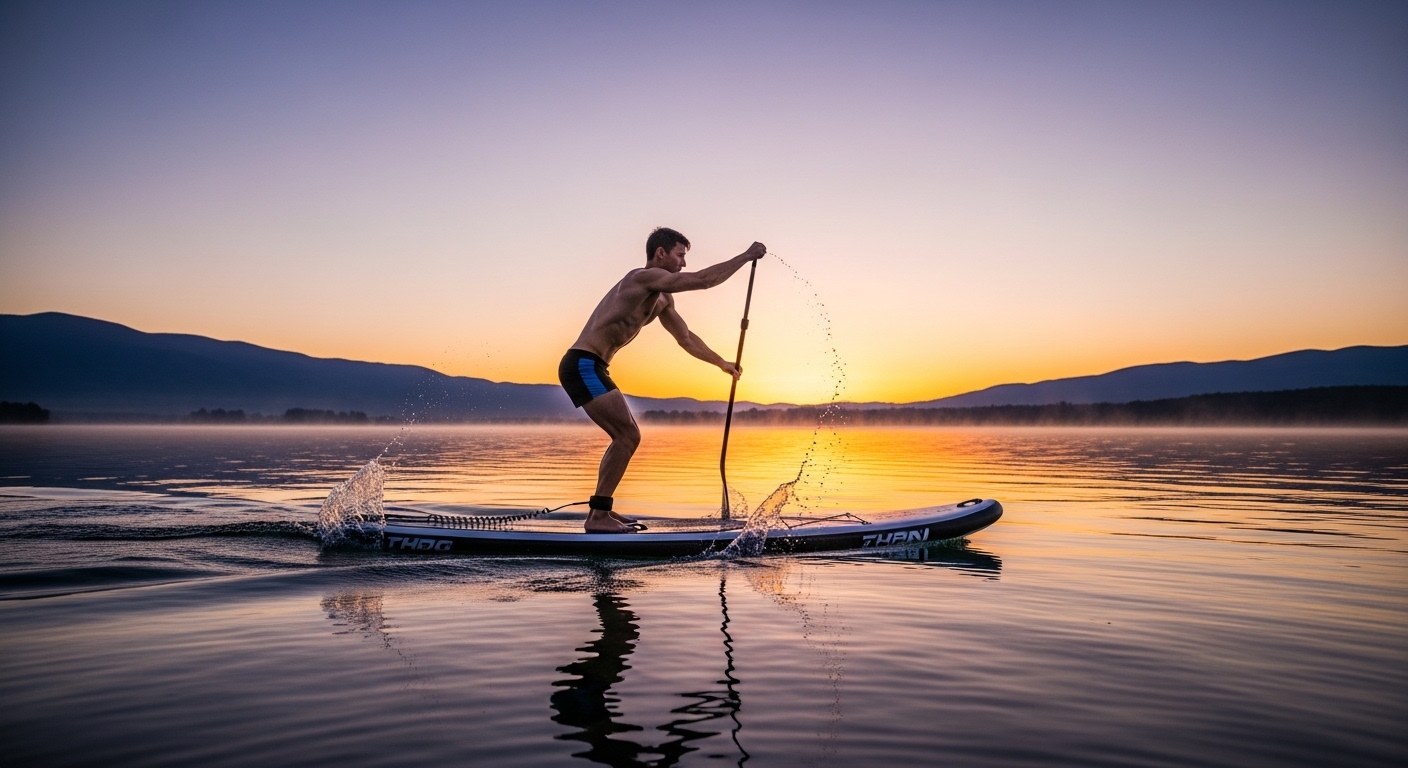
Paddleboarding looks relaxed from the shore. Someone gliding across calm water, barely breaking a sweat. But step onto a board and the reality hits fast: your legs are constantly micro-adjusting, your core is braced on every stroke, and your shoulders are driving a paddle through water with meaningful resistance. Done consistently, SUP delivers real cardiovascular conditioning, measurable strength gains, and documented mental health benefits — all wrapped in a low-impact package that’s easy on your joints. This guide breaks down exactly what paddleboarding does to your body, how much you can expect to burn, and how to get more out of every session.
Yes, Paddleboarding Is Good Exercise — Here's Why
Paddleboarding qualifies as moderate-to-vigorous physical activity under standard exercise classification. A 2014 study published in the Journal of Strength and Conditioning Research found that recreational SUP paddling elevated heart rate to 60–70% of maximum — firmly in the aerobic training zone. Push the pace or add SUP yoga or racing, and intensity climbs further.
What makes it particularly effective is the combination of demands. Unlike cycling or swimming, which isolate specific movement patterns, paddleboarding requires simultaneous engagement of your cardiovascular system, muscular endurance, balance, and proprioception. You’re doing more at once — and that multi-system demand is part of why it feels hard even when it looks effortless.
The low-impact nature seals the deal for many people. Unlike running, there’s no ground-reaction force hammering your joints with each stride. The water surface provides continuous micro-instability that activates stabilizer muscles, but without the shock loading that sidelines knees and hips over time.
Cardio Benefits: What Paddleboarding Does for Your Heart
Sustained paddling keeps your heart rate elevated for the duration of a session — typically 45 to 90 minutes for most recreational paddlers. That’s a meaningful aerobic stimulus. Regular aerobic exercise at moderate intensity improves VO2 max, lowers resting heart rate, reduces blood pressure, and improves cholesterol profiles over time. Paddleboarding checks all those boxes as long as you’re moving consistently rather than drifting.
The key variable is effort. A leisurely flat-water cruise might keep you at 55–60% of max heart rate. A headwind return paddle, a touring session covering several miles, or an SUP fitness class can push you to 75–80% — the vigorous zone where cardiovascular adaptations accelerate. Wind, current, and water chop naturally increase the demand without requiring you to consciously “push harder.”
Core, Balance, and Full-Body Strength
Balance is the headline benefit of SUP, and it’s legitimately significant. Every moment on a board, your ankles, knees, hips, and lower back are making continuous micro-corrections to keep you upright. This activates the deep stabilizer muscles — multifidus, transverse abdominis, hip abductors — that conventional gym exercises often miss. Over weeks of regular paddling, this translates to improved balance, better posture, and a noticeably stronger core.
The paddle stroke itself drives upper-body strength. A proper high-angle stroke engages the lats (your largest back muscle), rhomboids, rear deltoids, biceps, and forearms. Because you’re rotating your torso on each stroke, the obliques and the entire rotational chain through the thoracic spine gets a workout most gym-goers neglect. For a deeper look at every muscle involved, see this breakdown of muscles paddle boarding works.
Your legs are far from passive. Holding a slight knee bend throughout a session loads the quadriceps continuously — more like an isometric wall sit than a squat, but cumulative fatigue builds. Paddling into chop or crossing boat wakes forces your legs into active shock absorption that would challenge most athletes.
The result is a genuinely full-body workout — not the “full-body” marketing language applied to every exercise, but actual simultaneous demand on lower body, upper body, and core in a single integrated movement pattern.
Calorie Burn: Realistic Ranges by Style and Intensity
Calorie estimates for paddleboarding vary widely because the sport covers a wide range of intensities. Using MET (metabolic equivalent) values from the Compendium of Physical Activities and adjusting for body weight, here are realistic ranges for a 170 lb (77 kg) person per hour:
- Casual flat-water cruising: 300–400 calories/hour
- Moderate recreational paddling: 400–550 calories/hour
- SUP touring (sustained distance): 500–700 calories/hour
- SUP yoga: 350–450 calories/hour (lower cardio, higher stability demand)
- SUP racing or interval training: 700–1,000+ calories/hour
Heavier paddlers burn more; lighter paddlers burn less. Headwinds, current, and chop increase the burn significantly compared to calm conditions. For a complete breakdown with weight-based tables, see our full guide on paddle boarding calories burned.
The key takeaway: even a relaxed hour on a SUP burns a meaningful number of calories — more than casual cycling, comparable to moderate swimming — while feeling far less like “exercise” to most people.
Mental Health and Stress Benefits
The evidence for exercise and mental health is solid across modalities, but paddleboarding has a few qualities that amplify those benefits. Being on open water — a natural environment — adds measurable stress-reduction effects beyond what indoor exercise produces. Research into “blue space” (time near water) consistently shows reduced cortisol, lower self-reported anxiety, and improved mood compared to equivalent time spent in urban or indoor environments.
The focus required to balance on a board functions as a form of active mindfulness. Unlike running where your mind can wander freely, paddleboarding demands just enough present-moment attention to quiet rumination. Many paddlers describe sessions as genuinely meditative — not because they’re doing anything spiritual, but because the balance task occupies the part of the brain that otherwise replays the day’s stress.
Consistency matters here. A single session produces real mood lift via endorphins and reduced cortisol, but the durable mental health benefits (reduced anxiety symptoms, improved resilience, better sleep quality) come from regular practice over weeks and months.
How Different SUP Styles Change the Workout
Not all paddleboarding sessions are created equal. The style you choose substantially changes what your body gets out of it:
Recreational cruising is the entry point. Steady-state paddling at a comfortable pace. Good for building base aerobic fitness and getting comfortable on the board. Appropriate for beginners and recovery days for experienced paddlers.
Touring means covering distance — several miles in a session, often with a destination or loop. The sustained effort provides stronger cardiovascular adaptation than cruising. Core and upper body fatigue is more pronounced. This is where SUP becomes a genuine endurance sport.
SUP yoga shifts the emphasis. Cardio demand drops, but balance and stability requirements are dramatically higher. Holding warrior poses and balancing sequences on a floating surface recruits stabilizers that flat-water paddling barely touches. Great complement to standard paddling sessions.
Racing and interval training are high-intensity options that push heart rate into vigorous territory and drive the highest calorie expenditure. Sprint intervals — paddle hard for 30–60 seconds, recover, repeat — are an efficient way to build fitness in a shorter session.
SUP surfing adds a completely different movement dimension: explosive pop-ups, lateral weight shifts, and reactive balance on moving water. Short on cardio volume but high on neuromuscular demand and fun.
If you’re new to the sport and wondering how to get started safely regardless of style, the practical guide on how to paddleboard covers everything from equipment to technique.
How to Make Paddleboarding a Better Workout
Paddleboarding rewards intentionality. Here’s how to get more from your sessions:
- Use proper technique. A high-angle stroke with full torso rotation engages far more muscle than a short arm-only chop. Take one lesson if you haven’t — it changes everything about efficiency and effort distribution.
- Add structure. Instead of aimless paddling, build in intervals: paddle hard for 2 minutes, recover for 1, repeat. Or set a distance target and track pace over time.
- Paddle into the wind first. Start your session heading into wind or against current so the return is easier — not the other way around. This distributes effort more evenly and prevents bonking far from shore.
- Vary your sessions. Mix touring days with yoga days with interval days. The variety prevents adaptation plateaus and keeps different muscle groups challenged.
- Consistency beats intensity. Two to three sessions per week of moderate paddling will produce better results than one brutal session followed by a week off.
If weight management is a goal alongside fitness, the guide on paddle boarding for weight loss covers how to structure sessions and what to realistically expect over time.
Who does paddleboarding suit best? Honestly, almost everyone. It’s accessible to beginners, challenging enough for athletes, and joint-friendly enough for people with knee or hip issues that rule out running. It adapts to age, fitness level, and goals better than most sports. The main limitation is access to water — everything else is a matter of showing up.